
Retail EDC: 7 Essentials for the Sales Floor
Retail salespeople stand for roughly 6.6 hours of every 8-hour shift — about 83% of the workday — according to Bureau of Labor Statistics time-use data, more standing than nearly any other occupation group it tracks.1 A stockroom associate who clocks in at a big-box store doesn’t get a desk drawer, a car console, or even a back pocket most days — polyester uniform pants are cut slim on purpose, and aprons are built for register tools, not a wallet. Whatever makes it through a shift has to fit in a chest pocket, an apron sleeve, or a locker you can get to on break. That’s a narrower kit than office EDC or even a driver’s console bag, and it’s worth building on purpose instead of improvising with whatever’s left in your jeans.
What Retail EDC Actually Means When Your Uniform Has No Pockets
Most “retail worker essentials” lists online are really break-room lists — water bottles, compression socks, meal-prep containers. Useful, but none of it is on your body mid-shift when a customer needs a price check or a box needs opening right now. Retail EDC is narrower: the handful of items that fit in a chest pocket, an apron, or clip to a belt loop, available the second the floor needs them.

In practice that’s six or seven items, and every one of them has to clear a filter most other EDC guides don’t apply: does it look like a weapon to a loss-prevention manager, and does it survive being shoved into an apron pocket fifty times a shift. A keychain-sized multitool that’s fine in an office drawer can get an employee written up at a store with a strict weapons policy. That constraint shapes every pick below.
A Slim Card Holder, Not a Bifold
A bifold wallet is bulk you don’t need standing at a register eight hours a day — it prints a visible rectangle through slim uniform pants and catches on apron ties when you reach for a pen. A slim card holder carrying a debit card, an ID, and a transit card covers an entire shift without the extra leather.
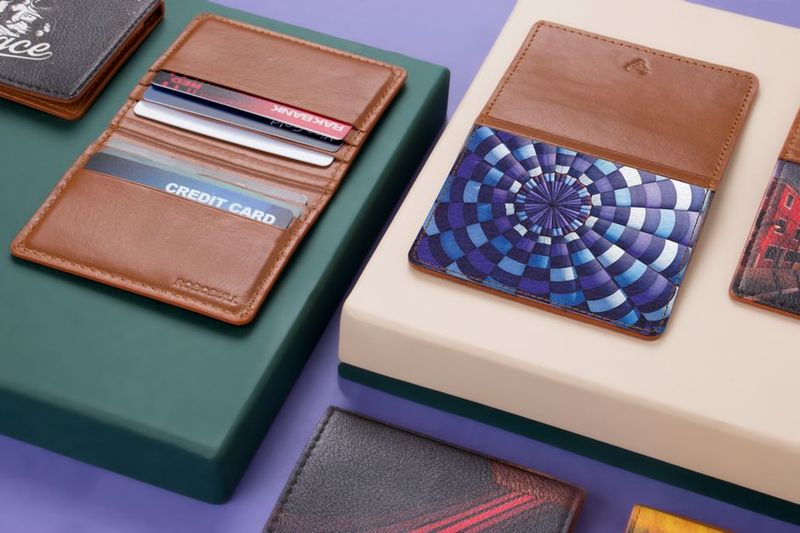
Leave cash and loyalty-card clutter in a locker. A store associate who gets patted down for a lost-and-found search or asked to empty pockets for a theft audit wants that to take five seconds, not require unpacking a folded stack of punch cards. The case for carrying less in your wallet generally applies twice as hard when the wallet has to survive a shift on your feet.
A Pen That Doesn’t Skip on a Returns Slip
Every retail job eventually puts a pen in your hand at the worst moment — a customer standing at the counter waiting on a manual return, a price override that needs a signature, a schedule swap you’re writing down before you forget it. A pen that skips or runs dry mid-signature makes an already annoying interaction worse.

A pressurized gel or space-pen-style cartridge writes through the carbon layer on a multi-part returns form without pressing hard enough to tear it, and it survives riding in a shirt pocket through a wash cycle you forgot about better than a cheap plastic stick pen does. A dedicated EDC pen comparison covers the tradeoffs if you want to go deeper than “whatever’s on the counter.”
A Dedicated Box Cutter — Never a Pocket Knife
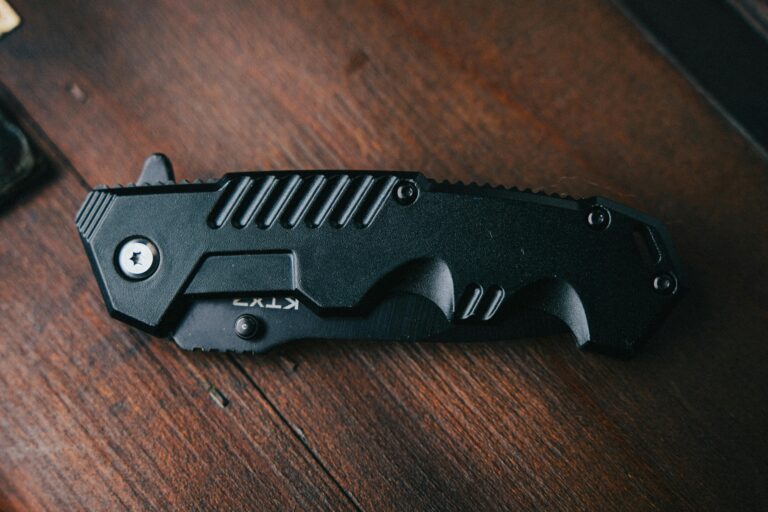
This is the one most new hires get wrong. Opening stockroom boxes is a daily part of almost every retail job, but a folding pocket knife clipped to your belt is exactly the kind of item that gets flagged under a broad “no weapons on company property” clause — sample employer weapons policies explicitly define “dangerous weapons” to include knives, and violating one is typically a fireable offense even when it isn’t a criminal one.2
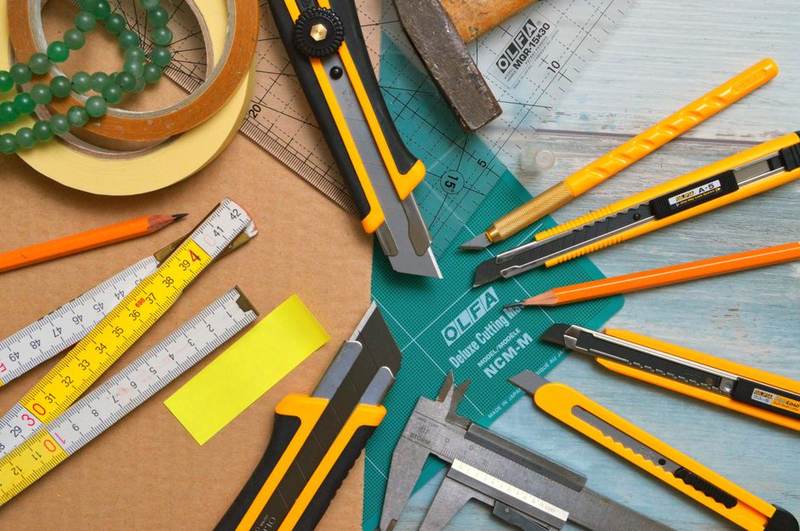
A spring-loaded, self-retracting safety cutter solves the actual job — opening cartons — without reading as a weapon to a manager or a customer who glances over. It’s also the safer tool on the numbers: nearly a third of all hand-tool injuries tracked in US workplaces involve retractable-blade knives, and OSHA estimates a single laceration costs an employer roughly $41,000 in claims and lost time.3 Keep it in the stockroom, not clipped to your belt on the floor, and most handbooks have no issue with it at all.
Hand Sanitizer and Lip Balm for Register Hands
Register work means touching hundreds of cards, cash, and receipts a day, plus whatever sanitizing wipe-down routine the store runs between shifts. Hands dry out fast, especially in a mall or big-box store running air conditioning hard in summer and heat hard in winter. A travel-size sanitizer and a stick of lip balm are small enough to live in an apron pocket permanently and solve a problem that otherwise shows up as cracked knuckles by week three.

Skip the gallon-size bottle. A one-ounce bottle refilled from a bigger one at home outlasts a week of register shifts and doesn’t add noticeable weight to an apron that’s already carrying a radio, a name badge, and a pen.
A Paper Notebook When Phones Are Banned on the Floor
A lot of retail employers restrict personal phone use on the sales floor entirely, which rules out the “just text yourself a reminder” habit most other professions lean on. A pocket notebook the size of a deck of cards fills that gap — a manager’s instruction, a customer’s held-item request, a restock number — without pulling out a phone a shift lead might flag.
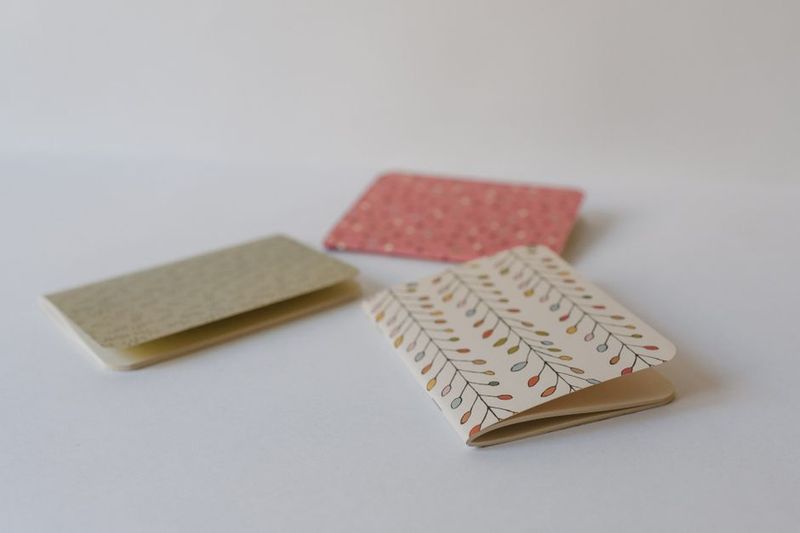
It doesn’t need to be fancy. A $4 memo pad does the job as well as a $20 one — the only requirement is that it fits flat in a shirt pocket and survives getting sat on in the break room.
A Key Organizer for the Locker, Not Your Pocket
Most retail jobs hand you a locker, not a desk, which means a house key, a car key, and sometimes a locker key or a cash-drawer key all riding together on one ring. Loose keys jingle during a shift, catch on apron ties, and dig into a thigh for eight hours of standing — a compact key organizer stacks them flat and silent instead.

A dedicated key organizer buying guide is worth a look if you’re swapping from a loose ring — the difference during an eight-hour shift on your feet is bigger than it sounds.
Blister Pads and a Few Bandaids for the Back Half of a Shift
Standing 83% of an 8-hour shift adds up fast on your feet, and a new pair of non-slip work shoes breaking in during week one is a near-universal retail rite of passage. Two or three blister pads folded into a card holder or apron pocket handle the hot spot before it becomes a limp you’re hiding from customers for the last two hours of a shift.
This is the one item worth treating as genuinely optional gear rather than daily carry — most shifts you won’t need it. A full EDC first aid kit covers the larger version of this problem if standing shifts are a regular part of your week, not just new-shoe season.
What a Retail Shift Actually Looks Like
If you’ve never worked a retail floor, the pocket-space constraint described above is easier to understand watching an actual shift than reading a list.
FAQ
Can I carry a pocket knife at a retail job?
Check your specific employee handbook before you clip one on. Most retail employers use broad “no weapons on company property” language that explicitly includes knives of any kind, and enforcement varies by manager — a safety box cutter kept in the stockroom is the lower-risk choice for opening boxes.
What should I keep in my work locker instead of my pockets?
Cash, spare uniform pieces, a phone if personal devices aren’t allowed on the floor, and anything bulky like a bifold wallet or a water bottle. Keep only what you’ll actually reach for mid-shift in your apron or pockets.
Do retail jobs let you carry a phone on the sales floor?
It depends entirely on the employer — some allow it in an apron pocket on silent, others require phones stay in a locker during a shift. A pocket notebook is the fallback that works everywhere regardless of the policy.
Is a multitool a good idea for retail work?
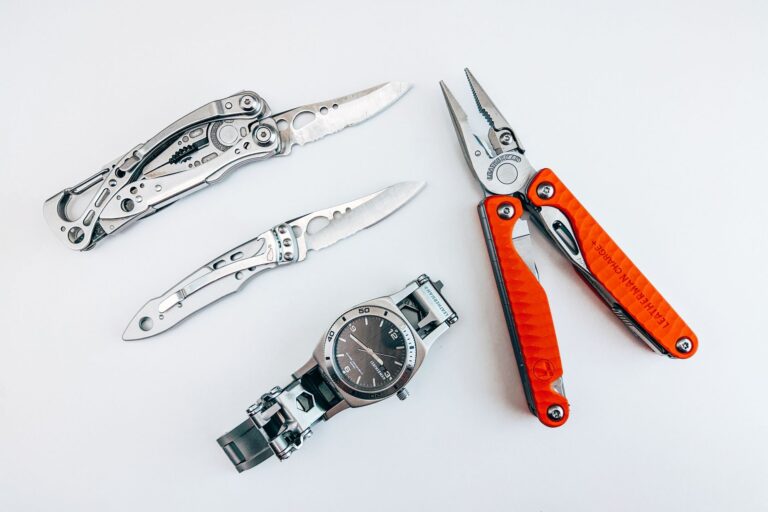
Usually not for the sales floor itself. Most multitools include a blade, which runs into the same weapons-policy problem as a pocket knife. A dedicated safety box cutter kept in the stockroom covers the actual job without the risk.
Sources
- U.S. Bureau of Labor Statistics — Retail Salespersons Occupational Requirements — standing time data for the retail sales occupation
- Lorman — Sample Employer Weapons Policy — standard language defining prohibited weapons, including knives, on company property
- CompSource Mutual — Cutting Tool Safety — OSHA-sourced data on retractable-blade injuries and laceration costs