Bellroy Slim Sleeve Review: 7 Honest Notes
A bifold stuffed with eleven cards runs close to three-quarters of an inch thick before you add a single bill — enough to wear a visible ring into a back pocket inside a year. The Bellroy Slim Sleeve exists to fix exactly that: four overlapping leather slots and a center pull-tab compartment that keep the wallet under half an inch thick even loaded with eight cards. I carried one daily through a Taipei summer in a front pocket, which is a harder test than most reviews run — humidity swells leather fast, and a wallet that bulges after three months of sweat isn’t actually slim. Here’s what held up, what didn’t, and who should save their money and buy something cheaper instead.

Bellroy Slim Sleeve Specs: What You’re Actually Buying
The Bellroy Slim Sleeve measures 3.15 by 3.74 inches (8 by 9.5 cm) and weighs under an ounce empty, built from leather sourced through Leather Working Group gold-rated tanneries.1 It ships in roughly ten colorways, from muted black and cognac to brighter options like Tangelo orange, and carries Bellroy’s standard three-year warranty against stitching and material failure. List price sits at $79 direct from Bellroy, though it regularly shows up closer to $65 through Amazon and other authorized resellers.1
There’s no RFID-blocking version of the Slim Sleeve itself — if that matters to you, Bellroy sells a separate Hide & Seek model built around the same slim-wallet concept with RFID lining added. Worth knowing before you order, since a lot of buyers assume every Bellroy wallet includes it.
Card Capacity: How Many Cards Actually Fit

Bellroy markets the Slim Sleeve as a 12-card wallet, and on paper that checks out — four vertical sleeves, each rated to hold roughly three cards without the leather stretching past its intended shape. In practice, that number is a ceiling, not a comfortable daily load. Six to eight cards is where this wallet actually feels slim; push past eight and the outer sleeves start to gape, and pulling a single card out from the middle of a packed slot gets fussy.
The layout breaks down into four distinct zones, which is worth knowing before you load it:
- Two outer sleeves for your most-used cards — debit, transit, ID
- One center pull-tab compartment for everything else
- A rear pocket that doubles as a folded-cash slot
Cash is the real limiter. There’s no dedicated bill compartment the way a bifold has one — folded cash rides behind the back panel, and anything past four or five bills starts to push the whole wallet out of shape. If you regularly carry cash for tips or a cash-only vendor, that’s a real tradeoff against the slim profile.
The Pull-Tab System: Faster Draw or Extra Step?

The center compartment is where the Slim Sleeve earns its reputation. Instead of digging through a stack, a leather tab lets you fan the center cards out with one motion — useful at a checkout line when you’re holding a coffee in the other hand. It works well when that slot is carrying three or four cards.
Load it past that, and the mechanism starts fighting you. Pack Hacker’s long-term test flagged the same issue I ran into: when the center slot gets crowded, the pull-tab can stick on the draw, and forcing it is exactly what stretches the leather prematurely.1 The fix is simple — treat the pull-tab slot as a four-card max, not a junk drawer for every loyalty card you own.
Pocket Profile: Does It Disappear in Jeans?

At 3.15 by 3.74 inches, the Slim Sleeve sits close in size to a standard bifold’s width but loses most of the thickness. Loaded with six cards and a couple of folded bills, it carries flat enough in a back pocket that sitting down doesn’t force an awkward lean, which is the actual test that matters for daily carry — not how it looks on a desk.
Front-pocket carry works even better. The rounded corners and soft leather mean it doesn’t print as a hard rectangle the way a card holder with exposed edges does. After four months in rotation, the leather had broken in enough to curve slightly with pocket shape rather than fighting it — a sign the construction is doing what Bellroy designed it to do.
Leather Quality and How It Wears
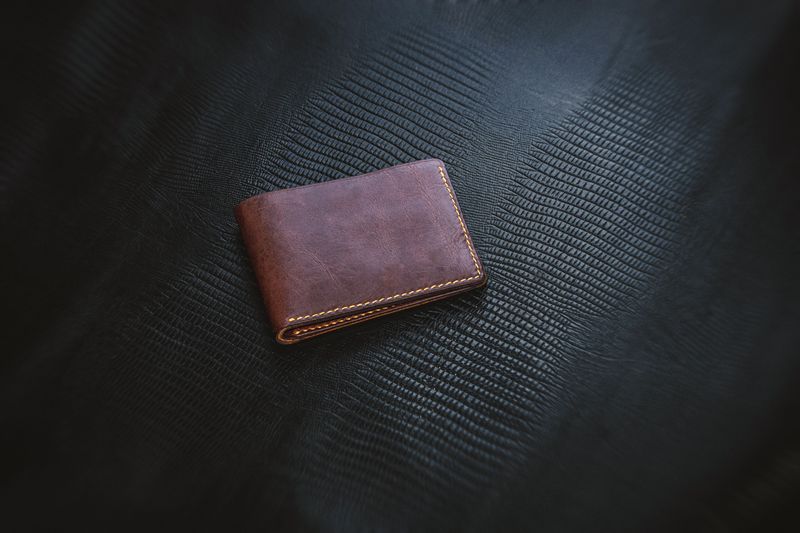
The leather is the part that justifies the price gap over a $20 card holder. It’s noticeably thicker and more structured out of the box than the budget alternatives crowding this category, and the stitching along the sleeve edges held up clean through daily use without fraying at the stress points — the corners of the pull-tab slot, mainly, which take the most friction.
It does patina. Lighter colorways darken at the corners and along the spine within a few months of regular carry, which some buyers want and others find annoying. If you want a wallet that looks the same on day 400 as day one, this isn’t it — you want a coated synthetic, not full-grain leather.
Bellroy Slim Sleeve vs a Bare Card Holder
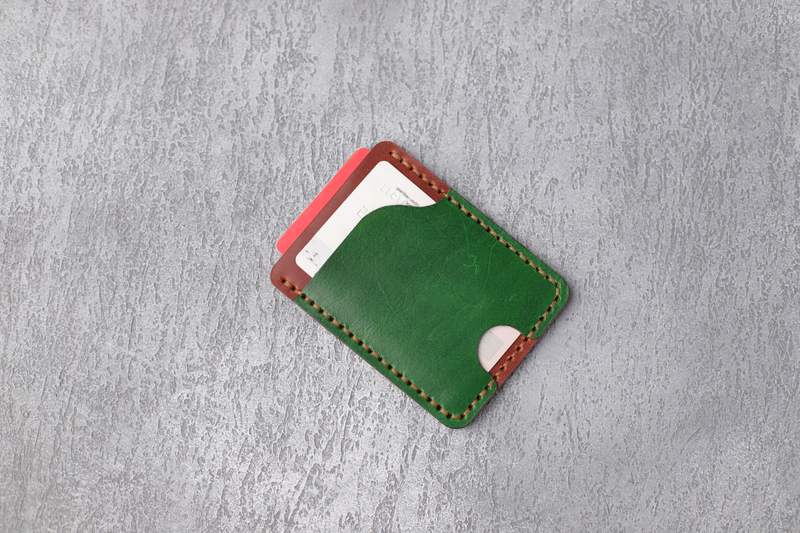
A basic leather card holder — two open pockets, no pull-tab, no cash slot — runs $15 to $25 and does one job well: carrying four or five cards as thin as physically possible. The Slim Sleeve costs three to four times that and gives up some of the thinness in exchange for cash capacity and a center compartment that a pure card holder doesn’t have. We covered the broader bifold-versus-card-holder tradeoff in more depth in our card holder vs bifold wallet breakdown, and the same logic applies here one level up.
The honest read: if your daily carry is strictly cards and you never touch cash, a $20 card holder gets you 90% of the slimness for a fraction of the price. The Slim Sleeve earns its premium specifically for people who still carry some cash and want one wallet instead of a card holder plus a money clip.
Who Should Buy the Bellroy Slim Sleeve (and Who Shouldn’t)

This wallet fits a specific carrier best: someone running six to eight cards total, who still wants a thin pull of cash available for the rare cash-only spot, and who’s fine replacing a bulging bifold rather than going full minimalist. Commuters and office workers are the obvious fit — the pocket profile matters more when you’re sitting at a desk or on transit all day than if you’re mostly driving.
It’s a worse fit if you’re a heavy cash carrier, if you’re juggling more than ten cards daily (hotel key cards, multiple work badges, several loyalty cards), or if you want a wallet that never needs a break-in period. Those carriers are better served by either a traditional bifold or a dedicated card case with a separate money clip.
Price, Colors, and Where It Fits Your EDC Budget

At $65 to $79 depending on where you buy it, the Slim Sleeve lands in the middle of the EDC wallet market — pricier than a basic card holder, cheaper than a full-metal wallet like the one we tested in our Ridge Wallet aluminum review. Unlike the Ridge, there’s no hard shell here, so it’s a quieter carry in a jacket pocket but offers less crush protection if you’re rough on gear.
Ten colorways give you more range than most EDC wallets in this price bracket, which matters if you’re trying to match a specific kit rather than just grab black. If you’re still deciding how far to push the minimalist route before landing on a wallet, our minimalist EDC guide covers the broader tradeoffs beyond just wallets.
See the Slim Sleeve in Action
Pictures only show so much of how the pull-tab system behaves under daily use. This walkthrough covers the fold, the draw, and the break-in pattern on a Slim Sleeve carried for several months:
The Verdict After Months of Carry
The Bellroy Slim Sleeve does exactly what it says on the box, and the failure cases are predictable rather than surprising — overload the pull-tab slot and it sticks, overload the cash pocket and it bulges. Stay inside the design’s limits and it’s one of the few wallets in this price range that actually earns the word “slim” instead of just marketing it. Buy it for the six-to-eight-card carry it was built for, not the twelve-card ceiling on the spec sheet.
Frequently Asked Questions
Is the Bellroy Slim Sleeve worth the price?
For anyone carrying six to eight cards who wants a thinner alternative to a bifold without losing cash capacity entirely, yes. If you’re down to four cards or fewer and never carry cash, a cheaper card holder gets you most of the same benefit.
How many cards does the Bellroy Slim Sleeve actually hold?
Bellroy rates it at 12+ cards across four slots, but six to eight is the comfortable daily range before the leather starts to stretch and the pull-tab gets harder to draw.
Does the Bellroy Slim Sleeve have RFID protection?
No. The standard Slim Sleeve does not include RFID-blocking material. Bellroy’s Hide & Seek model uses the same slim-wallet layout with RFID lining added, if that’s a requirement for you.
What’s the difference between the Slim Sleeve and the Apex Slim Sleeve?
The Apex Slim Sleeve uses a more structured, premium leather and costs more, but follows the same four-slot, pull-tab layout as the standard Slim Sleeve. The core carry experience is nearly identical.
Sources
- Pack Hacker — Bellroy Slim Sleeve Wallet Review — long-term specs, pricing, and wear testing referenced for capacity and pull-tab behavior.
- Bellroy — Slim Sleeve Wallet Official Product Page — manufacturer specs, colorways, and warranty details.