Fisher Space Pen vs TWSBI: Best EDC Pen
A Fisher Space Pen Bullet runs about $22 and fits in a coin pocket. A TWSBI Precision runs closer to $25-35 and needs a dedicated pen slot because it’s nearly 5.5 inches capped. Both show up constantly in EDC pocket dumps, but almost nobody explains why you’d pick one over the other — they just say “get a nice pen” and move on. The real answer depends on whether your pen spends its day in a tool bag or on a desk.
Two Pens, Two Completely Different Jobs
The Fisher Space Pen and the TWSBI get lumped together in “best EDC pen” roundups constantly, which is a little misleading. They were built to solve opposite problems. Fisher designed the pressurized cartridge in the 1960s so astronauts could write in zero gravity — the ink doesn’t rely on gravity or capillary action, it’s pushed out by nitrogen gas. TWSBI, a Taiwanese pen maker, builds for people who want a mechanically satisfying writing experience: visible ink windows, piston fillers, brass internals.
Comparing them head-to-head only makes sense once you accept that one is a tool and the other is an instrument. A tradesperson jotting measurements on a job site and a teacher grading papers at a desk are not shopping for the same pen, even if both of them call it their EDC pen.

The Fisher Space Pen: Built to Write Anywhere, Not Necessarily Well
What actually makes the Fisher Space Pen different is the AG7 pressurized cartridge. Nitrogen gas behind the ink forces it onto the ballpoint regardless of orientation, which is why it writes upside down, at any angle, on greasy or wet paper, and across a temperature range of -30°F to 250°F. NASA started flying it on Apollo missions in 1968, and the same cartridge design is still the one in every Fisher pen sold today.[1]
The Bullet model is the one most EDC carriers actually buy. Capped, it’s barely longer than a thumb — about 3.75 inches — and the cap posts onto the back for a full-length grip when you’re writing. At roughly $20-25, it’s cheap enough that losing one doesn’t sting. The tradeoff is the writing experience itself: reviewers consistently note the Fisher refill feels more utilitarian than smooth, closer to a tool pen than a premium ballpoint.[2] That’s a fair trade if your pen’s job is surviving a job site, not impressing anyone at a meeting.

The TWSBI: Built for People Who Actually Enjoy Writing
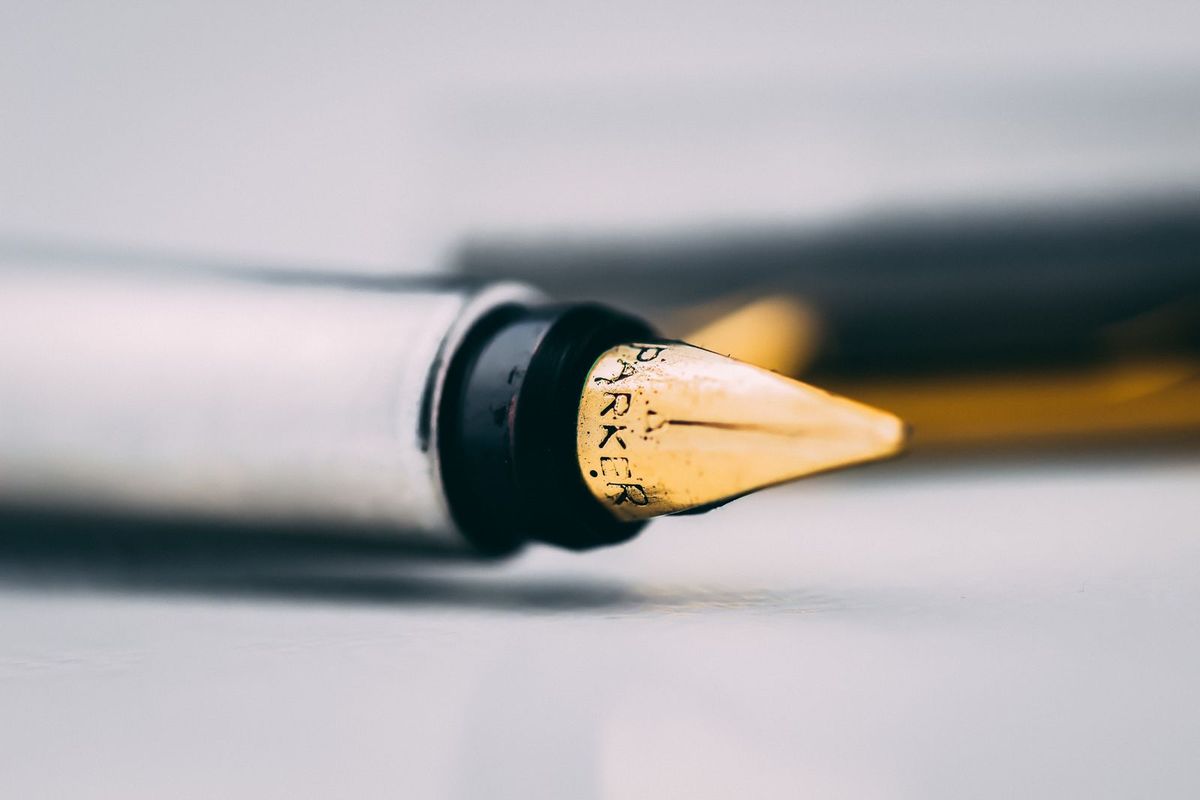
TWSBI pens, whether it’s the Precision ballpoint or one of their piston-fill fountain pens, are built around weight and balance first. The Precision has a hefty metal barrel that most reviewers describe as reassuringly substantial in the hand — closer to a dedicated writing tool than a pocket clip-on.[3] That weight is a deliberate choice: TWSBI assumes you’re going to use this pen for actual writing sessions, not just signing a receipt.
The refill is where the real difference shows up. A TWSBI nib or rollerball tip lays down ink more smoothly and with finer line control than a Fisher cartridge, but it won’t write upside down and it struggles on greasy or wet surfaces. In one side-by-side test, the Fisher refill kept working in conditions that stopped the TWSBI cold — but on normal paper, the TWSBI was the pen people preferred to actually write with.[3] That’s the entire comparison in one sentence: Fisher wins on abuse, TWSBI wins on feel.

Pocket Carry: Size, Weight, and the Clip Test
This is where the Fisher Space Pen pulls ahead for strict urban EDC. The Bullet collapses to under 4 inches and weighs about half an ounce — it disappears into a coin pocket, a bag’s front slip, or a wallet sleeve without printing or adding noticeable weight. There’s no pocket clip on the Bullet by default, but that’s the point: it’s meant to ride loose, not clipped to a shirt placket.
The TWSBI doesn’t collapse. Capped, it’s close to 5.5 inches and noticeably heavier in a trouser pocket — it wants a dedicated pen slot in a bag, a jacket’s interior pocket, or a desk cup, not a jeans pocket you’re sitting down in repeatedly. If your EDC philosophy is “fewer, smaller items,” the Fisher is the clear winner here. If you’ve already built your carry around a bag or a blazer with real pen storage, the TWSBI’s size stops being a liability.

Durability: What Happens When You Actually Abuse These Pens
Drop a Fisher Space Pen in the rain, write a note on a fogged-up, damp clipboard, or pull it out of your pocket after a cold commute, and it works exactly the same as it did at room temperature. The pressurized cartridge doesn’t care about humidity, grease, or orientation — that’s a NASA-grade design requirement, not marketing copy. For a pen that’s going to live in a tool bag, a glovebox, or a jacket that sees actual weather, that reliability matters more than how smooth the line looks.
The TWSBI is not built for that environment, and it doesn’t pretend to be. A piston-fill fountain pen depends on capillary action and a clean nib — cold temperatures can affect flow, and a rough jostle in a bag can occasionally cause minor leaking if the piston isn’t fully sealed. None of that makes it a bad pen. It makes it the wrong tool for a backpack that also holds a multitool and a battered water bottle. Match the pen to where it’s actually going to live, not to which one has the better spec sheet.

Refill Cost and How Often You’ll Actually Replace One
Fisher’s PR-series refills cost about $3-4 each and are sold at nearly every office supply store and most hardware stores — you can restock one on a lunch break without planning ahead. They also last a long time; the pressurized cartridge holds roughly twice the ink of a standard ballpoint refill, so a daily-carry Fisher might go a year or more between swaps.
TWSBI refills cost more to maintain, but not dramatically so. A rollerball or ballpoint cartridge runs similar to premium competitors, and if you’re running a fountain pen version, you’re buying ink bottles or cartridges and occasionally flushing the nib with water — a five-minute job, not a chore, but a real maintenance step the Fisher never asks for. If “buy it and forget it” is the priority, Fisher wins. If you don’t mind five minutes of upkeep for a noticeably better line, TWSBI’s cost difference is close to a non-issue.

Which One Should Actually Go in Your Pocket
Buy the Fisher Space Pen if your EDC gets rained on, dropped, or stuffed next to a multitool and a flashlight — it’s the pen for a teacher’s EDC kit that lives in a bag all day, a job site clipboard, or a minimalist carry where size matters more than nib feel. Buy the TWSBI if your pen mostly sees a desk, a planner, or a pocket notebook you’re actually journaling in, and you’d rather carry one excellent writing tool than the toughest one available.
Neither pen is wrong, and the EDC community’s habit of ranking them against each other misses the point. Buy both eventually. Carry the one that matches today’s job, the same way you’d pick a slim card holder over a bifold depending on what’s actually in your pockets that day.

FAQ
Can a Fisher Space Pen really write underwater?
Yes. The pressurized nitrogen cartridge pushes ink to the tip regardless of gravity or surface moisture, so it writes on wet paper and even briefly underwater. It won’t survive being fully submerged for long periods, but short underwater writing is a genuine, demonstrated capability, not a marketing exaggeration.
Is the TWSBI Precision a fountain pen or a ballpoint?
TWSBI makes both. The Precision line includes a ballpoint and rollerball version, while TWSBI’s Eco and Diamond lines are piston-fill fountain pens. The comparison in this article focuses on the ballpoint/rollerball Precision, since that’s the closer match to a Fisher Space Pen for pocket carry.
Which pen is better for cold weather EDC?
The Fisher Space Pen, without much competition. Its ink is rated to -30°F, while standard ballpoint and fountain pen ink can thicken or skip in sub-freezing temperatures. If your winter EDC includes time outdoors, the Fisher is the more reliable choice.
Do Fisher Space Pen refills fit other pens?
Many tactical and EDC pen brands are built specifically to accept the Fisher PR-series refill because of its reputation, so it’s worth checking your other pens’ specs before buying refills elsewhere. TWSBI pens use their own cartridge and converter system and are not refill-compatible with Fisher.
Sources
- Space Pen — Wikipedia — History of the pressurized cartridge design and its use on NASA missions since 1968.
- Fisher Space Pen Bullet Review — The Pen Addict — Detailed review of the Bullet model’s writing feel and size.
- Pen Review: The Fisher Space Pen — The Gentleman Stationer — Comparison of Fisher refill writing quality against standard ballpoints.