
Bike Commuter EDC: 7 Essentials for the Ride
A bike commuter in Portland gets a flat eleven minutes from the office and has two choices: walk the rest of the way in cleats, or spend ninety seconds with a patch kit and keep riding. The gear in your bag decides which one happens. Everyday carry guides built for the subway crowd miss this entirely — they’re optimized for a kit that never has to fix anything. A bike adds moving parts, exposure to weather, and a theft risk that doesn’t exist when your “ride” is a train car.
What a Bike Commuter EDC Kit Actually Needs
Strip it down and a bike commuter EDC kit covers four jobs a general commuter EDC kit doesn’t touch: securing the bike when you’re not on it, fixing a mechanical failure on the spot, staying visible to drivers, and staying dry enough to function at your desk. Your wallet, phone, and keys don’t change — they’re the same four items any commuter carries. What changes is everything that keeps the bike itself moving and in one piece.
Most “bike gear” lists write for weekend century rides — hydration vests, cue sheets, spare derailleur hangers. A commuter doesn’t need any of that. You need a kit that survives a 20-minute ride each way, five days a week, in whatever weather shows up, without turning your commute into a second hobby you have to maintain.

A rack full of commuter bikes — only the ones with proper locks will still be there at 5pm.
Lock Up or Walk Home: Why the U-Lock Comes First
An academic study released in January 2025 by researchers at UC Davis, UC Santa Barbara, and Bike Index put a hard number on bike theft in the US: 2,376,578 bicycles stolen annually, a rate 2.5 times higher than car theft, worth more than $1.4 billion a year. The number that should actually change how you lock up is buried deeper in the same report — 59% of stolen bikes were locked at the time. A lock existing isn’t the same as a lock working.
That 59% figure is almost always a cable lock or a single point of contact. A hardened-steel U-lock through the rear wheel and frame, anchored to something that isn’t going anywhere, is a different category of deterrent — not unbreakable, but slow and loud enough that most opportunists move to the next bike. If your commute ends with the bike sitting outside for six or eight hours, the lock isn’t optional gear. It’s the one item in this kit that, if skipped, can end the commute permanently.
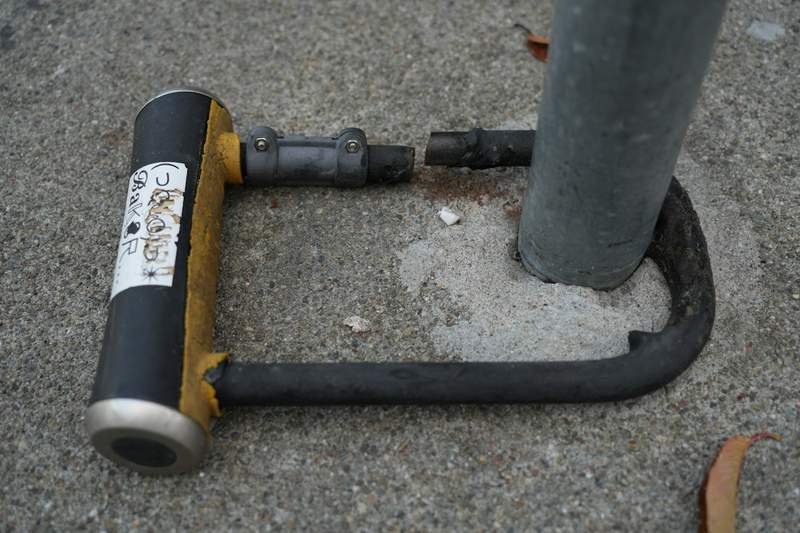
A U-lock through the rear triangle and a fixed object — the baseline, not the upgrade.
The Multitool and Puncture Kit That Get You Home
A bike multitool for commuting needs three things a general EDC multitool doesn’t: Allen keys in the sizes your bike actually uses (usually 4, 5, and 6mm), a chain breaker, and a flathead for derailleur limit screws. Anything beyond that — a built-in knife, pliers, a bottle opener — is weight you’re carrying for a scenario that won’t happen on a 20-minute ride. If you’re shopping for a general-purpose pocket tool rather than a bike-specific one, the breakdown in our best multitools for everyday carry guide covers the tradeoffs.
Pair the multitool with a minimal puncture kit: two tire levers, a self-adhesive patch set, and a CO2 inflator with one cartridge, or a compact hand pump if you don’t want to carry pressurized canisters on a crowded train platform. The whole kit should fit in a jersey pocket or a small seat bag — if it’s bulky enough that you leave it home “just this once,” it’s the wrong kit. A flat with no patch kit means walking, and an 11-minute ride home becomes a 40-minute walk.

Three Allen sizes and a chain breaker cover most roadside fixes — you don’t need a full shop in your bag.
Lights, Helmet, and Being Seen
A front light and rear light aren’t about seeing the road — most commuter routes are lit well enough without them. They’re about a driver at an intersection registering that something is there before they turn. A rear light with a steady and flashing mode, clipped to the seat post or bag, costs less than a decent multitool and does more for your safety than any other single item in this kit. Run it in daylight too; daytime running lights measurably cut intersection collisions, which is exactly where most bike-car crashes happen.
The helmet question gets debated endlessly in cycling forums, but for a daily commuter the math is simple: you’re riding the same route in the same traffic patterns five days a week, which is exactly the kind of repeated exposure where one bad pothole or one distracted left turn eventually catches up with you. A helmet that lives on your bike rack or pannier hook, not buried in a bag, is the only kind you’ll actually put on every time.
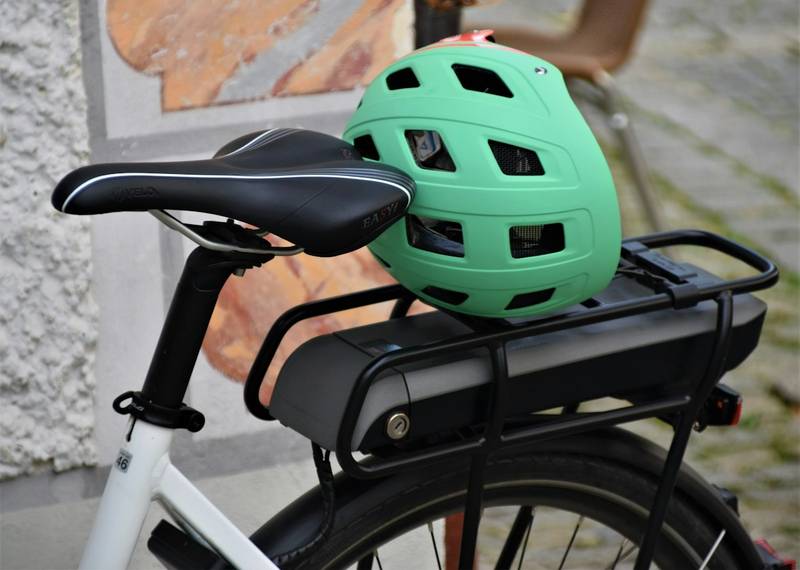
Keep the helmet clipped to the bike itself — the ones that live in a bag don’t get worn.
Weatherproofing: Rain Doesn’t Cancel the Commute
A transit commuter checks the forecast to decide whether to grab an umbrella. A bike commuter checks it to decide what goes in the bag. A packable rain shell that compresses into its own chest pocket covers the ride itself; a dry bag liner or a waterproof pannier cover protects whatever’s inside your bag from road spray, which soaks gear from below even when it’s not actively raining on you. Cheap clip-on fenders solve the same problem for less than the cost of one bad commute in work clothes.
The item people skip and regret is a second pair of socks. Wet shoes dry out over a workday; wet socks worn for eight hours don’t, and they’re the difference between an uncomfortable afternoon and a genuinely miserable one. It’s a two-dollar fix for a problem that ruins entire days.

A packable shell and a dry bag liner cover the two things rain actually ruins: you and your gear.
Where It All Goes: Bag, Pannier, or Pockets
A backpack works for short, flat commutes but puts the full weight of your laptop and lock on your shoulders and leaves your back damp by the time you arrive. A rear rack with a single pannier moves that weight onto the bike instead of your spine, which matters more the longer the ride gets or the hillier the route. A frame bag or top-tube bag is the right call for the repair kit specifically — it keeps the multitool and patches accessible without digging through a main compartment on the side of the road.
The honest answer is most commuters end up running two systems: a pannier or rack bag for the laptop, lock, and anything that shouldn’t bounce around, and a small frame or saddle bag for the repair kit and spare tube. Splitting it this way means a flat tire doesn’t require unpacking your entire bag on the shoulder of the road.

A dedicated frame bag for the repair kit means you’re not unpacking a laptop bag on the shoulder.
Phone Mount and Nav Backup
A handlebar phone mount earns its spot for turn-by-turn directions on a new route, but it’s also the single most commonly skipped item that people wish they’d had after their phone died mid-commute with no backup plan. The fix isn’t complicated: a mount that locks the phone in place (not a cheap clamp that rattles loose over potholes) and, if your route is genuinely unfamiliar, a paper cue sheet or a screenshot of the map saved before you leave. A dead phone shouldn’t mean a wrong turn into traffic while you figure out where you are.
Skip the mount entirely if your route never changes — glancing at a phone velcroed to your handlebars at every light is its own distraction, and a commuter who’s ridden the same six turns for a year doesn’t need navigation. Add it the moment that route changes, not after you’ve missed a turn in rush-hour traffic.
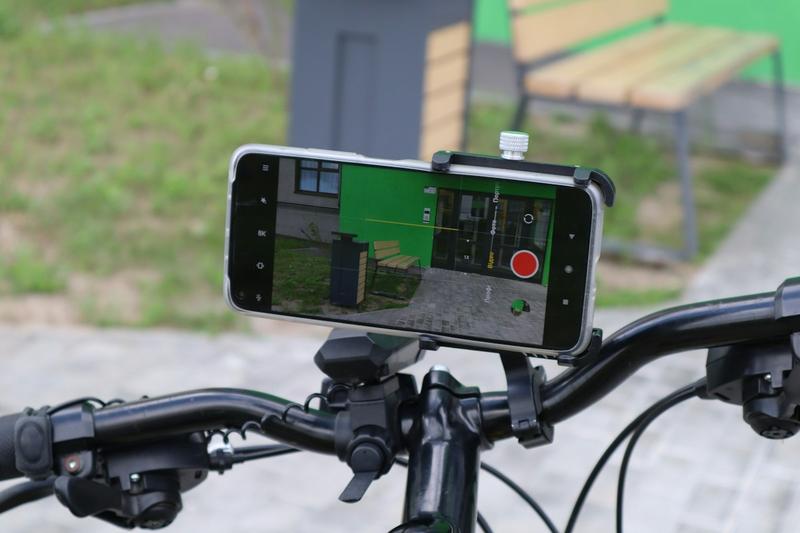
A locking mount beats a clamp — potholes shake loose anything that isn’t secured.
Building Your Kit Without Overpacking
The temptation with bike gear is to keep adding “just in case” items until the bag that was supposed to save you weight on the ride is heavier than the problem it solves. Our minimalist EDC approach applies directly here: every item earns its spot by solving a problem you’ve actually had, not one you’re imagining. A full set of hex wrenches for a bike that only needs three sizes is dead weight on every single ride.
Start with the lock, the multitool-and-patch kit, and a rear light — those three solve the failures that actually strand a commuter. Add the rest as your specific route and weather demand it. A commuter in a dry climate with a short, flat ride needs less than someone doing six miles through unpredictable weather with hills and heavy traffic. Build the kit for your commute, not for the worst-case version of someone else’s.
Frequently Asked Questions
Do I need a full bike multitool if I already carry a regular EDC multitool?
Usually not both. A bike-specific multitool with the correct Allen sizes and a chain breaker covers roadside repairs better than a general pocket tool built for opening boxes and tightening eyeglasses. Carry one or the other based on which failure you’re more likely to hit.
Is a cable lock good enough for a short commute?
No — cable locks are the lock type most commonly defeated in seconds with basic cutters, and they’re overrepresented in theft reports. A hardened U-lock through the frame and wheel is worth the extra weight even for a ten-minute stop.
What’s the single most skipped item in a bike commuter kit?
A rear light run in daylight. Most people only think of lights as a nighttime item, but daytime visibility at intersections is where a large share of bike-car collisions happen.
How much should a bike commuter EDC kit weigh?
Under two pounds for the lock, tool kit, and lights combined is a reasonable target. If your repair kit alone weighs more than a pound, you’re probably carrying tools for problems you won’t hit on a daily commute.
Sources
- Bike Index — 2025 Bicycle Theft Stats — annual theft figures and lock-effectiveness data from the UC Davis/UC Santa Barbara/Bike Index study
- The Discerning Cyclist — 8 Things Every Cyclist Should Have in Their EDC — reference for core cyclist carry items
- League of American Bicyclists — National Rates of Biking and Walking — bike commuting trend data