Commuter EDC: 8 Essentials Worth Carrying
The average American commute now runs 27.6 minutes each way, which adds up to roughly 230 hours a year spent getting to and from work.1 That’s nearly ten full days annually where your gear either earns its spot or just adds drag to your bag. Most EDC advice is written for weekend tinkerers who carry a fixed blade “just in case.” A commuter doesn’t need that. A commuter needs a kit that survives a packed subway car, a rain delay, and a dead phone at 4pm — without turning a security guard’s head.
What Actually Belongs in a Commuter EDC Kit
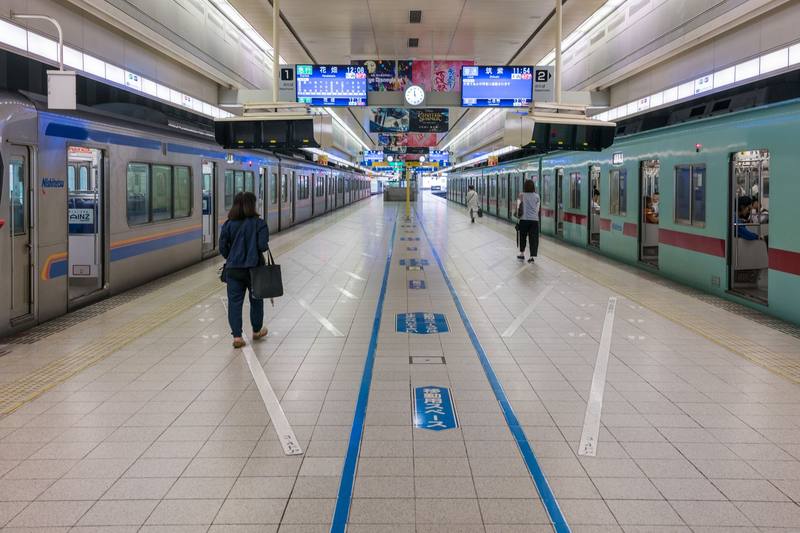
Strip a commuter EDC loadout down to first principles and it’s smaller than most gear forums suggest. You need something to pay with, something to communicate with, something to write with, and a way to stay dry. That’s four categories, not fourteen. The fifth item — a compact tool — is the one most people overthink, because it’s the one most likely to get flagged by a transit cop or an office security desk.
The mistake isn’t carrying too little. It’s carrying gear built for a different use case. A 4-ounce tactical flashlight and a full-tang fixed blade make sense for a weekend hike. On a 7:45am train, they’re just dead weight digging into your hip. Commuter EDC is about matching the kit to the actual environment: seats, turnstiles, elevators, and eight-to-ten hours away from home.
There’s also a social-friction cost most gear guides ignore. A multitool with a visible blade clipped to your belt reads differently in a client meeting than it does on a trailhead. Commuter EDC has to pass a second test that camping gear never faces: does it look reasonable next to a laptop bag on a crowded platform? Everything in this list is picked with that test in mind, not just raw utility.
The Wallet Question: Why Slim Wins on a Commute
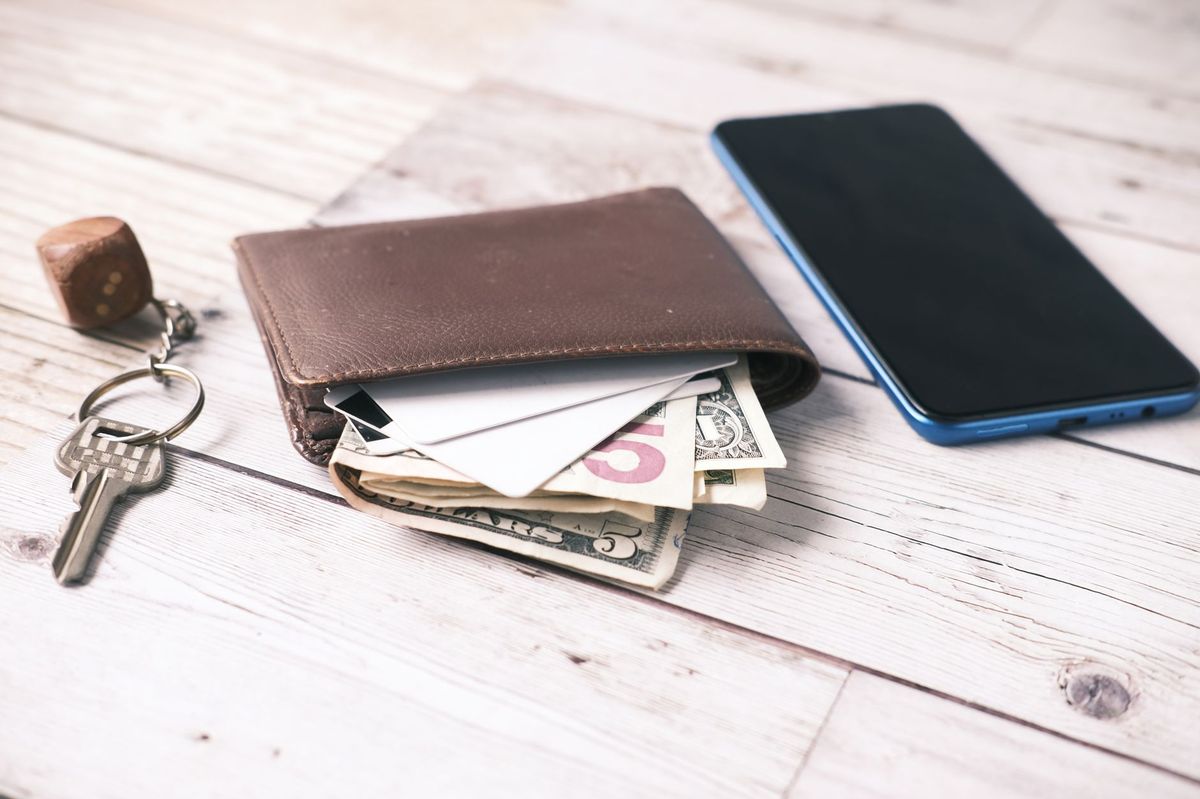
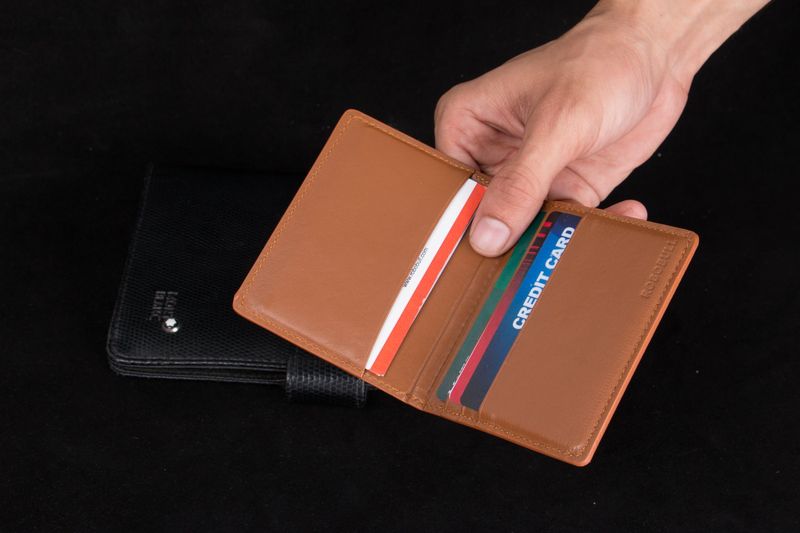
A thick bifold stuffed with receipts and loyalty cards is the single most common EDC mistake on a daily commute. It prints through a back pocket, it’s slower to dig out at a turnstile tap-point, and it’s the first thing a pickpocket on a crowded platform is trained to spot. Slim card holders solve all three problems at once — they sit flat, they’re faster to access one-handed, and they force you to actually audit which cards you use weekly versus which ones are dead weight.
We’ve made the case in detail for card holders over bifolds before, and a daily commute is exactly the scenario that tips the argument. If you ride transit, carry cash rarely, and tap to pay, a 6-card slim holder under 0.4 inches thick does everything a bifold does with half the bulk.
Keeping Your Phone Alive Through an 8-Hour Day
Your phone is your transit pass, your boarding gate, your two-factor code, and your way home if the train line goes down. A dead phone on a commute isn’t an inconvenience — it’s a logistics failure. A 10,000mAh power bank weighs about 6 ounces and delivers two full charges, which covers a long shift plus the ride home with margin to spare.
Skip the massive 26,800mAh bricks unless you’re also charging a laptop — they’re built for travel, not a daily bag. What actually matters for commuter use is a bank with pass-through charging, so you can top off the bank overnight while it’s still plugged into your phone, and a built-in cable so you’re not digging through a side pocket for a loose USB-C cord at 7am.
Battery anxiety is also why a lot of commuters quietly carry a second cable they never use. One good built-in-cable bank replaces the tangle of loose cords most bags accumulate over a year. If your commute includes a transfer or a walk between stations, a bank that lives in an outside pocket — not buried under a laptop — means you can top off while you walk instead of losing ten minutes standing at an outlet.

The One Tool Worth Carrying — and Where It’s Not Allowed
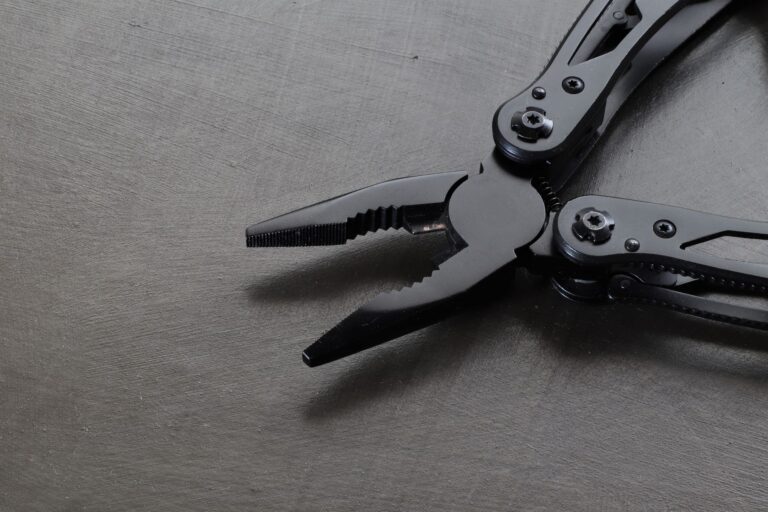
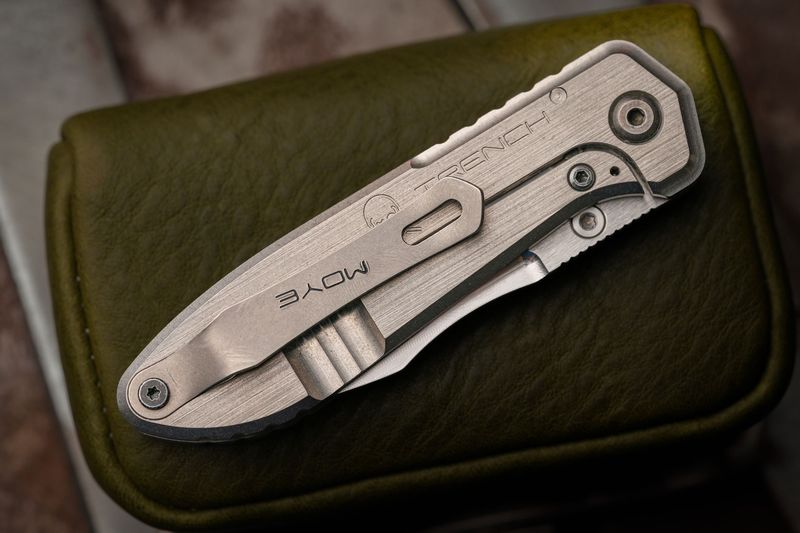
A compact folding knife or keychain multitool earns its place for the small stuff: opening a package at your desk, cutting a loose thread, breaking down a box. But a commuter EDC kit is the one context where carrying a blade can actually cost you something, because the rules aren’t consistent from one transit system to the next.
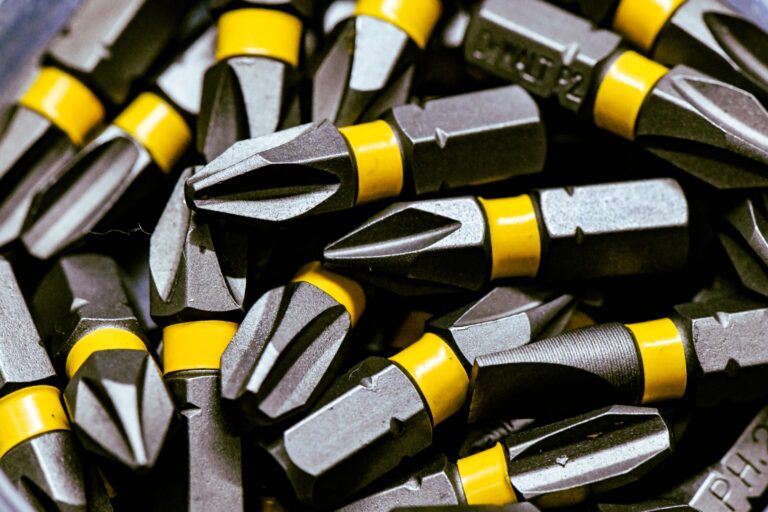
Amtrak allows folding knives under 4 inches on board, but New York City’s MTA has banned knives of any kind in the subway system for years, and Washington State’s SB 5444 bans possessing a knife at a covered transit station regardless of blade length — your 2.5-inch EDC folder becomes a problem the moment you step onto a covered bus platform.2 If your commute touches a subway, light rail, or bus terminal, check your local transit authority’s rules before you clip a knife to your pocket. A small multitool without a blade — pliers, screwdriver bits, a bottle opener — sidesteps the entire question and still handles 90% of what you’d reach for a knife to do anyway.
Weatherproofing the Walk Between Stops
Nobody plans their commute around rain until they’re standing at a bus stop in a dress shirt with no cover. A compact umbrella — the kind that collapses to 6 inches and fits in a side pocket — is worth more than almost anything else on this list on a bad-weather day, because it’s the one item with zero substitute. You can’t improvise an umbrella.
Beyond the umbrella, a packable windbreaker or light rain shell that compresses into its own pocket covers the gap between “the forecast said 20% chance” and “it’s actually pouring at 5:30pm.” Keep it in your bag year-round. The one day you leave it home is the one day you need it.

The Analog Backup: Notebook and Pen
A phone note app is fine until the battery’s at 4% and you need to jot down a gate change or a number someone just gave you. A small pocket notebook and a reliable pen cost nothing in battery life and work in the rain, on a packed train with no signal, or in a meeting where pulling out a phone reads as rude.
We’ve already broken down which pocket notebook actually survives daily carry — for a commuter, the deciding factor is usually pocket fit over page count. A notebook that doesn’t fit your coat pocket won’t get carried past week two, no matter how nice the paper is.

Bike, Train, or Car: How Your Kit Should Shift
Only about 0.54% of US commuters bike to work, but if you’re one of them, your EDC priorities flip.3 A bike commute means a bungee or clip-on light matters more than a backup battery, a bike lock replaces a chunk of your pocket budget, and your clothes need to survive sweat before they survive rain. Riders who swap a backpack for a frame bag at the first hint of a sore back usually don’t go back.
Train and bus commuters can afford to carry more without penalty — a seat means a bag doesn’t have to ride on your spine for 30 minutes straight. Car commuters have it easiest: a center console and a glovebox absorb most of what a train rider has to carry on their body, which is exactly why car-commuter EDC tends to bloat into a junk drawer on wheels if you’re not deliberate about it.
The practical test is simple: pack your bag the night before, then actually weigh it. Bike commuters who go over about 8 pounds in a backpack start feeling it in their lower back within a few weeks. Train and bus riders have more slack, but even they hit diminishing returns past a certain point — a bag that needs both hands to lift onto a luggage rack isn’t EDC anymore, it’s luggage with extra steps.

What to Cut From a Commuter Bag
Every item above assumes you’re not also hauling a laptop sleeve, a gym bag, lunch, and a backup charger for a backup charger. The honest version of commuter EDC is less about what to add and more about what to remove once the bag starts feeling heavier every week. If you haven’t touched an item in two weeks of commuting, it’s not EDC — it’s just luggage.
Our rundown on what to cut first applies directly here: duplicate chargers, a second pen you forgot about, and a multitool with eleven functions you’ve used twice are the usual offenders. A commuter bag that weighs under 3 pounds empty-of-laptop is sustainable for years. One that creeps past 5 pounds gets left at home within a month.
Frequently Asked Questions
Is it legal to carry a pocket knife on public transit?
It depends entirely on your city and transit system. Amtrak permits folding knives under 4 inches, but some city subway and bus systems ban knives outright regardless of blade length. Check your local transit authority’s weapons policy before carrying one.
What size power bank is enough for a daily commute?
A 10,000mAh bank is enough for most people — about two full phone charges. Anything larger is built for travel, not a daily train-and-desk routine, and just adds unnecessary weight.
Should I carry a knife or a multitool for commuting?
A small blade-free multitool is usually the safer, more versatile pick for transit commuters, since it avoids knife restrictions entirely while still covering most daily tasks.
How is bike-commuter EDC different from train or car EDC?
Bike commuters prioritize a light, a lock, and sweat-resistant layers over extra battery capacity, since a bike commute is shorter and more physically active than a seated train or car ride.
Sources
- Zippia — Average Commute Time Statistics (U.S. Census Bureau data) — national average one-way commute time and annual hours spent commuting.
- Artisan Cutlery — How to Carry Knives in Public Transit Systems Legally — Amtrak, NYC MTA, and Washington State transit knife regulations.
- Bloomberg — Biking to Work Isn’t Gaining Any Ground in the US — national bike-commuting share, 2019–2022.