Bit Driver or Bit Holder: How This One Feature Defines the Best Multitools Under $100
The multitool market at the sub-$100 price point is more competitive than it has ever been, but the single specification that determines whether you actually reach for the screwdriving function — or quietly stop using it — does not appear in most comparison charts. It is the difference between a bit holder and a bit driver, and it changes the torque, the grip geometry, and the tool’s usability in ways that only become obvious after a few months of daily carry. If you are evaluating the best multitools under $100, this is the question worth answering before tool count, weight, or brand loyalty.
Two Kinds of Screwdriver, One Name
Every multitool that claims to include a screwdriver ships with one of two fundamentally different mechanisms. A bit holder is a recessed socket — usually spring-loaded — that grips a standard 1/4″ hex bit. The bit lives inside the handle body, and you drive fasteners with the multitool’s closed form as the grip. It works for light work, but the driver axis sits offset from your palm centerline. Applying sustained torque means compensating with your wrist rather than driving cleanly through the bit.
A dedicated bit driver pivots out from the tool body to run inline with your grip — the same mechanical axis as a real screwdriver. When you push, you push in line with the bit. The resulting torque and feedback are substantially closer to using an actual driver. You can feel whether the bit is seated correctly, whether the fastener is turning or stripping, and whether you need to back off before damaging the head. That tactile feedback loop does not exist at the same level with a recessed holder.
Both systems accept standard 1/4″ hex bits, so the bit ecosystem is shared across both designs. The difference is entirely in orientation and handle geometry. For occasional, light fastener work, a bit holder is perfectly adequate. For regular screwdriving under any real load — automotive panels, furniture assembly, electronics work, field maintenance — the driver geometry matters more than most reviews acknowledge, and the gap shows up every single time you use it.
Leatherman Wave+ — The Reference Point
The Leatherman Wave+ ($85–99) is the benchmark against which every other multitool in this price range gets evaluated. Eighteen tools, 420HC stainless steel on both blades and most implements, spring-loaded needle-nose and regular pliers, outside-accessible knife and file, and the Leatherman 25-year warranty. If you are buying your first serious multitool and do not want to overthink it, the Wave+ is the right call — and that recommendation holds up after years of real-world use across a broad range of EDC contexts.
The bit holder on the Wave+ is the recessed-socket variety. A spring-loaded slot on the back of the closed handle accepts standard 1/4″ bits; the included double-sided bit covers flathead and Phillips. For most daily carry use — tightening a battery compartment cover, setting a hinge screw, adjusting cabinet hardware — that covers the territory and the geometry compromise is invisible. You use the tool, the screw moves, you close it and put it away.
Push into anything with real resistance — a seized machine screw, a cross-threaded panel bolt, a stripped head that needs persuasion — and the holder’s limits surface. The offset axis means your wrist is compensating rather than driving. After a few frustrating encounters with stubborn fasteners, you start reaching for a real screwdriver instead of the multitool. This is not a flaw specific to the Wave+; it is the inherent limit of the bit-holder approach at any price point. Know it going in and the Wave+ will not disappoint you. Go in expecting a screwdriver substitute and it will.
The Wave+’s case rests on its pliers. Both jaw formats are spring-loaded for one-hand deployment, the wire cutters handle everyday gauge without complaint, and the overall build quality at this price point is difficult to match. The Wave+ is a pliers tool that includes useful screwdriving capability — in that order of priority.
Shop Leatherman Wave+ on Amazon
Leatherman Charge+ — Refinement Over Revolution
The Leatherman Charge+ lands at the ceiling of the sub-$100 bracket, typically $95–115 depending on retailer and variant. The core difference from the Wave+ is not tool count — both carry 18 to 19 tools — it is the refinement of execution throughout. Tighter pivot tolerances, a more positive-retention bit holder, a liner lock on both blades that feels more deliberate, and noticeably smoother plier action overall. Holding both back to back, the Charge+ feels like a precision instrument where the Wave+ feels like a production tool. Both are excellent; the gap is real.
The bit holder on the Charge+ retains bits more positively than the Wave+ equivalent. When you are applying lateral force to a stubborn fastener, a bit that wobbles in its socket breaks the feedback loop and invites cam-out. The Charge+’s holder eliminates most of that. It is still a holder, not a driver, but it is the most capable holder implementation Leatherman builds in this price range. The TTi variant upgrades the main blade to S30V steel — a meaningful jump in edge retention over 420HC — but pushes past the $100 ceiling. For users who want the Leatherman platform and need the screwdriving function to perform at its absolute best within the holder paradigm, the standard Charge+ is the answer.
Gerber Center-Drive — The Centerline Argument
The Gerber Center-Drive (~$65–80) is the most mechanically interesting multitool at this price point for anyone who regularly uses a screwdriver. Gerber’s engineering premise is direct: the driver should sit on the handle’s centerline. When you open the Center-Drive and pivot the bit driver out, it locks inline with your grip — the same mechanical axis as any dedicated screwdriver you own. Push, and you push in line with the bit. The torque is real and direct, not routed through a compensating wrist angle.
This difference is tactile and immediate. Set a Center-Drive and a Wave+ side by side and drive the same fastener with both. With the Wave+, you are rolling your wrist slightly to maintain centerline pressure through a holder that sits offset from your grip plane. With the Center-Drive, you are just driving a screw — and you can feel whether it is seating, turning, or starting to strip. That feedback loop changes how confidently you use the tool and how much force you are willing to commit before backing off.
The tradeoffs are real and worth knowing. The Center-Drive’s pliers use a single-pivot opening rather than Leatherman’s butterfly fold, and some users find the closed grip slightly less comfortable for sustained heavy plier work. The blade steel is 7Cr17 — serviceable and resharpenable, but not as long-wearing as 420HC under regular use. Tool count sits lower than the Wave+. None of these tradeoffs matter if screwdriving is your primary use case. If it is not, the Wave+ handles a broader range of tasks within the same price bracket and does them with better-tested ergonomics.
Shop Gerber Center-Drive on Amazon
Leatherman Skeletool — Minimal, Intentional
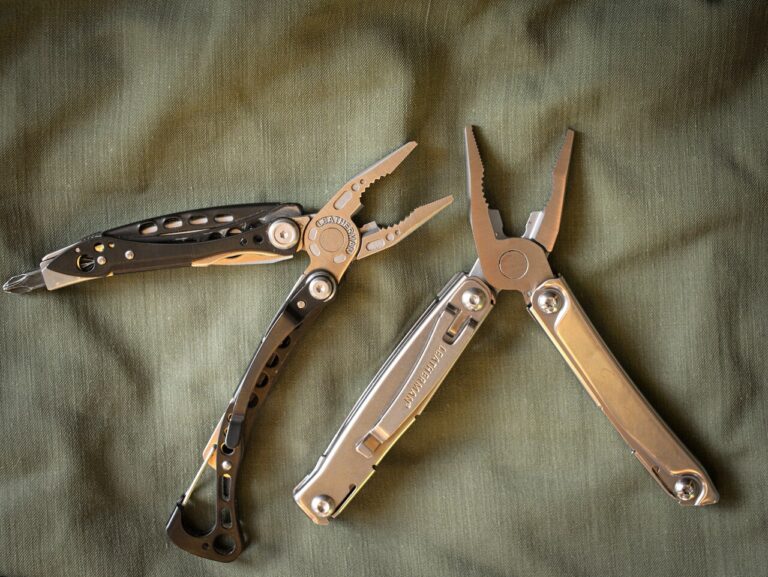
The Skeletool (~$55–70) takes the opposite approach from the feature-maximalist Wave+. Seven tools: spring-loaded pliers, a 420HC drop-point knife, a wire cutter, a carabiner clip that doubles as a bottle opener, and a four-position bit driver. No excess. Because the tool set is deliberately narrow, every included function received intentional design attention rather than being crammed into a crowded handle as an afterthought.
The bit driver uses the same recessed-holder geometry as the Wave+, but the stripped-down tool count means accessing it is faster — no hunting through nested layers to find the right implement. The carabiner clip makes the Skeletool the easiest multitool in this category to carry consistently: clip to a belt loop, bag strap, or pack zipper and forget it until you need it. Deployment is immediate. For EDC users who have decided honestly that most multitool features are tools they never reach for, the Skeletool is the right buy. The four functions you actually use most — pliers, wire cutter, knife, driver — are all present. Nothing else adds weight or friction to the kit.
Building Out the Bit System
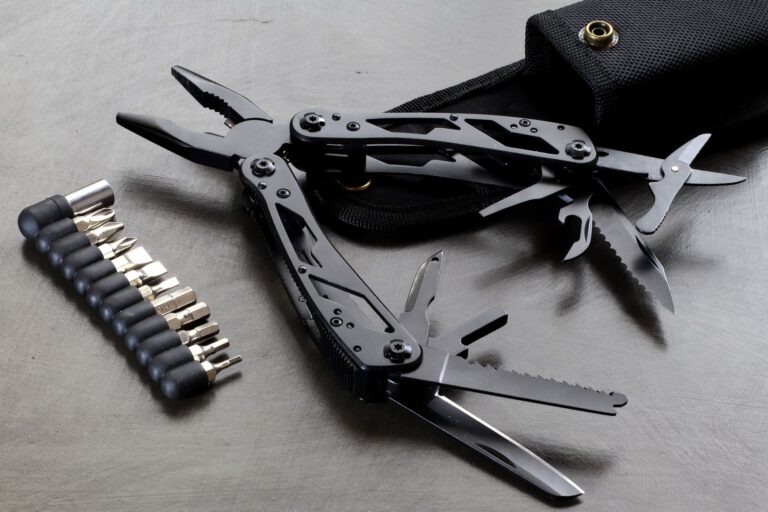
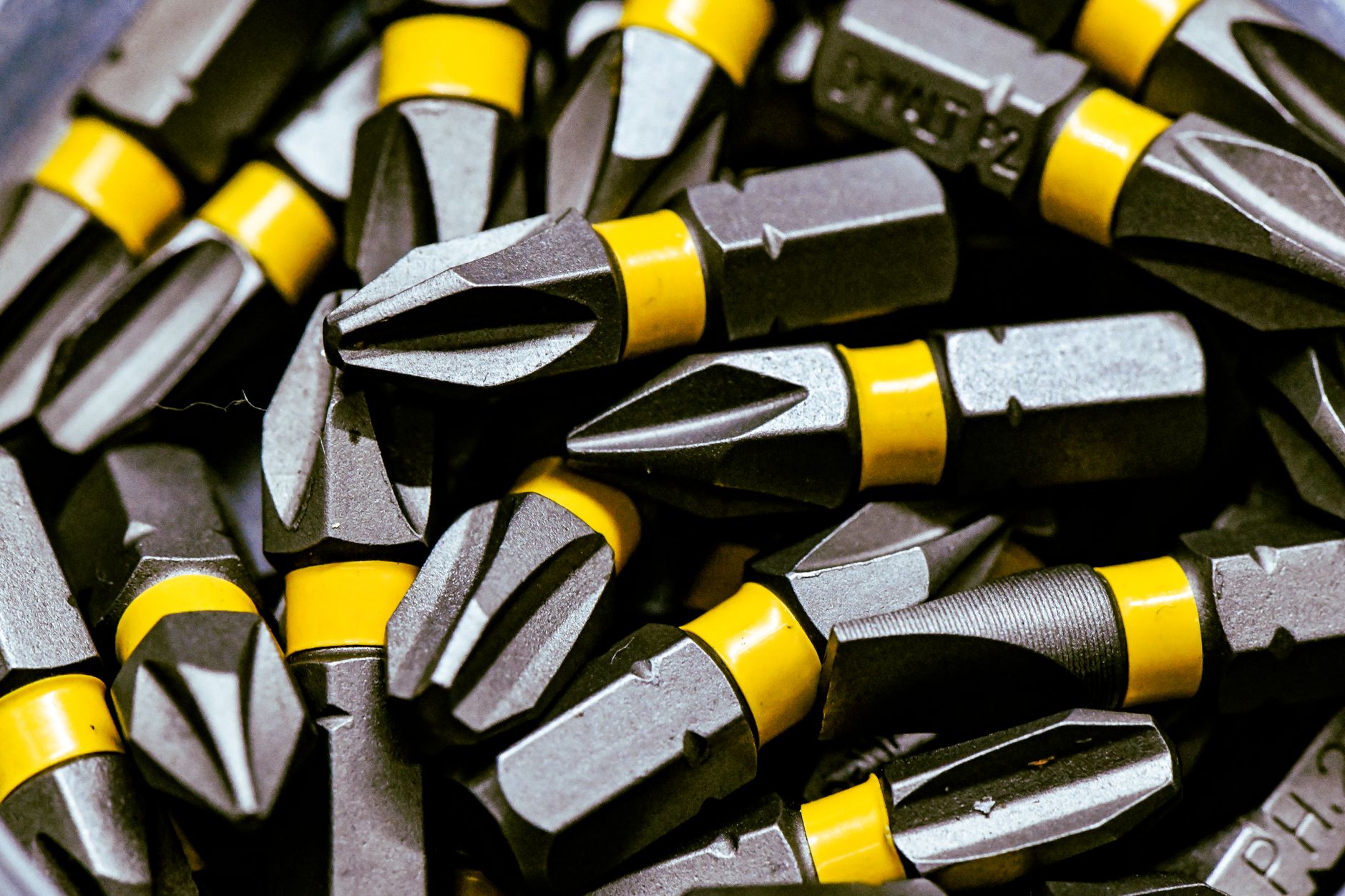
Any multitool with a bit system becomes substantially more capable when paired with an expanded bit kit. Leatherman’s 21-piece set covers Phillips #1, #2, and #3; slotted flatheads in multiple widths; hex keys from 1.5mm through 6mm; Torx T6 through T25; and square drive in two sizes. The kit collapses into a keychain-sized carrier and adds roughly 15 grams to your total load. For Wave+ and Charge+ users, this kit is the upgrade that transforms the tool from carrying one bit to carrying every fastener head you are likely to encounter in daily urban carry.
The practical daily-carry subset is narrower than the full kit. Phillips #1 and #2 handle the majority of consumer electronics and household hardware. T10 and T25 Torx cover automotive interior panels, most appliances, and the majority of power tool fasteners. A 3mm and 4mm hex handle saddle bolts, furniture assembly, and cycling hardware. Those six bits cover roughly 90% of what comes up. Start there before buying the full set — you will find out quickly whether you need the T6 and T45 or whether the core six is sufficient for your specific carry context.
For Center-Drive users, the centerline geometry makes higher-torque bits genuinely usable rather than theoretical. Square drive #3, T40, and T45 all require real force to drive — force that the offset geometry of a recessed holder makes difficult to apply cleanly without risking cam-out. The Center-Drive’s inline axis lets you commit full grip strength in line with the bit. Gerber sells its own expansion bit set compatible with the Center-Drive’s 1/4″ socket, covering the same major drive types.
When the Driver Spec Stops Mattering
Not every EDC context involves regular fastener work. If your multitool is primarily a pliers and wire-cutter tool — trail carry, vehicle emergency kit, outdoor adventure where screwdriving is rare and opportunistic — driver geometry ranks low on the priority list. A Leatherman Wingman at $35 or a Gerber Suspension NXT at $40–45 covers the basics without the cost premium of a driver-optimized design. Both include bit holders. Both handle the one-off tightening job without issue. Both free up budget for other kit items.
The driver distinction compounds in carry contexts involving regular fastener work: apartment maintenance, workshop carry, field service, van or vehicle builds, any situation where you are driving screws more than a handful of times a month. In those scenarios, the frustration of working against poor driver geometry accumulates across dozens of uses and eventually drives you toward a dedicated tool — which defeats the purpose of reaching for a multitool in the first place. Match the tool architecture to your actual use pattern before letting tool count or brand loyalty make the decision for you.
Making the Call
Evaluating the best multitools under $100 gets cleaner when you start with one honest question: how often do you drive screws, and under how much resistance? Rarely and lightly — the Leatherman Wave+ is the cleanest buy in the category. Outstanding pliers, a proven 18-tool platform, and a 25-year warranty that makes it a keep-forever tool. The Skeletool earns its place for carry-first users who want the four essential functions with nothing extra added to the weight or the profile.
Regularly and under real load — the Gerber Center-Drive is the honest pick. The centerline driver changes what the screwdriving function is capable of, and that difference compounds across months of use into a qualitative shift in how much you trust the tool. The Leatherman Charge+ sits between camps: still a holder, not a driver, but the most refined holder Leatherman builds at this price point — tighter tolerances, better bit retention, and a build quality that justifies the price premium over the Wave+ for users who want the Leatherman platform performing at its ceiling.
The bit driver versus bit holder question does not appear on most comparison charts. It should be the first question you ask.
Shop Leatherman Charge+ on Amazon