Plier-Based vs Knife-Based Multitools: The Architecture Decision That Actually Matters
Every multitool makes a design decision before you even handle it in a store. Not about tool count, or blade steel, or whether the bit driver locks. The first decision happens at the frame level — does this tool pivot around its pliers, or is the blade the center of gravity? That architectural choice determines how the tool sits in your pocket, what you reach for first when something needs fixing, and what it genuinely cannot do no matter how many tools the spec sheet lists. Plier-based multitools and knife-based multitools are not competing points on the same scale. They are built around different primary jobs, and buying the wrong architecture for your actual use means the tool comes out, fails the task, and goes back in your pocket frustrated every time.
What Plier-Based Architecture Actually Means
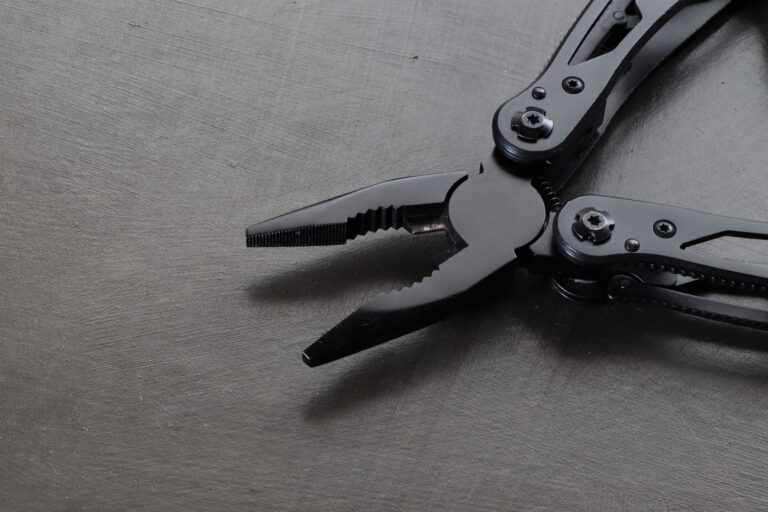
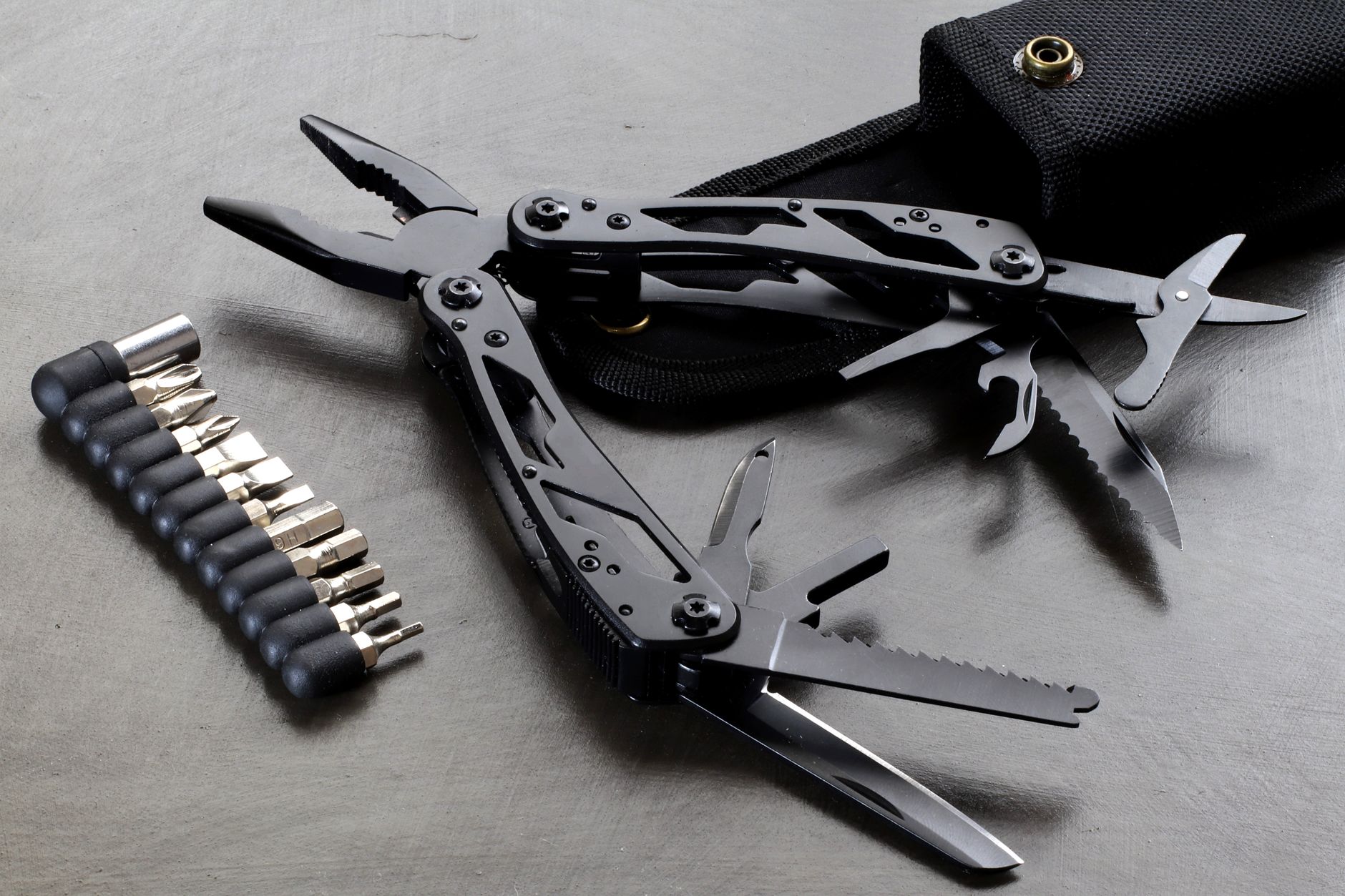
Open a Leatherman Wave+ from the spine and the first thing your hand encounters is a pair of needle-nose pliers with integrated wire cutters. The whole tool unfolds around that jaw. The handles — where the blade, file, can opener, bit driver, scissors, and everything else live — are literally the structural wrapper around the pliers. That is the plier-first design: the pliers are the load-bearing feature, and the rest of the tool count extends out from them like branches from a trunk.
This architecture has direct physical consequences. Plier-based multitools are wider, thicker, and heavier than knife-first designs, almost without exception. The Wave+ weighs 8.5 oz. The Leatherman Surge — same architecture, larger jaw — hits 12.5 oz. These tools carry in a belt sheath or a work bag. Anyone expecting a Surge to disappear in a front pocket the way a folding knife does has misread the design intent, and no amount of EDC conviction changes the physics of what two steel handles wrapped around a jaw mechanism will weigh.
What you get in exchange is mechanical capability that a blade-first tool cannot replicate. Spring-loaded, replaceable-jaw pliers can grab stiff wire, pull a corroded cotter pin, crimp a battery terminal, provide purchase where bare hands slip, and lock onto a workpiece under actual load. The wire cutters on a Surge handle 12-gauge copper cleanly. The bit driver on a Wave+ exits on the center axis of the grip, which means real torque transfer — not the fiddly stub-driver experience of a side-exit secondary tool. If your hands regularly interact with mechanical systems, wiring, conduit, plumbing fittings, or automotive components, the plier architecture is not a nice-to-have. It is why the tool exists.
What Knife-Based Architecture Actually Means
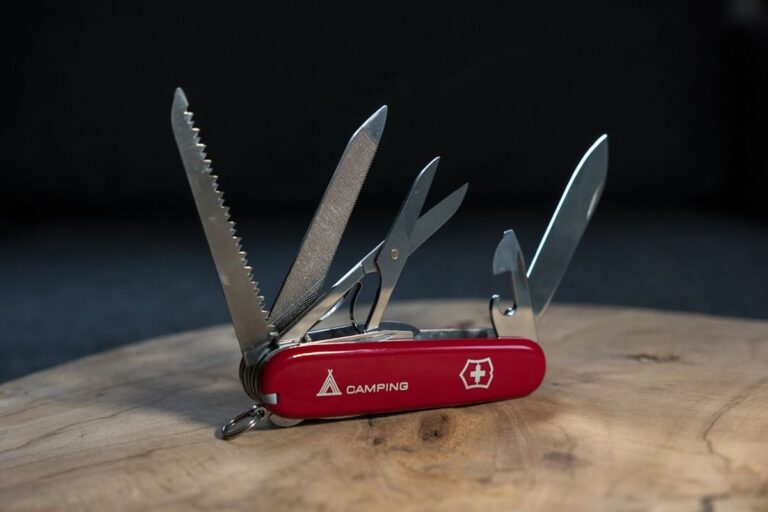
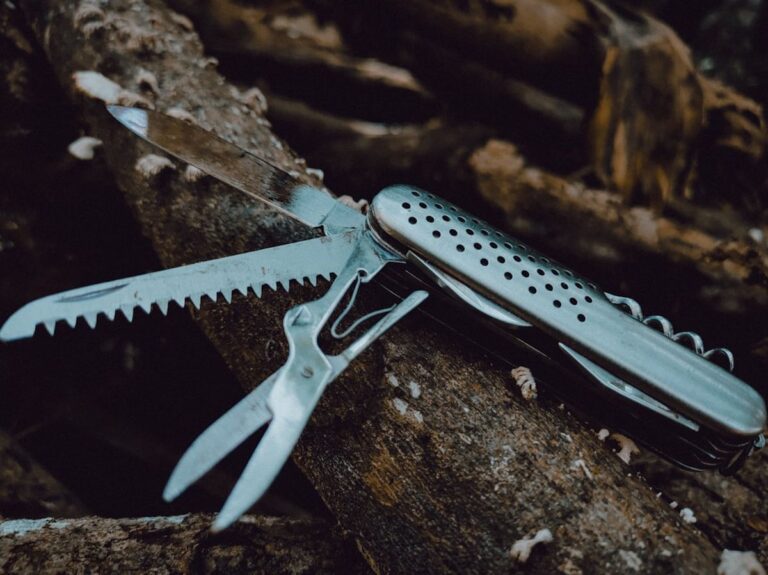
The Victorinox SwissChamp holds 33 tools and weighs 6.6 oz. Its chassis is organized around a blade that folds out from one end of the body, with additional tools fanning out from both sides. There are no pliers at the structural center. A small pair was added to mid-range Swiss Army knives in the mid-1990s — partly in response to Leatherman’s commercial success — but on any Swiss Army knife they function as a secondary detail tool, not the mechanical foundation of the package. The frame is thinner. The hand feel is closer to a knife than a plier handle. The tool slides into a pocket without the bulk penalty of the plier-first design.
Knife-first multitools carry differently because they are shaped differently. A Victorinox Cadet weighs 1.4 oz and lays flat in a front pocket with no visible presence. The Huntsman sits at 2.7 oz and still manages to disappear in daily carry. For anyone whose use case is light and varied — cutting cord, opening packages, tightening a loose screw, popping a bottle cap at a campsite — the Swiss Army architecture offers flexibility across many small tasks in a package light enough that it is always with you rather than left in the truck.
The limitation surfaces the moment a job requires real grip force. The pliers on a SwissChamp are small, flat-nose, and designed for finesse rather than load. You can use them to hold a small object or bend thin wire. You cannot use them to grip a rusted fitting, crimp a wire terminal under tension, or pull a stuck fastener. That is not a criticism — it is architectural honesty. The Swiss Army knife was not designed to be a Leatherman. Its pliers are a convenience feature on a tool whose primary job is the blade and the detail tools surrounding it.
Shop Leatherman Wave+ on Amazon
The Same Day, Two Different Outcomes
Run both architectures through the same set of real tasks and the gap becomes concrete fast. Start with a basic wiring job — stripping 14-gauge wire, twisting terminals, running a screw home on a terminal block. With a Wave+: the pliers grip the wire while the integrated stripper notches the insulation cleanly without cutting through. The wire cutters trim the excess flush. The bit driver, sitting straight in the handle, turns the screw with actual torque behind it. The whole task happens in one tool without awkward repositioning. With a knife-first tool, the blade can score the insulation and the screwdriver stub can turn the screw, but there is nothing to grip the wire under any tension, and the screwdriver is a side-exiting tool angled away from your wrist rather than in line with it. The architecture does not fit the job.
Reverse the scenario. You are breaking down camp, cutting paracord, slicing open packaging, trimming a loose strap. Knife-first: pull the blade, one stroke, done — the tool is in your hand in under two seconds and the blade is immediately accessible from the outside of the body. On a Surge, the main blade lives inside the frame and requires opening the tool first with two hands before the blade comes out. The Wave+ introduced an outside-accessible blade in later configurations, but even then the deployment is not as instinctive as a single knife fold-out. For rapid, single-cut tasks where speed matters, the Swiss Army blade is genuinely faster to put on steel.
Close-tolerance screwwork tells the same story from a different angle. A SwissChamp carries a dedicated size 0 Phillips driver optimized for small fasteners on electronics and eyeglass frames. The Wave+ bit driver uses interchangeable bits and is proportioned for #1 and #2 Phillips screws — functional, but the SwissChamp’s dedicated small driver is more ergonomic for surface-mount or optical fasteners where the bit driver’s size becomes a liability. The knife-first architecture’s advantage is breadth across light tasks. The plier-first architecture’s advantage is depth and force on heavy ones.
Carry Weight Is Not a Spec Sheet Number
Eight ounces looks manageable on a product page. After six hours with it on your hip, it is a different calculation. Plier-based tools like the Wave+ and Surge are belt-carry and bag-carry tools, and approaching them honestly on those terms is part of making the right buy. Tradespeople who reach for these multitools dozens of times a day carry them in a sheath on a work belt where the weight distributes naturally and the trade-off is obvious. Office workers and light-use daily carriers who buy a Surge because it looks serious, then forget to bring it because it is too heavy, are underutilizing the architecture while ignoring the knife-first tool that would actually be in their pocket every day.
The Leatherman Skeletool represents an honest reckoning with this tension. It keeps the pliers and wire cutters from the plier-based architecture, adds a liner-lock blade with one-hand opening, and strips out the file, can opener, and most of the secondary tools. The result is 5 oz and a clip-to-pocket profile closer to a folding knife than a full-frame multitool. That is a deliberate trade: real mechanical capability from the pliers, better carry than the Wave+ or Surge, and a tool count that drops to six functions. If you never use the can opener or scissors, the Skeletool is a genuine hybrid solution. If you depend on the full tool suite, it is not the answer.
Shop Victorinox SwissChamp on Amazon
What the Gerber Center-Drive Reveals About Plier Architecture Variants
The Gerber Center-Drive is worth examining as an architectural variant within the plier-first family because it makes visible something the Wave+ design accepts as a compromise. It keeps the standard jaw-pivot plier structure but repositions the bit driver so it exits from the center of the handle on a straight line rather than folding out at a side angle. That means the screwdriver sits on the same axis as your wrist — the way a real screwdriver works — and you are driving in a straight line rather than compensating for the angle of a side-exit tool. For anyone who regularly runs screws with a multitool rather than just finger-tightening the occasional terminal, this matters in practice. Torque does not translate as efficiently through an angled wrist, and the Center-Drive closes that gap inside the plier-based form factor.
The Center-Drive weighs 8 oz and carries in a sheath, which puts it squarely in the same use case as the Wave+ and Surge. It is not trying to compete on carry comfort or pocket presence. It is trying to be the better plier-based multitool for users whose primary secondary function after the pliers themselves is driving fasteners. That specialization is exactly the kind of architecture-level thinking that separates serious multitool choices from general spec-sheet comparisons.
Matching Architecture to How You Actually Work
The decision between plier-based and knife-based multitools is not about which design is objectively better. It is about which architecture matches the mechanical reality of your actual day. If you regularly work with wire, fasteners, conduit, or anything that requires a physical grip under load, the plier-based architecture is the correct answer and the weight is the price of the capability you need. Buy the Wave+ or Surge, put it on your belt, and stop expecting it to pocket-carry like a folding knife. If your multitool use is occasional, varied, and weighted toward cutting tasks, small screwwork, and general utility, the knife-first design gives you something light enough to carry every single day — and a tool that is always with you outperforms a better tool that is always in your truck.
The mistake that burns people is buying on the wrong criterion. A Surge because it looks more capable — then never using the pliers, resenting the weight, and eventually leaving it on the workbench. Or a SwissChamp because it is lighter — then hitting the wall every time a real fastener or stuck fitting shows up and there is nothing in your hand with enough grip to move it. The architecture is the feature. Read what the design was actually built to do before you commit to it.
Shop Gerber Center-Drive on Amazon