What Your $100 Gets You in a Multitool: Pliers, Steel, and the Brands That Actually Deliver
The multitool market is a graveyard of good intentions. Hundreds of tools flood Amazon every year, most of them built to survive a photo shoot and nothing longer. But at the sub-$100 price point, something real happens: a handful of tools from Leatherman, Gerber, and a few others cross into genuinely daily-carry territory. The problem is sorting them from the noise, because at this price, marketing budgets and actual engineering quality don’t always move together.
What follows is a breakdown of how to evaluate what you’re looking at — and which specific tools under $100 currently pass the bar for real-world EDC. No fluff. Just specs, real-world context, and what matters when you’re spending under a hundred bucks on something you’ll reach for every day.
The Pliers Define Everything
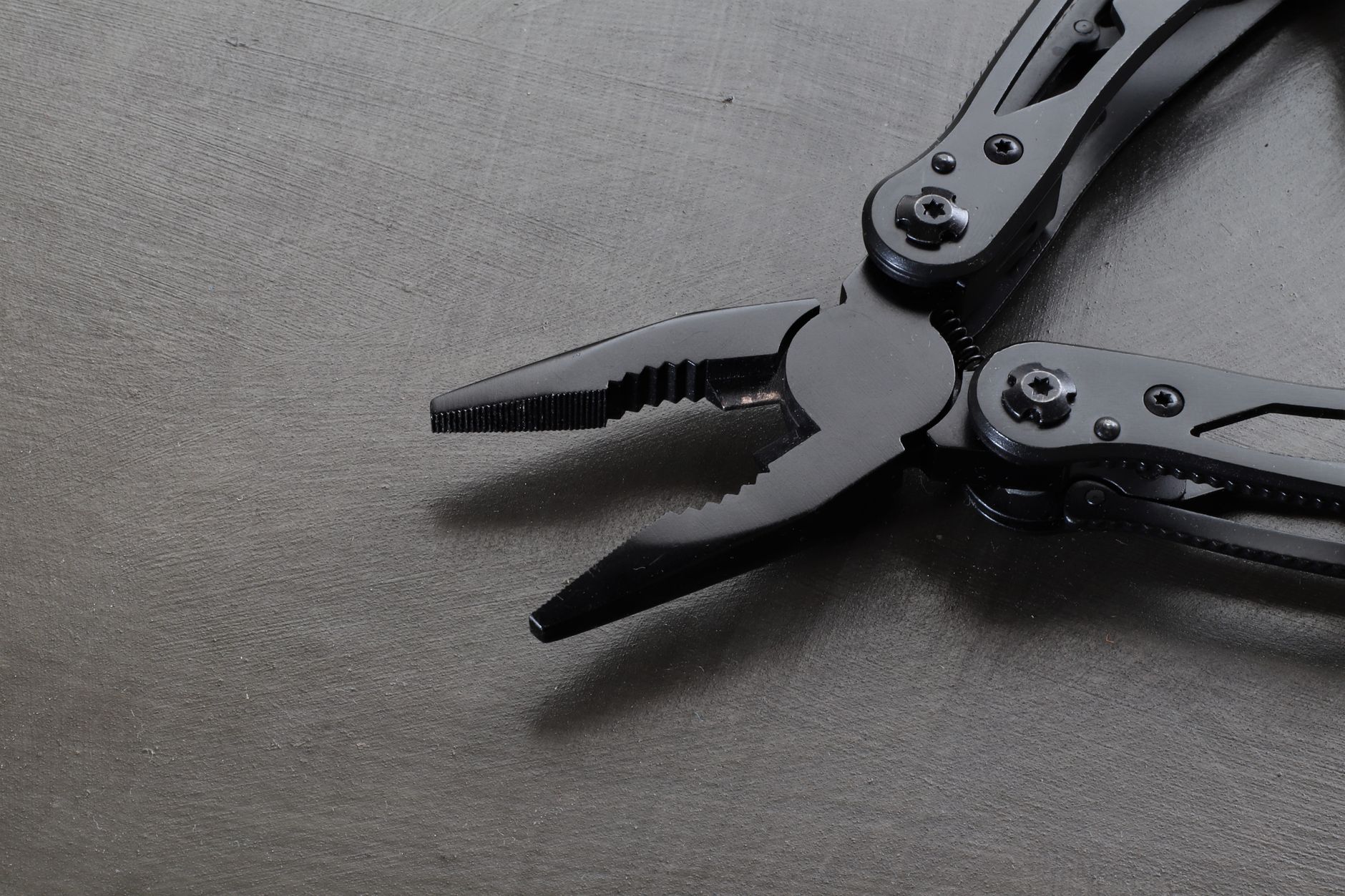
The pliers are the heart of any multitool. If a company cuts corners here, they cut corners everywhere. When you’re evaluating a tool under $100, open the pliers and look at three things: jaw geometry, spring return, and wire cutter placement.
Jaw geometry matters because most real-world tasks that require pliers happen in tight spaces. A long, gradual taper to the needle-nose is more useful than a blunt jaw with a sharp nose bolted on as an afterthought. The Leatherman Wingman gets this right for around $40 — the jaw profile transitions continuously rather than creating a dead zone between the regular and needle-nose sections. The Gerber Suspension NXT, at a similar price, gets this wrong. The needle-nose feels grafted on rather than designed in, and that matters the moment you’re trying to grip a fastener in a confined space.
Spring return is non-negotiable for a daily carry tool. Opening the pliers one-handed while holding something in place requires the jaws to spring back reliably. Cheap spring steel fails or goes limp over months of use. On the Wingman and the Leatherman Rebar, spring return is crisp out of the box and stays that way. On no-name tools, it tends to soften within six months of regular use — exactly when you’ve stopped thinking to check it.
Wire cutter placement is a quality tell almost nobody discusses. On well-engineered tools, the cutters sit near the pivot where mechanical advantage peaks. On cheaper tools, they’re pushed toward the jaw tips where they chew wire rather than shear it. If the cutters don’t feel clean and positive on the first snip at a shop, they won’t improve with time.
The Blade: What Steel You’re Actually Getting at This Price
At under $100, you’re typically looking at 420HC, 154CM, or a proprietary alloy. Each has a different edge retention and sharpenability profile, and which one matters more depends entirely on how you use the blade.
The Leatherman Wingman runs 420HC, which is on the softer end of the spectrum. It dulls faster than D2 or 154CM, but it’s trivially easy to touch up in the field — two or three strokes on a ceramic rod and you’re back. If your blade use covers cutting rope, cardboard, food packaging, and zip ties — which accounts for the vast majority of actual EDC blade work — 420HC is a non-issue. The frustration only starts if you’re doing sustained cutting or expect a working edge to last weeks without maintenance.
The Leatherman Skeletool CX, which runs $70–80, steps up to 154CM on the blade. That’s a meaningful upgrade: better corrosion resistance than 440C, better edge retention than 420HC, and it takes a finer working bevel. If blade performance matters more to you than raw tool count, this is part of where the price difference goes. The blade on the Skeletool CX also deploys via a thumb cutout rather than a stud, which some users find quicker when wearing gloves.
One practical check before buying: is the blade accessible without fully opening the handles? On the Wingman and the Leatherman OHT, the blade deploys directly from the closed position via an outside-accessible cutout. On many cheaper tools, you split the handles first, which adds a step and defeats the purpose for quick one-handed tasks. Outside blade deployment correlates strongly with better-engineered tools at this price point.
The Driver Problem — and the Tool That Actually Solved It
Bit drivers on multitools have historically been the weakest link in the category. The standard approach — a flathead screwdriver machined from the same spring-steel as the handle liner — works for assembling flatpack furniture and that’s about it. Too flexible for real torque, often too thick for recessed fasteners, and it doesn’t lock into a position that lets you drive anything with authority.
Gerber addressed this directly with the Center-Drive, which retails in the $75–90 range. The key innovation is a center-axis bit driver: instead of sitting on the outside edge of the handle, the driver runs through the centerline of the tool. Torque is applied inline with the axis of rotation — like a real screwdriver — rather than at a lateral angle. The bit holder accepts standard 1/4-inch hex bits, so you can carry Torx, Phillips, or hex without buying a proprietary accessory kit. On a traditional multitool, the screwdriver is the last implement you’d reach for. On the Center-Drive, it’s frequently the first.
The Leatherman Skeletool also runs a 1/4-inch hex bit driver, without the center-axis advantage. It still substantially outperforms a fixed-blade flathead. If you do mechanical work, appliance maintenance, or any regular disassembly — the kind of work where stripped heads and awkward angles are the enemy — a standard-bit-compatible driver at this price is genuinely worth the additional spend over a base Wingman.
Shop the Gerber Center-Drive on Amazon
Tool Count vs. Tool Access: Where the Spec Sheet Lies
The spec sheet is where multitool marketing does its best misleading. A 21-tool multitool sounds like better value than a 7-tool multitool. But if 14 of those implements are buried inside the handles and require two hands and a thumbnail to deploy, they don’t exist in the field. They’re marketing checkboxes, not working tools.
Leatherman built the Skeletool around this problem. Seven tools, but five of them — pliers, wire cutters, knife, carabiner clip, bit driver — are accessible without fully opening the handles. That’s a more practically useful tool than a heavily featured cheap multitool where every implement is locked inside a handle you have to set something else down to open. The Skeletool won’t do everything a Wave+ will, but the tools it has are always reachable.
The Wingman sits between these extremes. It’s a full-size tool with around 14 implements, and it uses an outside-accessible blade design that keeps the most-used tools reachable without full handle deployment. For $40–50, it’s the best balance of tool count and accessibility in the category. For someone who wants a do-everything tool and doesn’t need the driver precision of the Center-Drive or the minimalist carry of the Skeletool, the Wingman is typically the answer.
Before buying any multitool, map out the three implements you reach for most and verify where they live. A can opener buried inside the handle is useless in a jacket pocket. Scissors that require two hands to deploy get left at home. Accessibility isn’t a premium feature — it’s what determines whether a tool actually gets used.
Shop the Leatherman Wingman on Amazon
Carry Format: Size, Weight, and Where the Tool Actually Lives
How a multitool carries is nearly as important as what it does. Most full-size tools in this category — the Wingman, Rebar, and OHT — run 6–7 ounces and are designed to live in a belt pouch or a bag pocket, not a jeans pocket. That’s a legitimate carry method: a good nylon sheath on your belt keeps the tool accessible without bulk in your pants. Know that going in rather than discovering it after you’ve ordered.
The Skeletool is the exception. At 5 ounces with a built-in carabiner clip, it’s designed to hang from a belt loop or bag strap without a dedicated pouch. The profile is slim enough that it disappears on the hip. For people who want a multitool on their person every day without committing to a belt pouch, this is the most realistic option in the sub-$100 Leatherman lineup.
The Gerber Center-Drive is a work-site tool in terms of carry format. Heavier and wider than the Leatherman options, and the included nylon sheath is solid but occupies real belt real estate. It’s not a subtle daily carry — if you mostly use a multitool at the work site, in the shop, or in a work vehicle, that’s a non-issue. If you want it in a front jeans pocket at the office, it’s the wrong tool.
What to Pass On
Chinese no-name multitools — including the ones that appear visually identical to Leatherman products right down to the handle profile — consistently fail at the spring steel. Liners flex, locking mechanisms run sloppy out of the box, and blade steel won’t hold an edge past the first few real uses. The gap between a $15 Amazon special and a $45 Leatherman Wingman isn’t fit and finish or branding. It’s manufacturing tolerance and material specification throughout every component of the tool.
The SOG PowerAssist has a vocal fan base, but the compound leverage mechanism adds bulk and complexity without meaningfully improving real-world performance for most EDC users. As a shop tool it’s fine; as a daily carry it’s overbuilt for the tasks that actually come up. If you’re set on SOG, the PowerAccess Deluxe is a better value in their lineup.
Outdoor-general-brand multitools from mass retailers — Ozark Trail, Sheffield, and similar — are built to a retail price point, not a performance standard. Blade steel is soft, pliers run loose from the factory, and the failure modes are exactly the ones that matter: handles that develop slop, locks that don’t seat cleanly, springs that give up. None of that is acceptable in a tool you might actually need to do work with.
Shop the Leatherman Skeletool CX on Amazon
Making the Call
Three questions cut through most of the noise: What do you actually use a multitool for? Where does it live when you carry it? And how much do you need from the driver?
If you reach for a multitool throughout the day for general light tasks — cutting, gripping, stripping wire, tightening the occasional loose screw — the Wingman at $40–45 covers everything and covers it well. The pliers are solid, the blade is easy to maintain, and Leatherman’s 25-year warranty means you won’t be replacing it when it sees hard use. It’s the default answer for a reason.
If you carry minimally and want one tool on your person without a dedicated pouch, the Skeletool’s size, weight, carabiner clip, and 154CM blade make it the rational choice. You give up some tool count. You gain a tool that’s actually with you five days a week instead of sitting in the bag you left at home.
If you turn screws regularly — mechanical work, appliance repair, furniture assembly, anything that involves hex bits and real torque — the Gerber Center-Drive’s center-axis bit driver is categorically better than anything else in this price bracket. It’s heavier and less elegant for daily pocket carry, but for a work bag or shop bench it’s the right call.
The $100 ceiling is not a quality ceiling. It’s a features ceiling. Past $100, you start getting better handle materials, premium blade steels, and tools like the Leatherman Wave+ with fully outside-accessible deployment on every implement. Under $100, you’re still getting functionally excellent tools from the brands that actually invest in their manufacturing. The Wingman, Skeletool CX, and Center-Drive all qualify. Most of what sits between them on a search results page doesn’t.