The Multitool Frame Is the Product: Choosing Sub-$100 by Platform, Not Tool Count
The problem with shopping for multitools in the sub-$100 range isn’t the options—it’s how buyers evaluate them. Most people count tools. Twenty-one tools sounds better than fourteen, even when those extra seven are redundant bottle openers and serrations nobody touches. The truth is that a multitool is a platform, not a collection, and the platform determines everything: how the tool opens, how the pliers feel under load, whether the blade deploys one-handed, and how the whole thing holds up over a decade of daily carry. At sub-$100 you have real options from builders who have been doing this for thirty years. What you need is a framework for choosing one.
Start With the Pliers, Not the Tool List
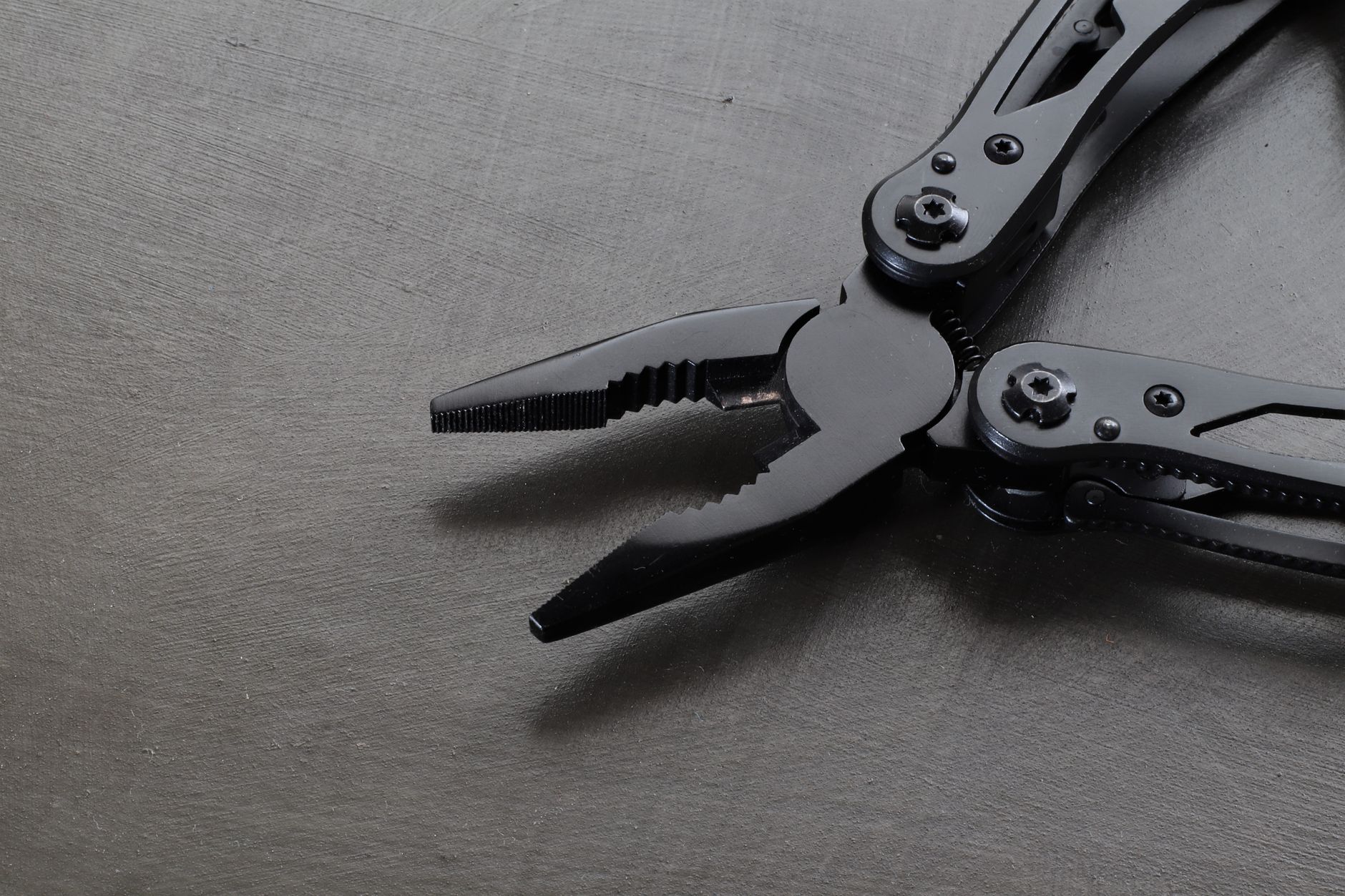
The pliers are the load-bearing reason anyone buys a full-size multitool over a Swiss Army knife. They’re what you reach for when the job requires real grip—clamping, pulling wire, crimping, bending—and the plier quality is the single clearest signal of a multitool’s overall build standard. Needle-nose jaws should close cleanly with no play, and the cutting edge inside the jaw should be sharp out of the box and re-sharpenable over time without special tooling.
At sub-$100, Leatherman’s 420HC stainless on the Wingman and Rebar is the category baseline. Both close without rattle, both feature dedicated wire cutters designed as replaceable inserts—a feature that matters more than it sounds when you’re doing repetitive electrical work. The Rebar’s longer jaw adds reach for automotive and conduit work. But there’s texture in the comparison: the Rebar’s jaw feels stiffer out of the box, requiring break-in before it moves freely. The Wingman’s spring-loaded handles mean the pliers open and close faster for one-handed work, but the snap-lock mechanism requires a deliberate stroke to engage.
Victorinox’s SwissTool sits near the top of this price range at roughly $85–$90 and approaches the plier question with a different philosophy. The entire handle body is the tool housing, and the pliers fold out through a locking mechanism that holds rigid under significant load. Jaw quality is excellent—Swiss-made tolerances show up as smooth, tight operation that doesn’t develop slop after years of use. The wire cutter is precise and flush-cutting close to the jaw. If plier quality is the primary specification you’re optimizing for, the SwissTool earns its price in this tier.
Frame Architecture Changes Everything
Once you accept that pliers come first, the next question is how the multitool organizes everything else around them. Two dominant frame architectures exist in the sub-$100 market: the plier-forward full-size, where all tools fold into the handles, and the hybrid design, where certain tools—usually the blade—are accessible from the outside without opening the plier handles first.
The Leatherman Rebar is the cleanest example of plier-forward construction available under $100. Every tool—both blades, the saw, the can opener, the screwdrivers—lives inside the handles. You open the handles, select the tool, lock it open, use it, fold it back, close the handles. That’s the workflow. It’s slower for knife-first tasks, but the tool housing is more robust because there are no exterior pivot points to wear loose. The Rebar runs around $60–$65, ships with a nylon belt sheath, and weighs 6.7 oz. It’s the right spec for field work, trades, or anyone whose first reach is for pliers.
Contrast that with the Leatherman Skeletool, which runs a completely different architecture. The Skeletool strips the tool count to seven: pliers, wire cutter, knife, bit driver, carabiner clip, and a bottle opener integrated into the clip. The blade deploys from the outside, one-handed, with a flipper tab that works cleanly even with work gloves on. At 5 oz. with aluminum handles and stainless liners, the Skeletool is measurably lighter than any full-size Leatherman. Clipped to a front pocket it disappears into jeans without the bulk of a belt sheath, which is not something you can say about any other Leatherman at this price.
The tradeoff is real and worth naming: seven tools limits you. The Skeletool has no saw, no scissors, no can opener, no awl, no file. For a job site or a field carry bag, you’ll hit those gaps inside a week. For an office EDC user who needs pliers occasionally and the blade regularly, the Skeletool is a more honest carry than a 21-tool unit that’s mostly dead weight. Know which user you are before you buy either one.
Shop Leatherman Skeletool on Amazon
The Case for Gerber’s Center-Drive
Gerber’s Center-Drive, sitting at around $85–$90, offers something genuinely unique at this price point: a center-axis bit driver that aligns the driving force directly through the plier handle axis. Every other multitool places the driver off-center because of how the tools fold into the handles—the Center-Drive’s patented design corrects that misalignment. In practice it drives screws faster and transmits more torque than any other sub-$100 multitool when you’re working a stubborn fastener under real load.
The pliers open from the exterior on the Center-Drive—a faster deploy for gripping tasks than a traditional fold-open plier-forward design. The blade is also outside-accessible and locks open. The overall build quality is solid, though fit and finish don’t quite reach Leatherman or Victorinox tolerances—there’s slightly more play in the tool pivots, and the 420HC blade steel runs at a lower hardness spec than what Leatherman achieves with the same steel designation. For screwdriver-intensive work—mechanics, electronics, furniture assembly—the Center-Drive earns its position at the top of this price tier. For cutting tasks, the Leatherman options lead.
Shop Gerber Center-Drive on Amazon
Steel Quality and the Blade Question Under $100
The blade steel conversation matters differently on a multitool than on a dedicated EDC knife. The blade is one of many tools, so you’re not optimizing it in isolation—you’re accepting that it will be a working blade tuned for durability and easy maintenance, not a high-performance slicer. At sub-$100, 420HC stainless is the category standard across Leatherman, Gerber, and SOG. It resists corrosion well, sharpens easily with basic equipment, and holds an edge adequately for the cutting tasks a multitool actually sees.
Where the variation lives is in the heat treatment, not the steel designation. Leatherman heat-treats 420HC to their own spec, which consistently outperforms generic 420HC—the Rebar and Wave+ blades stay sharper longer than comparable Gerber or SOG blades carrying the same steel name on the box. The Wave+ at just under $100 represents the highest blade-quality ceiling in this price range: the 420HC is heat-treated harder than on the Wingman or Rebar, and the optional serrated edge handles rope and webbing without degrading the plain edge section. If blade performance matters to your decision, the Wave+ is where this tier peaks.
Rebar vs. Wingman: When the Frame Upgrade Pays Off
The Wingman (around $40) and Rebar (around $65) look nearly identical on spec sheets—same jaw style, same tool set, same general dimensions. The difference is in the frame: the Rebar uses full stainless handles instead of the Wingman’s stainless-inlay aluminum, adds replaceable wire cutters, and builds to tighter tolerances overall. The Wingman’s spring-loaded handle mechanism is actually more convenient for repetitive plier work, but the Rebar’s all-steel frame means less flex under real load and slower development of handle play over years of hard use. If you’re using the pliers for anything beyond light occasional tasks—automotive wire work, field repairs, anything requiring sustained grip force—the Rebar is where the $25 upgrade earns itself back.
The Tools That Actually Get Used
Every sub-$100 multitool review focuses on the tools included. The more useful audit is which tools see regular use. After a year of daily carry, most users settle into three to five tools from their multitool’s full roster: the pliers, the blade, one screwdriver orientation, and sometimes the scissors or saw. The rest—the can opener, the file, the awl, the wire stripper—see occasional use at best and often go years between touches.
This should change how you evaluate tool count. A 21-tool multitool isn’t more useful than a 14-tool unit unless those extra seven tools fill specific gaps in your actual workflow. The better question is whether this platform has the four or five things you genuinely need, and whether those tools are well-executed within the design. The Leatherman Rebar covers every base most users hit without the weight penalty of a premium Wave+. The Skeletool covers a narrower set but executes each remaining tool more cleanly, precisely because the frame wasn’t forced to accommodate fifteen others.
Carry Weight and Method: The Spec That Decides Daily Use
A tool that sits in a junk drawer isn’t an EDC multitool. Carry method is where sub-$100 options diverge more than any other spec. The Leatherman Rebar ships with a nylon belt sheath that works for work shirts and cargo pants, but at 6.7 oz. it’s genuinely too heavy for comfortable front-pocket carry. The Skeletool’s integrated pocket clip works on denim, and at 5 oz. it disappears there without friction. The Wingman at 6.7 oz. runs heavier than its build quality justifies, though the sheath keeps it accessible on a belt setup.
The Victorinox SwissTool is the thinnest sub-$100 full-feature unit—just over 5 oz. in the standard stainless version—and its flat profile carries better in a belt case than Leatherman’s rounder cross-section. The Center-Drive ships with a pocket clip, but the geometry is slightly awkward for front-pocket carry; it’s most naturally a belt tool or a bag tool. If your daily context is office plus commute and you want a true pocket carry, the Skeletool wins outright. If you’re running a work truck, field kit, or trades vest, the Rebar or SwissTool in a sheath is the right setup for the long haul.
Matching Platform to Use Case
The sub-$100 multitool market has clear winners once you stop shopping by tool count and start shopping by platform. Office carry with light daily use and pocket carry preference: Leatherman Skeletool. Work carry on a job site or field setup where the pliers and blade both see regular load: Leatherman Rebar. Maximum tool coverage with premium Swiss tolerances and a plier jaw that stays tight for a decade: Victorinox SwissTool. Driver-intensive work where screwdriver torque and axis alignment matter more than anything else: Gerber Center-Drive.
What you’re buying in all four cases is a platform. The plier jaw quality, the frame rigidity under load, the blade steel heat treatment, and the carry method together determine whether this tool stays in your pocket for ten years or ends up forgotten in a kitchen drawer by spring. The sub-$100 range has genuine tools that pass that test. The only mistake is buying the wrong platform for your actual day—and that mistake is almost always made by people counting tools instead of thinking about frames.
Shop Leatherman Rebar on Amazon
Sources
- Leatherman — product specifications and materials
- Gerber Gear — Center-Drive specifications
- Victorinox — SwissTool specifications
- Wikipedia — Multi-tool overview and history