Twisty, Clicky, or Rotary: The Switch Mechanism That Decides Your EDC Flashlight’s Reliability
Every EDC flashlight review obsesses over lumens, throw distance, and tint. Almost none of them talk about the part of the light you actually touch every single time you use it: the switch. Spec sheets don’t list switch architecture the way they list emitter type or battery chemistry, but the switch is the component most likely to determine whether your light works when you need it — and it’s the component most likely to fail first. Twisty heads, clicky tail caps, electronic side switches, and rotary bezels aren’t just cosmetic differences. Each one represents a different tradeoff between simplicity, user-interface richness, and long-term reliability, and picking the wrong one for how you actually carry a light is a more common mistake than picking the wrong lumen count.
Why the Switch Matters More Than the Spec Sheet
A flashlight’s switch does two jobs at once: it completes an electrical circuit, and it’s the physical interface a human operates under every condition from a sunny sidewalk to a freezing parking garage with gloves on. Mechanical switches — twisty heads and tail-cap clickies — complete the circuit through direct metal-on-metal contact. Electronic switches don’t carry the full current at all; they’re low-voltage triggers that tell a microcontroller to switch a separate power transistor. That single architectural difference cascades into everything else: how the light seals against water, how many modes it can offer, how it fails, and how you fix it in the field.
Twisty Switches — The Case for Doing Less
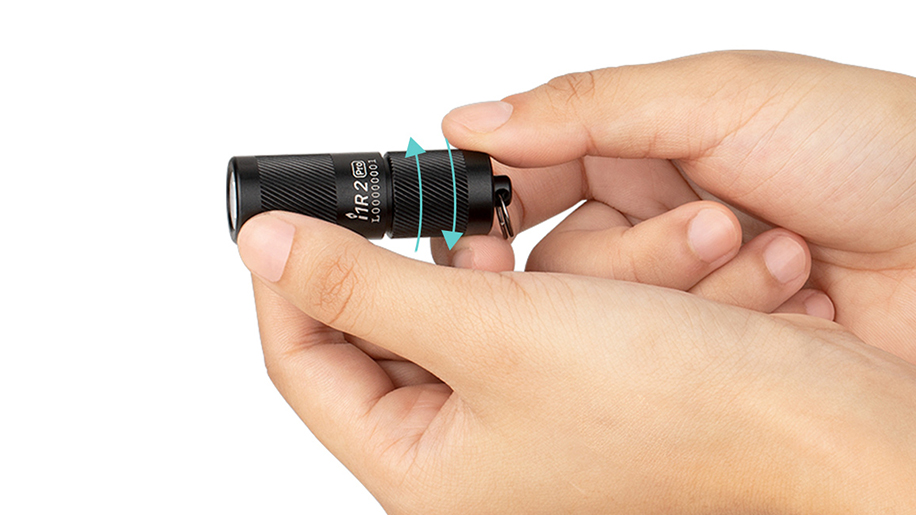
A twisty flashlight has no separate switch at all. Rotating the head (or the tail cap, on some designs) closes a set of contacts directly, completing the circuit through simple thread engagement. There’s no button, no membrane, no PCB trigger — just brass or copper meeting brass or copper. It’s the oldest activation method in flashlight design, and it survives in modern EDC lights precisely because there’s almost nothing left to break.
How a Twisty Circuit Actually Works
Turn the head a quarter turn and a contact ring bridges the gap between the battery’s positive terminal and the driver board. Turn it further and, on lights with electronic drivers behind the twist action, you can access multiple brightness levels by pausing at different rotation points — a hybrid approach used on lights like the Peak Eiger and several Malkoff Devices MDC variants. There’s no debounce logic, no capacitor charge time, and nothing for moisture to short out beyond the O-rings sealing the threads themselves.
Where Twisty Flashlights Still Win
Divers and outdoor guides still gravitate toward twisty heads because the failure mode is obvious and self-diagnosing — if it doesn’t light up, you tighten it further, and that’s usually the whole troubleshooting process. There’s no membrane to degrade, no solder joint to crack from repeated flexing, and no firmware to glitch. The tradeoff is speed: you can’t get instant-on light with one hand as fast as a clicky, and momentary activation — holding the button for a quick flash without committing to constant-on — isn’t possible at all.
Clicky Tail Switches — Momentary Control, Old-School Reliability
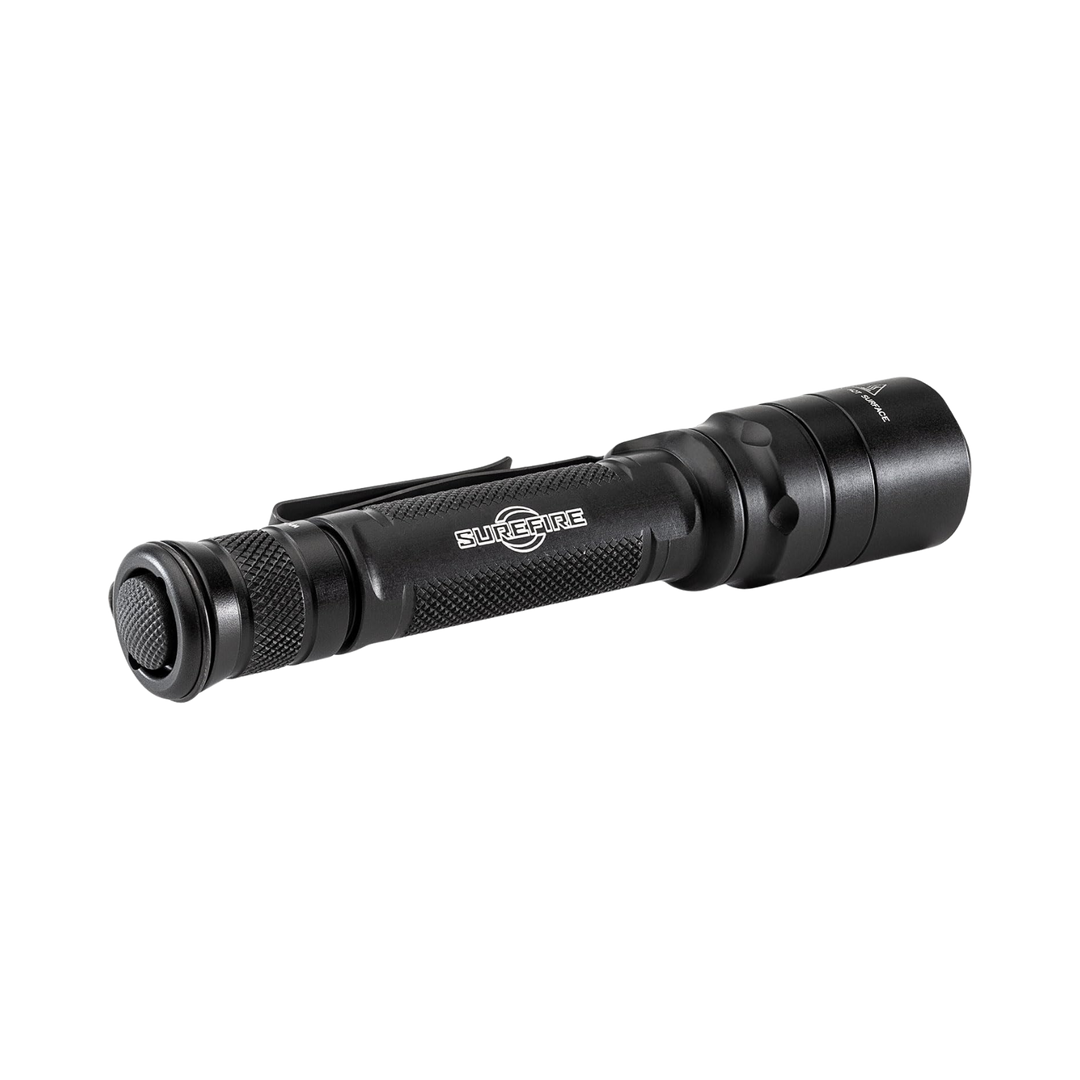
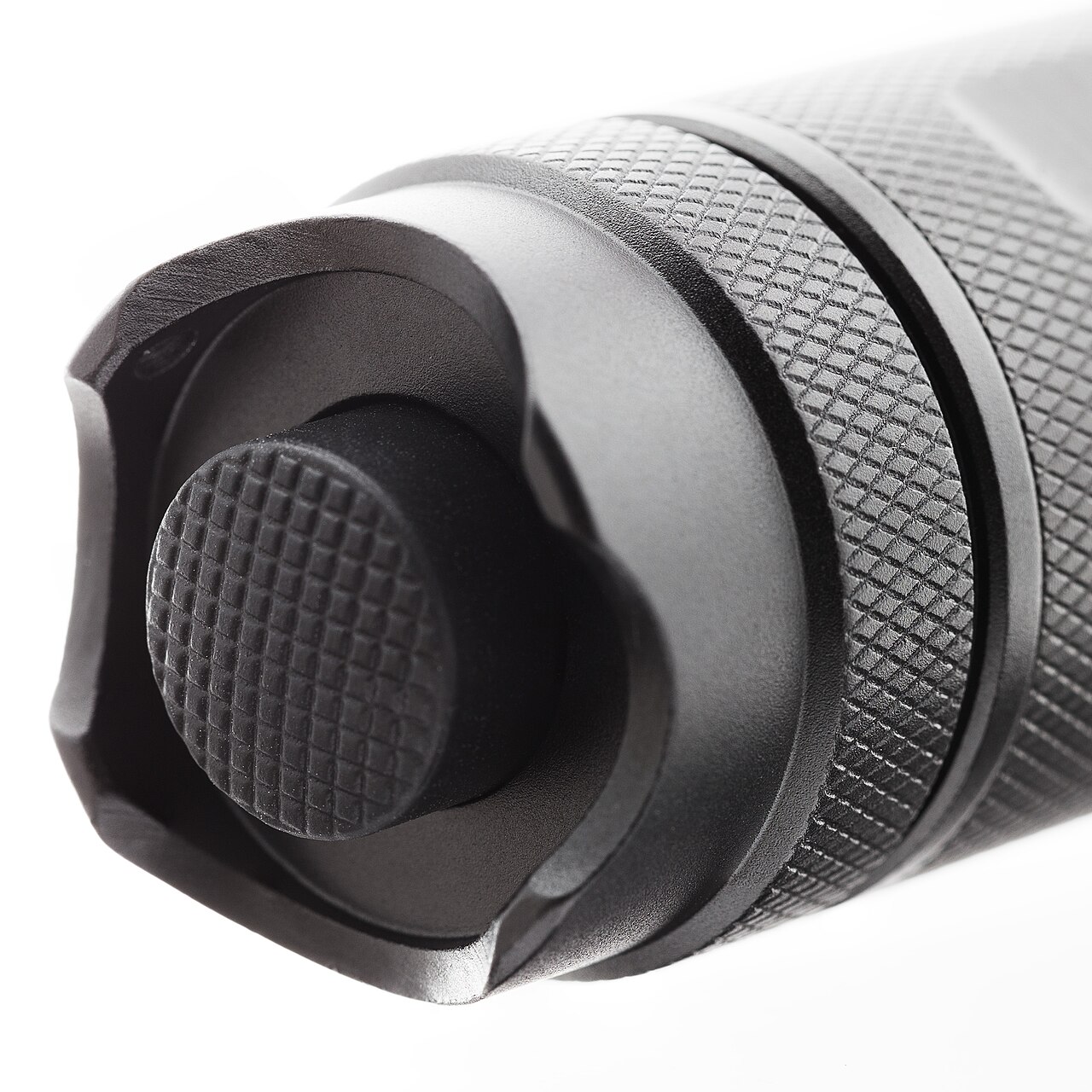
The tail-cap clicky is the switch most people picture when they think of a “real” flashlight — a rubber-booted button at the back end that you press with your thumb. Underneath the boot sits a spring-loaded mechanical contact, and depending on the design, that contact behaves in one of two fundamentally different ways.
Forward Clicky vs Reverse Clicky
A forward clicky activates on a light half-press, giving you momentary light for as long as you hold it, and locks into constant-on with a full click. This is the standard on duty and self-defense-oriented lights like the Surefire EDCL2-T, because momentary activation lets you flash a room or signal without committing to full illumination. A reverse clicky skips the half-press entirely — every press is a full click, and there’s no momentary function — which trades tactical flexibility for a simpler, more durable mechanism that’s harder to activate accidentally in a pocket. Lights like the ThruNite Archer series use variations of both depending on the model, and it’s worth checking which one you’re getting before you buy based on expected use.
Mechanically, a clicky’s biggest advantage over an electronic switch is directness: the button is physically wired into the power path (or, on some designs, into a low-side circuit that still uses a hard mechanical contact rather than a microcontroller trigger). That means even a light with a dead or glitched driver board will often still fire on its lowest mode, because the switch itself isn’t dependent on firmware logic to close the loop.
Shop Surefire EDCL2-T on Amazon
Electronic Side Switches — Complexity in Exchange for Control
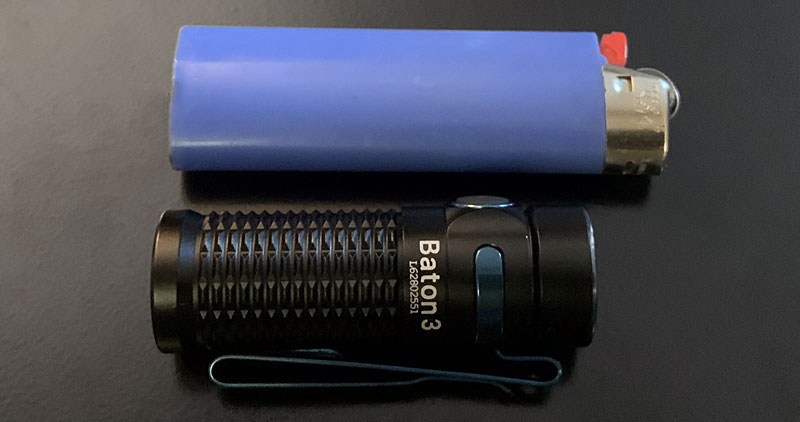
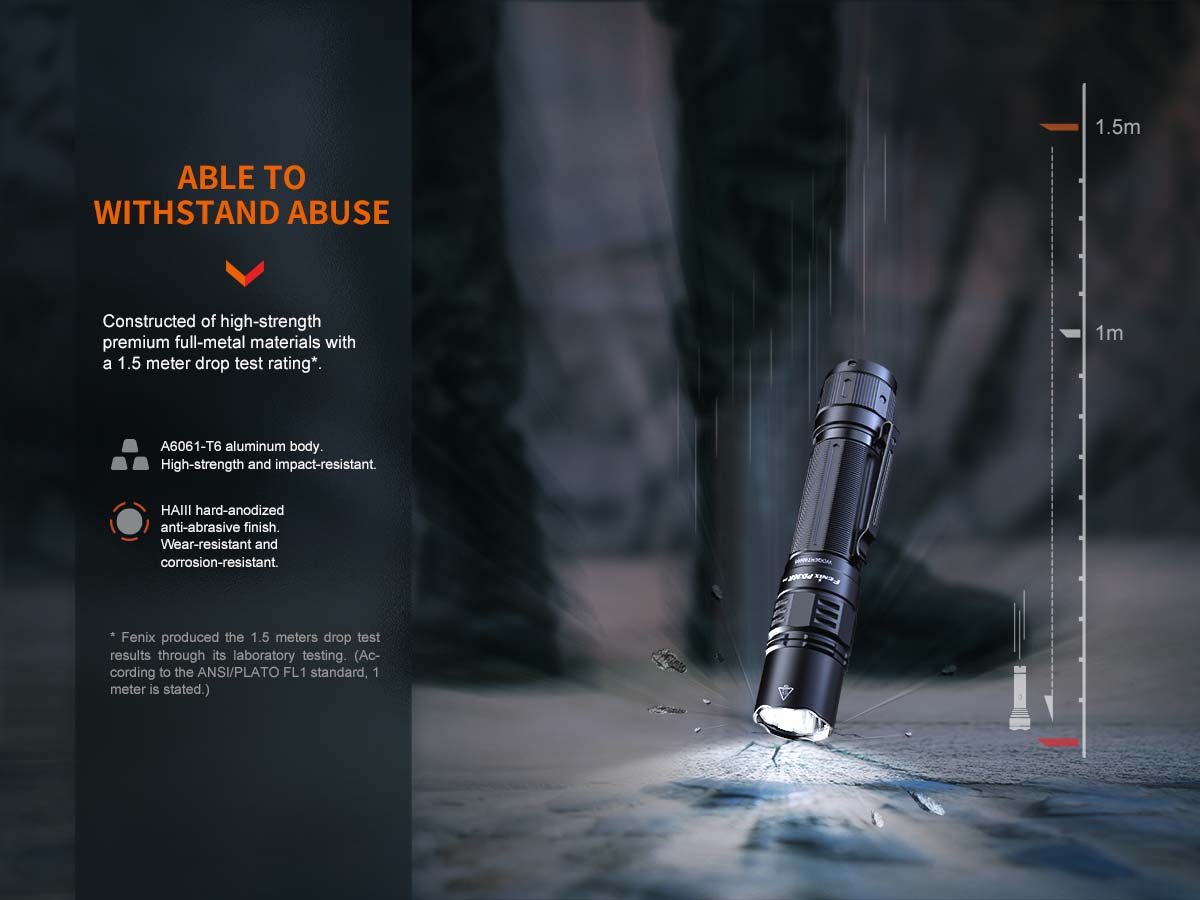
Most modern EDC flashlights with rich mode sets — multiple brightness levels, strobe, moonlight, mode memory — use an electronic side switch mounted in the body rather than the tail. Lights like the Olight Baton 3 Pro and Fenix PD36R Pro rely on this design, and it’s the architecture that made feature-dense UIs possible in the first place.
What’s Actually Inside a Membrane Switch
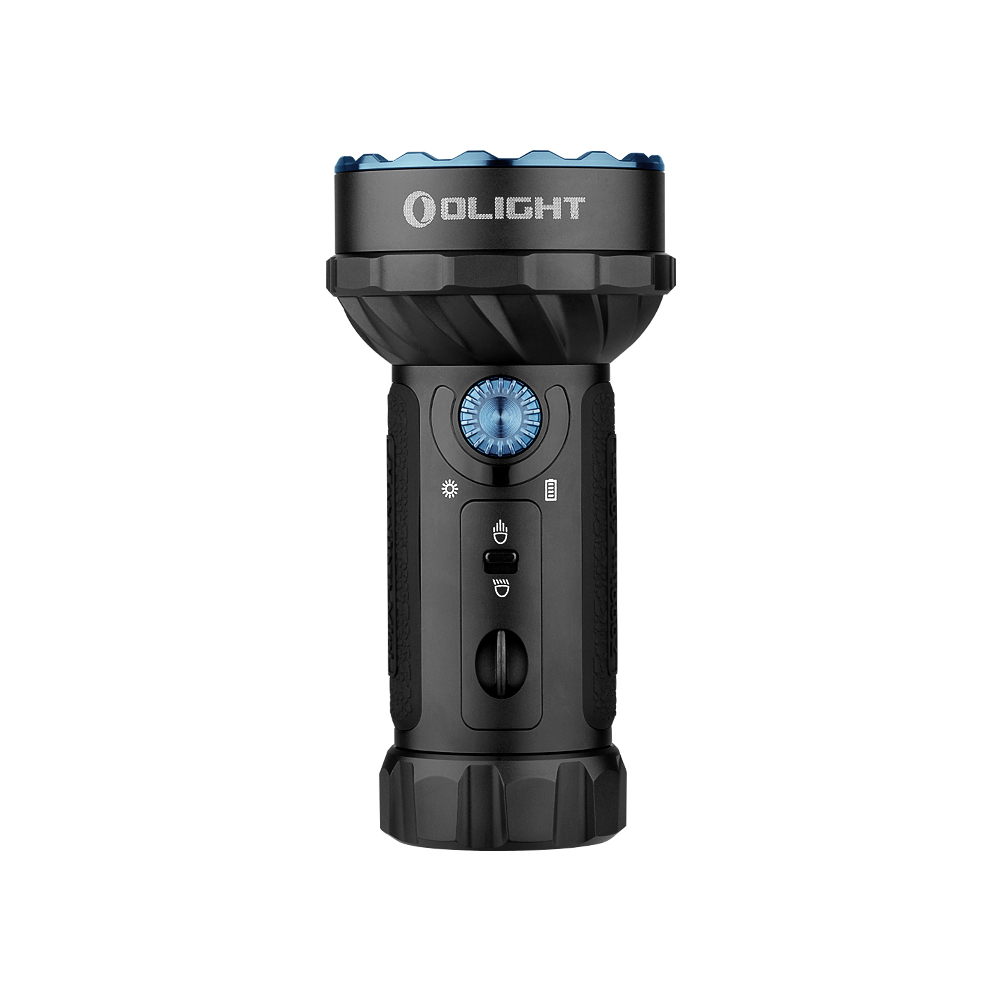
An electronic switch is usually a silicone or rubber membrane pressing down on a low-voltage tactile dome or capacitive pad, sealed against the body with its own dedicated O-ring or gasket. Unlike a clicky or twisty, this switch never carries the battery’s full current — it just sends a signal to a microcontroller, which then handles switching the actual power load through a MOSFET. That indirection is what allows a single button to support click-and-hold for ramping, double-click for turbo, triple-click for strobe, and long-press for a lockout mode, all through firmware logic rather than additional physical contacts.
The Failure Modes Nobody Talks About
The complexity that enables a rich UI is also the source of an electronic switch’s unique failure modes. The membrane itself can crack or lose its tactile snap after years of thumb presses, especially on cheaper lights where the silicone compound degrades faster in heat and UV exposure. Debounce logic — the firmware routine that filters out the tiny electrical noise a mechanical press generates — can glitch after moisture intrusion, causing phantom clicks or a light that turns on in a pocket. And because the switch and the driver board are tied together electronically, a failure on either side can take the whole light offline, unlike a clicky where a dead driver sometimes still leaves you a working low mode. None of this makes electronic switches unreliable in practice — quality lights from established brands see very low field failure rates — but it does mean the failure, when it happens, is less predictable and harder to diagnose than “the threads need cleaning.”
Shop Olight Baton 3 Pro on Amazon
Rotary Bezels — Continuous Output Without a Microcontroller
A smaller category of EDC lights uses a rotary bezel or rotary collar that you twist to sweep continuously from moonlight to maximum output, rather than stepping through fixed brightness levels. Some rotary designs, like variants of the Prometheus Beta QR and several boutique titanium lights from small American makers, pair the rotation with a magnetic or friction detent system that lets you dial in an exact brightness rather than settling for whatever preset is closest. Because the rotation itself is doing the current-limiting work — often through a mechanical potentiometer or a magnetically-coupled sensor — these designs can deliver infinitely variable output while still avoiding a firmware-dependent switch. The downside is cost and complexity of manufacture: precision rotary mechanisms are expensive to machine and tend to show up on boutique and collector-oriented lights rather than mainstream production models.
The O-Ring Problem: Why Switch Type Isn’t the Whole Ingress Story
It’s tempting to assume mechanical switches are automatically more water-resistant than electronic ones, but that’s not quite right. Every switch design — twisty, clicky, electronic, or rotary — depends on an O-ring or gasket at the point where the moving part meets the body, and that seal is the actual ingress boundary, not the switch mechanism itself. A twisty head with a dried-out or nicked O-ring will let water in just as fast as an electronic switch with a torn membrane. What differs is how much repeated actuation stresses that seal over time: a side switch pressed thousands of times flexes its membrane in the same spot repeatedly, while a twisty’s rotational seal wears more evenly around its circumference. If you carry a light daily for years, periodic O-ring inspection and a light coat of silicone grease matters more to long-term water resistance than which switch type you originally chose.
Matching Switch Type to How You Actually Carry
The right switch depends less on which is “best” and more on how the light fits into your day. If you want a light that will still work after being dropped, soaked, and ignored for months in a glovebox, a twisty or a basic reverse-clicky gives you the fewest points of failure and the most obvious repair path. If you want momentary activation for signaling or situational awareness — checking a noise at night without fully committing to bright light — a forward clicky like the EDCL2-T is purpose-built for exactly that. If you want mode memory, a moonlight setting you can find by feel, and a UI dense enough to run one light for reading, walking the dog, and emergency signaling without swapping tools, an electronic side switch on something like the Fenix PD36R Pro or a compact option like the Lumintop FW3A gets you there — you’re just accepting a slightly more complex thing to eventually troubleshoot. None of these are wrong choices. They’re different bets on where you’d rather the complexity live: in your hands, or in the light.
Shop Fenix PD36R Pro on Amazon
Sources
IP Code (ingress protection rating) — Wikipedia
Fenix Lighting — official site