Scissors or Pliers? Matching a Truly Pocketable Multitool to the Jobs You Actually Do
Most compact multitool advice gets stuck on weight and dimensions, as if shaving half an ounce is what decides whether a tool earns a permanent spot in your pocket. It doesn’t. The thing that actually determines whether you carry a multitool every day, or leave it in a drawer after week two, is whether the implement you reach for most is parked at the front of the tool or buried three layers deep. And for genuinely pocketable tools, that argument almost always comes down to one fork in the road: pliers or scissors.
Get that choice right and a two-to-five-ounce tool disappears into your daily routine. Get it wrong and you’ve bought a clever paperweight. This is a jobs-first guide to the best compact multitools that fit in your pocket, organized around what you’ll actually do with them rather than what looks good on a spec sheet.
The fork in the road: pliers tools vs scissors tools
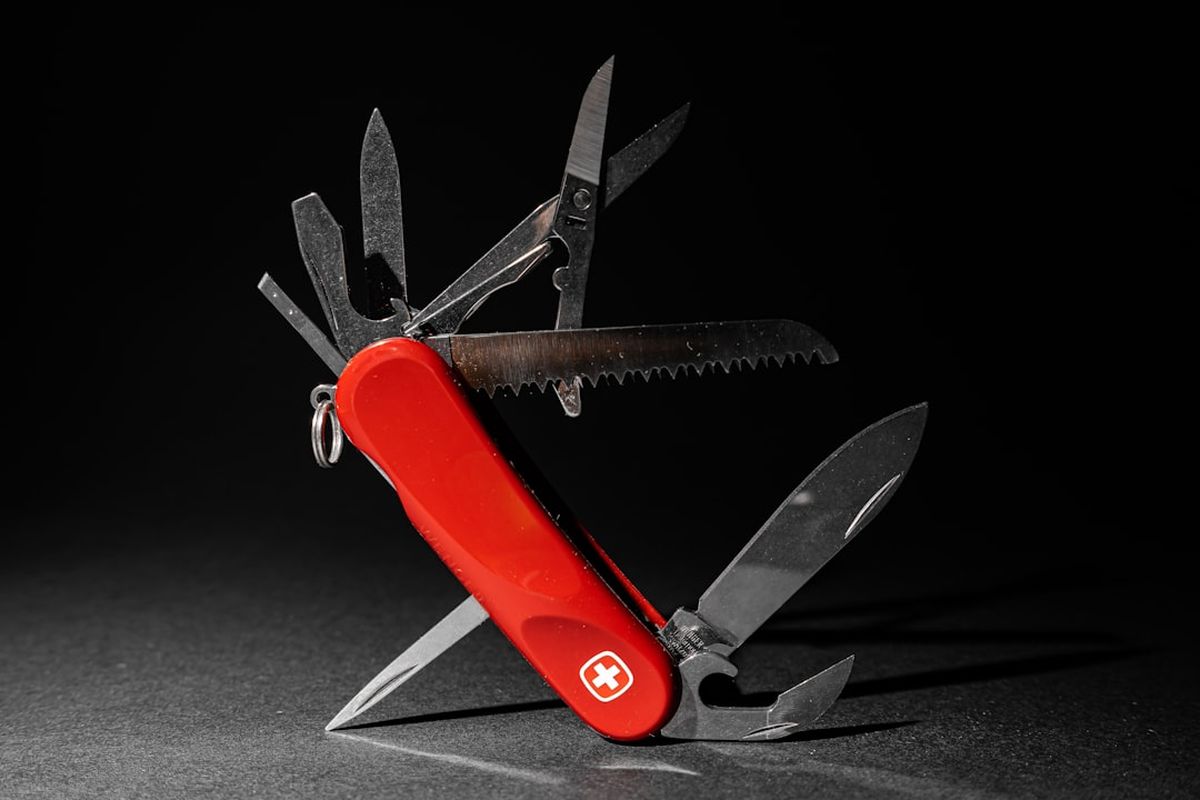
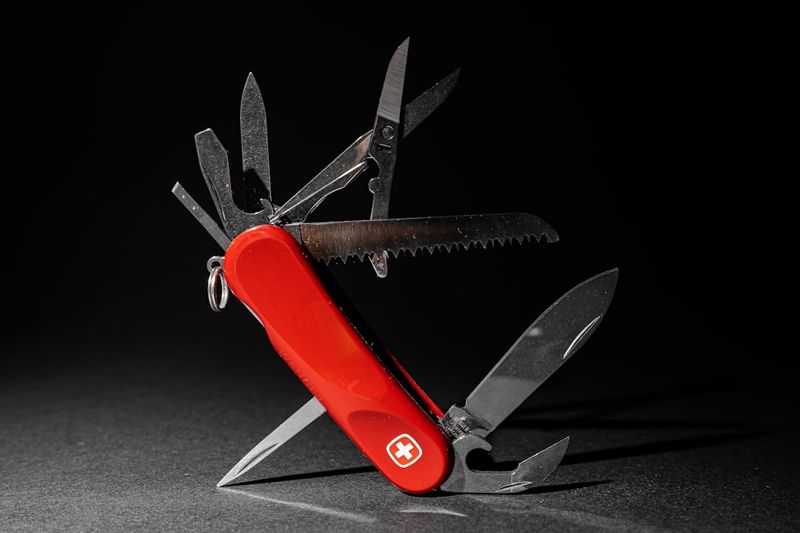
Every compact multitool is built around a primary jaw. On a pliers tool, the two handles fold out to form needle-nose or combination pliers, and everything else (blade, drivers, file) hangs off the inside or outside of those handles. On a scissors tool, the spring-loaded scissors are the headline implement, and the body is a flat keychain-sized frame closer to a Swiss Army Knife than a Leatherman Wave.
This isn’t a small distinction. Pliers give you grip, torque, and the ability to pull, crimp, and bend. Scissors give you clean cutting that a folding blade can’t match for thread, packaging tape, zip ties, blister packs, and stray clothing tags. Almost nobody needs both at full size in their pocket, and the tools that try to do both end up too thick to carry comfortably. So the first honest question is: across a normal week, are you fighting hardware or fighting packaging?
Why pocketability punishes the all-rounder
A full-size Leatherman Wave Plus is a brilliant tool, but at 8.5 ounces and roughly four inches closed, it rides in a sheath or a bag, not loose in a front pocket alongside your phone and keys. The moment you commit to true pocket carry, you’re working within a weight budget of roughly two to five ounces, and that budget forces a choice. Designers can give you strong pliers or good scissors in that envelope, plus a small blade and a driver or two, but not the whole workshop. The compact tools that feel great to carry are the ones that picked a lane.
If your week is hardware: the compact pliers tools
If you regularly open a battery compartment, pull a stubborn cotter pin, hold a tiny nut while you turn a bolt, or strip and crimp a wire, you want pliers at the front. The trick is finding pliers small enough to forget about.
Leatherman Skeletool: the minimalist’s full-size compromise
The Skeletool is the tool most people land on when they want real pliers without the bulk. It weighs five ounces, runs a skeletonized handle to cut grams, and deliberately strips the toolset down to the essentials: needle-nose and regular pliers, a wire cutter, a 2.6-inch 420HC combo blade you can open one-handed with the outside flipper, a bit driver, and a bottle opener that doubles as the pocket clip. There’s no spread of single-use implements to bloat the body, which is exactly the point.
At five ounces it’s the heavy end of pocketable, and the clip carries it more like a large folding knife than a keychain trinket. But the bit driver accepts standard flat double-ended bits, so a quick swap covers Phillips, flathead, Torx, and hex without adding thickness. If your daily jobs lean mechanical and you only want to carry one thing, this is the realistic sweet spot.
Shop the Leatherman Skeletool on Amazon
Leatherman Free P2: pliers plus a real toolset, one-handed
If the Skeletool feels too stripped, the Free P2 is the compact pliers tool that still gives you a fuller kit. At 4.7 ounces it’s actually lighter than the Skeletool while packing 19 tools, and the Free line’s magnetic architecture means every implement opens one-handed with a satisfying thumb push and locks independently. You get spring-loaded needle-nose pliers, replaceable wire cutters, a 2.2-inch blade, spring-action scissors, a package opener, an awl, a can and bottle opener, a pry tool, and a Phillips plus assorted drivers.
That outside-access, magnetic-detent design is the real upgrade over older Leatherman folders, where you had to fish implements out with a fingernail. The P2 is thicker than a keychain tool and rides best in a pocket on its own, but for someone who wants pliers as the anchor and a near-complete toolset behind them, it’s hard to beat in this size class.
Shop the Leatherman Free P2 on Amazon
Leatherman Squirt PS4 and Gerber Dime: keychain pliers
When you want pliers but refuse to give up keychain-level carry, the Leatherman Squirt PS4 is the benchmark. It’s a hair over two ounces and around two and a quarter inches closed, yet the pliers are genuinely usable for small hardware, and you still get a knife, spring scissors, a flat and Phillips driver, a file, and a bottle opener. It’s the tool that lives on a keyring and earns its keep weekly.
The Gerber Dime plays in the same space at a lower price, adding a dedicated package-opener hook that’s weirdly useful for blister packs and clamshell plastic. Its build feels less refined than the Squirt and the pliers have more play, but for a few dollars clipped to a bag zipper it punches above its cost. Either one answers the question “what if I need pliers and I have nothing else on me.”
If your week is packaging and threads: the scissors tools
Be honest about your actual days. For a lot of people, the implement that gets used five times a day isn’t pliers at all, it’s scissors. Cutting a clothing tag, opening a vacuum-sealed pouch, trimming a loose thread, snipping a zip tie, opening a mailer, neatening a bandage. A folding blade does all of these clumsily; spring-loaded scissors do them cleanly and one-handed. If that’s your reality, stop buying pliers you’ll never use.
Victorinox Classic SD and Cadet: the original pocket tools
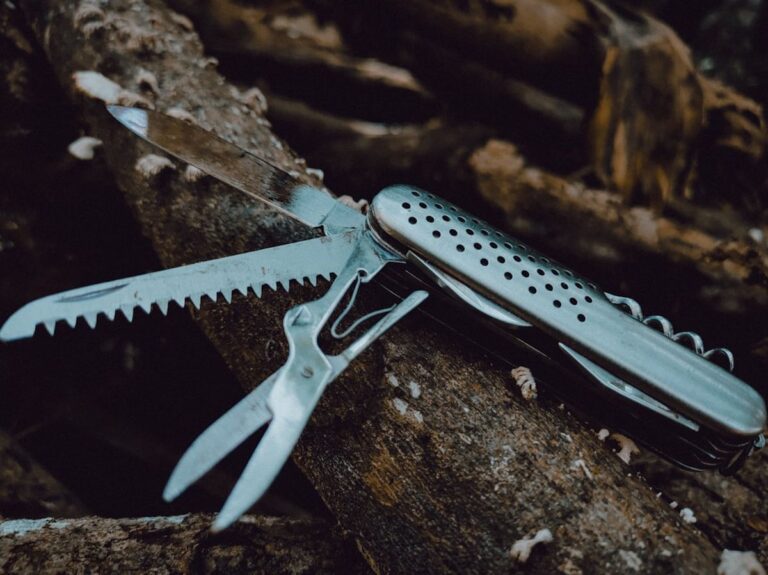
It’s easy to overlook the Swiss Army Knife in a Leatherman conversation, but the Victorinox Classic SD is arguably the most-carried multitool on earth for a reason. At well under an ounce and barely two and a quarter inches long, it disappears on a keyring and gives you small but excellent scissors, a tiny blade, a nail file with a flathead tip, tweezers, and a toothpick. The scissors alone justify the carry for most people, and the spring is a leaf design that’s been refined for decades.
Step up to the Victorinox Cadet or Compact if you want an Alox or a fuller frame with a larger main blade, a flathead and can opener, and on the Compact, scissors plus a pressurized ballpoint pen. These are flat, slim, and pocket-friendly in a way no pliers tool can match, and the cellidor or Alox scales slip in and out of a pocket without snagging.
Shop Victorinox pocket knives on Amazon
Leatherman Micra and Style PS: scissors-first, Leatherman build
If you want scissors as the hero implement but prefer Leatherman’s heavier-duty feel, the Micra is the long-running answer. It folds open scissors-first instead of pliers-first, so the spring scissors are the main event, backed by a blade, flat and Phillips drivers, a file, tweezers, and a bottle opener, all in about 1.8 ounces. The Style PS is the even smaller, TSA-conscious sibling: no blade at all, just scissors, pliers, tweezers, a file, and a bottle opener, which makes it the rare multitool you can often carry through airport security.
That bladeless angle matters more than people expect. If your carry needs to survive a courthouse, a school pickup, an office with a no-knives policy, or international air travel, a scissors-and-tweezers tool with no locking blade is the version that doesn’t get confiscated. You give up cutting power but keep most of the daily utility.
The honest middle: when you actually want a bit driver instead
There’s a third group worth naming, because plenty of people who think they want pliers actually want a screwdriver. If your repeated jobs are tightening a glasses hinge, swapping a watch battery, adjusting a cabinet hinge, or assembling flat-pack furniture, what you need is reliable bit access, not jaws.
The Gerber Armbar Drive is built around exactly that idea: a folding knife body with a rotating bit driver, plus scissors, an awl, a pry bar, and a bottle opener, at around three ounces. It carries like a chunky folding knife rather than a pliers tool, and the driver takes standard bits so you can match it to whatever screws you live with. For a desk-and-home EDC where the real adversary is small fasteners, a driver-first tool beats both pliers and scissors.
This is the category that quietly converts the most people, because once you stop pretending you do field repairs and look at what you actually open and tighten, a good driver plus scissors covers a startling share of real life.
How to actually choose, in order
Strip away the brand loyalty and the spec-sheet rabbit holes and the decision is short. Walk it in this order and you’ll land on the right tool the first time.
- Audit one real week. Note every time you wished you had a tool and what the job was. Count pliers jobs, cutting jobs, and screw jobs separately. The biggest pile picks your category.
- Set your carry envelope. Keyring or pocket-clip? Keyring means sub-two-ounce (Squirt PS4, Classic SD, Style PS, Micra). Dedicated pocket means you can run a Skeletool, Free P2, or Armbar Drive.
- Check your blade constraints. Travel a lot or work somewhere blade-hostile? Choose a bladeless scissors tool like the Style PS so it survives your day.
- Confirm one-handed access on the implement you use most. If your top tool is buried and slow to deploy, you’ll stop reaching for it no matter how good the spec sheet looks.
Do that honestly and the “best compact multitool that fits in your pocket” stops being a universal ranking and becomes a personal one. The Skeletool wins for the mechanically-minded one-tool carrier, the Free P2 for someone who wants pliers plus a near-complete kit, the Squirt PS4 for keychain pliers, the Victorinox Classic SD or Micra for the scissors-and-packaging crowd, and the Armbar Drive for the fastener fighters. None of them is wrong. The wrong one is the tool built for jobs you don’t do.
Shop the Leatherman Squirt PS4 on Amazon
The takeaway
A compact multitool only counts as everyday carry if it’s still in your pocket six months from now. That longevity has almost nothing to do with how many implements it lists and everything to do with whether the one tool you reach for daily is fast, present, and right for your life. Pick pliers, scissors, or driver based on your real week, match it to a carry envelope you’ll actually tolerate, and the rest sorts itself out. The smallest tool you’ll genuinely use beats the most capable tool you leave at home, every single day.
Sources
- Leatherman — official specs for the Skeletool, Free P2, Squirt PS4, Micra, and Style PS
- Victorinox — Swiss Army Knife lineup including the Classic SD, Cadet, and Compact
- Gerber Gear — Dime and Armbar Drive product details
- Wikipedia: Multi-tool — history and design background on folding multitools
Explore our top EDC gear picks at the EverydayCarryGuy shop →
Shop on Amazon
Multitools on Amazon →
As an Amazon Associate we earn from qualifying purchases.
Shop on eBay
Multitools on eBay →
We may earn a commission when you shop through our eBay links.
Survival & preparedness gear
Shop Survival Frog →
We may earn a commission when you shop through our Survival Frog link.