Sub-3-Ounce Multitools and the Daily Carry Test: Picking a Tiny EDC Tool You’ll Actually Reach For
A multitool that lives in your pocket gets used. A multitool that lives in a drawer because it’s too bulky to clip on a Tuesday morning might as well not exist. That single sentence is the entire framework for choosing a compact EDC multitool. Spec sheets matter, sure. But the real question isn’t which tool has the most blades or the strongest pliers—it’s which one you’ll actually carry every day without thinking about it.
The best compact multitools that fit in your pocket share a few honest traits: they weigh less than your phone, they ride predictably whether clipped or slipped, and they solve the small daily friction without making you feel like you’re carrying a tool.
What “Pocket-Fit” Actually Means
Pocket-fit isn’t a single metric. It’s the intersection of weight, profile, edge geometry, and how the tool sits when you sit down. A 3-inch closed multitool that weighs 4 ounces feels heavier in a pair of chinos than a 4-inch tool at 2.5 ounces. Mass moves more than length when you walk.
Three working weight thresholds, refined over years of swapping tools in and out of daily carry:
- Under 2 ounces: vanishes. You forget it’s there. Squirt PS4, Style PS, Victorinox Classic SD territory.
- 2 to 4 ounces: noticeable but acceptable. You feel the weight in slim-fit pants but it won’t pull them down. Skeletool, Skeletool CX, Gerber Dime.
- Over 4 ounces: belt pouch territory for most carry contexts. The Wave+ at 8.5 oz is a workhorse, but it’s not a pocket tool in the strict sense.
The other variable nobody talks about: corner profile. Rounded scales (Skeletool CX) ride in a pocket like a smooth river stone. Square-cornered tools (full-size Wave) bite at the pocket seam and snag when you reach for keys. Check the corners before you check the spec sheet.
The Pliers Compromise
Every compact multitool gets pliers wrong in one of two ways: too small to do real work, or so dominant they crowd out the rest of the tool. This is the central design tension of the category, and it’s the single decision that should drive your choice.
Sub-3-ounce multitools have pliers that are functionally fine for stripped wire ends, removing splinters, and unscrewing stuck battery terminals—and basically useless for anything torquier than that. The Squirt PS4 pliers are jewelry-store sized. They’ll pull a small bent nail; they will not loosen a stuck garden hose fitting.
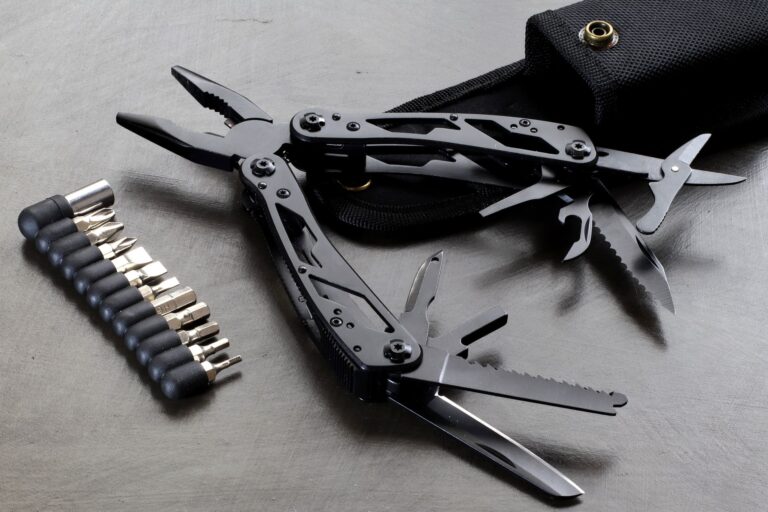
Mid-weight compacts (Skeletool, Dime) get usable pliers but lose tool count. The Skeletool ships with seven tools total—pliers, blade, bit driver, two bits, carabiner clip, bottle opener. That’s deliberate minimalism, not a cost cut. Leatherman removed the scissors, file, saw, and second blade so the pliers stayed honest.
Decide the pliers question first. If you’re a homeowner who needs occasional real pliers work, the compromise tier (Skeletool, Dime, Style CS) is where you want to land. If pliers are a “nice to have,” go smaller and lighter and accept that real pliers work means walking to the toolbox.
Tools That Earn Their Slot
Four compact multitools have survived multiple rotations through my daily carry. Each handles a specific carry context better than the others, and the choice between them is more about your day than about the tools themselves.
Leatherman Skeletool CX
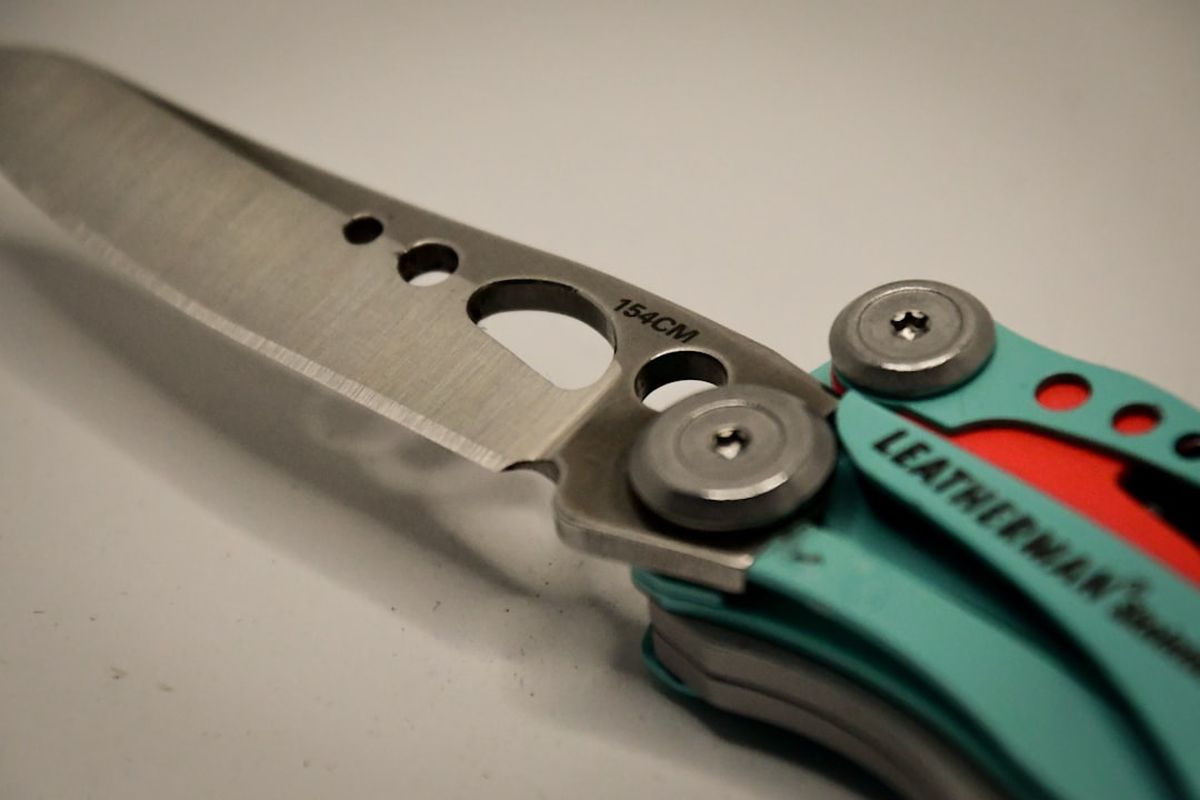
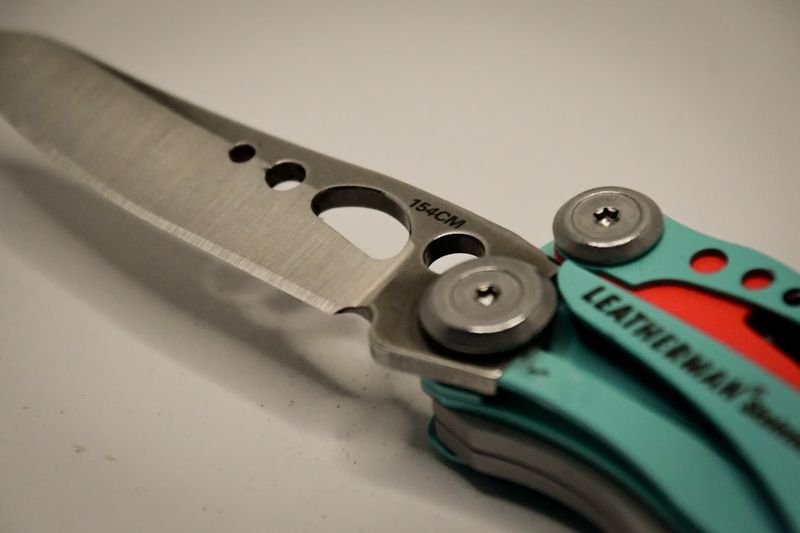
The Skeletool CX is the default answer to “one compact multitool that does most things.” 5 ounces, 4 inches closed, 7 tools. The CX upgrade swaps standard 420HC for 154CM blade steel and gives you a DLC-coated handle that resists wear and looks better after two years than the standard Skeletool does after two weeks.
What it gets right: needle-nose pliers that actually grip. A 2.6-inch blade you can deploy one-handed via the thumb stud. A removable pocket clip that doubles as a carabiner. A magnetic bit holder with two double-ended bits stored in the handle itself.
What it gets wrong: no scissors, no file, no saw. If your daily friction points include opening packaging tape and trimming threads, the Skeletool will frustrate you. Pair it with a small scissors tool if those are real needs.
Leatherman Squirt PS4 and Style PS
The Squirt PS4 was the gold standard of true pocket multitools until Leatherman discontinued it. The current replacement is the Style PS—1.4 ounces, key-ring sized, with spring-action pliers, scissors, screwdriver, file, and tweezers. No blade, which is the trade Leatherman made to keep it TSA-friendly.
If you can find a Squirt PS4 secondhand, it’s worth the hunt for the blade alone. Otherwise the Style PS is the modern answer for “multitool that disappears into a pocket or keychain.” It won’t do plier-heavy work. It will absolutely handle the tiny annoyances that derail a day—the loose screw, the snipped thread, the splinter you need to pull out before it gets infected.
Victorinox Cadet and Classic SD
Victorinox is its own category. The Cadet—3.3-inch closed, 1.6 ounces, aluminum-scaled—is arguably the perfect office EDC multitool. Blade, file, scissors, can opener, screwdrivers, bottle opener. No pliers. No intimidation factor. You can carry a Cadet into a Manhattan office building or a downtown Taipei coworking space without anyone blinking.
The Classic SD is even smaller—2.25 inches, 0.7 ounces—and lives on a keychain by design. Blade, scissors, file, tweezers, toothpick. The scissors alone justify the slot. They cut cleaner than any other key-ring tool at this size and they stay sharp for years if you don’t abuse them on cardboard.
Both run tin-plated carbon steel blades that take a screaming sharp edge and patina quickly if you cut acidic stuff. That’s a feature for the people who like patina, a drawback for the people who don’t. Either way, they sharpen on a kitchen stone in two minutes.
Gerber Dime
The Gerber Dime is the budget answer that punches above its price. 4 inches closed, 2.6 ounces, 12 tools including spring-loaded pliers, scissors, blade, file, three screwdrivers, bottle opener, package opener, and tweezers.
Build quality is not Leatherman or Victorinox tier. The pliers have a bit of play. The blade steel is mystery stainless that takes a quick edge and loses it just as fast. But for under $25 it’s hard to argue against, especially as a beater tool for the truck, the camera bag, or the workshop drawer where the Skeletool would be overkill and the Squirt undersized.
Slip Carry vs Clip Carry
The pocket clip changed compact multitools more than any design innovation since the Wave’s outside-accessible blades. A clipped tool rides predictably—you know exactly where it is, you know the orientation, and you can draw it one-handed without fishing.
A slip-carried tool migrates. It bunches with keys, it ends up upside down, it tangles with your phone cable. For tools 3 ounces or heavier, the clip is mandatory. For under-2-ounce tools, slip carry in the coin pocket is often better than clip—they’re too light to ride a clip naturally and they free up the main pocket for your wallet or phone.
The Skeletool’s removable pocket clip is the best in the category. It’s a structural part of the tool, not a screwed-on afterthought. The Wave+ ships without a clip, which is part of why it’s a belt-pouch tool by default. Aftermarket clips exist; they’re fine; they’re not the same as designed-in clips.
Where Tiny Tools Honestly Fail
Compact multitools have honest weaknesses. They will not replace a real screwdriver set when you’re rebuilding a bike. They will not loosen a properly-torqued bolt. The blades are short enough that food prep is awkward and any real wood cutting is out of scope.
The Skeletool’s bit driver is excellent until you need a bit you don’t have. The carry capacity is two double-ended bits, which means four bit profiles. Most days, fine. The day your bathroom sink needs a Robertson #2, your two Phillips bits are useless and you’re back to the toolbox anyway.
Plan around the failures. A compact multitool is the answer to roughly 90% of the friction in a typical day. For the other 10%, you have a toolbox at home or a real screwdriver in the truck. Trying to make one tool cover everything is how you end up with a 12-ounce monstrosity that lives in a drawer because nobody wants to carry it.
Daily Loadout Pairing
The compact multitool isn’t a standalone item. It’s a slot in a loadout, and the right tool depends on what else is in the loadout with it. Three pairings that have survived multiple rotations:
Mixed-use weekend setup: Skeletool CX + dedicated EDC knife (Spyderco Para 3, Benchmade Bugout) + small flashlight. The multitool handles utility, the knife handles cutting tasks, the light handles everything dark. Total weight under 9 ounces and every tool earns its slot.
Office and travel: Victorinox Cadet + slim wallet + phone. The Cadet alone is enough for office days where pliers are a fantasy and a discreet blade is the actual constraint. Drops through TSA without raising eyebrows when checked.
Travel layer: Style PS on keychain + full-size knife in pocket (or in checked luggage when flying). The tiny tool covers grooming and scissors needs, the real knife covers cutting. Useful for travel because the Style PS often passes airport security when forgotten in a carry-on.
Steel, Finish, and Longevity
Multitool blade steel is usually mediocre on purpose. Compact multitool blades take abuse—prying on cans, scraping paint, cutting cardboard with grit on it—and softer steels are easier to resharpen in the field without specialized equipment. 420HC at 56-58 HRC is the workhorse for a reason.
The premium steel options (154CM on the Skeletool CX, S30V on Leatherman’s high-end models) hold edges noticeably longer but require diamond stones to resharpen properly. If you carry a sharpener and use it, premium steel earns its premium. If you sharpen twice a year on a kitchen stone, 420HC is the smarter pick and you’ll save the price difference for a better knife.
DLC and titanium coatings genuinely extend visible life. The CX-finish Skeletool looks new after rough use; the bare-stainless standard Skeletool develops scuffs within months. Call it aesthetic preference, not function—but if a tool looks beat after a month, you stop carrying it, and a tool you don’t carry has zero function regardless of its steel.
Final Carry Notes
The honest test for any compact multitool is two weeks of carry. Not a pocket-dump photo, not a YouTube unbox, not a forum debate. Clip it, slip it, use it. If after two weeks you find yourself reaching for it when something needs cutting or twisting, it earned the slot. If you reach for your phone first to figure out where you put it, it failed.
For most readers most of the time, the answer is the Skeletool CX or the Victorinox Cadet, picked by carry context. Office and travel: Cadet. Mixed-use, weekend project, occasional pliers work: Skeletool CX. Outdoors or heavy use: step up to the Wave+ and accept the belt pouch.
Don’t overthink the tool. Overthink the carry test. The best compact multitool is the one you’re still carrying in February when the novelty wore off in January and the tool is just quietly doing its job in your pocket.
Sources
- Leatherman — official spec sheets for Skeletool, Squirt, Style, and Wave product lines
- Victorinox — official Swiss Army Knife product reference, blade steel and tool configurations
- Gerber Gear — Dime multitool specifications and build details
- Wikipedia: Multi-tool — category history and design evolution of pocket multitools
Explore our top EDC gear picks at the EverydayCarryGuy shop →
Shop on Amazon
Multitools on Amazon →
As an Amazon Associate we earn from qualifying purchases.
Shop on eBay
Multitools on eBay →
We may earn a commission when you shop through our eBay links.
Survival & preparedness gear
Shop Survival Frog →
We may earn a commission when you shop through our Survival Frog link.