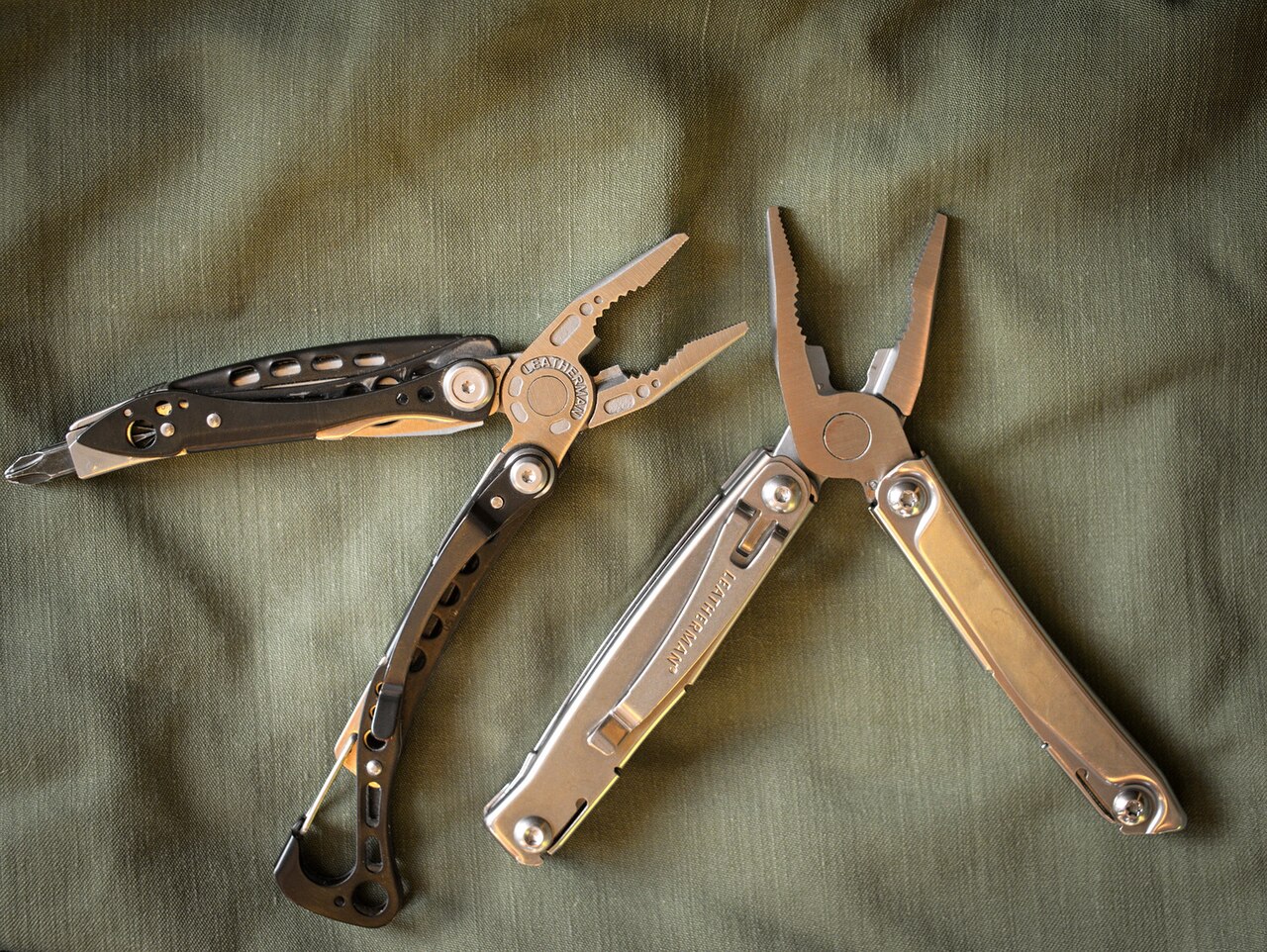
Compact Multitool Reality: Why Sub-4-Ounce Pocket Tools Beat Full-Size Workhorses for Daily EDC
When you actually weigh what is already in your pockets — phone, keys, wallet, maybe a dedicated pocket knife — adding a full-size multitool like a Leatherman Wave+ (8.5 oz) starts to feel like packing a brick on your right hip. The compact multitool category exists for one reason: most of the cutting, prying, screwing, and pinching you do in a normal day does not need a full-size plier head. It needs something you will actually carry every single day.
This is a deep dive into what “compact” really means in the multitool world, what engineering trade-offs happen when manufacturers shave below 4 ounces, and why a Leatherman Skeletool, a Squirt PS4, or a Victorinox 91mm chassis outperforms a Wave+ for the average person’s actual daily use case — even though the spec sheet says otherwise.
The Sub-4-Ounce Threshold: What Counts As Pocket-Friendly
Anything over 5 ounces stops being a pocket tool and starts being a belt-carry tool. That is not arbitrary — it is roughly the weight at which a multitool drags the right side of your jeans down enough that you feel it every time you stand up, sit down, or climb stairs. The Wave+ sits at 8.5 oz. The Charge+ Ti is 8.89 oz. The Surge is 12.5 oz. Those are workshop tools that ride in a sheath on your belt, not pocket tools.
The compact category, broadly defined, covers anything from about 1.5 oz (Leatherman Style PS) up to about 5 oz (Leatherman Skeletool). Within that band you have three rough sub-classes worth understanding before you buy.
Sub-2-Ounce Keychain Class
Leatherman Style PS, Micra, Squirt PS4 (discontinued, secondhand), Gerber Dime, Victorinox Classic SD. These are key-ring tools. You barely notice they exist until you need them. The trade-off is short cutting edges (under 2 inches) and limited plier reach.
2 to 3 Ounce Light EDC Class
Victorinox Manager, Tinker, Climber, Huntsman; Leatherman Juice CS4; Gerber Suspension NXT. These ride in a front pocket or a small belt pouch. You get a longer main blade and either real scissors or a meaningful screwdriver array.
3 to 5 Ounce “Real Plier” Compacts
Leatherman Skeletool, Skeletool CX, Gerber Center-Drive Compact, Victorinox SwissTool Spirit. This is where you get full-size needlenose pliers without the full-size weight penalty. For most people who actually use pliers regularly, this is the sweet spot.
Why Compact Beats Full-Size for Daily EDC
The Carry Math Is Brutal
The average person reaches for a multitool one to three times a day. Most of those reaches are for the knife, the scissors, or a screwdriver bit — not the pliers. A Wave+ gives you 17 tools at 8.5 oz. A Skeletool gives you 7 tools at 5 oz. The Skeletool is missing scissors and the small drivers, but the tools it does have are essentially the same size and capability as the Wave’s. You are paying 3.5 ounces in pocket weight for tools you might use once a week, if that.
The math gets even more lopsided with the Squirt PS4 at 2 oz: nine tools including spring-loaded needlenose pliers, a 1.6-inch blade, scissors, and a flathead. That is roughly the same plier reach as the Wave, at less than a quarter of the weight, and it fits on a keychain.
Tool Frequency vs Tool Capability
If you actually log the tools you reach for in a normal urban EDC week, the ranking comes out something like this: main blade or scissors first by a wide margin, Phillips driver second, bottle or can opener third, pliers a distant fourth, wire cutters very rarely, and files/saws/awls almost never. A compact multitool covers the top three perfectly. The full-size advantage only shows up at rank four and below — and those tasks are infrequent enough that you can plan ahead with a dedicated tool when you actually need one.
The Skeletool Class: Full-Size Pliers, Half the Weight
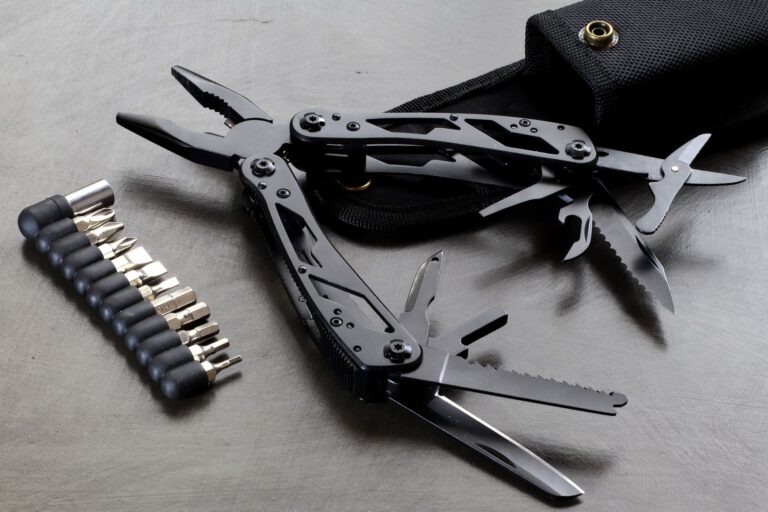
The Leatherman Skeletool is the platonic ideal of compact-but-real. Leatherman started with a Wave-class chassis, deleted everything except the pliers, the main blade, a bit driver, and a bottle opener, then hollowed out the handles into a skeletonized frame. The result: 5.0 oz, full-size needlenose pliers with hard-wire cutter inserts, a 2.6-inch 420HC plain-edge blade, and a removable bit holder that takes any standard 1/4-inch hex bit.
The Skeletool CX upgrades the main blade to 154CM stainless and adds a carbon-fiber handle insert for a marginal weight reduction. The 154CM upgrade is meaningful — it holds an edge roughly twice as long as 420HC and resists corrosion better, at the cost of being slightly harder to resharpen freehand on a field stone. For most carriers the standard 420HC Skeletool is the better buy: easier to keep sharp, $40 cheaper, and the steel is plenty for utility cutting.
The trade-off you are accepting: no scissors, no small flathead, no can opener (the bottle opener doubles as one but it is awkward on tall cans), no awl, no file, no saw. For someone who already carries a dedicated pocket knife, the Skeletool effectively becomes a pliers-and-driver pack that lives in a front pocket without making you feel like you are smuggling a hand tool.
The Squirt PS4 Class: Keychain Tools With Real Pliers
The Leatherman Squirt PS4 was discontinued in 2020 and has since become a cult object on the secondhand market, regularly clearing original MSRP on eBay. There is a real reason for that: it remains the only sub-2-oz tool with spring-loaded needlenose pliers that can actually grip and cut light wire. Leatherman replaced it with the Style PS, which dropped the pliers in favor of scissors — a controversial change that lost most of the original Squirt audience.
The Gerber Dime (2.6 oz) and the Victorinox Manager (1.4 oz) cover the same general niche differently. The Dime adds package-opening scissors with a captive spring and a small pry bar; the Manager skips pliers entirely and bets on the assumption that you have other ways to grip small objects — but adds scissors, a file, and a ballpoint pen that genuinely writes.
The keychain class teaches a useful lesson about EDC: the tools you carry on your keys get used roughly ten times more than the tools that live in a pocket pouch, simply because your keys are already in your hand when you arrive at your car, your front door, or your desk. A 2-oz keychain multitool punches well above its weight just by being the most accessible thing you own.
Build Quality at the Small Scale
The honest trade-off in the keychain class is steel quality. The Squirt PS4 used 420HC — forgiving, easy to sharpen, but dulls quickly under heavy use. The Victorinox 91mm and smaller frames use 1.4110 stainless (the proprietary Victorinox blend), softer than the premium powder steels people obsess over on knife forums but functionally corrosion-proof and easy to sharpen on any cheap field stone. Neither will hold an edge like a CPM-S30V pocket knife, but neither is designed to. A keychain blade is for opening boxes and slicing tape, not batoning kindling.
The Swiss Army Standard: Why a 91mm Victorinox Still Holds Up
You cannot write honestly about compact multitools without talking about the Victorinox 91mm class — Spartan, Climber, Tinker, Huntsman, Camper, Fieldmaster. These tools were the original compact multitools, and a Spartan at 2.1 oz still beats almost any modern competitor on a tools-per-ounce basis.
The reason they get dismissed by gear-forum nerds: no pliers. The reason that does not actually matter for most EDC: you almost never need real plier pressure for a daily task. A Climber gives you two blades, real scissors, a can opener, a bottle opener with small flathead, a large flathead, an awl with sewing eye, a corkscrew, toothpick, and tweezers — all at 2.9 oz. That is a small workshop on a keychain, and the bladed tools are usable enough that the absence of pliers turns out to be a fair trade for most carriers.
The 91mm chassis has been in continuous production since 1961. The scales are user-replaceable, the springs are repairable, and Victorinox honors warranty repairs effectively forever — including running the originals back through their Swiss workshop for refurbishment. That is a different kind of EDC argument than the spec sheet makes: durability and serviceability count more than peak material spec when you are carrying the same tool every day for ten or fifteen years.
What Gets Cut to Hit the Weight Target
When manufacturers drop from 8 oz down to 4 oz, here is what actually disappears from the tool tray. Understanding this list is the difference between buying smart and buying twice.
- Outside-access tools — the Wave’s signature “open the blade without unfolding the pliers” magic costs real weight in the spring bars and channel pivots. Compact tools nearly always require full unfolding.
- Saw blades — wood saws need thick stock to stay rigid; that mass is the first thing engineers delete.
- Dedicated large flathead drivers — usually consolidated into the bottle-opener edge or eliminated entirely in favor of the bit driver.
- Awls and metal files — file teeth require thicker stock to stay stiff, and awls double the pivot count.
- Replaceable wire cutter inserts — the cutters on a compact are nearly always permanent. You sharpen carefully or you replace the whole tool.
The deletions that hurt most are the second blade (gone on the Skeletool, kept on every Victorinox) and the dedicated scissors (kept on the Style PS, gone on the Skeletool). These two tools account for probably 60% of actual everyday multitool use, so figuring out which one your compact retains is the single most important carry decision you will make in this category.
Materials and Build at the Compact Scale
Stainless construction varies more than you would expect at this size. The Skeletool uses 420HC throughout, with the CX upgrade swapping only the main blade to 154CM — the pliers and bit driver stay 420HC because no one needs premium steel in a plier jaw. Gerber tends toward 5Cr15MoV in its budget compacts, a Chinese-spec stainless that sharpens easily but rolls under hard use. Victorinox’s 1.4110 sits between the two for edge retention but wins on corrosion resistance, which matters more in daily pocket carry than most spec-sheet readers admit.
Pivot tolerances are the other sleeper spec. A compact multitool that wobbles at the plier joint after two years of carry is going to frustrate you on every wire bend. Leatherman and Victorinox both maintain tight pivots well past warranty; the budget end of Gerber sometimes does not. If you can handle a tool in person before buying, work the pliers under pressure and listen for the click — slop is audible before it is visible.
When Compact Is Not Enough
There are honest scenarios where a compact multitool will let you down, and pretending otherwise leads to bad gear recommendations. The full-size class earns its weight when you need any of the following.
- Bike repair — you need real chain-tool leverage and full-size hex keys; compact pliers cannot generate the torque.
- Field electrical work — wire crimping and stripping need full-size pliers and replaceable cutter blades.
- Automotive wrench work — torque requirements chew through compact driver bits and round out small hex stock.
- Backcountry or survival use — a dedicated fixed blade plus a full-size multitool together always beat any compact for hard outdoor tasks.
For those scenarios the Wave+, Charge+, or Surge are the right answer — but they live in a vehicle console, a workshop drawer, or a belt sheath, not a front pocket. The mistake most new EDC carriers make is buying a Wave+ as their daily carry and being quietly surprised when they stop carrying it after a month. Then they buy a Skeletool, and they carry that one for years.
The Compact Carry System That Actually Works
The setup most people land on after a few years of EDC iteration looks something like this. It is not glamorous, and it is not what the marketing pages push, but it is what tends to stick.
- Dedicated pocket knife for cutting — Spyderco Para 3, Benchmade Bugout, or a Victorinox if you want to consolidate.
- Compact multitool for pliers, driver, and a backup blade — Skeletool, Squirt PS4 if you can find one used, or a Victorinox 91mm Climber.
- Dedicated bit driver kit in your bag if you are a pro user — Wera Tool-Check Plus or similar.
That stack covers 99% of daily tasks at under 8 ounces total — less weight than a single Wave+ alone — and the cognitive load of “which tool do I reach for” drops because each tool has a defined role. It is the inverse of the maximalist “carry everything in one tool” philosophy, and it is the carry pattern that most multi-year EDC carriers eventually converge on whether they planned to or not.
The Bottom Line on Compact Carry
The best multitool is the one you actually have on you when something needs fixing. The Wave+ that lives in your car glove box has lost to the Skeletool in your pocket every single time. Pick the compact that matches your dominant use case — Skeletool if you need pliers, Victorinox 91mm if you live in a scissors-and-screwdriver world, Squirt-class if your keychain is your primary carry — and stop optimizing for the 1% of tasks that justify the 8-oz monster. Your right hip will thank you, and the tool will actually be there when you need it.
Sources
Explore our top EDC gear picks at the EverydayCarryGuy shop →
Shop on Amazon
Multitools on Amazon →
As an Amazon Associate we earn from qualifying purchases.
Shop on eBay
Multitools on eBay →
We may earn a commission when you shop through our eBay links.
Survival & preparedness gear
Shop Survival Frog →
We may earn a commission when you shop through our Survival Frog link.