Why Some EDC Multitools Get Carried for a Decade and Others Get Drawer-Retired: A 2026 Buyer’s Reality Check
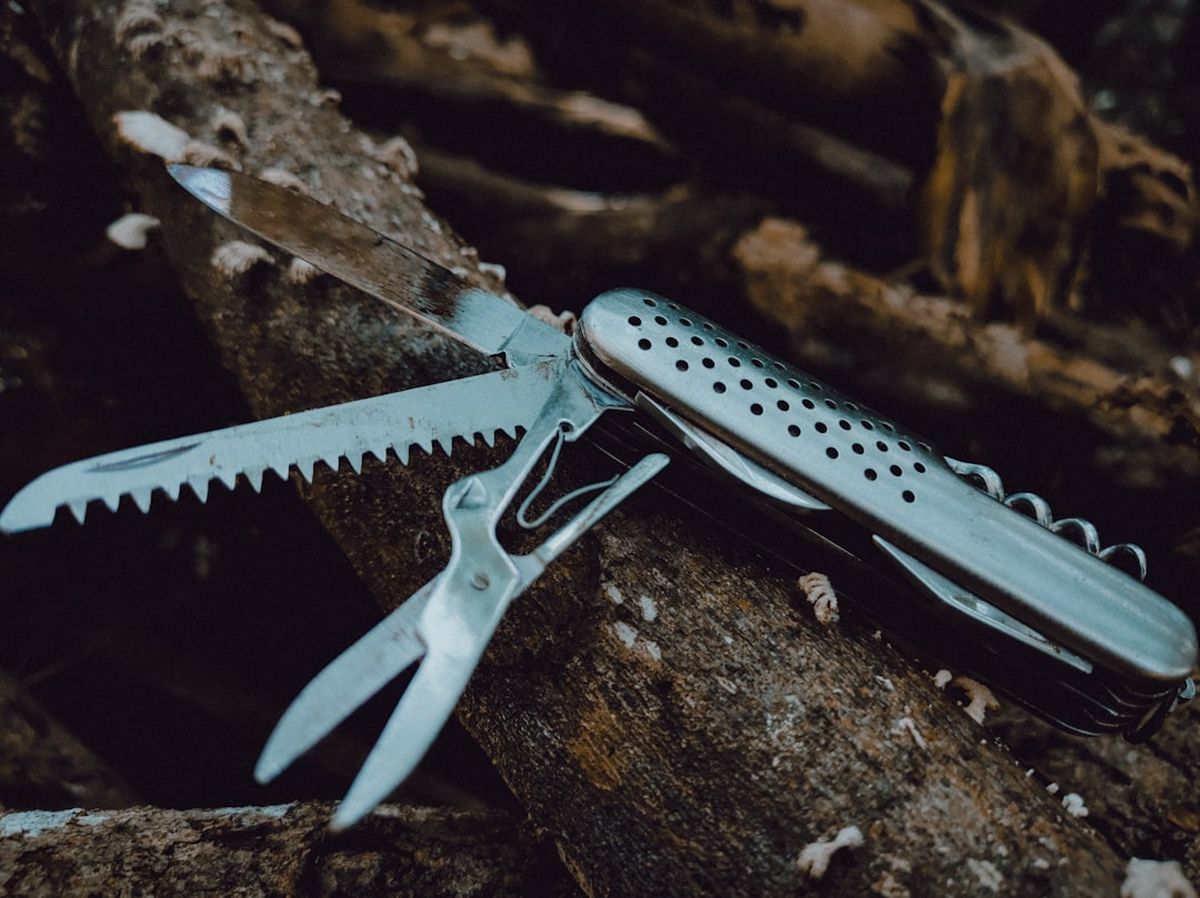
Spend enough time around everyday carry and you notice a pattern that has nothing to do with marketing spec sheets: most people own more multitools than they carry, and the one that actually rides on the belt every single day is rarely the one with the highest tool count. The 21-function showpiece sits in a drawer. The 14-function workhorse gets used until the anodizing wears off the handles. Understanding why that happens is the single most useful thing you can do before spending money on the best multitools for everyday carry in 2026.
This isn’t a ranked list. Tool counts and “top picks” change every season and tell you almost nothing about whether a tool will still be on your hip in five years. What actually predicts long-term carry comes down to three mechanical realities most buying guides skip: how you get the tools out, whether the wear parts can be replaced, and whether there’s a real bit ecosystem behind the driver. Get those three right and the rest is preference.
The Access Problem Nobody Mentions Until It Annoys Them
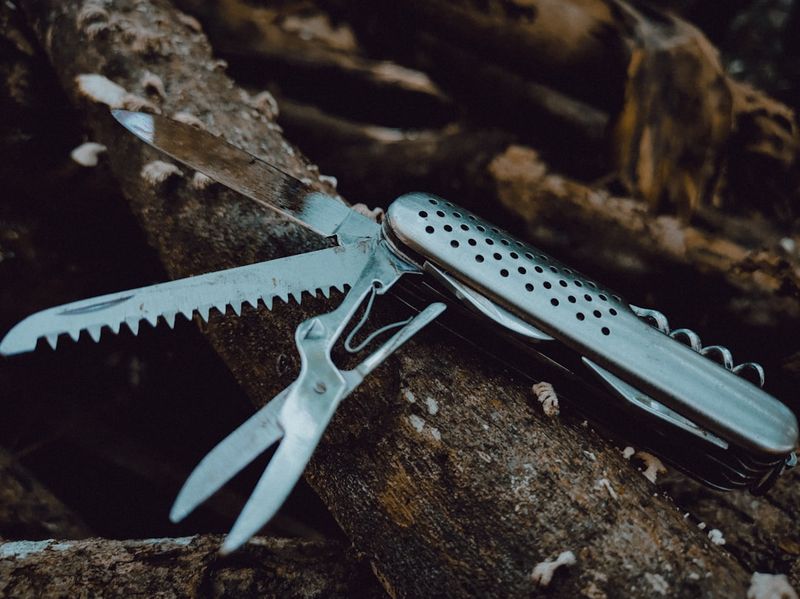
The defining split in modern multitool design is whether the tools you reach for most live outside the handles or inside them. It sounds trivial. It is the difference between a tool you grab one-handed for a ten-second job and one you sigh at, unfold fully, and pick through like a Swiss Army knife at a picnic.
Older plier-style multitools — and plenty still sold today — bury the blade, saw, and file on the inside of the handle scales. To use the knife you butterfly the whole tool open, exposing the pliers, then fold the handles back together to lock the blade. For a camp chore that’s fine. For the dozen tiny daily cuts a real EDC tool handles — a zip tie, a box, a loose thread, a blister pack — it’s friction, and friction is what sends a tool to the drawer.
This is exactly what made the Leatherman Wave Plus the default recommendation for over a decade. Its two most-used implements — the plain blade and the serrated blade — sit on the outside, deployable with the tool closed, one-handed, thumb on the nail nick. You never open the pliers to cut a box. That one decision is why the Wave outsold tools with twice the function count.
The newer Leatherman Free line pushed the idea further with magnetic detents and a one-hand opening action on nearly every tool, not just the blades. The Free P4 lets you flick out implements from the outside with a thumb, and the magnets give a satisfying, deliberate snap that older spring-less designs never had. Whether you prefer the classic outside-access Wave geometry or the Free’s magnetic everything-accessible approach is genuinely a matter of feel — but both share the principle that matters: the tools you use hourly should never require fully deploying the ones you use weekly.
When you’re evaluating any multitool, do this test before you read another spec: figure out which two or three tools you’d actually use most, and check whether you can deploy them with the tool folded and locked. If the answer is no, no amount of extra functions will fix the daily annoyance.
Shop Leatherman Wave Plus on Amazon
Wear Parts: The Quiet Reason Cheap Tools Become Disposable
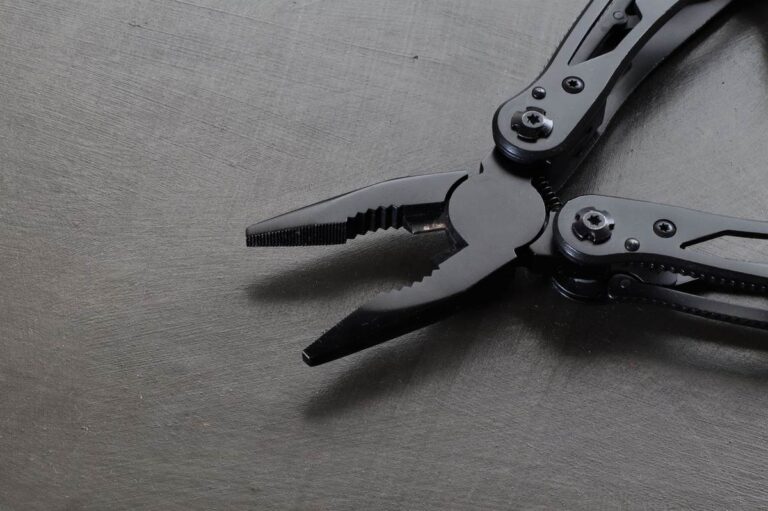
Every multitool has a part that wears out first, and on a plier-based tool it’s almost always the wire cutters. The cutting jaws take the hardest, most concentrated abuse on the whole tool — snipping hardened wire, the occasional small nail, picture-hanging wire, fence ties. Soft jaws roll over and stop biting. Hard jaws can chip. Either way, on a cheap fixed-cutter design, a worn cutter means the entire tool is degraded for good.
This is where the gap between a $20 hardware-store multitool and a serious EDC tool stops being about polish and becomes about lifespan. Mid-tier and premium Leatherman models — the Wave Plus, Charge, and Surge among them — use replaceable wire cutter inserts. The hardened cutting segments are separate pieces held in place rather than ground into the plier head. When they dull or chip, you swap the inserts instead of retiring the tool. The Surge takes that further with larger replaceable cutters built to handle thicker stock.
The Victorinox SwissTool approaches durability from a different philosophy — a one-piece, all-stainless build with no scales to loosen and a reputation for outlasting its owner — but the principle for the buyer is the same: ask what wears out first and whether you can do anything about it. A tool you can service is a tool you keep. A tool that becomes garbage when one jaw rolls is a tool you replace, and replacing tools is how people end up with a drawer full of them.
Two other wear points worth checking before you buy: pivot tightness and the locking mechanism. Pivots on quality tools can be adjusted — a quarter turn on the right screw brings a sloppy joint back to a clean, deliberate action. Locks are harder to service, which is why the liner and frame locks on better tools matter; a lock that develops play is one you live with, so buy one that started tight.
The Bit Driver Ecosystem Is the Real Force Multiplier
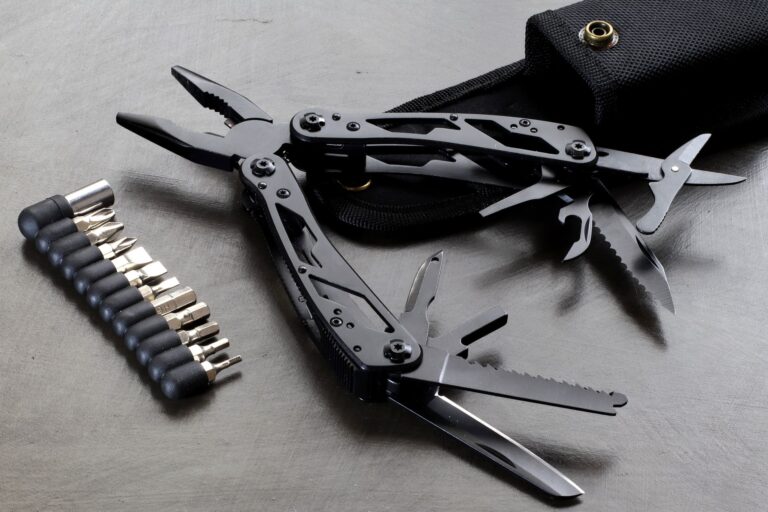
Here’s the upgrade that quietly changed what a multitool can do: the move from fixed flathead and Phillips drivers to a standardized bit system. A tool with two molded screwdrivers can turn two kinds of screws. A tool with a bit driver can turn anything you have a bit for — Torx, hex, square, security bits, precision sizes for eyeglasses and electronics — and that turns a pocket tool into a genuinely capable field kit.
Leatherman’s flat proprietary bits are the most common implementation — double-ended, thin enough to store on the tool, and backed by an inexpensive bit kit that covers nearly every fastener you’ll meet. The tradeoff is that flat bits aren’t standard hardware-store 1/4″ hex bits, so you’re buying into one company’s accessory line. The Gerber Center-Drive made its name answering a related complaint: it puts a full-size, standard-bit driver on the center axis of the tool, so it spins in line with the fastener like a real screwdriver instead of off to the side. For anyone who actually drives screws regularly, that geometry is a meaningfully better experience than an edge-mounted driver.
The question to ask isn’t “does it have a screwdriver” — they all do. It’s whether the driver accepts swappable bits, how those bits are stored and replaced, and whether the driver sits where you can actually put torque through it. A center-axis or extendable driver you can lean on beats a stubby molded blade every time you hit a tight screw.
Shop Gerber Center-Drive on Amazon
Matching the Tool to How You Actually Carry
None of this means bigger is better. The most capable tool you’ll never carry loses to the modest one that’s always on you. Weight and footprint decide that, and they decide it daily. A full plier multitool runs 8 to 9 ounces and wants a belt sheath or a dedicated pocket. That’s a fair trade for someone who works with their hands, fixes things, or spends time outdoors. For an office carry where the heaviest job is opening packages and tightening the occasional screw, that same weight is dead load you’ll eventually leave at home.
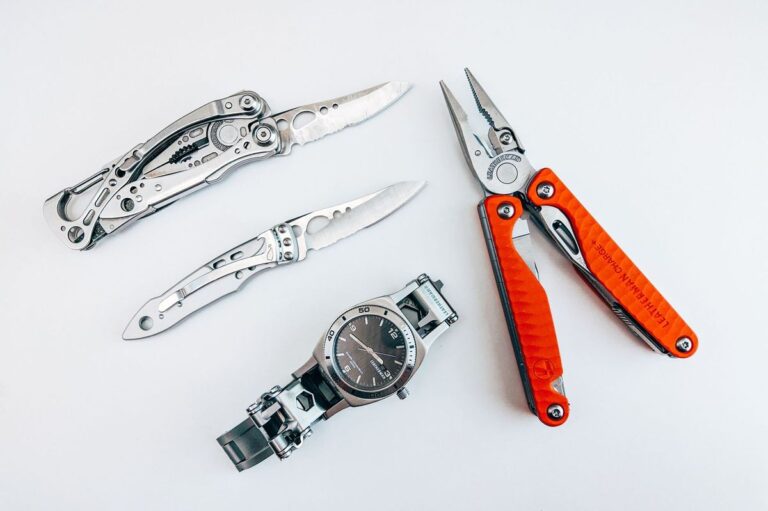
This is why honest EDC advice usually lands on a two-tier approach rather than one do-everything tool. A full-size plier multitool lives in the bag, the truck, or on the belt for work days. A lighter pocket tool — something in the Skeletool or Free P2 class — handles the 90% of daily tasks that are really just “cut something and turn a screw.” The mistake is buying one maximal tool and expecting it to be both the workshop tool and the grab-and-go, then carrying neither because the compromise satisfies neither.
Sheath and clip quality belong in this conversation too, even though they never make spec lists. A tool you carry on the belt lives or dies by its sheath; a tool you pocket lives or dies by its clip. A great multitool with a flimsy clip that lets it flop around in your pocket gets carried less, full stop. Handle the carry hardware before you commit.
A Five-Minute Buying Test for 2026
Strip away the marketing and a smart multitool decision in 2026 comes down to running a short, honest interrogation of any tool you’re considering:
- Can I deploy my two most-used tools with it closed and one-handed? If not, expect friction.
- Are the wire cutters replaceable inserts, or ground into the head? Inserts mean a tool you service instead of replace.
- Does the driver take swappable bits, and where does it sit on the tool? Center-axis or extendable beats edge-mounted for real torque.
- Can I adjust the pivots and is the lock tight out of the box? Serviceable joints age well; sloppy ones only get worse.
- Will I actually carry this weight every day, or am I buying a fantasy of the jobs I rarely do?
Run that test and the field narrows fast. The classic outside-access Wave Plus and the magnetic one-hand Free P4 keep showing up at the top of serious carry lists not because they’re the most loaded tools on the shelf, but because they pass every line of that interrogation. The Surge answers it for heavier work, the Gerber Center-Drive answers it for people who drive a lot of screws, and the Victorinox SwissTool answers it for buyers who value a bombproof one-piece build over an accessory ecosystem.
Buy on access, serviceability, and the bit system, then carry the one that’s light enough to stay on you, and you’ll skip the expensive lesson of owning five multitools and trusting one. The best multitool for everyday carry in 2026 isn’t the one with the longest spec sheet — it’s the one you’ll still be reaching for in 2031.
Shop Leatherman Free P4 on Amazon
Sources
- Leatherman — official product specifications and warranty information
- Victorinox — SwissTool line and construction details
- Gerber Gear — Center-Drive and multitool lineup
- Wikipedia — Multitool history and design overview
Explore our top EDC gear picks at the EverydayCarryGuy shop →
Shop on Amazon
Multitools on Amazon →
As an Amazon Associate we earn from qualifying purchases.
Shop on eBay
Multitools on eBay →
We may earn a commission when you shop through our eBay links.
Survival & preparedness gear
Shop Survival Frog →
We may earn a commission when you shop through our Survival Frog link.