What Wears Out First on a Cheap Pocket Knife — and How to Buy a Sub-$50 Blade That Earns Long-Term Trust
Spend enough time reading knife forums and you’ll notice the sub-$50 conversation almost always starts in the wrong place. People argue about steel charts and blade shapes as if a budget folder lives or dies on edge geometry. It doesn’t. A cheap knife rarely fails at the edge — you can bring a dull edge back with ten minutes on a stone. What actually kills a budget knife is the mechanism: blade play that creeps in, a detent that softens, a lockbar that develops a wobble you can feel through the scales. If you want a sub-$50 knife you’ll still be carrying in three years, you have to buy for the parts that wear, not the parts that sharpen.
This is a durability-first guide. Instead of ranking blades, we’re going to walk through the failure points of an inexpensive folder in the order they typically go, and then look at which real sub-$50 knives are engineered to resist each one. By the end you’ll be able to pick up any budget knife in a shop and know, within about thirty seconds of flicking and closing it, whether it’s built to last.
The pivot goes first — and it’s usually the cheapest thing to fix
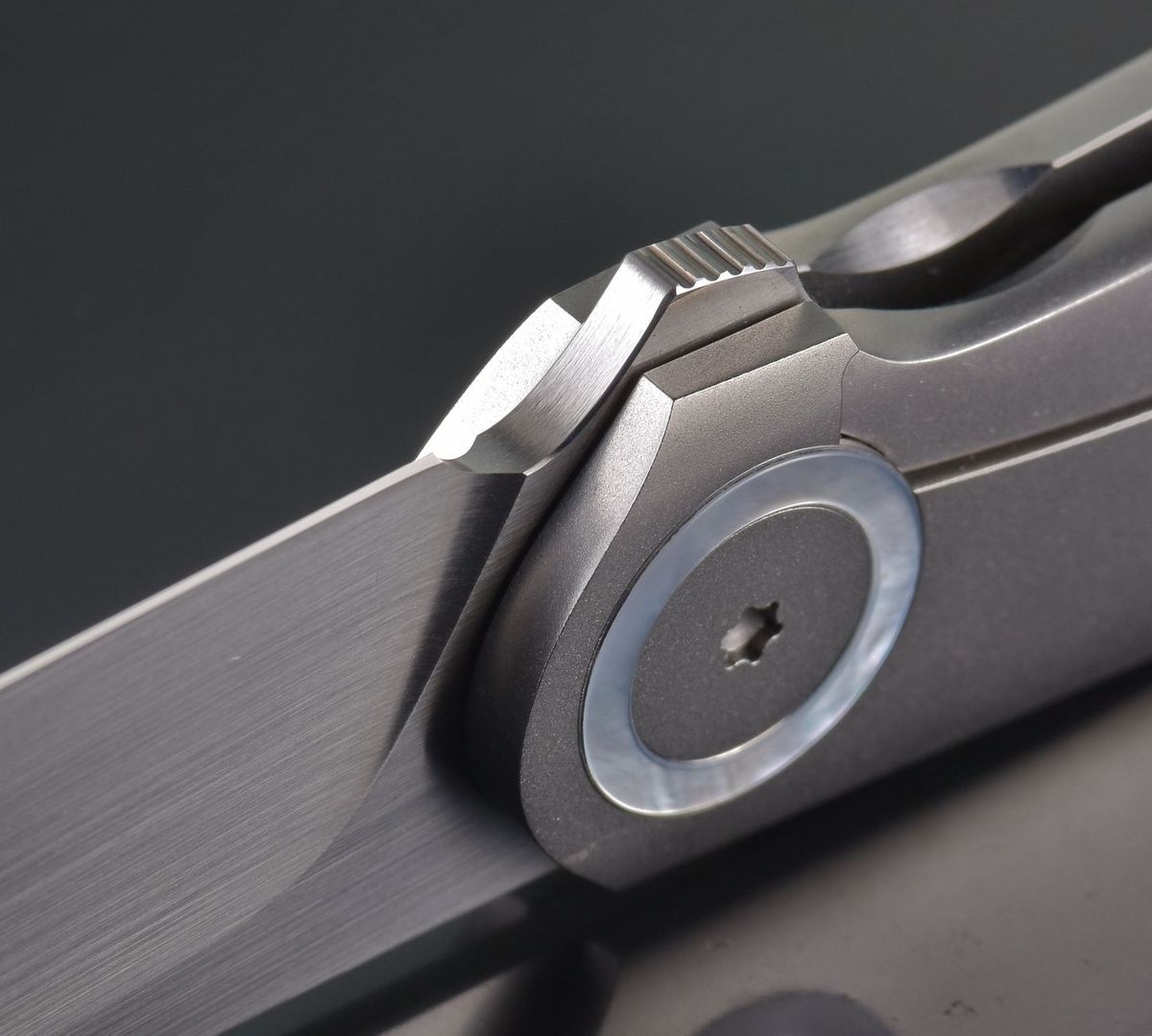
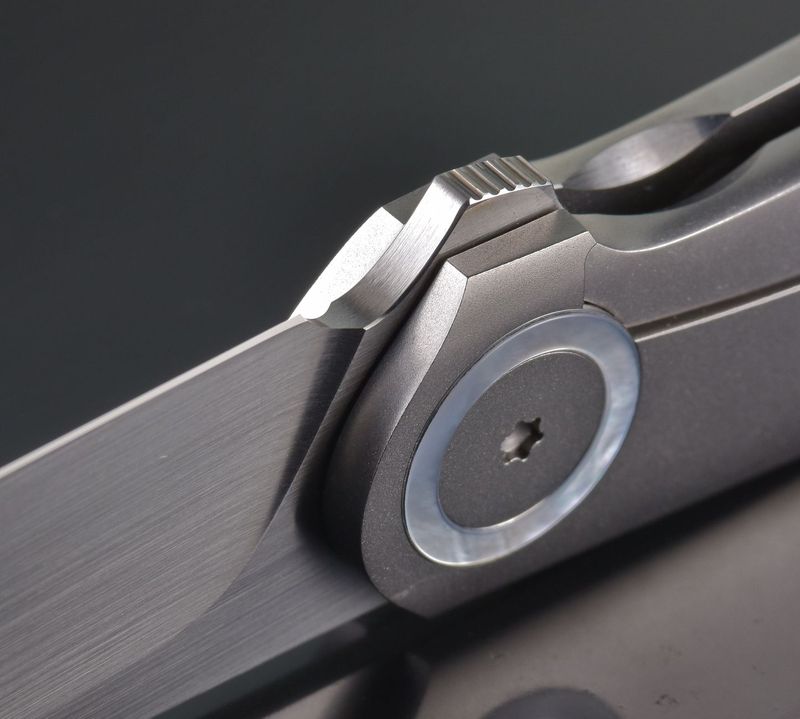
The single most common complaint about budget folders isn’t dullness or rust — it’s blade play. You open the knife, wiggle the blade side to side, and feel a tiny click of movement at the tip. That’s the pivot, and on a cheap knife it develops for one of two reasons: a bushing-free pivot design, or soft washers.
Better budget knives run phosphor bronze washers or a caged bearing system on a proper pivot bushing. The bushing sets a fixed clamping height so you can torque the pivot down to zero play without binding the blade. Knives without a bushing force you to choose between a gritty, tight action and a loose, wobbly one — and over a few hundred open-close cycles they drift loose. The Ontario RAT 1 and RAT 2 are the classic example of doing this right on the cheap: Teflon washers, a beefy pivot, and a design that’s been carried hard for over a decade with the play staying tunable. CIVIVI’s Elementum uses phosphor bronze washers and a caged bearing on some variants, which is why it flicks like a knife twice its price and stays that way.
The test in a shop: open the blade fully, lock it, then push the tip gently side to side and up and down. A whisper of movement you can adjust out with a torx driver is fine. Play you can’t tune out — because there’s no bushing — is a knife that will only get worse.
Shop the Ontario RAT 1 folding knife on Amazon
The lock is where the real money hides
Liner locks and the wear problem
Most knives in this price bracket use a liner lock or a frame lock, and here’s where cheap manufacturing shows. A lock bar is a piece of spring steel that snaps behind the blade tang when you open it. Every time it engages, metal rubs metal. On a poorly made knife the lock face is soft or badly angled, so it either engages too far across the tang (eventually sticking) or too little (a lock that can slip). Cheap lockbars can also “lock rock” — a little vertical play at the tip because the geometry isn’t dialed in.
What you want on a budget liner lock is early-to-mid engagement: with the blade open, the lockbar should sit roughly a third to halfway across the tang, leaving room to travel further as the lock faces wear in over the years. A brand-new knife that already locks up at 90% across the tang has nowhere to go — a few months of use and it’ll start sticking hard. CJRB and Sencut (both Artisan Cutlery sub-brands) have gotten notably good at consistent lock geometry at this price, and Kizer’s Vanguard line brings machining tolerances that used to cost twice as much.
Why the humble backlock refuses to die
If you genuinely never want to think about lock wear, look at a back lock (lockback). Spyderco’s budget-friendly Tenacious and the Byrd Cara Cara use a spine-mounted lock that’s ambidextrous, dead simple, and largely immune to the horizontal wear that plagues cheap liner locks. There’s a reason the Opinel — a wood-handled knife that costs less than a sandwich — has survived essentially unchanged for over a century: its Virobloc collar lock has almost nothing to wear out. Simplicity is a durability feature, and on a budget it’s often the smartest thing you can buy.
Steel matters — but not the way the charts imply
Steel is the part of the knife everyone obsesses over and the part that matters least for longevity, because steel is the one thing you can maintain. A dull blade sharpens. A rusty blade cleans up. What you’re really buying with steel at this price is a balance of edge retention (how long it stays sharp) and ease of sharpening (how fast you can bring it back).
The steels you’ll see under $50, roughly from easiest-to-sharpen to best-edge-retention:
- 8Cr13MoV / AUS-8 — Soft, tough, sharpens in seconds on any stone. Won’t hold an edge long, but you’ll never struggle to fix it. Great for a first knife or a hard-use beater.
- 14C28N (Sandvik) — Kershaw’s workhorse. Excellent corrosion resistance, easy to sharpen, holds an edge respectably. One of the best value steels in existence.
- Nitro-V / 9Cr18MoV — A step up in edge retention with good stainless behavior. Common on CIVIVI and value Chinese-made folders.
- D2 — A semi-stainless tool steel with genuinely long edge retention. The catch: it’s more stubborn to sharpen and will develop light surface patina if you neglect it. The RAT 1 and Elementum both come in D2 for a few dollars more.
- AR-RPM9 — Artisan’s powder-metallurgy steel on the CJRB Pyrite. Fine grain, takes a keen edge, and punches well above its price.
Here’s the honest take: for a daily carry that mostly opens boxes, breaks down cardboard, and cuts the occasional zip tie, a soft, easy-to-sharpen steel like 14C28N will serve you better than a super-steel you dread putting on a stone. Edge retention only matters if you actually maintain the knife — and most people sharpen more willingly when it’s easy.
Shop the CIVIVI Elementum D2 pocket knife on Amazon
The clip and the detent — small parts, daily annoyances
Two components punch far above their size in whether you’ll actually keep carrying a knife. The first is the pocket clip. Cheap clips are stamped from thin steel with too little spring tension, so they either flop loose (and your knife rides up and falls out) or clamp so hard they shred your pocket seam. A good budget clip has a defined ramp so it slides onto fabric without catching, and enough tension to stay put without being a wrestling match. If the clip on a knife you’re considering feels wrong in the store, know that it’s often the part that sends an otherwise-fine knife to the drawer.
The second is the detent — the tiny ball bearing in the lockbar that drops into a dimple on the blade tang to hold it closed. Detent strength is what gives you that satisfying flick-open and, just as importantly, keeps the blade from drifting open in your pocket. A weak detent on a cheap flipper means the knife won’t deploy reliably; too strong and it’s stiff to open. Well-sorted budget flippers like the CJRB Pyrite and Kizer Vanguard models get this dialed, which is the difference between a knife that opens crisply every time and one you fight.
A quick word on assisted-opening budgets
Kershaw built a huge chunk of the budget market on SpeedSafe assisted opening — the Leek and Blur being the poster children. Assisted knives use a torsion bar to spring the blade open once you push it past a threshold. The upside is fast, snappy one-hand deployment for cheap. The durability caveat: the torsion bar is one more part that can eventually fatigue and break, though on Kershaw’s decades-long track record it rarely does within normal carry life. The Leek’s other weak point is a famously thin, needle-like tip — superb for detail work, easy to snap if you pry with it. Buy it for what it is: a slim, elegant slicer, not a pry bar. If you want assisted opening under $50, Kershaw’s 14C28N models are the safe bet.
Shop the Kershaw Leek assisted pocket knife on Amazon
How to buy for the long haul
Put it all together and a durable sub-$50 knife reveals itself through a short physical checklist, not a spec sheet. Open it and check for a bushing or bearing pivot you can tune. Look for a lock that engages early with room to wear in. Favor a steel you’ll actually enjoy sharpening over a super-steel you’ll neglect. Feel the clip and flick the detent a few times. Everything else — handle material, blade shape, finish — is preference, and preference is cheap to satisfy.
The genuinely encouraging part is that this checklist has gotten easy to pass. A decade ago, sub-$50 meant real compromise on tolerances. Today an Ontario RAT, a CIVIVI Elementum, a CJRB Pyrite, a Kizer Vanguard, or an old-faithful Opinel will give you fit and finish that embarrasses the mid-tier knives of years past. Buy for the mechanism, maintain the edge yourself, and a $40 knife will outlast most of the gear in your pocket.
Sources
- Wikipedia — Pocketknife
- Wikipedia — Tool steel
- Wikipedia — Opinel
- BladeForums — knife community reference
Explore our top EDC gear picks at the EverydayCarryGuy shop →
Shop on Amazon
EDC Knives on Amazon →
As an Amazon Associate we earn from qualifying purchases.
Shop on eBay
EDC Knives on eBay →
We may earn a commission when you shop through our eBay links.
Handmade Polish craftsman knives
Shop Polish Custom Knives →
We may earn a commission when you shop through our Polish Custom Knives link.