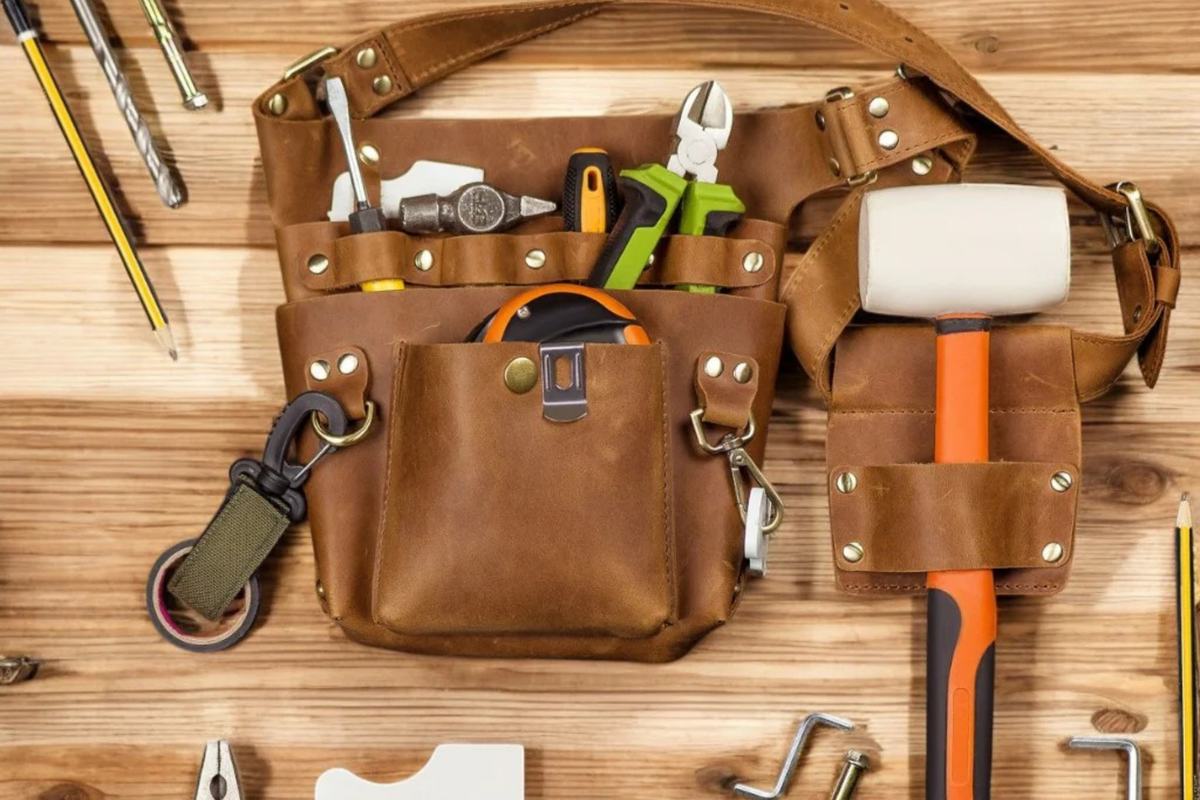
Construction Worker EDC: 7 Jobsite Essentials
More than 8.3 million people worked construction in the U.S. as of September 2026, according to the Bureau of Labor Statistics, and almost none of them start a shift by digging through a shared gang box for the basics. The jobsite supplies the saw, the drill, the ladder — it doesn’t supply what fits in a pocket. That gap gets filled by the same handful of items on most crews: a knife that opens material without walking to the truck, a multitool for the fix that can’t wait, and a flashlight for the one corner of the building with no power run to it yet.
The Folding Utility Knife That Opens Everything First
Most of what gets cut on a jobsite isn’t lumber or pipe — it’s packaging. Shrink wrap off a pallet of drywall, banding off a lumber bundle, the cardboard around a box of fixtures. A folding utility knife with a replaceable-blade mechanism handles all of it without ever needing a sharpening stone, and a pocket clip keeps it reachable without unclipping a full tool pouch for a thirty-second cut.
Fixed-blade sheath knives look tougher but spend most of a shift as dead weight; a folding model that snaps closed when it’s not in use is the one that actually survives bending over rebar or climbing a ladder all day. A $20–$30 folder with a lock-back or framelock mechanism and snap-off or swing-out replaceable blades covers a framer, an electrician, and a drywaller equally well.

Shop the Gerber EAB Lite on Amazon
A Compact Multitool for the Fix That Can’t Wait
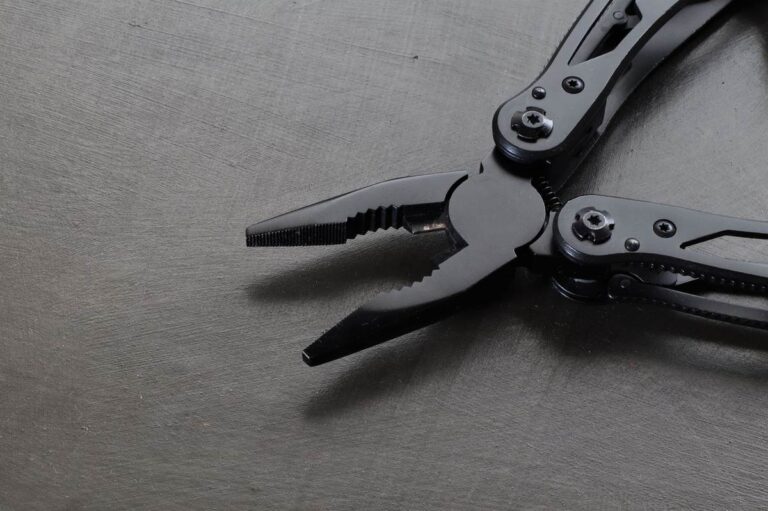
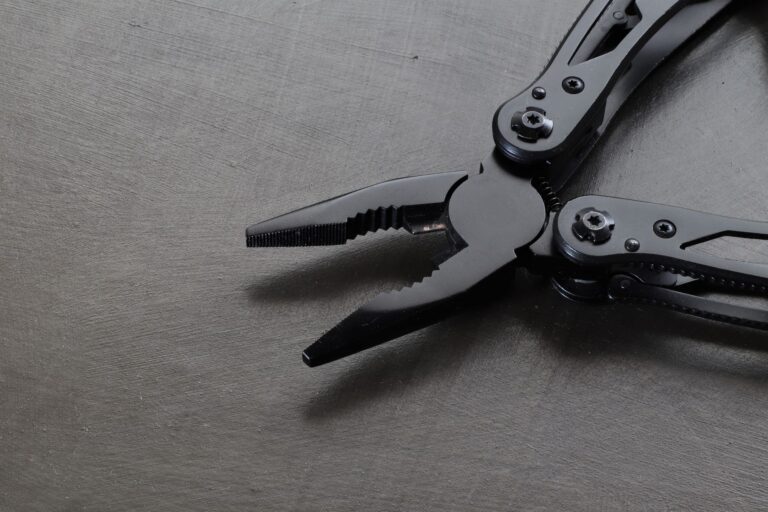
A loose hinge screw, a wire that needs stripping, a bent nail that needs pulling before the next course goes up — none of it is worth a trip back to the truck for a full toolbox. A compact multitool with pliers, a wire stripper, and a bit driver for Phillips, flathead, and the T9/T8/T6 Torx sizes that show up constantly on fixtures and electrical covers closes that gap in about fifteen seconds.
Full-size multitools like a Leatherman Wave Plus ride on a belt loop in a sheath rather than a pocket, which is how most finish and framing crews actually carry them — a pocket version prints through denim and gets left in a jacket on the one day it’s actually needed. The pliers matter more than the blade count; a multitool bought for twelve tools nobody uses is dead weight the same way a fixed-blade knife is.
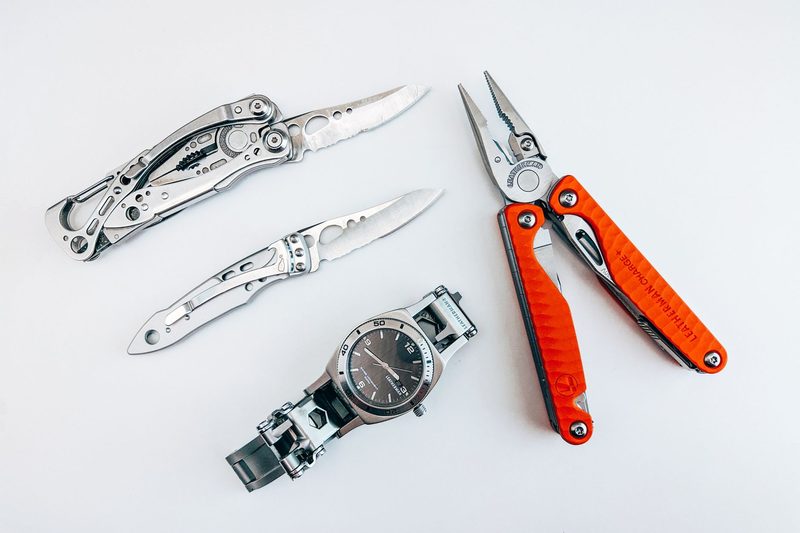
Shop the Leatherman Wave Plus on Amazon
A Pocket Tape Measure for the Quick Check
The 25-foot tape clipped to the belt is for layout — stud spacing, door rough-openings, cut lists. It’s not what gets reached for fifty times a shift for the small question: does this fit through that doorway, is this shelf height going to clear the outlet, how much clearance is left under that duct. A mini pocket tape in the 6–10 foot range, clipped to a keyring or dropped in a shirt pocket, answers that without unclipping the big one.
It earns its keep mostly as a backup. The 25-foot tape gets set down on a sawhorse or a window sill and left there more often than anyone wants to admit, and a crew that shares one tape between three people loses an hour a week just walking around looking for it. A second small one in a pocket means never being the person waiting on someone else’s tape.

A Carpenter’s Pencil That Survives Concrete and Rain
A carpenter’s pencil has a flat, oval barrel for a reason: it doesn’t roll off a stack of trusses, a window sill, or the top of a ladder the way a round pencil does. The wide, flat graphite also marks rough-sawn lumber, block, and wet material clearly, where a fine-tip pen either won’t write at all or smears into nothing the first time it gets rained on.
A standard pen still earns a pocket for site paperwork — delivery slips, change orders, a signature on a packing list — but it’s the carpenter’s pencil that gets pulled out and re-pocketed a hundred times in a normal shift. Cheap enough to carry three or four at once and never worry about losing one.

A Rugged Phone Case for a Device That Can’t Go Down
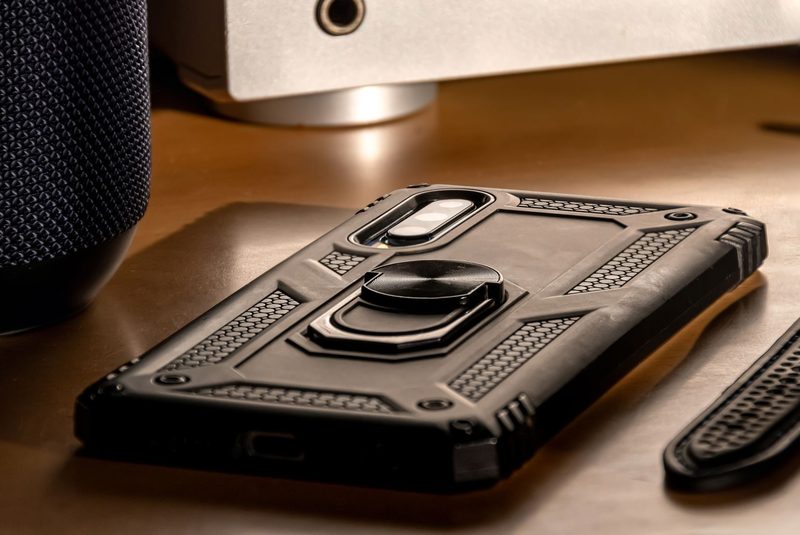
A phone on a jobsite takes hits an office phone never will: dropped off a ladder, sat on in a truck seat, coated in drywall dust, splashed with wet concrete at a pour. A drop-rated case matters more here than almost anywhere else EDC gets discussed, because a cracked screen mid-shift means no photos for a change order, no text to a foreman, no plan set pulled up on-site.
A case built for real drops — not just a slim cosmetic shell — paired with a belt clip holster or a lanyard keeps the phone off a ladder rung where it can slide out of a pocket on the climb down. It’s one of the cheapest insurance purchases on this entire list relative to what a replacement screen costs.
Safety Glasses and Earplugs Within Arm’s Reach
OSHA 1926.102 requires eye protection meeting the ANSI Z87.1 standard anywhere there’s a risk of flying particles, and most sites enforce it the moment a saw or grinder comes out. The problem isn’t the rule — it’s that the one pair clipped to a hard hat gets lost by lunch. A second pair in a hard case in a shirt pocket means not walking off the clock to find a spare before making a cut.
Foam earplugs belong in the same category. A small keychain case keeps a pair clean and actually on-body instead of loose in a pocket collecting dust and sawdust, which is usually the real reason people skip wearing them around a compressor or a saw — not that they forgot, but that digging a clean pair out of a gang box felt like more hassle than it was worth.

A Pocket Flashlight for the Spaces Daylight Doesn’t Reach
Crawl spaces, electrical panels, a mechanical room with no windows, an early-morning start in winter before the sun’s up — a compact flashlight earns its place for all of it. It’s the tool that gets used almost every shift but never looks urgent enough to buy until the one morning a breaker trips in a room with no light and a phone flashlight isn’t bright enough to read the panel labels.
A belt-clip or pocket flashlight with a simple twist-on or single-button interface — nothing that needs an app or a charging cradle left at home — is the one that’s actually in a pocket when it’s needed instead of sitting in a truck console. Rechargeable is worth the extra cost over disposable batteries for the same reason it matters on any tool that sits unused for weeks between the jobs that actually need it.
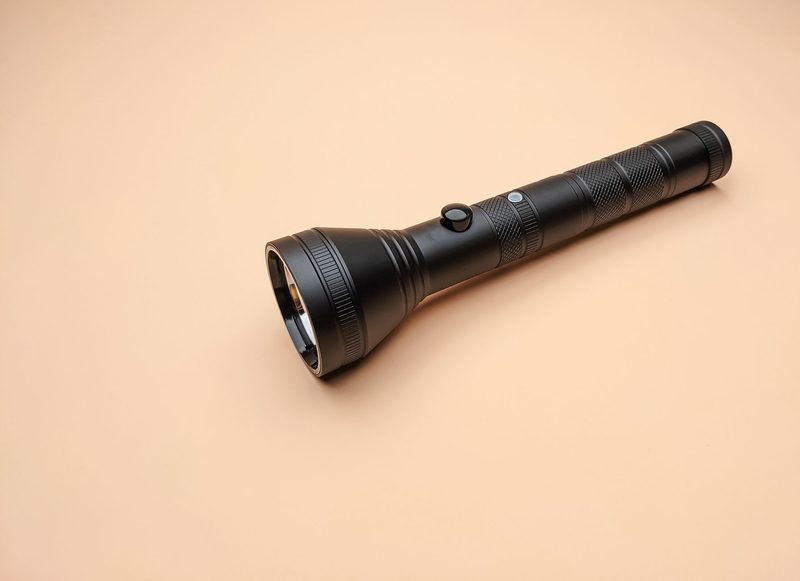
Shop the Streamlight ProTac 2L-X on Amazon
Put it together and it’s seven items that fit in a pocket or on a belt loop with room to spare: utility knife, multitool, pocket tape, carpenter’s pencil, phone case, spare safety glasses and earplugs, and a flashlight. None of it duplicates the tool belt — it’s what’s still useful the moment the belt comes off at the end of the day, and what should already be on before the first tool bag gets opened in the morning. Tradespeople weighing which multitool is actually worth carrying or double-checking local knife carry rules before adding a folder to the mix can start with those guides.
Frequently Asked Questions
What should a construction worker carry in their pockets besides tools from the belt?
A folding utility knife, a compact multitool, a small pocket tape measure, a carpenter’s pencil, a rugged phone case, a spare pair of safety glasses, foam earplugs in a case, and a compact flashlight. None of it duplicates what’s already on the tool belt.
Are safety glasses legally required on a construction site?
Yes. OSHA 1926.102 requires eye protection meeting the ANSI Z87.1 standard wherever there’s a risk of flying particles, which covers most cutting, grinding, and nailing tasks on a typical site.
Is it okay to carry a folding knife on a jobsite?
Generally yes — unlike bars, offices, or schools, construction sites treat a folding utility knife as a standard tool rather than a weapons-policy issue. Check with a site supervisor on any blade-length limits, which vary more by state carry law than by company policy.
What’s the difference between a tool belt and jobsite EDC?
A tool belt carries trade-specific tools for the task at hand — a framer’s hammer and nail bags look nothing like an electrician’s pliers and strippers. EDC is the smaller, trade-independent set that stays on a worker regardless of what the belt holds that day.
Sources
- U.S. Bureau of Labor Statistics — Employment Situation Summary — September 2026 construction employment figures.
- OSHA 1926.102 — Eye and Face Protection — construction eye protection standard and ANSI Z87.1 reference.