Victorinox Swiss Army Knife vs Leatherman: Which Belongs in Your Pocket?
Ask ten EDC guys what lives in their pocket and you’ll eventually start a small war between two camps: the Victorinox loyalists who swear by a slim red sliver of Swiss steel, and the Leatherman crowd who won’t leave the house without a set of pliers folded against their hip. Both companies have spent decades earning that loyalty, and both make genuinely excellent tools. But they solve fundamentally different problems. This is the honest, spec-deep breakdown of Victorinox Swiss Army Knife vs Leatherman — what each does brilliantly, where each falls flat, and how to figure out which one actually deserves a permanent spot in your carry.
Two Different Philosophies of “Tool”
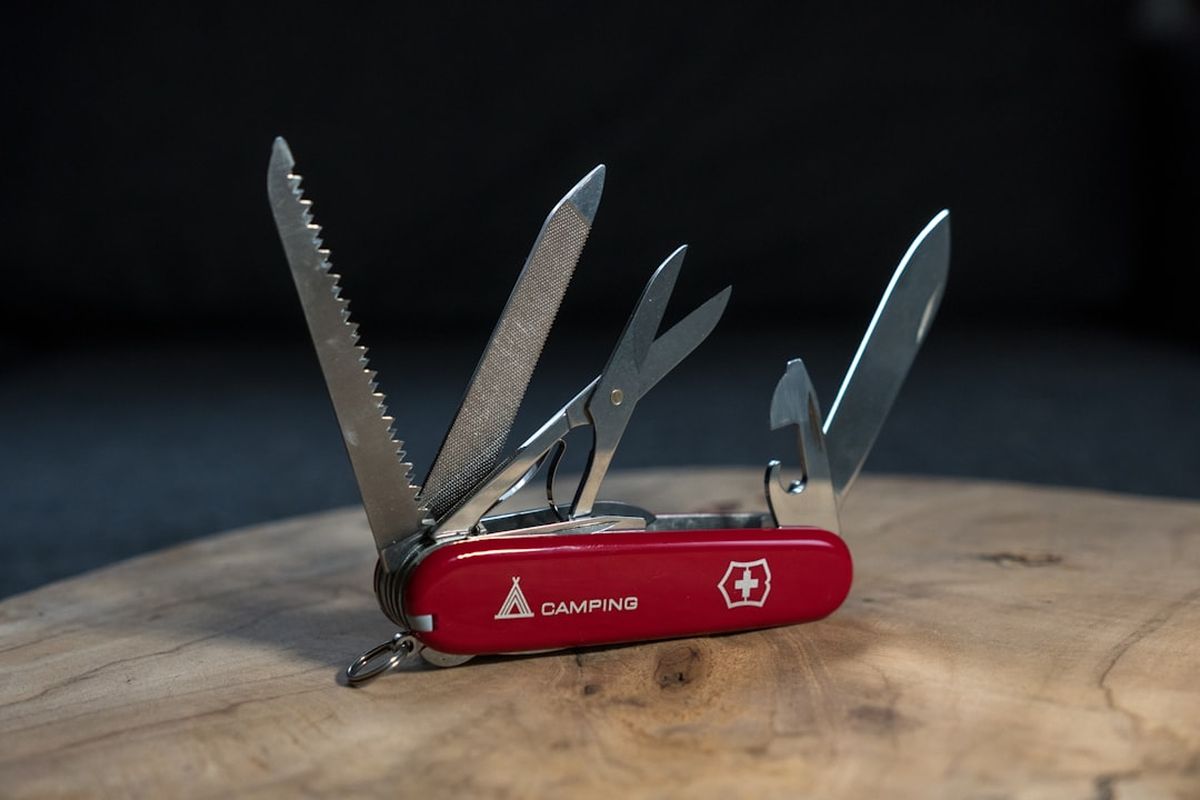
The core difference isn’t quality — it’s design intent. A Victorinox Swiss Army Knife is a folding-knife platform that happens to carry small implements. Everything nests around a blade, and the whole package is built to disappear into a pocket. A Leatherman is a plier platform that happens to carry blades. The pliers are the spine of the tool, and everything folds out from the handles. Once you internalize that, the entire comparison clicks into place.
Victorinox builds for refinement and constant low-stakes utility — opening packages, trimming threads, tightening eyeglass screws, slicing an apple at your desk. Leatherman builds for leverage and mechanical work — gripping a stripped bolt, cutting wire, prying, twisting hardened steel. Neither is “better.” They’re aimed at different days.
Weight and Pocketability: The Deciding Factor for Most People
This is where the decision is usually won or lost. The Victorinox Classic SD weighs around 21 grams (0.7 oz) and is small enough to ride on a keychain you forget is there. The mid-size Victorinox Huntsman — arguably the most balanced SAK ever made — comes in around 97 grams (3.4 oz) with its 91mm frame. It carries like a fat pen and slips into a fifth pocket without protest.
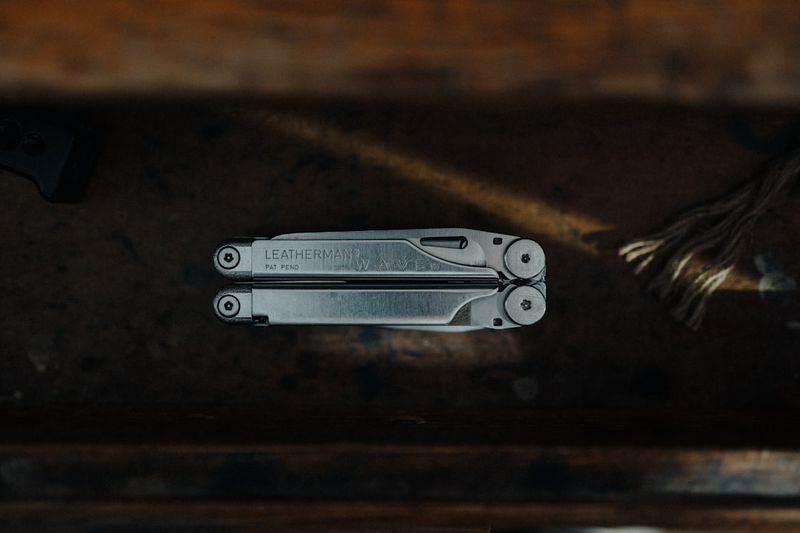
A Leatherman is a different animal entirely. The flagship Leatherman Wave Plus tips the scale at roughly 250 grams (8.5 oz). The Leatherman Free P4 is similar at around 244 grams. That’s a quarter-kilo of stainless steel, and you feel it. Most people who carry a full-size Leatherman daily run it in a belt sheath or a bag, not loose in a pocket. The lighter Leatherman Skeletool drops to about 142 grams by stripping the toolset down, which is the company’s answer to the pocketability problem — but even that is heavier than a fully loaded Huntsman.
If your honest answer to “will I actually carry this every single day” is uncertain, weight is your tiebreaker, and Victorinox wins it nearly every time.
Shop Victorinox Huntsman on Amazon
The Pliers Question
Here’s the simplest decision filter in this entire comparison: do you regularly need pliers? If yes, the conversation is basically over — Victorinox doesn’t make a real plier tool, and you need a Leatherman. The needle-nose pliers on a Wave Plus, with their hardened wire cutters and replaceable cutting inserts, can grip a hot fitting, pull a splinter, crimp a connector, or snip 12-gauge wire without complaint.
The kinds of work that demand pliers — automotive, electrical, bike maintenance, anything involving fasteners that fight back — are exactly the jobs a Swiss Army Knife cannot do. The SAK’s tools are designed for finesse, not torque. Try to muscle a stuck bolt with the small screwdriver on a Huntsman and you’ll either slip or bend it. The Leatherman handles are literally built to be gripped hard and leaned on.
One-Hand Opening and Outside-Access Tools
Leatherman’s higher-end models — the Wave Plus and the magnetic-detent Free P4 — let you deploy the main blade and several tools without unfolding the pliers. That outside-access design is a genuine functional advantage when your other hand is occupied. The Free line adds magnetic one-hand opening and locking on every implement, which is the closest a multitool has come to feeling like a precision instrument rather than a folded toolbox.
Victorinox, by contrast, is overwhelmingly a two-hand, nail-nick affair (the Trekker and a few one-hand models are exceptions). For desk-and-pocket tasks that’s fine. For working with gloves on or a load in your off hand, it’s a real limitation.
Blades and Steel: An Honest Look
Neither brand is chasing the supersteel race, and that’s fine — both prioritize ease of sharpening over edge retention. Victorinox uses a proprietary stainless (roughly equivalent to X55CrMo14, around 56 HRC). It is famously soft by knife-snob standards, but that softness is a feature: a SAK blade takes a screaming-sharp edge in about four passes on a stone and you can touch it up on the bottom of a coffee mug in a pinch. The thin, flat-ground blade is one of the best slicers in any pocket tool, period.
Leatherman blades run 420HC stainless, hardened a touch higher, with thicker stock behind the edge because the blade has to share a handle with everything else. It holds an edge a bit longer than Victorinox steel but slices noticeably worse — that extra thickness fights you in fine cutting tasks. For breaking down a box, both are fine. For peeling fruit or detailed cutting, the Swiss Army blade is the clear winner.
If you want a serious dedicated cutting edge, honestly, neither brand should be your primary knife — pair either with a proper folder. But as the only blade you’re carrying, the Victorinox edge geometry is more pleasant to actually use.
The Unsung Heroes: Scissors and the Tweezer/Toothpick
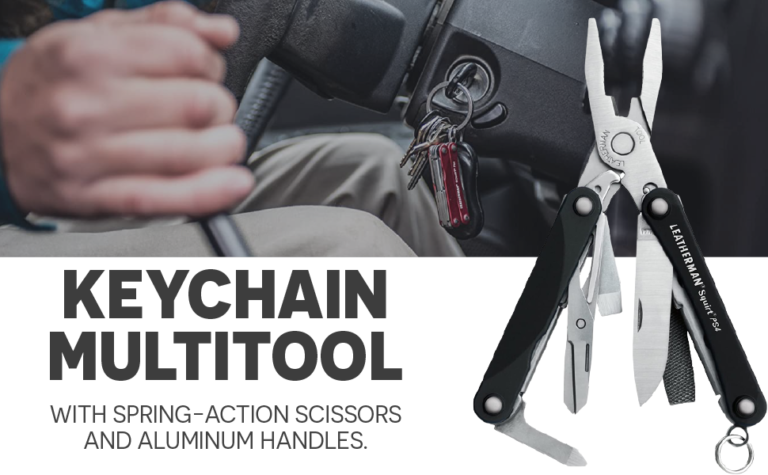
Talk to long-term Victorinox carriers and you’ll hear the same confession over and over: the tool they use most isn’t the blade — it’s the scissors. The sprung scissors on a Huntsman or Classic are genuinely excellent, far better than the cramped scissors Leatherman crams into some models. They cut fingernails, tags, coupons, fishing line, and packaging with real precision. For an EDC that lives in an office or around a home, the scissors alone justify the SAK.
The hidden tweezers and toothpick tucked into the larger Victorinox scales are another quiet win — splinters, ticks, and that thing stuck in your teeth at a restaurant. Leatherman’s strengths are real, but they’re industrial. Victorinox owns the small, frequent, human-scale annoyances of daily life.
Shop Leatherman Wave Plus on Amazon
Build, Warranty, and the Long Game
Both brands build tools that outlive their owners. Leatherman backs its tools with a 25-year warranty; Victorinox effectively offers a lifetime guarantee against defects in material and workmanship. In practice, a well-treated SAK or Leatherman will run for decades.
Durability differs in character, though. A Leatherman shrugs off abuse — drops, prying, grit, weather. The all-steel construction means there’s simply less to break. A Victorinox is more delicate in absolute terms; the cellidor or nylon scales can crack, and the tip of a small screwdriver can bend if you treat it like a pry bar. But the SAK is also serviceable in ways that matter: spent a scale? Replace it. The whole tool can be flushed, oiled, and brought back to factory-smooth in minutes.
Maintenance Reality
Leatherman pivots benefit from occasional oil and the cutting inserts on the Wave Plus are user-replaceable — a brilliant touch that means your wire cutters never permanently dull. Victorinox tools love a single drop of mineral oil on the springs once or twice a year. Neither is high-maintenance, but the Leatherman’s all-metal guts tolerate neglect better, while the SAK rewards a tiny bit of care with glassy action.
So Which One Should You Actually Carry?
Strip away the brand loyalty and the answer comes down to the shape of your days. If your typical “tasks” are opening mail, cutting tags, trimming a hangnail, tightening a screw on your glasses, and slicing fruit — and you want something that vanishes in your pocket — get a Victorinox. The Huntsman is the do-everything sweet spot; the Classic SD is the keychain minimum that’s still endlessly useful.
If your days involve fasteners, wire, prying, gripping, and real mechanical work — and you don’t mind a sheath or a heavier carry — get a Leatherman. The Wave Plus is the proven workhorse; the Free P4 is the modern upgrade if you value one-hand magnetic deployment and locking tools.
And here’s the answer most seasoned EDC people land on: carry both. A featherweight Victorinox Classic on the keychain for the hundred tiny daily tasks, and a Leatherman in the bag or on the belt for when the day turns into actual work. They’re not really competitors — they’re a matched set that covers the full spectrum of “I need a tool right now.”
The Budget Entry Point
If you’re new to either ecosystem and want to test the waters cheaply, the Victorinox Classic SD is the single best few-dollars-spent in all of EDC — small, light, and shockingly capable. On the Leatherman side, the Skeletool delivers pliers, a blade, and a bit driver in a far more carry-friendly package than the full Wave, and it’s the gateway most people use before committing to a full-size multitool.
Shop Victorinox Classic SD on Amazon
The Bottom Line
Victorinox Swiss Army Knife vs Leatherman isn’t a fight with a single winner — it’s a question about your life. Victorinox is the master of the small, the slim, and the everyday: scissors, a fine blade, and a package you’ll never notice carrying. Leatherman is the master of leverage: pliers, cutters, and a toolbox that folds into your fist. Pick the one that matches the work your hands actually do, and if the budget allows, let them share your kit. Either way, you’re carrying a tool from a company that’s been getting this right for over a century.
Sources
- Victorinox — official site (specs, model lineup, warranty)
- Leatherman — official site (Wave Plus, Free P4, Skeletool specs and warranty)
- Wikipedia — Swiss Army knife (history, steel, construction)
- Wikipedia — Leatherman (company history and tool design)
Explore our top EDC gear picks at the EverydayCarryGuy shop →
Shop on Amazon
EDC Knives on Amazon →
As an Amazon Associate we earn from qualifying purchases.
Shop on eBay
EDC Knives on eBay →
We may earn a commission when you shop through our eBay links.