The Under-$100 Multitool Sweet Spot: Where Budget Money Actually Buys Real Capability
There’s a stubborn myth in EDC circles that you have to spend $150-plus to get a multitool worth carrying. It’s wrong. The sub-$100 bracket is arguably the most interesting price tier in the entire category, because it’s exactly where the engineering stops being about cost-cutting and starts being about deliberate trade-offs. Below $30 you’re buying compromises you’ll regret on the first stuck bolt. Above $100 you’re mostly paying for premium steel, replaceable wire cutters, and 25-year warranty polish. But the $40-to-$100 window? That’s where pliers get strong enough to trust, blades get long enough to matter, and you stop noticing what’s missing because the tool just works.
This isn’t a ranked list of “the ten best.” It’s a breakdown of what your money actually buys as you climb from budget to the $100 ceiling, what separates a genuinely good cheap multitool from a drawer-dweller, and which tools earn the spend. If you carry a multitool daily — for work, for the car, for the perpetual small emergencies of adult life — this is the tier you should be shopping.
What Actually Changes as You Cross $40
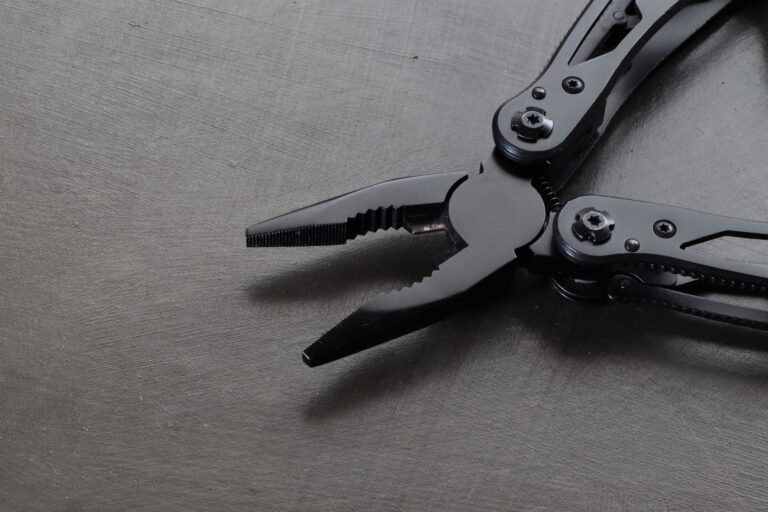
The single biggest jump in multitool quality happens at the pliers. Cheap multitools — the gas-station and big-box no-names — fail at the plier jaws first. The pivot is loose, the jaws don’t meet cleanly, and the handles flex under any real squeeze because the steel is thin and the construction is folded sheet metal rather than properly machined. You feel it the moment you try to grip a rounded nut: the tool twists in your hand and cams off.
Cross into the $40-to-$60 range and the pliers become trustworthy. The Leatherman Sidekick and Wingman, Gerber’s Suspension line, and Victorinox’s entry SwissTools all use box-construction handles or solid stainless frames that don’t flex. The jaws actually align. The needle-nose tips meet at a point fine enough to grab a dropped screw out of an engine bay. That structural rigidity is the dividing line between a tool you grab without thinking and one you reach past for real pliers.
The second thing that changes is access. Budget tools bury every implement inside the handle, meaning you have to unfold the whole tool — and frequently pry at a stubborn blade with a fingernail — just to cut a zip tie. Spend a bit more and you start getting outside-accessible blades you can open with the tool closed, often one-handed. The Leatherman Sidekick puts both its knife and saw on the outside; the Wave Plus (which sneaks in right under or around the $100 mark depending on the day) puts all four primary blades outside. Once you’ve carried a tool with one-hand blade access, going back feels archaic.
The Budget Heroes: $40-$60
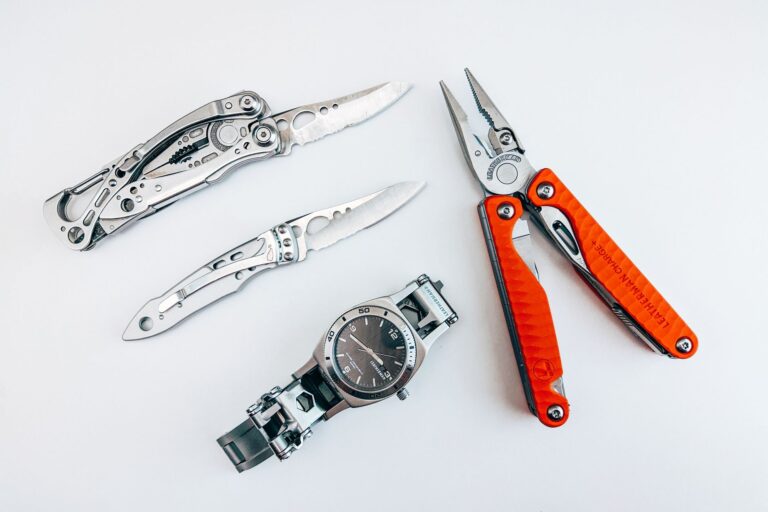
If you want one recommendation that punches absurdly above its price, it’s the Leatherman Sidekick. It typically lands in the mid-$40s and gives you spring-loaded pliers (they open back up on their own, which matters more than you’d think during repetitive work), a combo knife and a wood/metal saw both accessible from the outside, and the full Leatherman 25-year warranty. The spring-loaded jaws alone put it ahead of tools costing more. It’s made in Portland, not offshore, and it’s the tool I hand to anyone who asks “what’s a good first multitool that won’t disappoint me.”
Its sibling, the Wingman, swaps the saw for spring-loaded scissors and runs even cheaper. If your daily annoyances skew toward packaging, threads, and tape rather than wood and rope, the Wingman is the smarter buy. The scissors on these are genuinely good — sprung, sharp, and large enough to use without cramping your fingers.
On the Gerber side, the Suspension NXT brings spring-loaded pliers and a butterfly-opening frame in the same price neighborhood, with a more aggressive, lightweight aesthetic and a pocket clip — something Leatherman often omits at this tier. Gerber’s quality control has historically been streakier than Leatherman’s, but the current Suspension is a solid, honest tool. The carbide-tipped wire cutters on the higher Gerbers are a real perk if you cut a lot of hard wire.
Shop the Leatherman Sidekick on Amazon
The $60-$100 Bracket: Where the Compromises Disappear
Push toward the upper half of this tier and you reach tools that genuinely don’t feel like budget choices anymore — they feel like the tools the flagships are based on, with a few premium features shaved off.
Leatherman Rebar
The Rebar is, to a lot of long-time Leatherman users, the platonic ideal of a no-nonsense multitool. It’s built on the same heavy-duty DNA as the legendary Super Tool but in a more pocketable package. The pliers are stout, the construction is all stainless, and crucially it has replaceable wire cutters — a feature usually reserved for tools well over $100. You don’t get one-hand-opening blades; everything is inside-access and you need both hands. For a lot of people who use a multitool as a tool and not a fidget toy, that’s a non-issue. The Rebar trades convenience for durability and a lower price, and it’s a trade worth making if you work with your hands.
Victorinox SwissTool Spirit (entry versions)
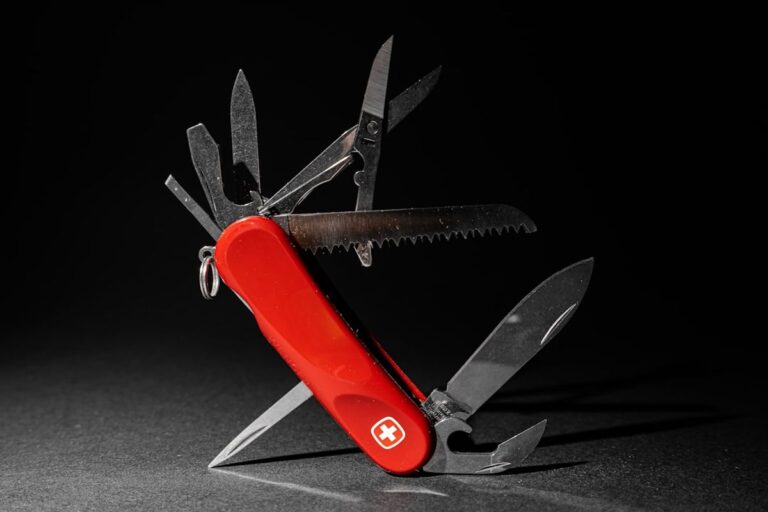
Victorinox is famous for Swiss Army Knives, but their full-size multitools are quietly some of the best-machined in the business. The base SwissTools run above $100, but the smaller SwissTool Spirit in its simpler trims can be found near the ceiling of this range, and the fit and finish embarrasses tools costing more. The implements open with the tool unfolded and — uniquely — all the tools are accessible from the outside on the Spirit, with proper nail nicks and a smoothness of action that feels engineered rather than assembled. If you value precision and a slim, refined feel over brute pliers torque, this is the standout.
Leatherman Wave Plus
The Wave Plus is the best-selling multitool in the world for a reason, and depending on sales it hovers right around the $100 line. It’s worth stretching for if you can. Four outside-accessible, one-hand-opening blades (plain knife, serrated knife, saw, file), replaceable wire cutters, and the all-around competence that’s made it the default recommendation for over a decade. The “Plus” upgrade brought better-quality wire cutters and a more useful file over the older Wave. If your budget can flex to the top of this tier, the Wave Plus is the tool that ends the search for most people.
Shop the Leatherman Wave Plus on Amazon
Spec Realities: What to Ignore and What to Insist On
Multitool marketing loves to brag about implement count. Ignore it. A tool advertising “21 functions” is usually padding the list by counting each flathead size and the bottle opener separately. What matters is whether the implements you’ll actually use are good, and whether the ones you don’t can be ignored without adding bulk you’ll hate carrying.
Insist on a few things. First, locking blades and tools — at this price point there’s no excuse for implements that fold on your fingers under load. Both Leatherman and Victorinox lock their primary cutting tools in this tier. Second, handle construction you can grip without pain; box-frame stainless handles dig into your palm during hard plier work, which is why some people prefer rounded or rubberized grips for heavy use. Handle this if you can before buying. Third, an honest assessment of weight: a full-size tool runs 8 to 9 ounces, which on a belt sheath disappears but in a pants pocket announces itself all day. If pocket carry is the plan, that weight is the real spec to respect.
One spec genuinely worth paying for inside this budget is replaceable wire cutters. On cheaper tools the cutters are machined into the plier jaws, so when they dull or nick from cutting hardened wire, the whole tool is degraded forever. The Rebar and Wave Plus use removable, replaceable cutter inserts — a small thing that dramatically extends the useful life of a tool you might carry for fifteen years.
Matching the Tool to How You Actually Live
The honest truth is that the “best” multitool under $100 depends entirely on the shape of your daily problems. If you spend your days around packaging, cabling, and office friction, a scissor-forward tool like the Wingman solves more real problems than a heavy pliers brute ever will. If you work on cars, bikes, or job sites, the Rebar’s torque and replaceable cutters matter more than one-hand opening. If you want a do-everything tool you’ll carry for a decade and stop thinking about, the Wave Plus is the safe, boring, correct answer.
What you should not do is buy on implement count or on the sub-$25 price that looks irresistible online. The cheapest tools fail exactly when you need them — the pliers that twist off a nut, the blade that won’t lock, the saw that bends. The whole point of carrying a multitool is confidence that it’ll handle the unplanned moment. That confidence starts at about $40 and is fully bought by $100. Spend somewhere in that window, match the tool to your actual life, and you’ll carry it for years.
If you’re new to carrying and want the lowest-risk entry, start with the Sidekick or Wingman, carry it daily for a month, and pay attention to which implements you actually reach for. That real-world data is worth more than any spec sheet when you eventually decide whether to step up to a Wave Plus or a SwissTool. The budget tier isn’t a consolation prize — for a lot of people it’s the destination.
Shop Multitools Under $100 on Amazon
Sources
- Leatherman — official product specifications and warranty details
- Gerber Gear — Suspension and multitool line specifications
- Victorinox — SwissTool product information
- Wikipedia — Multitool (history and construction overview)
Explore our top EDC gear picks at the EverydayCarryGuy shop →
Shop on Amazon
Multitools on Amazon →
As an Amazon Associate we earn from qualifying purchases.
Shop on eBay
Multitools on eBay →
We may earn a commission when you shop through our eBay links.
Survival & preparedness gear
Shop Survival Frog →
We may earn a commission when you shop through our Survival Frog link.