Compact Multitool Pocket Math: Width, Profile, and Pivot Stack Geometry That Decides What Actually Carries
The phrase “fits in your pocket” does a lot of dishonest work in multitool marketing. Almost every multitool will technically fit in a pocket. The question gear nerds actually care about is whether it carries — whether you’ll still be carrying it three weeks from now, after it has printed through your chinos, scratched your phone screen, or migrated to the bottom of a drawer because clipping it on felt like wearing a brick.
That gap between “fits” and “carries” is where compact multitool selection actually happens. And it’s not solved by chasing the lowest weight figure on a spec sheet. The deciding factors are geometry: width across the pivots, profile thickness when closed, edge taper on the handle scales, and how the tool stack distributes mass when you sit, squat, or bend over. Get those right and a 4-ounce tool disappears in your pocket. Get them wrong and a 2.5-ounce tool feels like a hockey puck.
This is a breakdown of the physical variables that decide whether a compact multitool actually earns its real estate — and how to read the spec sheet honestly when you’re shopping.
Width Is the Lie the Spec Sheet Tells
Manufacturers quote closed length because it sounds compact. A Leatherman Wave+ is 4 inches closed — about the same as a folding knife you’d carry without thinking. What they don’t lead with is closed width: the Wave+ is roughly 1.27 inches wide and 0.65 inches thick. That’s a fat fist for a pocket, regardless of length.
Width across the pivot stack is the single biggest comfort variable on a compact multitool, and it’s almost never advertised. It dictates whether the tool nestles flat against your leg or wedges sideways. Sub-1-inch width is the threshold where a multitool starts disappearing into a chino pocket the way a knife does. Above 1.1 inches, you’re carrying a brick that just happens to be short.
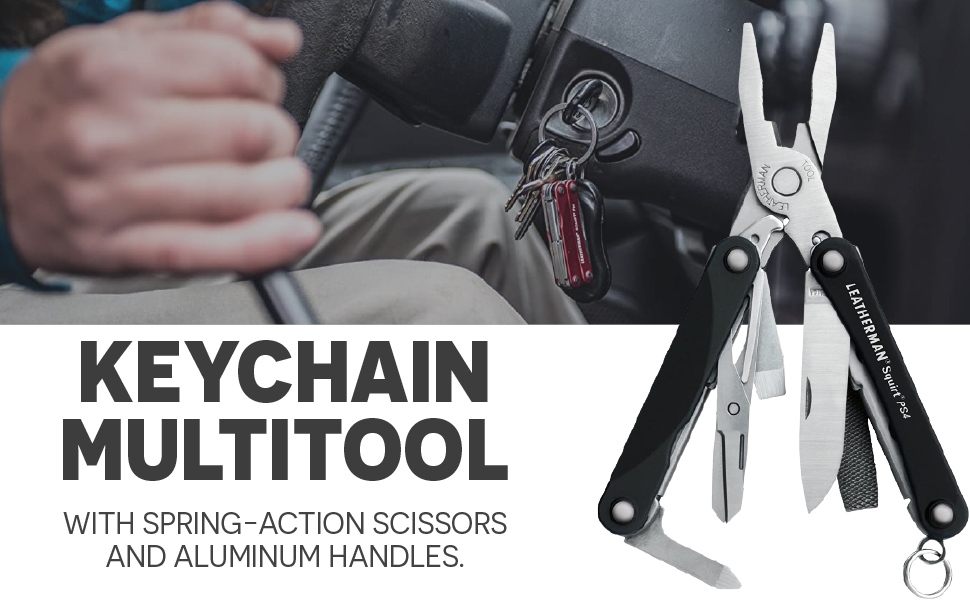
The Leatherman Squirt PS4 sits at roughly 2.25 inches closed and well under an inch wide. The Gerber Dime is similar. These aren’t choices made for spec-sheet bragging — they’re deliberate design decisions to stay under the width threshold where pocket carry breaks down.
Profile Taper and the Phone-Screen Test
Closed thickness — the dimension perpendicular to the pliers’ jaw axis — is what determines whether the tool sits flush against your pocket lining or rides up over the seam. It’s also the variable that decides if your tool will scratch your phone screen when they share a pocket.
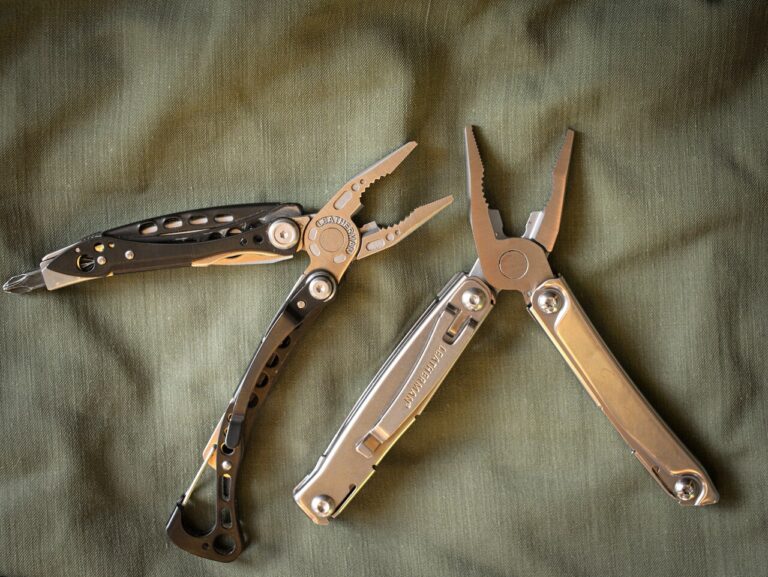
A flat-backed multitool with chamfered scales (Leatherman Skeletool style) rides cleaner than a tool with raised pivots and exposed bit-driver heads. The bit-driver multitools — Leatherman Free T4, Gerber Truss — tend to have lumps and proud rivets that catch on pocket fabric and chew screens. If you carry your phone and your tool in the same pocket (you shouldn’t, but most of us do), edge profile matters more than absolute weight.
The honest test: lay the closed multitool flat on a table. If it rocks because the scales aren’t true to one plane, you’ve got a rocker in your pocket. Every step prints through the fabric.
Tool Density vs. Function — The Diminishing Return Curve
There’s a real diminishing-return curve on tool count. Anything beyond 8–10 implements on a sub-3-ounce multitool starts compromising the primary tools. A Victorinox MiniChamp packs 18 functions into a 58mm body, but the pliers are a curved nail-puller — useless for anything mechanical. A Leatherman Squirt PS4 has 9 tools, but the pliers actually grip and the wire cutters cut hardened wire.
The principle for compact tools: pick a primary mission, then size the tool count to support it without bloating the carry. If your daily use is package opening, cable management, and the occasional bottle, you need a knife, scissors, pliers, file, and one screwdriver. Everything else is theater.
Shop Leatherman Squirt PS4 on Amazon
Pivot Stack and One-Hand Deployment
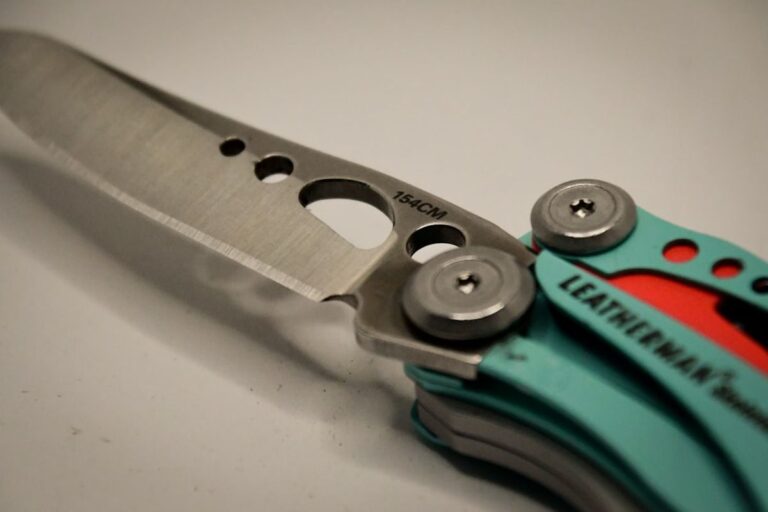
Pivot stack thickness is where compact multitool engineering gets interesting. Every tool that pivots from the handle adds two washers (or a pin and a void) to the stack. Stack five tools per handle and you’ve got a half-inch of pivots adding nothing but width.
Newer designs — Leatherman Free P2, Gerber Truss, SOG PowerLitre — use magnets and detents to eliminate the backspring bars from the stack, dropping width without losing tool count. The Free series specifically shaved roughly 15% off the closed width versus the equivalent Wave generation by going magnetic.
The tradeoff: magnetic detents are less satisfying than backsprings to deploy, and they wear slightly over thousands of cycles. For a compact pocket tool used a few times a day, magnetic is the right call. For a daily contractor tool getting deployed dozens of times, traditional springs still win on long-term feel.
Plier-First vs. Knife-First Architecture
The other architectural decision is whether the tool opens plier-first (Leatherman style — squeeze the handles to butterfly open and the pliers come out) or knife-first (Swiss Army style — the primary blade rides in the body and the pliers are an internal tool).
For sub-3-ounce compact multitools, knife-first is almost always more pocket-friendly because the body stays a single solid block — no handle flare, no exposed pivot pin sticking out the bottom of the closed tool. The Victorinox SwissTool Spirit is the high-end exception that does plier-first in a compact form, but you pay for it in width.
For genuinely pocketable carry on chinos or slim jeans, the Swiss Army Tinker, Climber, or MiniChamp formfactor — slim, knife-first, scissors-included — is the geometry that disappears.
Material Choice and Why Stainless Wins for Compact Carry
Aluminum scales (Leatherman Skeletool, Gerber Dime) shave weight at the cost of dent resistance. For a compact tool that lives in a pocket with keys, coins, and your phone, dented aluminum scales become a printed-aluminum-spider-web inside of six months.
Stainless steel scales — heavier per cubic inch but harder — are the right call for any compact multitool you actually intend to carry hard. The 0.3-ounce penalty for stainless over aluminum is invisible in the pocket. The difference in 12-month wear is dramatic.
Carbon-fiber scales are mostly decorative on multitools. The structural rigidity comes from the steel internals; CF on the outside is jewelry. Skip the premium.
The Belt-Clip Lie
Compact multitool ads love showing a clip on a belt. Real-world: nobody who carries a sub-3-ounce tool clips it to their belt. Belt clips on compact multitools are vestigial — they exist because the marketing photos look better. The actual carry positions are pocket (knife-first slim tools), keychain (genuinely sub-2-ounce keychain tools like the Squirt or Dime), or pouch (anything bulkier than the Skeletool, where pocket carry was always a fiction).
If the manufacturer leads with belt clip in their marketing for a “compact” tool, they’re admitting it doesn’t pocket. Read that signal honestly.
When Compact Stops Being Useful
There’s a floor below which multitool size compromises become absurd. The Victorinox Classic SD is a 58mm keychain knife with a 1.5-inch blade and microscopic scissors. It’s lovely. It’s also useless for any task harder than cutting a tag off a t-shirt.
If you actually need pliers that grip a stuck nut, wire cutters that cut anything thicker than a paperclip, or a blade that handles a cardboard box without folding closed on your fingers, you’ve outgrown the sub-2-ounce class. The honest minimum for a multitool that does real work is roughly the Leatherman Squirt / Gerber Dime size — about 2.25–2.6 inches closed, 3–3.5 ounces. Below that, you’re carrying jewelry that has a tool icon printed on the box.
The Leatherman Skeletool is the sweet spot for many EDC carriers — 5 ounces, full-size pliers, locking blade, bit driver, and it pockets cleaner than a Wave because of its skeletonized handle geometry. It’s the largest tool that still genuinely carries in a chino pocket without printing.
Reading the Spec Sheet Honestly
When you’re shopping a compact multitool, the spec line that matters most is one most reviews skip: closed dimensions in all three axes (length × width × thickness), not just length and weight. The honest variables to chase:
- Closed width — under 1 inch is pocket-friendly, over 1.1 starts hurting
- Closed thickness — under 0.55 inches sits flat in chino pockets
- Total weight — 2.5–4 ounces is the sweet spot for serious tools that still carry
- Locking blade — for any tool that flips out a knife, this is non-negotiable
- Tool count — 8 to 12 hits diminishing returns above 12
The brands that publish width honestly (Leatherman, Victorinox, SOG) tend to make tools that actually pocket. Brands that hide it tend to be selling you a brick with a clip.
Travel and TSA Considerations
Worth flagging because it kills a lot of compact multitool purchases the first time you fly: TSA prohibits blades over 2.36 inches, which rules out the Skeletool and most full-pliers multitools from carry-on. The Leatherman Style PS — no blade — is the TSA-friendly compact option, alongside the Victorinox Jetsetter (also no blade).
If you fly often, you either buy two tools (one travel, one EDC) or commit to a no-blade compact for carry-on. The single-tool-for-everything approach loses to airport security.
The Honest Hierarchy
After working through the geometry, weight, and use-case math, the hierarchy for compact pocket-carry multitools settles into roughly three tiers based on what you actually do during the day.
For genuine keychain or coin-pocket carry with light tasks (cable ties, box flaps, loose screws), the Squirt PS4 and Gerber Dime are the right call. For meaningful EDC where you might actually need to fix something — a hinge, a battery compartment, a stripped screw — the Leatherman Skeletool is the floor. For anything heavier than that, you’re past compact territory and should be looking at full-size tools that ride in a pouch.
The sweet spot for most readers — guys who want a real tool that disappears in chino pockets — is the Skeletool class. It’s not the smallest, but it’s the largest tool that still respects pocket geometry.
What to Skip
Two categories of compact multitools that keep showing up in reviews but don’t survive contact with real EDC.
Credit-card multitools (Tool Logic and clones): clever in concept, useless in practice. The tools are too small to torque anything. Sharp edges in your wallet wear the leather. Skip.
Pen-style multitools: the pen barrel limits tool size to symbolic. Fine as a backup in a desk drawer; not a serious EDC choice.
Shop Victorinox MiniChamp on Amazon
The Carry Trial That Settles It
The real test for any compact multitool isn’t bench reviews — it’s three weeks of carry. Buy one, put it in the pocket you normally carry your knife in, and don’t put a second tool in. After three weeks, you’ll know:
- Whether it’s still in the pocket or migrating to a drawer
- Whether you reach for it instinctively or forget you have it
- Whether the tools you actually used were the ones the marketing focused on (usually no)
Most guys discover their compact multitool gets used three times a week, almost always for scissors, pliers, or the knife. The fourteen other functions don’t get touched. That’s the data that should drive your next purchase — buy fewer tools, but the right ones.
Sources
- Leatherman — official spec sheets for Squirt PS4, Skeletool, Free series
- Victorinox — official spec sheets for MiniChamp, SwissTool Spirit, Jetsetter
- TSA — current rules on blade length in carry-on luggage
- Gerber — Dime and Truss spec data
Explore our top EDC gear picks at the EverydayCarryGuy shop →
Shop on Amazon
Multitools on Amazon →
As an Amazon Associate we earn from qualifying purchases.
Shop on eBay
Multitools on eBay →
We may earn a commission when you shop through our eBay links.
Survival & preparedness gear
Shop Survival Frog →
We may earn a commission when you shop through our Survival Frog link.