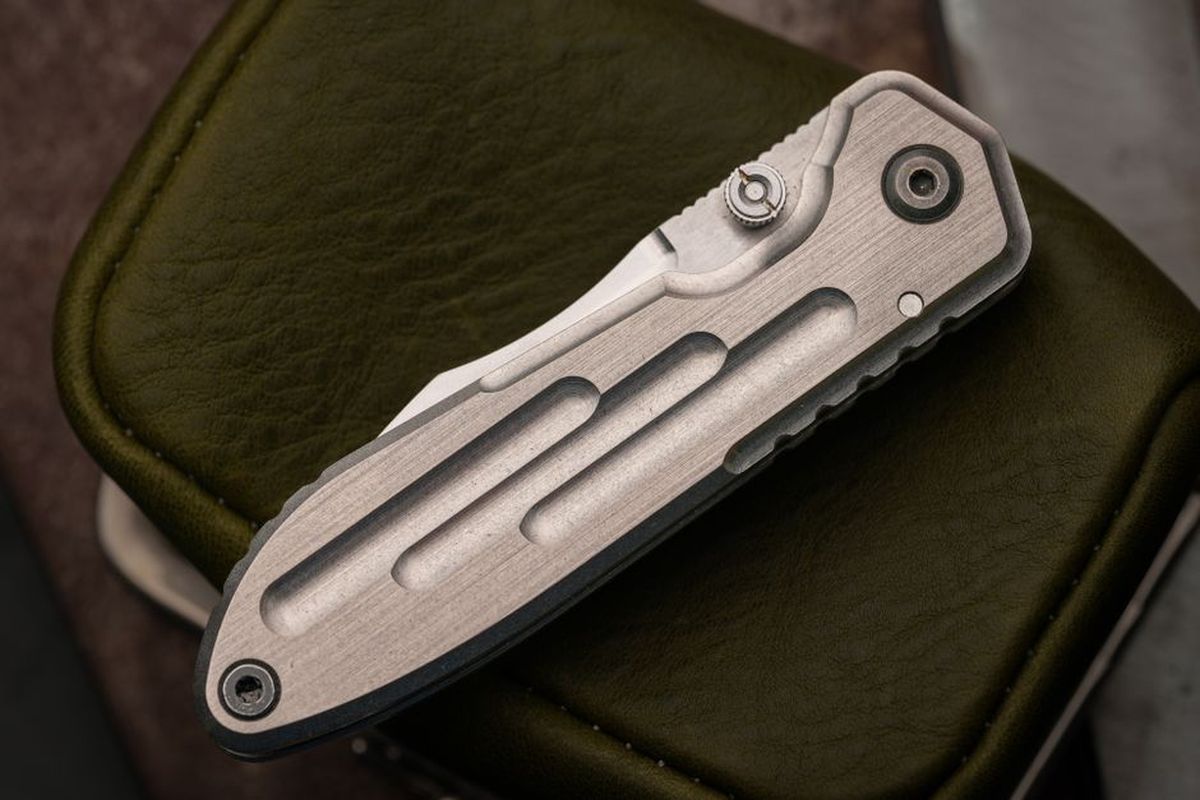
The Last Folder You’ll Buy: Building a Keep-It-For-Good EDC Around a Sub-$100 Knife
Almost every guy who carries a knife has a drawer. You know the one — a Ziploc bag or a shoebox with six or seven folders in it, each bought because it was on sale, or the steel sounded cool, or a YouTube reviewer got you excited on a Tuesday night. None of them stuck. That drawer is the single most expensive way to buy an everyday carry knife, because $30 spent four times over is $120 you’ll never carry.
The under-$100 tier is where you get to stop doing that. Not because it’s the most expensive knives money can buy — it’s a fraction of what a custom or a high-end Benchmade costs — but because it’s the first price point where every part of the knife is genuinely good enough to be permanent. The steel holds an edge through real work. The lock doesn’t develop play. The pivot stays smooth after a thousand opens. Nothing on the knife is the reason you’d replace it. This guide is about choosing that knife on purpose, so the drawer stops growing.
What actually wears out — and why $100 fixes it
Before you can buy a knife you’ll keep, you have to know what makes people quit their knives. It’s rarely the blade shape or the color. It’s three failure points that show up over months of carry, and the sub-$100 tier is exactly where all three get solved at once for the first time.
Edge retention that survives Tuesday
A $25 knife in 8Cr13MoV or 3Cr steel cuts fine on day one. The problem is that it dulls fast — break down three Amazon boxes and slice open a bag of soil and you’re already stropping. It’s not that the knife failed; it’s that you spend more time maintaining it than using it, and eventually that friction pushes it into the drawer. Around the $70–$100 mark you get into steels that change the math entirely: Sandvik 14C28N on the budget end of this tier, and then the real prizes — CPM S35VN, Nitro-V, and D2 done properly with good heat treat. S35VN in particular is the sweet spot: it holds a working edge for weeks of daily cutting, resists rust, and still sharpens back up on a normal stone without a diamond plate and a prayer. That single upgrade is the difference between a knife you baby and a knife you use.
A lock that stays a lock
Cheap liner locks and frame locks develop blade play — a tiny wobble side-to-side or up-and-down that appears after a few months. It’s harmless at first and infuriating forever after, because once you notice it you can’t stop noticing it. Under $100 you get lockup that’s been engineered instead of stamped out: hardened steel lock inserts on titanium frame locks (so the softer titanium never galls), Spyderco’s compression lock, and Benchmade’s AXIS lock, which is arguably the best action-and-lock system that exists at any price and shows up on the Bugout right at the top of this bracket. A lock that doesn’t loosen is what lets a knife earn ten years instead of ten weeks.
A pivot you never think about
The last thing that kills long-term carry is a gritty, inconsistent action. Budget knives on nylon washers open differently depending on the weather and how dirty they are. Somewhere in this price range washers get better (bronze and PTFE) and caged ceramic bearings become common, so the blade drops on a thumb flick the same way every single time. That reliability sounds like a small thing until you’ve carried a knife long enough to open it ten times a day without looking — and then it’s everything.
The models that actually go the distance
You don’t need a shortlist of thirty. You need to understand a handful of proven platforms, because in this tier the knives that get carried for a decade tend to be the same few names, chosen for the reasons above rather than the marketing. Here’s how the standouts break down by the kind of carry you’re actually after.
The everyman workhorse: CIVIVI Elementum and Ontario RAT
If you want one knife that disappears into a pocket and just works, the CIVIVI Elementum is the modern default. It sits in the $45–$70 window depending on handle material, runs a drop point in D2 or Nitro-V, and rides on bearings with a detent that’s tuned better than knives twice its price. The Ontario RAT-1 and RAT-2 are the older, plainer answer to the same question — AUS-8 or D2, a bomb-proof liner lock, and a four-finger handle that fills your hand. Neither knife is exciting. That’s the point. Exciting knives get sold; boring knives get carried until the clip wears through your pocket.
Shop the CIVIVI Elementum on Amazon
The forever folder: Spyderco Para 3 Lightweight
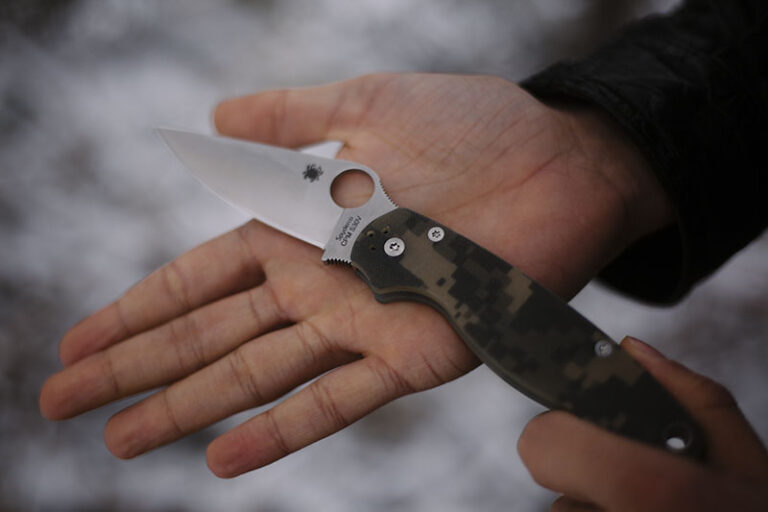
If there’s one knife under $100 that people genuinely stop upgrading after, it’s the Spyderco Para 3 Lightweight. You get the compression lock, a full-flat-ground blade in CTS-BD1N (a steel that punches well above its price for stainlessness and easy sharpening), and an FRN handle that drops the whole knife to around 2.4 ounces. It’s the rare folder that’s light enough to forget you’re carrying and capable enough that you never wish you had more knife. The full-size Para Military 2 in S35VN sits right at the ceiling of this budget and is the knife a lot of collectors admit is the last one they actually need.
Shop the Spyderco Para 3 Lightweight on Amazon
The titanium flex: Kershaw Iridium and CJRB frame locks
Ten years ago a titanium frame lock with a bearing pivot was a $300 knife. Now the Kershaw Iridium gives you aluminum-framed, bearing-equipped D2 flipper action for well under $60, and brands like CJRB and Kizer put real titanium frame locks with hardened steel lockbars in your hand for $70–$90. This is the corner of the tier where the knife feels like an object worth keeping — the machining, the flipper detent, the way it drops shut. If part of what makes you carry a knife for years is that you actually like picking it up, this is where that lives without leaving the budget.
How to pick the one — a decision, not a list
Reading specs is easy. Choosing is the hard part, and the trap is buying by the number that looks biggest on paper. The knife you keep is the one that fits the jobs you actually do and the pants you actually wear, so run your choice through this instead of the spec sheet.
- Match blade length to your real cuts. Most EDC cutting is boxes, cordage, food, and the occasional stubborn package. A 2.9–3.5 inch blade covers all of it. Bigger blades carry heavier and read as more aggressive in public for zero practical gain.
- Pick the lightest knife that still feels solid. Weight is the number one reason a knife gets left at home, and a knife at home isn’t an EDC knife. Sub-3-ounce FRN or aluminum handles win more real carry days than a beautiful 5-ounce slab of titanium.
- Choose a steel you’ll actually maintain. S35VN, 14C28N, and Nitro-V all resist rust and sharpen on normal stones. Skip the exotic super-steels that need diamond plates unless you enjoy the ritual — the best steel is the one you’ll keep sharp.
- Deploy it in the store, or return-test it at home. How a knife opens is the interaction you’ll repeat thousands of times. If the flick or flipper doesn’t feel right in week one, it never will.
- Buy the lock you trust. AXIS, compression, and a well-built frame lock all outlast cheap liner locks. If you can’t articulate why you trust the lock, keep looking.
Make it last: the twenty minutes a year that matter
A sub-$100 knife earns its “forever” status partly through build quality and partly through the tiny amount of care that keeps it that way. None of this is fussy, and skipping it is how a good knife slowly becomes an annoying one.
Wipe the blade down after cutting anything acidic or wet — apple juice and salt do more rust damage than a rainstorm. Every few months, put a single drop of light oil on the pivot and work the action a dozen times; that’s the whole maintenance schedule for the moving parts. Learn to strop on a loaded leather strop or the back of a belt, and you’ll go months between real sharpenings because you’re maintaining the edge before it’s gone rather than rebuilding it after. Once a year, if your knife has a screwed-together (not pinned) construction, take it apart, clean the pocket lint out of the pivot, re-oil, and reassemble. That’s it. Twenty minutes a year is the difference between a knife you carried for a decade and a knife you meant to.
Why $100 is the ceiling, not the floor
It’s worth saying plainly: you can absolutely spend more, and above $100 you get genuinely nice things — better fit and finish, exotic steels, machining you can feel. But you cross a line of diminishing returns fast. A $300 knife does not cut three times better than a $90 Para 3. It cuts about the same and feels a little nicer, and “a little nicer” is a hobby, not a need. The reason to cap your EDC purchase around $100 isn’t just money — it’s that a knife in this range is cheap enough that you’ll actually use it. You’ll baton a stick with it, pry a staple, lend it to a coworker, drop it on concrete, and not have a small heart attack each time. A tool you’re afraid to use isn’t a tool. It’s jewelry.
The best EDC knives under $100 aren’t the ones with the flashiest spec sheets. They’re the ones built well enough that nothing about them ever becomes the reason you reach for something else. Pick one of these platforms, match it honestly to how you carry and what you cut, give it twenty minutes of care a year, and the drawer stops filling. That’s the real definition of the last folder you buy — not the most expensive one, but the one you never had a reason to replace.
Shop the Kershaw Iridium on Amazon
Sources
- Spyderco — official specs for the Para 3 Lightweight and Para Military 2, including lock and steel details.
- Crucible Industries — datasheets for CPM S35VN and other powder steels referenced above.
- Wikipedia: Pocketknife — background on folding knife lock types and construction.
Handmade Polish craftsman knives
Shop Polish Custom Knives →
We may earn a commission when you shop through our Polish Custom Knives link.