
Best EDC Power Bank: 7 Picks for 2026
A phone at 11% battery with a train transfer, a client call, and a two-mile walk left on the day is the actual problem a power bank solves — not a spec sheet. Most buying guides rank power banks by capacity alone, which is backwards: a 20,000mAh brick that sits in a drawer because it’s too heavy to pocket helps nobody. The picks below are sorted by the carry situation they actually fix, with the mAh and wattage numbers that matter once you’re past the marketing copy.
How Much Battery You Actually Need for Daily Carry
A fully charged modern smartphone battery holds roughly 15-20Wh. A 10,000mAh power bank at 3.7V nominal voltage holds about 37Wh on paper, but you only get two-thirds to three-quarters of that after voltage conversion and heat loss — call it 25-27Wh in practice. That’s still enough for a full phone charge plus a partial second one, which covers the overwhelming majority of daily-carry use cases.
5,000mAh packs are the right call if your pattern is a 20-30% top-up between a morning commute and an evening one — not a full recharge. 20,000mAh only makes sense if you’re charging a tablet or laptop alongside a phone, or you’re away from an outlet for more than a day. Anything past that is luggage, not EDC.

The moment a power bank actually earns its pocket space: a low-battery warning with hours left on the day.
Best EDC Power Bank: 7 Picks for 2026
Each of these fills a different gap in a daily carry setup rather than competing on the same spec. Pick the one that matches how you actually move through a day, not the one with the biggest number on the box.
1. Anker Nano 10,000mAh — Best All-Around Daily Carry
This is the sweet-spot pick for most people. A built-in retractable USB-C cable means one less cord to lose, 45W output charges a phone fast enough to matter during a lunch break, and it’s 16% smaller than Anker’s older models — small enough to clear a jacket pocket without printing through the fabric. Runs about $50.
2. Anker Nano MagSafe 5K Qi2 — Best Ultra-Slim Pick
At 5,000mAh and thinner than most phone cases, this one disappears into a pocket in a way 10K packs don’t. Qi2 magnetic charging at 15W means no cable at all — snap it to the back of the phone and keep walking. The trade-off is capacity: it’s a top-up tool, not a full recharge. Around $50.
3. Baseus Magnetic 5,000mAh — Best Budget Magnetic
Same magnetic convenience as the Anker above at less than half the price, with 20W output and a 3.8oz weight that disappears in a pocket. The build quality isn’t quite Anker-level, but for a secondary pack kept in a bag rather than a daily driver, it’s hard to argue with the price. Around $20.
4. Nitecore NB Plus 10,000mAh — Best for Gear Snobs
Nitecore built its name on flashlights that survive being dropped, run over, and forgotten in a jacket for a winter, and that same build philosophy shows up here. It’s heavier than the Anker Nano at 5.47oz and skips the MagSafe gimmick entirely, but if the rest of your EDC is Nitecore or Fenix-branded, this is the pack that matches. Around $65.
5. Baseus Blade HD 20,000mAh — Best Airline-Legal Max Capacity
At roughly 74 watt-hours, this stays under the TSA’s 100Wh carry-on limit while still holding enough charge for a full weekend away from an outlet. 100W output is overkill for a phone but means it’ll also keep a laptop alive in a pinch. Around $90.
6. INIU 20,000mAh 45W — Best Multi-Day Backup
Bulkier than anything else on this list at 11.5oz, but 45W output and 20,000mAh capacity mean this is the one pack that can realistically replace a wall outlet for two or three days. It belongs in a bag, not a pocket — which is exactly the point for a travel or camping-adjacent trip. Around $30.
7. UGREEN Nexode 25,000mAh 200W — Best If You Also Charge a Laptop
This is the outlier pick for anyone whose “daily carry” includes a work laptop. 200W output can actually fast-charge a MacBook, not just trickle-charge it, and 25,000mAh covers a full workday of laptop plus phone use. It’s not pocket EDC — it lives in a backpack — but it’s the only pack on this list that replaces a laptop charger entirely. Around $90.

A built-in cable beats a loose one you’ll eventually lose.
Output Wattage Decides Charging Speed, Not Capacity
A 20,000mAh pack at 10W output charges slower than a 5,000mAh pack at 30W. Capacity only tells you how many charges you get — wattage tells you how fast each one happens, and that’s the number that actually matters when you’ve got fifteen minutes before a meeting.
Most phones top out their charging speed around 20-30W, so anything beyond that is wasted on a phone alone — it only matters if you’re also charging a tablet or laptop from the same pack. Check your phone’s actual max charging wattage before paying extra for a 100W+ pack you’ll never use to its full potential on a phone.
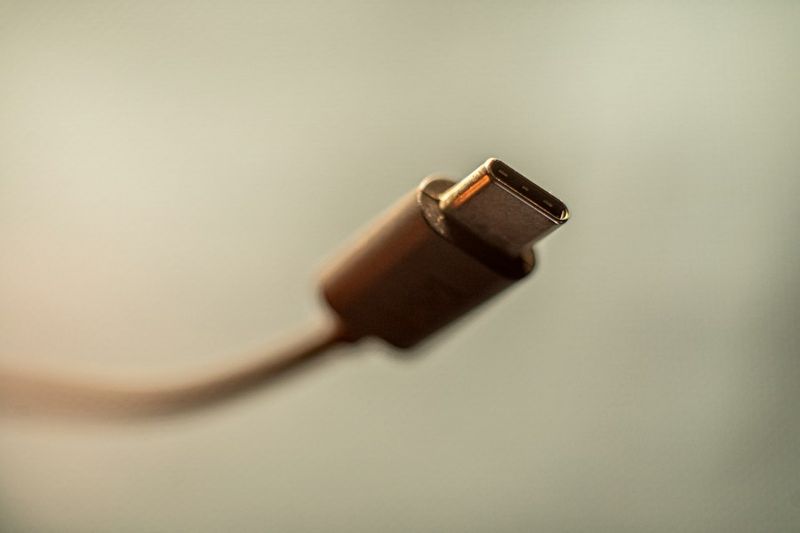
Wattage, not capacity, decides whether a charge takes ten minutes or an hour.
TSA Rules for Carrying a Power Bank on a Plane
The FAA caps lithium-ion batteries at 100 watt-hours in carry-on baggage without airline approval, and most power banks never list watt-hours directly on the box — only milliamp-hours. The conversion is simple: multiply mAh by the pack’s nominal voltage (almost always 3.7V) and divide by 1,000. A 20,000mAh pack works out to roughly 74Wh, which clears the limit with room to spare. A 27,000mAh+ pack starts creeping close to the ceiling.
Power banks are carry-on only — checked luggage doesn’t allow loose lithium batteries at all, a rule that trips up more travelers than any capacity limit does. If a trip is part of the plan for whichever pack you buy, check the watt-hour math before you pack it, not at the security line.

Carry-on only — the watt-hour math matters more at the gate than the TSA line.
Magnetic vs Cable: Which Actually Earns Pocket Space
MagSafe and Qi2 magnetic packs solve a real annoyance — no cable to tangle with your keys or fray at the connector — but they only work with phones that support magnetic charging, and the connection can slip loose in a tight pocket if you’re moving fast. A built-in cable, like the standard Anker Nano, works with anything that takes USB-C and stays attached no matter how the pack sits in a bag.
The honest answer is that magnetic convenience is worth a premium for a phone you already use MagSafe accessories with, and a waste of money if you don’t. Don’t buy the magnetic version because it looks cleaner in a product photo — buy it because your phone case already has a magnet ring in it.

Magnetic charging only pays off if the phone underneath already supports it.
Keeping a Power Bank Alive in Your Pocket for Years
A lithium-ion cell loses meaningful capacity after 300-500 full charge cycles, and the single biggest factor in hitting that number early is heat. A power bank riding in a pocket against body heat all day, then left charging overnight in a warm room, ages faster than one that spends most of its life at room temperature. Partial charges don’t hurt a lithium cell the way they used to with older nickel-based batteries — topping off at 60% instead of waiting for a full drain is actually better for long-term capacity, not worse.
Letting a pack sit fully drained for weeks is the other common way people kill one early. If a power bank is a backup rather than a daily driver, check it every month or two and top it off to 50-60% for storage rather than leaving it at 0%. None of this requires babying the thing — just don’t leave it in a hot car, and don’t let it sit dead for a season.

A power bank is one more piece of gear that depends on how it’s actually treated, not just what it’s rated for.
Where a Power Bank Actually Fits in a Daily Carry Setup
For a straight commuter doing two short train rides and a desk job in between, a 5,000mAh magnetic pack covers the gap — it’s a buffer, not a lifeline. A bike commuter running navigation and music the whole ride burns a phone battery fast enough that a 10,000mAh pack with real output wattage earns its weight.
Office workers who leave a charger at a desk rarely need to carry a power bank at all — that’s dead weight solving a problem a wall outlet already handles. The calculation changes completely for travelers, where outlet access is unpredictable and the TSA watt-hour math above actually matters. Match the pack to the gap in outlet access, not to whichever one has the biggest number on the box.

The right power bank size comes down to how unpredictable your outlet access actually is.
Frequently Asked Questions
Is 10,000mAh enough for a power bank?
Yes, for most daily carry. It delivers roughly one full smartphone charge after real-world conversion losses, which covers the vast majority of one-day gaps in outlet access.
Can I bring a power bank on a plane?
Yes, in carry-on baggage only, as long as it stays under 100 watt-hours. Checked baggage doesn’t allow loose lithium-ion batteries regardless of capacity.
Does a higher mAh rating always mean a better power bank?
No. Output wattage determines charging speed, and real-world capacity runs 25-35% below the rated mAh number once voltage conversion losses are accounted for. A smaller pack with higher output can outcharge a bigger one.
Are magnetic power banks worth it?
Only if your phone already supports MagSafe or Qi2 magnetic charging. Otherwise a standard USB-C pack with a built-in cable is more reliable and usually cheaper.
How long does a power bank actually last before it needs replacing?
Most lithium-ion packs hold up for 300-500 full charge cycles before capacity drops noticeably — roughly 1-2 years of daily EDC use. Keeping it out of heat and away from full-drain storage pushes that number higher.
Sources
- FAA: Airline Passengers and Batteries — official carry-on lithium battery watt-hour limit
- Anker Nano Power Bank (10K, 45W) product page — capacity, output, and built-in cable specs
- UGREEN Nexode 25,000mAh 200W product page — laptop-class output specs