Decoding ANSI FL1: What Your Flashlight’s Spec Sheet Actually Promises
Every EDC flashlight box is covered in numbers — lumens, candela, meters, hours, IP68 — stamped next to a little icon that looks like an official seal. It is an official seal, sort of. Almost every reputable flashlight brand tests to the ANSI/PLATO FL1 standard, and almost nobody buying the light has actually read what that standard requires. That gap is where marketing lives. Understanding what FL1 actually measures, and where the standard leaves room to maneuver, turns a spec sheet from a marketing slide into a tool you can use to compare lights honestly.
What ANSI FL1 Actually Is
FL1 is a voluntary flashlight testing standard developed jointly by the National Electrical Manufacturers Association (NEMA) and the American National Standards Institute (ANSI). It was created because before 2009, every flashlight brand measured lumens differently — some at the emitter, some at the lens, some by theoretical LED output that the actual light never produced. Buyers had no way to compare a Surefire against a no-name light from a gas station rack. FL1 fixed that by defining exactly how output, distance, runtime, water resistance, and impact resistance must be measured, so a “1000 lumen” claim means the same thing across brands that follow it.
The catch: FL1 compliance is self-certified. There’s no third-party lab stamping every light before it ships. A brand tests its own product, reports the numbers, and puts the icon on the packaging. Reputable manufacturers like Fenix, Olight, ThruNite, Nitecore, and Surefire generally test honestly because their reputation depends on independent reviewers confirming the numbers with integrating spheres and chronographs. Lesser-known brands on marketplace listings sometimes print the FL1 icon next to numbers that were never tested at all.
Lumens: Measured at 30 Seconds, Not at Steady State
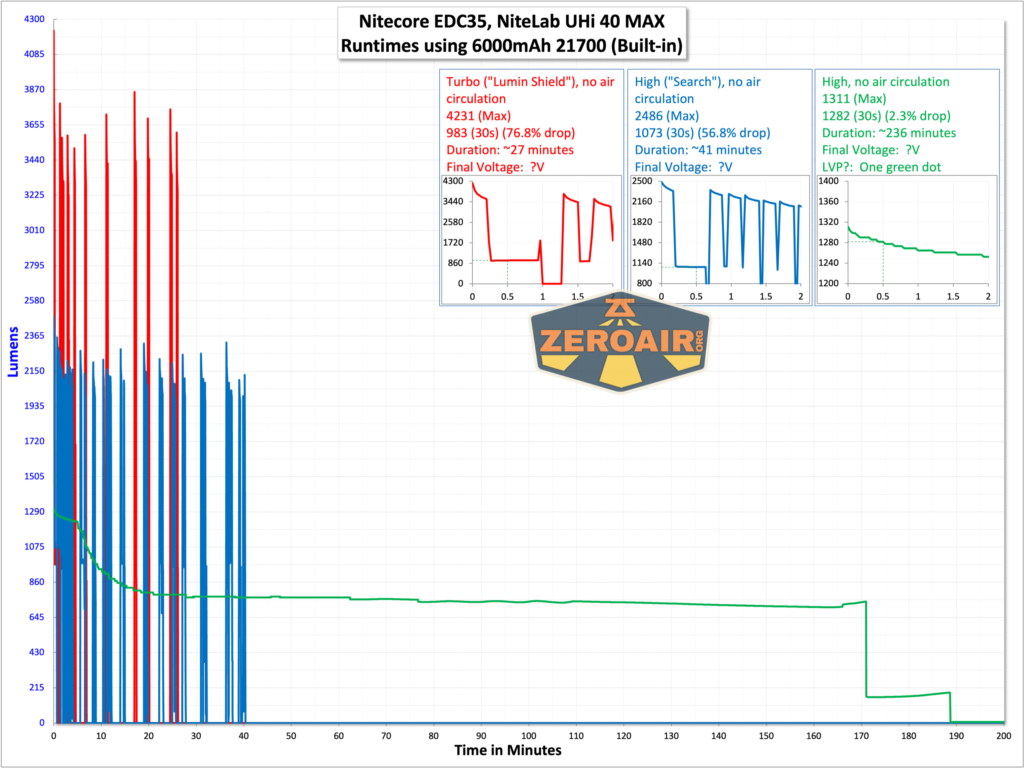
The single most misread number on any spec sheet is peak lumens. FL1 requires output to be measured 30 seconds after the light is turned on, at full brightness, from a fresh battery. That’s a specific and somewhat generous moment in a flashlight’s life. Most emitters run hottest and brightest in that first half-minute, before thermal regulation kicks in and throttles the driver down to a sustainable level. A light rated at 1,200 lumens might already be down to 600 or 700 lumens by the two-minute mark, and that’s not a defect — it’s the standard working as intended, just widely misunderstood by buyers who assume the box number is what they’ll get if they leave the light on.
This is why two lights with identical peak-lumen ratings can feel completely different in the hand. A light with better thermal engineering — thicker aluminum walls, better heat sinking at the head — holds a higher percentage of its rated output for longer. A light that just has a stronger LED but poor heat dissipation will hit that peak number for the photo, then drop hard. The spec sheet won’t tell you which one you’re holding. Independent runtime graphs, published by reviewers who track output over the full discharge cycle, will.
Candela and Beam Distance Are the Same Number, Twice
Beam distance under FL1 isn’t independently measured — it’s calculated from peak beam intensity (candela) using a fixed formula that assumes the human eye can still perceive light at 0.25 lux on a clear night. The formula is distance in meters equals the square root of candela divided by 0.25. That means beam distance is entirely derived from candela, not measured with a light meter at the claimed range. A light claiming 300 meters of throw isn’t being walked out to a football field and verified — it’s back-calculated from a number taken in a lab a few feet from the lens.
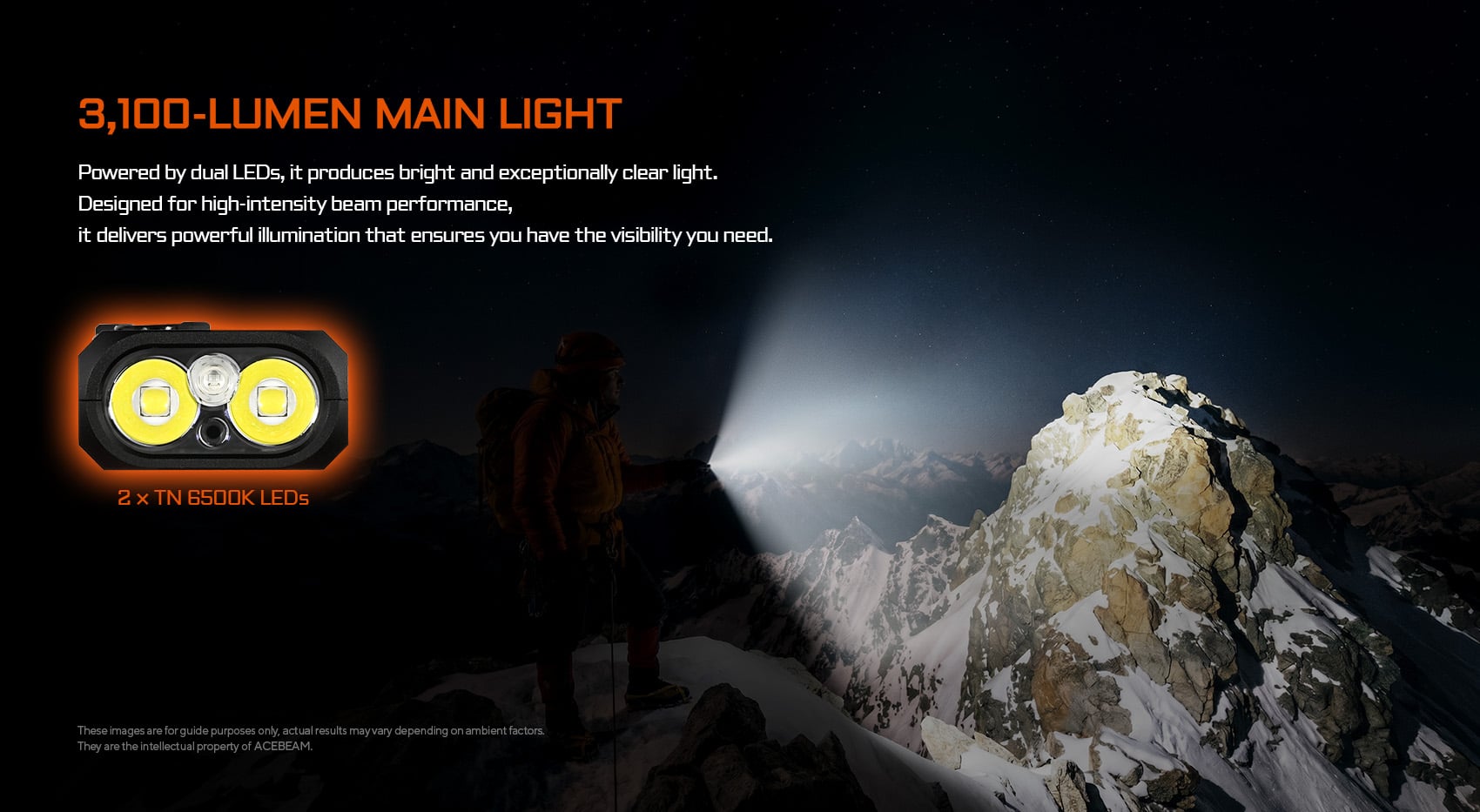
This matters for buyers comparing a flood-heavy EDC light against a thrower. High candela with modest lumens produces long claimed beam distance with a narrow, tight hotspot — useful for identifying something across a parking lot, useless for lighting a room. High lumens with lower candela produces a wide, even flood with a short claimed beam distance — great for close-range tasks, weak for distance. Neither number alone tells you which light suits your actual use case; you need both, read together.
Runtime Is Measured to 10%, Not to Zero
FL1 runtime is defined as the time it takes for output to drop to 10% of the initial 30-second measurement. That’s a reasonable cutoff — a light at 10% of peak is still usable, and testing to true zero would make runtime numbers meaningless for lights with electronic low-voltage cutoff circuits that never fully die. But it also means a “2 hour runtime” rating includes a long tail of dim, low-output light near the end. If a manual or listing shows a runtime graph rather than just a single number, that graph is worth more than the headline figure — it shows you the regulated high-output plateau, the step-downs, and the tail, rather than one number that blends all three.
Multi-mode lights complicate this further. A light with a 1,000-lumen turbo mode and a 10-lumen low mode will publish runtime for both, and the difference is enormous — turbo might run 45 minutes before stepping down, low might run 200 hours. Buyers scanning for “runtime” without checking which mode it applies to end up disappointed when their daily-carry habit of running the light on turbo drains it in under an hour.
Shop the Fenix PD36R on Amazon
IPX8 vs IP68: The Rating Most Buyers Misread
Water and dust resistance ratings use the IEC’s IP Code, referenced within FL1 rather than defined by it, and the two-digit format trips up more buyers than any other spec. The first digit rates solid particle protection on a 0-6 scale, where 6 means fully dust-tight. The second rates water protection on a 0-9K scale, where 8 means the item can be continuously submerged beyond one meter for a duration and pressure the manufacturer specifies. A light rated IP68 is both dust-tight and rated for sustained submersion. A light rated only IPX8 has never been tested for dust ingress at all — the X isn’t zero, it’s untested, and that’s a meaningfully different claim than a full IP6X rating.
The submersion depth and duration behind that “8” also vary by manufacturer, because the standard requires the brand to specify their own test parameters for that rating tier. One company’s IP68 might mean 2 meters for 30 minutes; another’s might mean 1.5 meters for 4 hours. Both are legitimately IP68. If depth matters — a light that’s going to live on a kayak or dive bag rather than just surviving rain — check the manufacturer’s stated test depth in the manual, not just the two-digit code on the box.
The Impact Rating Nobody Reads
FL1 also defines an impact resistance test, expressed in meters, that gets far less attention than lumens or waterproofing but matters just as much for a light that’s going to live in a pocket and hit concrete regularly. The test drops the light onto a concrete surface from the rated height, in multiple orientations, and the light must still function afterward. A 1-meter impact rating is common on budget lights; premium EDC lights often carry 1.5 to 2-meter ratings, reflecting thicker wall construction and better internal shock mounting for the driver board and emitter.
This number correlates strongly with build material and wall thickness, which is why titanium and thick-walled aircraft-aluminum bodies tend to carry higher impact ratings than lights built from thin polymer or lightweight alloy shells chasing a lower weight spec. For a light that’s going to be dropped on a job site or clipped to a pocket that regularly bangs against tools and door frames, the impact rating is arguably more relevant to daily survival than another 200 lumens of peak output.
Shop the Olight Baton 3 Pro on Amazon
Reading a Spec Sheet Like an Engineer, Not a Shopper
Once you know what each number actually measures, a spec sheet stops being a sales pitch and starts being a set of testable claims. Peak lumens tells you the 30-second best case, not the sustained output — cross-check it against a published runtime graph if one exists. Candela and beam distance are the same measurement expressed two ways — use candela to judge actual throw and lumens to judge actual flood. The IP rating’s first digit tells you if dust protection was tested at all, and the second digit’s real-world meaning depends on the manufacturer’s stated test conditions, not just the digit itself. Impact resistance, often buried at the bottom of the spec list, is a decent proxy for how the light is actually built.
None of this means FL1 numbers are meaningless — quite the opposite. A standardized test that every major brand follows the same way is exactly what lets you put a Fenix, an Olight, and a ThruNite side by side and trust that “1,000 lumens” means roughly the same thing on all three boxes. The failure mode isn’t the standard; it’s shoppers reading a single headline number and assuming it captures the whole performance envelope of the light. It doesn’t, and it was never designed to.
Where Independent Testing Fills the Gap
Because FL1 is self-certified, the real verification layer comes from independent reviewers who own integrating spheres, lux meters, and chronograph rigs, and who publish full runtime graphs rather than single numbers. Forums and review channels built around flashlight testing have effectively become the FL1 standard’s audit function — when a brand’s claimed numbers don’t match independent measurement, it gets called out publicly, and that reputational cost is what keeps major manufacturers honest even without a third-party lab requirement. For any light being considered as a serious daily carry, checking whether an independent runtime graph exists for it is worth more than re-reading the box copy a third time.
Buying decisions get easier once the numbers on the box are understood as test results rather than promises. A light with a lower peak-lumen number but a flat, well-regulated runtime graph and a full IP68 rating with a stated deep-submersion test depth is very often a better daily carry than a light with a flashier headline number and a thermal step-down that cuts output in half within ninety seconds. The spec sheet has the information — it just requires knowing which numbers to trust at face value and which ones need a second look.
Shop the ThruNite Archer 2A on Amazon
Sources
- American National Standards Institute (ANSI)
- IP Code (IEC ingress protection standard) — Wikipedia
- National Electrical Manufacturers Association (NEMA)