GHK Multi Tool Review: Solid 17-in-1 EDC
A Leatherman Wave retails for about $120. The GHK 17-in-1, a stainless-steel folding multi-tool manufactured out of Yangjiang, China, does roughly 80% of the same job for closer to a fifth of that price — and it does it with a detail that got attention on YouTube, not on the sales listing: the knife slot isn’t proprietary. It accepts the same T-shank blades sold in every hardware store for jigsaws and snap-off utility knives. Nobody puts that on the Alibaba page. This review covers what the pliers, blade, scissors, and screwdriver bits actually feel like after real use, where the tool legitimately competes with pricier cousins, and where the $20 price tag shows its limits.
What’s Packed Into the GHK 17-in-1
GHK shows up under a handful of names depending on where you buy it — Grand Harvest on the manufacturer’s own storefront, white-labeled under names like PERWIN once it lands on Amazon — but the hardware underneath is the same family of tool. Folded, it’s a little over four inches long and sits around 200-230 grams, light enough for a jacket pocket but heavy enough to feel like a tool instead of a keychain gimmick. Here’s what’s actually built into the handle:
- Needle-nose pliers
- Regular pliers
- Wire cutter notch
- Drop-point folding blade
- Scissors
- Wood/rope saw
- Nail file
- Large flathead screwdriver
- Small flathead screwdriver
- Phillips screwdriver
- Bottle opener
- Can opener
- Ruler edge
- Awl/reamer
- Wire stripper notch
- Keychain/lanyard loop
- Safety-locking mechanism
Like most budget multi-tools, that 17-function count pads things a little — the ruler edge and the lock mechanism itself both get counted as standalone “functions” on the box, which is marketing more than engineering. Strip those out and you’ve still got a genuinely useful 14-15 tool set in a frame built from a 420/440A stainless combo, the same material pairing used across most of this product tier.

The Pliers Are Why You’d Buy This One
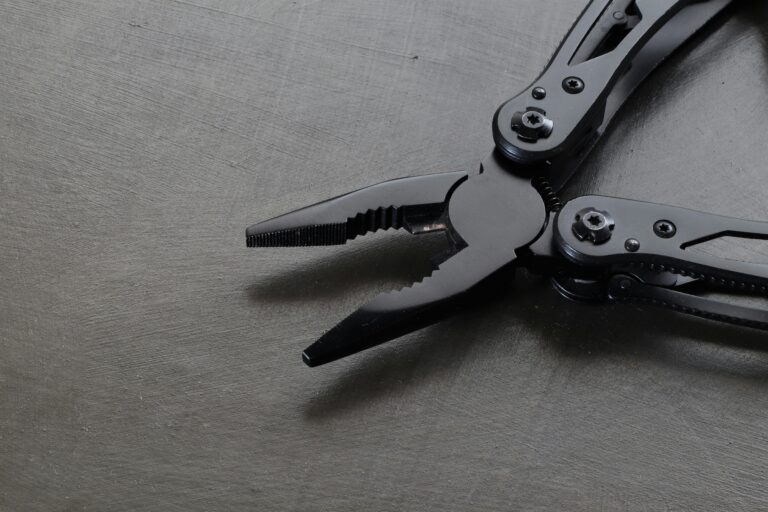
Multi-tools live or die on their pliers, and this is where the GHK earns its price. The jaw opens wide enough for real mechanical work — pulling a cotter pin, gripping a stripped screw head, bending stiff wire — not just the token pinch you get on keychain-sized tools. The needle-nose section tapers enough to work in tight spots, like cinching a zip tie flush or reseating a jewelry clasp, and the handle leverage (helped by the tool’s overall size) means you’re not fighting it to get real torque.
It won’t replace a dedicated set of linesman pliers for electrical work. But for the stuff EDC pliers actually get used for — stuck zippers, bent nails, splinters, loose wire — they hold up fine across repeated use, and the self-locking mechanism keeps the jaw from folding shut on your fingers mid-task, which matters more than it sounds like until you’ve used a tool without one.

Blade, Scissors, and the Rest of the Cutting Tools
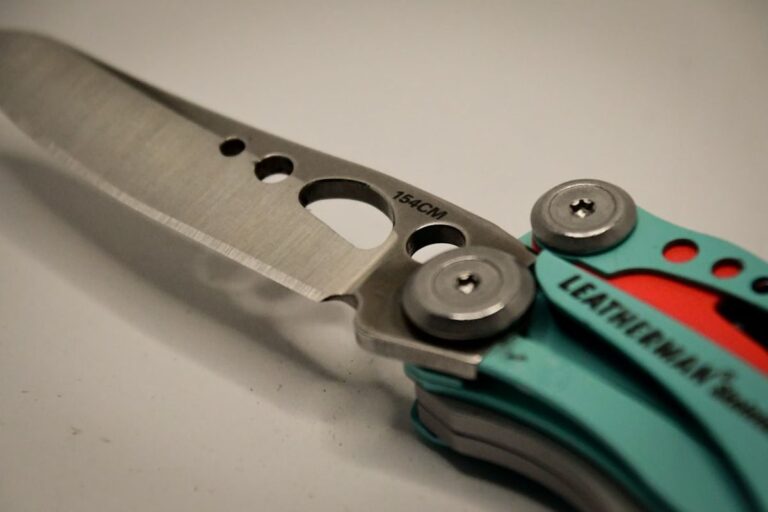
The drop-point blade is the second-most useful tool here, and it’s serviceable rather than exceptional. Out of the box it’s sharp enough to break down boxes and slice cord cleanly, and the stainless holds a working edge through normal EDC use — opening mail, cutting zip ties, trimming paracord — without needing a touch-up every week. It’s not a blade you’d baton through wood or trust for anything that needs real edge retention under hard use; for that, step up to a dedicated folder built around a locking mechanism, not a multi-tool’s secondary blade.
The scissors are the tool’s weakest link: fine for a loose thread or a strip of tape, but the short blades bind on anything thicker than paper, and it’s clearly the function GHK’s engineers spent the least time on. The wire cutter notch, by contrast, is genuinely useful and handles 16-18 gauge wire without rounding its own edge the way cheaper multi-tools do after a dozen cuts.

The T-Shank Trick Nobody Talks About
Here’s the detail that separates the GHK from the ocean of look-alike 17-in-1 tools: the blade doesn’t lock into a proprietary slot the way most folding multi-tool knives do. It’s built around a T-shank fitting — the same tang shape used on standard jigsaw blades and the snap-off utility blades sold at any hardware store. A YouTube teardown from the channel Hvac Budget, titled “They Broke The Code!”, walks through exactly this: once you know the GHK’s blade holder is a T-shank slot, you’re not locked into sourcing a GHK-branded replacement blade if the stock one snaps or dulls past saving. You can drop in a standard utility blade instead.
That matters more than it sounds like on paper. Most budget multi-tools treat the blade as disposable in the bad sense — once it’s gone, the tool is gone, because nobody stocks a replacement for a no-name import knife. A T-shank-compatible slot turns that into a five-minute fix with parts that are probably already sitting in a garage drawer. It’s the single best argument for buying the GHK over a visually identical competitor that uses a sealed, proprietary tang.

Screwdriver Bits and the Smaller Tools
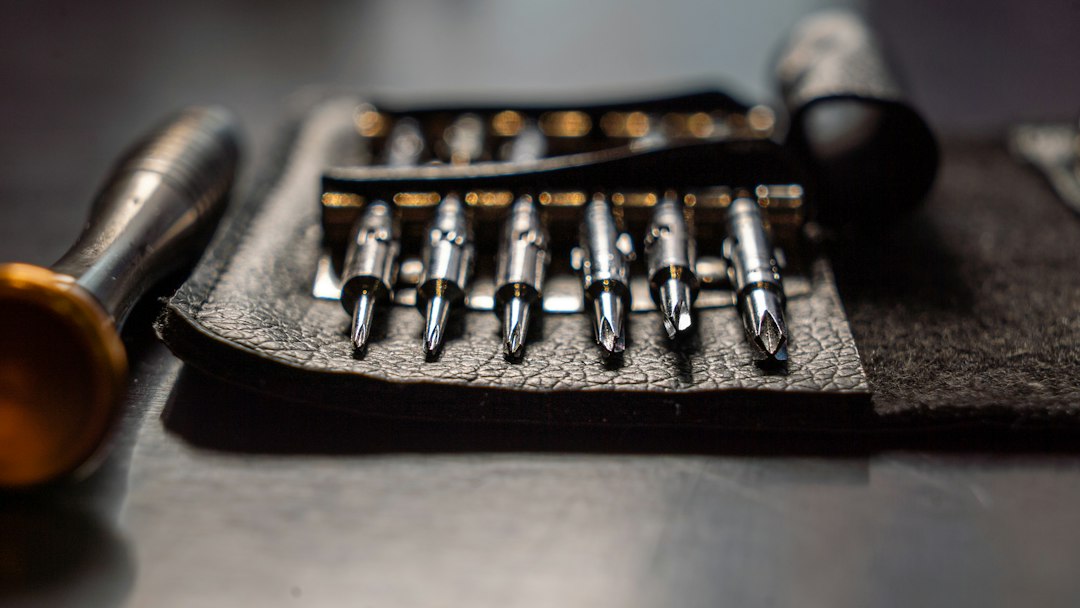
The screwdriver section is where the compromises of a $20 price tag show up clearest. The flathead and Phillips bits are thin — functional for battery covers, eyeglass screws, and furniture hardware, but they’ll strip out on anything torqued down hard, and there’s no bit-swap system, so you’re stuck with whatever sizes GHK picked. The file is coarse enough for a quick nail-edge cleanup and not much else.
The bottle opener, can opener, and keychain loop all work exactly as expected and make a real argument for throwing this in a glovebox or junk drawer even if it never becomes your primary carry piece. None of these are reasons to buy the tool. They’re reasons it’s a fair one-tool solution instead of a 17-function marketing number with twelve dead weights attached to two good ones.
Locking Mechanism, Sheath, and Carry
The GHK ships with a nylon belt sheath and a metal pocket clip, and the whole tool runs on a safety-locking hinge — the pliers have to be manually unlocked before they’ll fold closed, which stops the jaw from snapping shut on a knuckle under load. That’s not a given at this price point; a handful of comparable budget multi-tools skip the lock entirely to save on manufacturing cost, and it shows the first time the jaw folds on a finger instead of staying open.
Carried in the sheath on a belt, it rides noticeably bigger than a folding knife, closer to a small tool pouch than a pocket item. That’s the tradeoff with any pliers-first multi-tool: the size that makes the pliers useful is the same size that rules out dropping it in a front pocket next to keys and a wallet.

Who Actually Builds the GHK — and Why That’s Not a Red Flag
GHK is manufactured in Yangjiang, Guangdong — a city that produces roughly 70% of China’s total knife output and, by some counts, eight out of every ten knives and scissors China exports. Spyderco, CRKT, Kershaw, Gerber, and Leatherman all source production out of the same region. GHK, operating under the name Grand Harvest, sells closer to the factory and skips the brand markup, which is why it shows up on Alibaba and AliExpress more often than on a dedicated storefront, and why the identical hardware gets rebadged under names like PERWIN once it lands on Amazon.
That’s a real content gap worth naming plainly: there’s almost no independent English-language coverage of GHK specifically, which is unusual for a tool this capable. Most of what’s findable online is wholesale listings and rebrand reviews of the same base tool under someone else’s name. If you want to try one, search for the GrandHarvest or GHK-branded listing rather than a generic “17 in 1 multitool” search — it surfaces the same hardware without guessing which rebrand you’re actually getting.
GrandHarvest / GHK 17-in-1 Multi-Tool on Amazon →
As an Amazon Associate we earn from qualifying purchases.

Is the GHK 17-in-1 Worth Carrying?
Yes, with a specific caveat: buy it for the pliers and the T-shank blade slot, not the function count printed on the box. If you’re the kind of EDC carrier working toward one slim piece doing double duty — see our breakdown of what to cut from your kit entirely — a 230-gram pliers tool isn’t it.
But if your carry already includes a pocket knife and you’re weighing whether a multi-tool earns its own spot next to it — our full multi-tool buying guide covers that tradeoff across five tools in more depth — the GHK is a legitimately smart buy at its price: real pliers, a field-serviceable blade, and screwdriver bits that cover most of what people actually reach for a multi-tool to do. It won’t out-cut a dedicated folder built on a mechanism like the ones we broke down in our slip-joint vs liner lock piece, and it shouldn’t try to. It’s a pliers tool with a knife attached, not the other way around.
FAQ
Is the GHK multi-tool made by Leatherman or a licensed knockoff?
No. GHK, sold as Grand Harvest, is an independent Chinese manufacturer based in Yangjiang, the same region that produces components and contract manufacturing for Leatherman, Gerber, and other major brands, but there’s no licensing relationship between them. It’s a separate product built with similar stainless-steel pliers-multitool construction.
Can I really replace the GHK’s blade with a standard utility knife blade?
Yes — the folding blade slot uses a T-shank fitting, the same tang shape found on snap-off utility blades and jigsaw blades sold at any hardware store, so a dulled or broken stock blade can be swapped for a generic T-shank blade instead of a hard-to-find proprietary part.
How does the GHK 17-in-1 compare to a Leatherman Wave or Charge?
The pliers and blade hold up reasonably well for the price, but the bit selection, scissors, and overall fit-and-finish are a clear step down from a $100+ Leatherman. Treat the GHK as a budget pliers-first tool, not a drop-in replacement for a premium multi-tool.
What’s the biggest weakness on this tool?
The scissors. They’re short, bind on anything but thin material, and feel like an afterthought compared to how much attention went into the pliers and the T-shank blade slot.
Sources
- Grand Harvest / GHK manufacturer site — product line and materials for the GHK multi-tool family.
- The Gadgeteer: PERWIN 17-in-1 Multitool review — hands-on review of the same OEM hardware family sold under a different brand.
- “They Broke The Code!” — Hvac Budget (YouTube) — teardown covering the GHK’s T-shank blade compatibility.
- Yangjiang, Guangdong — Wikipedia — background on the manufacturing region GHK and major knife brands produce out of.