
EDC Compass: Why You Still Need One When Your Phone Dies
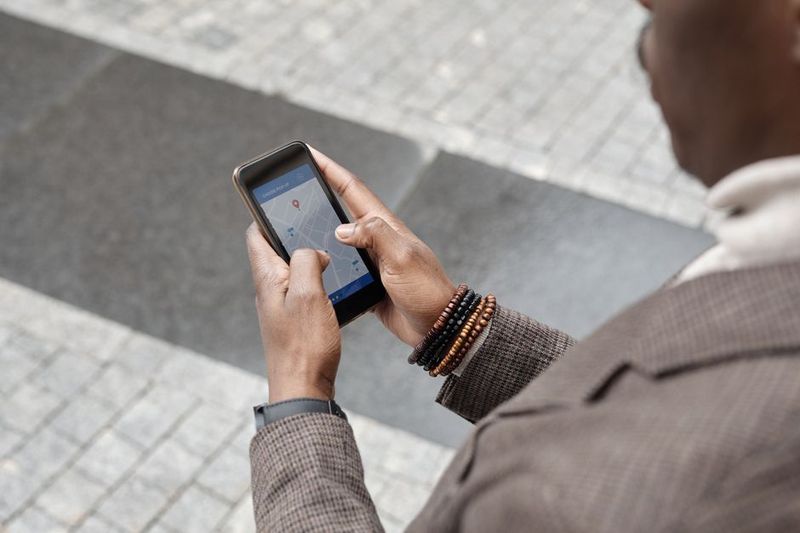
Your phone hits 2% battery three blocks from a subway stop you’ve never used, in a neighborhood where the street grid doesn’t run north-south like the rest of the city. Maps freezes mid-reroute. This is the moment every EDC compass earns its pocket space — not on a mountain trail, but on a sidewalk, when the one navigation tool you trusted just quit.
A compass sounds like gear for people who don’t live in cities. It isn’t. It’s a zero-battery backup that tells you which way is which when your phone can’t, and it weighs less than your keys.
Why a Compass Still Matters When You Have GPS
Phones fail in ways that have nothing to do with signal. Batteries die in cold weather faster than the percentage readout admits — lithium-ion cells lose a real chunk of usable charge below freezing, right when you’re least willing to stand on a corner waiting for a reboot. Screens crack and go dark. Storms knock out cell towers for hours at a time, and GPS chips inside phones are notoriously bad at holding a fix indoors or between tall buildings — the “urban canyon” effect, where signals bounce off glass and steel and the blue dot on your map drifts a full block from where you’re actually standing.
A compass doesn’t care about any of that. It has no battery to manage, no signal to lose, and no software to freeze. It gives you one piece of information instantly and for free: which way is north. That’s often all you need to stop walking the wrong direction for ten minutes before you realize it and have to backtrack.
This isn’t a call to abandon your phone. It’s a case for a backup that costs under $20, adds no meaningful weight, and never needs charging. The same logic that puts a spare pen or a backup light in your pocket applies here — redundancy for the one tool you’d otherwise have zero fallback for.
Button, Keychain, or Baseplate: Which Fits Urban EDC
Compasses split into a few carry formats, and not all of them belong in a city pocket.
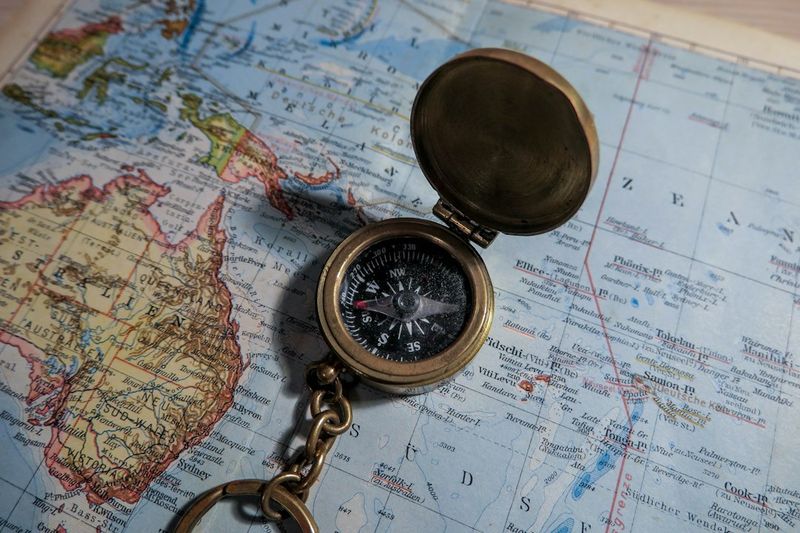
Button compasses are the smallest option — a sealed liquid-filled capsule roughly the size of a watch battery, often mounted on a zipper pull or keyring. They give you cardinal direction only: no bearing-taking, no declination adjustment. For urban use, that’s usually enough.
Keychain compasses are a step up in size, still small enough to disappear on a keyring or paracord lanyard, but with a slightly larger capsule that’s easier to read at a glance without stopping to squint.
Baseplate compasses — the flat rectangular ones with a rotating bezel — are built for taking precise bearings off a map. They’re bulkier and mostly overkill unless you’re also using them for actual wilderness navigation on weekends. For a daily city carry, they’re the one format worth skipping.
What to Actually Look For in an EDC Compass
Four things separate a compass worth carrying from one that ends up in a drawer.
- Liquid-filled capsule — the needle settles almost instantly instead of swinging for ten seconds, which matters when you’re checking it on the move.
- Luminous markings — a glow-in-the-dark or tritium-lit dial reads in a dark stairwell or parking garage without needing your phone’s flashlight, which defeats the point of a battery-free backup.
- Attachment point — a secure zipper-pull ring or keyring loop beats a loose fob that can snag and fall off a bag strap.
- Housing material — brass, titanium, or hard polycarbonate all survive years in a pocket; cheap stamped aluminum cracks or the capsule clouds over within months.
Accuracy matters less than you’d expect for city use. A compass that’s off by a few degrees still tells you correctly whether you’re walking toward the river or away from it — which is the actual job it’s doing most days.
One more thing worth checking before you buy: how the needle damps. Cheap dry-needle compasses swing back and forth for several seconds before settling, and in that window it’s easy to misread which way it’s actually pointing. A liquid-filled capsule stops that oscillation almost on contact, which is the difference between a glance and a 10-second stare while you wait for the needle to stop wobbling.
Best EDC Compass Picks by Carry Style
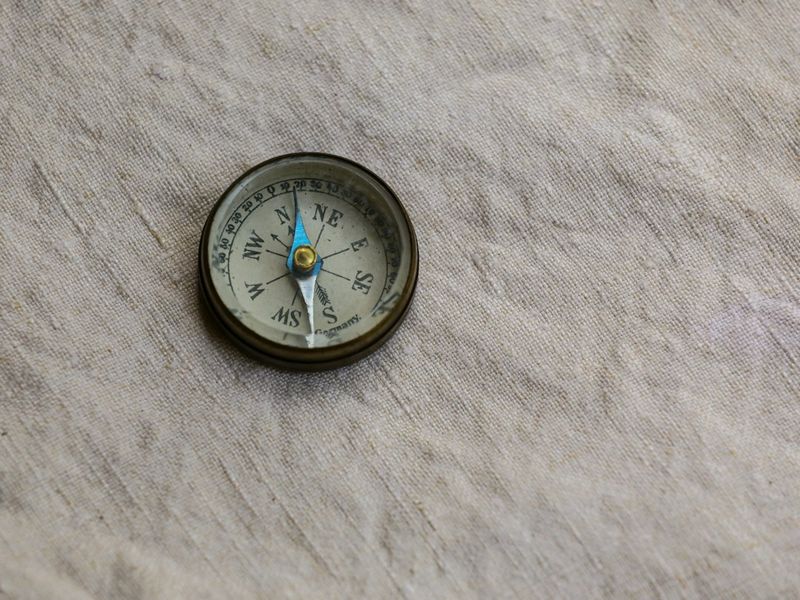
For a minimalist keychain setup, a brass or titanium button compass on a zipper pull adds almost no bulk and survives being tossed in a bag for years. The Case Brass Button Compass is a common pick in this category — solid brass housing, liquid-filled capsule, sealed against moisture. Look for one with a sealed liquid capsule rather than a dry needle — dry compasses stick and lag in cold weather.
Shop Brass Button Compass Keychains on Amazon
For low-light commuters — anyone walking to a subway or parking garage before sunrise or after sunset — prioritize a luminous dial over a cheaper non-glowing version. The Suunto Clipper clips directly onto a map edge or bag zipper and uses a liquid-filled card that settles fast, with enough glow retention to read in a dark stairwell. The price difference between a glow and non-glow model is usually a few dollars, and it’s the one feature that actually changes whether you’ll glance at it or ignore it.
For travelers who want one tool that covers both city orientation and the occasional trail, a small baseplate compass with a sighting mirror splits the difference. The Brunton TruArc 3 is still pocketable, but capable of taking an actual bearing off a paper map if a weekend hike is on the itinerary — overkill for daily carry alone, but worth it if the compass is pulling double duty.
Shop Baseplate Compasses on Amazon

How to Actually Use One on City Streets
You don’t need orienteering skills for this. Urban compass use comes down to two habits.
First, orient yourself once, at the start. Before you leave a subway exit or a parking structure, glance at the compass and note which direction you’re facing relative to where you need to go — “my destination is roughly northeast of here.” That ten-second check is the whole skill.
Second, use it to catch wrong turns early. Grid-based cities make it easy to assume every street runs the same direction, and plenty of neighborhoods break that pattern — old city cores especially, where streets were laid out centuries before anyone cared about a tidy compass grid. A quick glance at the compass after a turn tells you immediately if you’ve drifted off the heading you expected, instead of finding out six blocks later when the skyline stops matching what you pictured.
It also works as a tiebreaker when two apps disagree. Phone compasses (the little arrow on your map app) get thrown off by nearby metal, magnets in phone cases, or being indoors — a known quirk, not a defect. A physical compass held flat and away from your phone gives you a second reading to check against, and it’s rarely the one that’s wrong.

Declination: The One Technical Detail Worth Knowing
True north and magnetic north aren’t the same place, and the gap between them — called declination — shifts depending on where you are. In most of the continental US it’s small enough to ignore for walking directions; a few degrees of drift doesn’t change whether you’re heading toward downtown or away from it.
It matters more if you’re also using the compass with a paper map for actual navigation, where a few degrees compounds over distance. For pure “which way is north” urban use, don’t let declination talk you out of carrying one — it’s a non-issue at the scale of city blocks.

Where It Fits in Your Loadout
A compass isn’t a replacement for your phone, and it’s not a core daily item the way a wallet or knife is. It’s a backup — the same category as a spare AAA battery or a paper copy of an address you can’t afford to lose access to. It earns a permanent spot on a keyring or zipper pull precisely because you’ll forget it’s there until the one day you need it.
If you’re already running a minimalist carry and cutting items that don’t pull their weight, a compass survives that cut. It costs nothing in bulk and nothing in attention — it just waits.

Frequently Asked Questions
Do I really need a compass if I always have my phone?
You need one for the moments your phone doesn’t work — dead battery, cracked screen, no signal, or GPS drift between tall buildings. It’s not a primary tool, it’s insurance that costs under $20.
What’s the most practical EDC compass format for a city dweller?
A small liquid-filled button or keychain compass with luminous markings. It’s small enough to forget you’re carrying it and precise enough for cardinal-direction checks on foot.
Will a cheap compass actually be accurate enough to trust?
For city navigation, yes. You’re using it to confirm general direction, not take survey-grade bearings. Even a budget liquid-filled compass is accurate enough for that.
Can a compass near my keys or phone give a false reading?
Keys, phone cases with magnetic clasps, and metal carabiners can all deflect a compass needle if they’re touching or very close. Keep a few inches of separation when you actually check it, and it’ll read true.