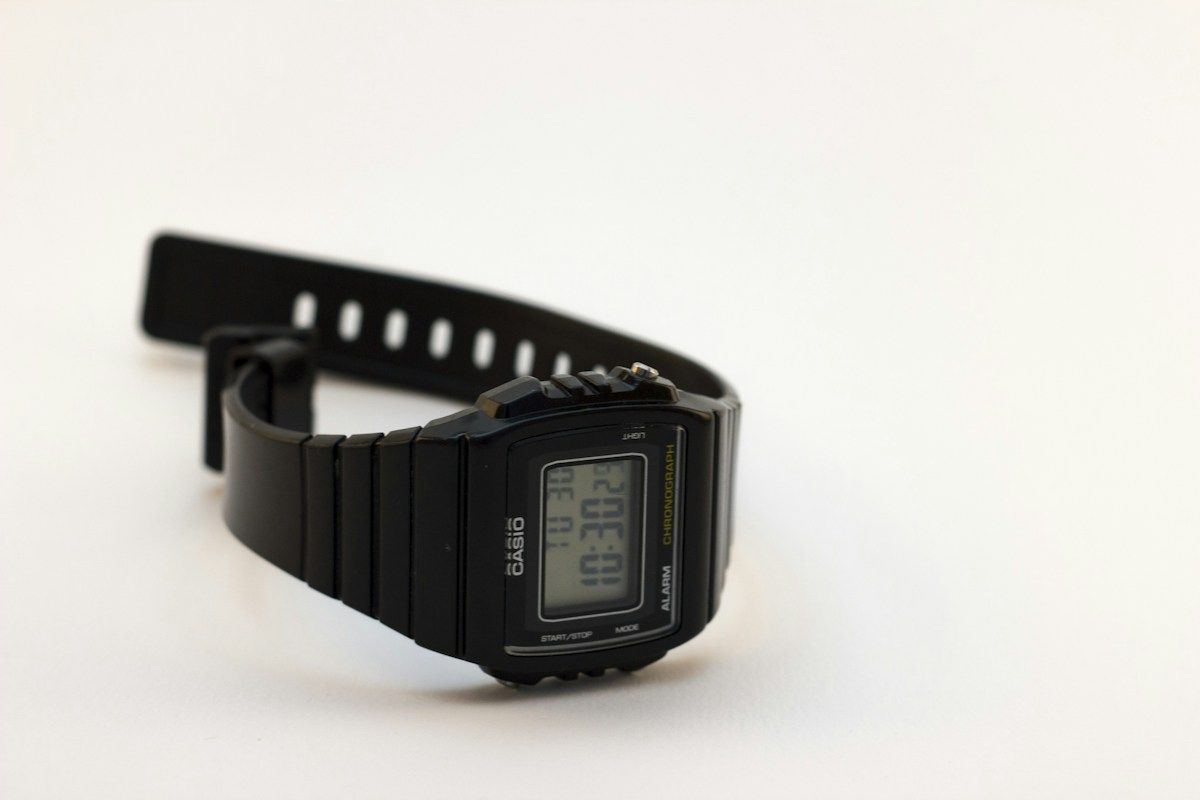
G-Shock DW5600: 5 Reasons It Still Wins
Three hundred bucks bought me a dive watch in 2019. It died in a sink full of dishwater eighteen months later — a “100-meter water resistant” rating that apparently didn’t account for soap. The $44 G-Shock DW5600 I bought as a backup has been through four dishwater soakings, a concrete sidewalk drop outside a 7-Eleven, and two years of forgetting it was even on my wrist. It still keeps time within a few seconds a month. That’s the whole case for this watch in one paragraph, and everything below just backs it up.
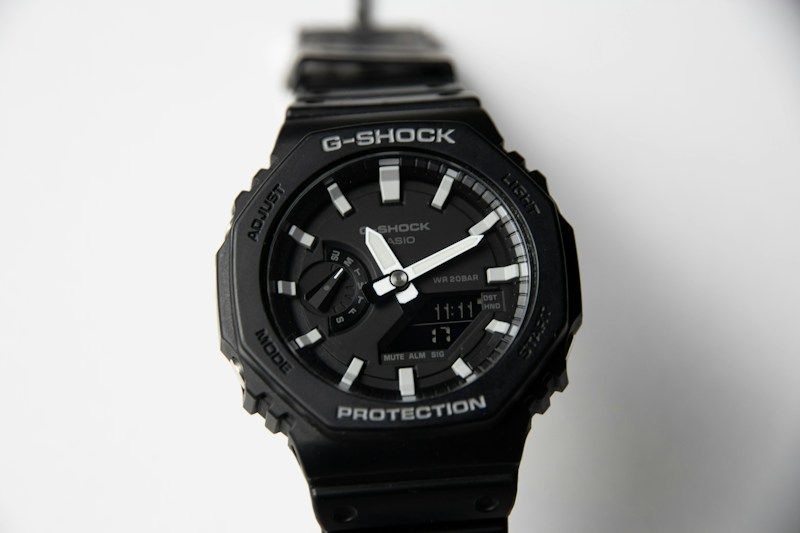
The square-faced digital layout has barely changed since Casio launched it in 1983.
What Makes the DW5600 an EDC Staple
Casio released the original DW-5000C in 1983, and the DW5600 that followed is close to the same watch with modern tolerances. The case is 48.9mm long, 42.8mm wide, and only 13.4mm thick — slim enough to slide under a jacket cuff or a nitrile glove without catching. At 52-53 grams it’s lighter than most analog field watches, and the resin band doesn’t leave the sweat-ring a leather strap does after a ten-hour shift.
What earns it a permanent spot in EDC kits isn’t any single spec. It’s that nothing about the design invites failure. There’s no sapphire crystal to source a replacement for, no automatic movement to regulate, no companion app that stops getting updates in three years. The feature set — stopwatch, countdown timer, daily alarm, full auto-calendar through 2099 — was decided in 1983 and hasn’t needed revision since.
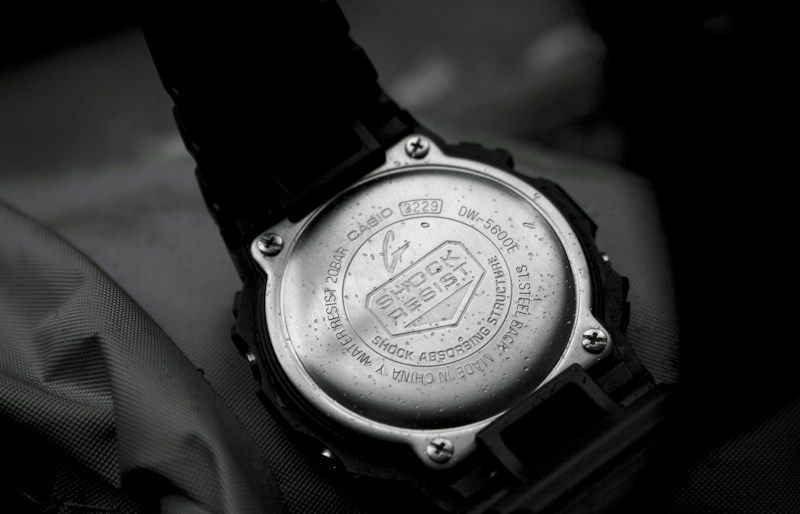
The screw-secured caseback and recessed buttons are part of why the shock rating holds up.
Built to Take a Beating
Casio’s own spec sheet lists 200-meter water resistance and a shock-resistant structure, and that’s not marketing fluff for this model specifically — it’s the baseline the entire G-Shock line was built to clear in 1983 after Casio engineer Kikuo Ibe reportedly dropped and destroyed 200 prototypes before landing on a design that survived a three-story drop onto concrete. The DW5600 inherits that same hollow-structure case design, which cushions the module inside a shock-absorbing frame rather than relying on a solid metal shell.
Reviewers at EDC Shelf put this to a real test: drops from waist height onto concrete, full submersion, and months of daily wear in trades and healthcare work, with no water entry and no case damage reported. That 200-meter rating covers showering, dishwashing, swimming, and the kind of sweat and rain that kills a lot of “water-resistant” fashion watches within a year. If your EDC watch needs to survive a job site or a kitchen, this is the baseline to measure against.
The resin band is the one part that eventually gives out, usually a few years in, after the material stiffens and the pin holes stretch from repeated adjustment. Casio sells replacement bands for under $15, and swapping one takes about five minutes with a spring bar tool. That’s a far cry from the cost of reconditioning a leather strap or replacing a metal bracelet link, and it’s the kind of maintenance that actually fits a daily-carry mindset — cheap, fast, and rare.
Where It Actually Falls Short
I’m not going to pretend this watch is flawless, because it isn’t, and every glowing review that skips the downsides is lying to you. The backlight is weak — TechWriterEDC’s review calls it out directly, noting they’d like it “a little brighter,” and reading the display in direct sunlight at an angle takes a second longer than it should. Setting the time and alarms is clunky too — the four-button interface takes a genuine learning curve the first week, and anyone coming from a phone screen will find it archaic by design.
The bigger letdown: Casio’s original DW-5000C ran ten years on a battery. The modern DW5600 manages about two years on its CR2016 cell before you’re paying a jeweler $8 to swap it. And at full retail around $70, you’re genuinely better off waiting for a sale — the same reviewer found it discounted to around $40, which is where this watch actually earns its reputation as a budget pick instead of just an okay one.
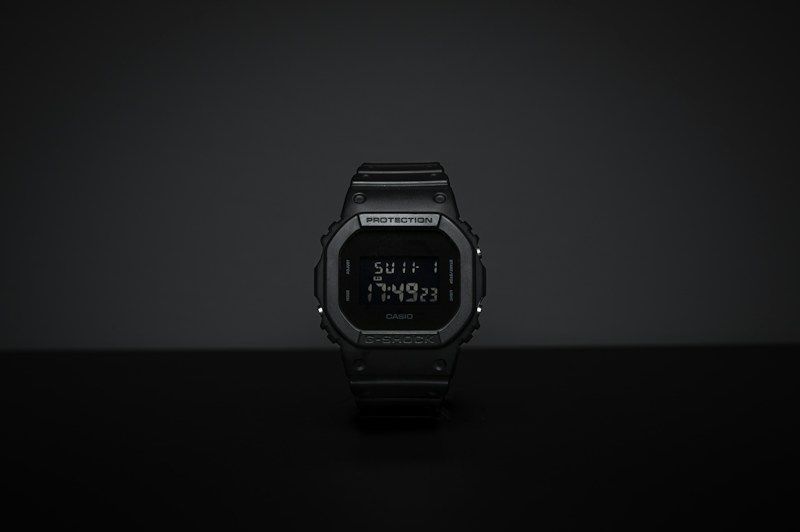
The DW5600’s boxy silhouette is unchanged from the original 1983 design.
DW5600 vs the Rest of the G-Shock Lineup
Casio sells dozens of G-Shock variants, and it’s worth knowing where the DW5600 sits before you buy the wrong one. The Mudmaster and Rangeman add mud resistance, barometers, and compasses — useful if you’re actually hiking, overkill if you’re mostly commuting and sitting at a desk. The GA-2100, nicknamed the “CasiOak” for its octagonal bezel, trades some of the DW5600’s slimness for an analog-digital hybrid face that reads easier at a glance.
If your EDC is genuinely urban — subway platforms, office buildings, coffee shop counters — the DW5600’s thinness and light weight beat the bulkier outdoor-focused models every time. Save the Mudmaster for actual trail use. For a broader rundown of watches in this price range, our guide to EDC watches under $200 compares several alternatives side by side.
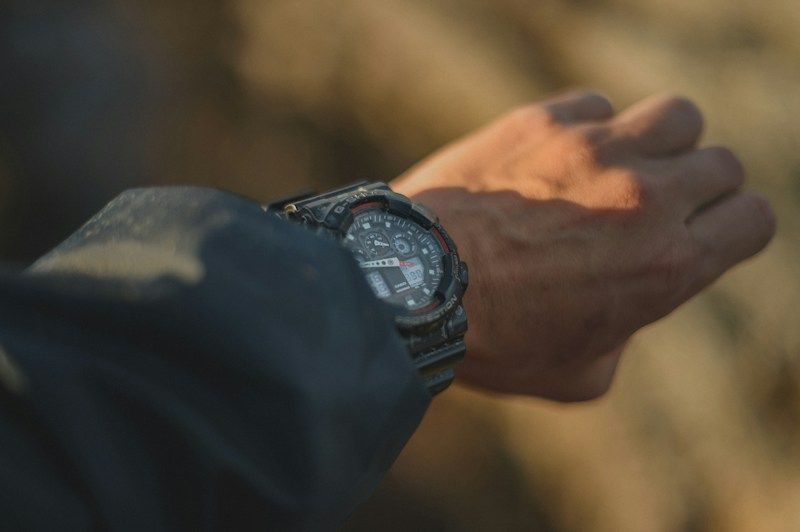
At 53 grams, the DW5600 disappears on the wrist during a full day of wear.
Does It Replace a Smartwatch?
No, and it was never trying to. A smartwatch tracks your heart rate, pings you when a text comes in, and dies by dinner if you forget to charge it. The DW5600 does none of that — it just tells time, for two years, without being plugged into anything. That trade-off is the actual decision point: do you want a wrist computer or a tool that works every single time you look at it?
Plenty of people in trades, healthcare, and warehouse work carry both — a smartwatch for notifications at a desk, and a G-Shock for anywhere a $400 screen has no business being. If your EDC priority is “never think about this again,” the DW5600 wins by default. If you need step counts and calendar alerts on your wrist, it was never built for that job and won’t pretend otherwise.
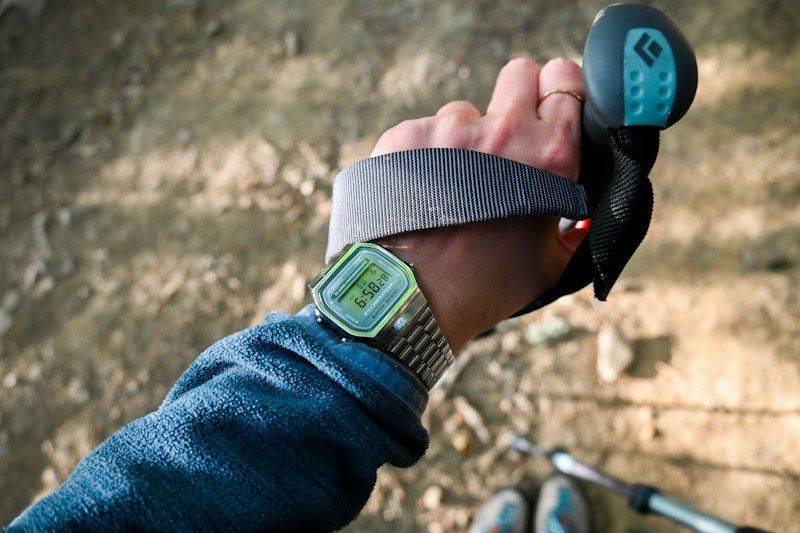
No charging cable, no paired app — the kind of reliability that matters when you’re away from an outlet.
What You Get for $70 (Or Less)
At full retail, $70 for a plastic digital watch sounds steep until you compare it to the alternative: a $25 drugstore watch that corrodes in a year, or a $300 “tough” watch that still can’t match a 200-meter rating. Casio also sells the AE-1200, a metal-banded digital model with a similar no-frills spec sheet, if you want something that reads a little more formal for an office setting without giving up the durability.
The real value case shows up on sale. Watch the price for a few weeks and you’ll see it dip into the $40s regularly — at that price, there’s genuinely nothing else on the market built this tough for this little money. Full retail is fine. Sale price is where this watch stops being a compromise and starts being an obvious pick.
Run the math over five years and the gap widens further. A $70 DW5600 plus one battery swap at the two-year mark and another near year four lands around $90 total. A $300 analog field watch needing a single service — a stuck crown, a gasket replacement — can run $150 or more at a jeweler, on top of the original purchase. The DW5600 isn’t just cheaper up front. It stays cheaper the longer you own it, because there’s almost nothing on it that can break in a way that costs real money to fix.

Casio’s metal-banded digital models offer a dressier alternative with the same no-nonsense feature set.
Where It Fits in a Real EDC Loadout
A watch earns its spot in your pockets the same way anything else does — by doing one job reliably without demanding attention. The DW5600 pairs well with the kind of stripped-down kit we cover in our minimalist EDC guide: a slim wallet, a single multitool, and nothing you have to think about twice. If you’re building out a kit around it, our best EDC multi-tool guide covers tools that share the same “just works” philosophy.
It’s not a status piece, and it was never meant to be one. It’s the watch you forget you’re wearing until the moment you actually need to know what time it is — through a shift, a commute, a spilled coffee, or a drop onto pavement. That’s a low bar on paper, but most watches twice this price still fail it.
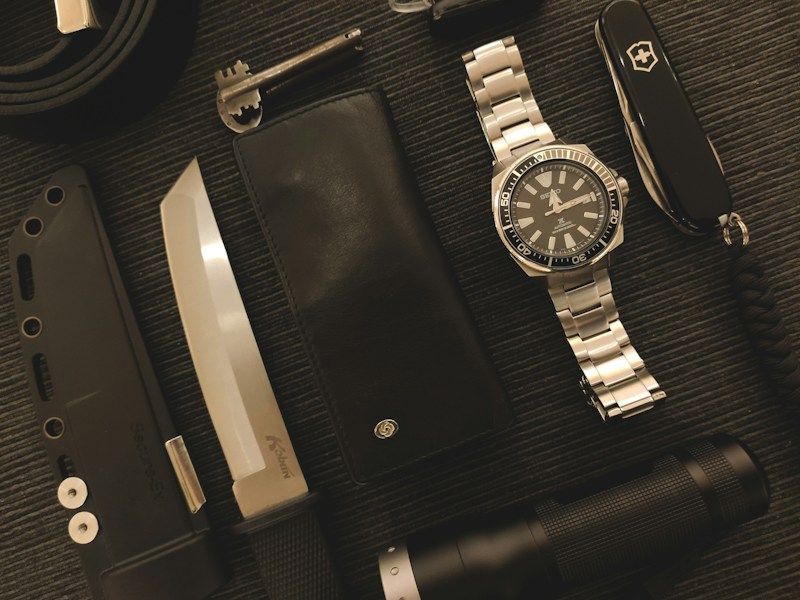
A digital watch like the DW5600 rounds out a minimalist carry setup without adding bulk.
Frequently Asked Questions
Is the G-Shock DW5600 waterproof enough for daily use?
Yes. It’s rated to 200 meters, which covers showering, dishwashing, swimming, rain, and sweat with plenty of margin. That’s a higher rating than most watches marketed as “water resistant” in this price range.
How long does the battery actually last?
About two years on the standard CR2016 coin cell under normal use. That’s down from the original 1983 model’s 10-year claim, but still far longer than any rechargeable smartwatch.
Is the DW5600 too small for a larger wrist?
At 42.8mm wide and only 13.4mm thick, it runs compact by modern standards. It sits fine on small-to-medium wrists and most larger wrists too, though if you prefer a bigger face, the GA-2100 or Mudmaster size up.
Should I buy it at full price or wait for a sale?
Wait if you can. It regularly drops into the $40s, and at that price it’s one of the best durability-per-dollar watches available. At full retail around $70 it’s still solid, just a less obvious deal.
Sources
- Casio DW-5600E-1V Official Product Page — case dimensions, water resistance, and battery specifications
- EDC Shelf: Casio G-Shock DW5600 Review — durability testing and real-world EDC use cases
- TechWriterEDC: Casio G-Shock DW-5600E Review — backlight, interface, and pricing critique
- EverydayCarry.com: Is the Casio G-Shock DW-5600 Worth It? — long-term ownership perspective