RFID Blocking Wallets: Real Risk or Myth?
A security researcher at DEF CON can skim a test card from four inches away with a $30 reader. That demo has been running for over a decade, and it is the entire reason RFID blocking wallets exist as a product category. What almost never gets mentioned next to it: the Identity Theft Resource Center’s own chief operating officer says flatly, “We do not believe this topic addresses a real risk.” Two things can be true at once — the skim is technically possible, and it is nowhere near how anyone actually loses money on a stolen card.

What RFID Skimming Actually Requires
The gear itself isn’t exotic. A compatible reader runs under $50 online, and the proof-of-concept demos that spawned the whole RFID-wallet industry are over a decade old at this point. What those demos never reproduce is the setting most of us actually move through — a train platform, a checkout line, a crowded sidewalk — where getting a reader flush against a stranger’s pocket for the full read cycle, without them noticing, is a lot harder than it looks in a controlled video.
Pulling data off a contactless card isn’t a drive-by job. Near-field communication, the tech behind every tap-to-pay card and phone, only reads at a few centimeters — closer than a handshake. A thief would need a reader pressed almost against your pocket, in a crowd, for the one or two seconds the chip takes to respond, and they’d need you to be carrying a card that still broadcasts a usable static number, which fewer and fewer do.
Visa’s own fraud team calls the scenario “very unlikely and limited in scope.” Frank McKenna, chief strategist at the fraud-analytics firm Point Predictive, put it more bluntly to AARP: RFID theft is “just very theoretical fraud.” Darius Kingsley, who handles consumer banking practices at Chase, told the same reporter he personally doesn’t think about RFID-blocking wallets at all. These are people whose job is worrying about card fraud for a living, and none of them lose sleep over this one.
The EMV Chip Already Beat This Threat
Here’s the part the RFID-wallet industry would rather you not connect: the gold or silver square chip on your card is EMV, not RFID. They’re often bundled into the same piece of plastic, which is exactly how the marketing confusion happens. EMV doesn’t transmit your card number in a form a skimmer can reuse. Every tap generates a one-time cryptographic code tied to that single transaction — even if someone intercepted it mid-air, replaying it at a different terminal just gets the transaction declined.

That’s a fundamentally different animal from the magnetic stripe fraud RFID blocking was originally pitched to solve back when stripes were still standard. A stripe really did store a static, clonable number. The chip standard that replaced it closed that hole industry-wide starting around 2015, which means the product category built to stop RFID skimming showed up right as the underlying card technology made the attack mostly pointless.
What the Real Fraud Numbers Show
Global card fraud losses hit $33.41 billion in 2024, according to Nilson Report data released in January 2026 — and the report is explicit about where that money goes. Card-not-present fraud, meaning stolen numbers used on websites and over the phone, is called out as the highest-risk category in every region the report tracks. Contactless and RFID theft isn’t even broken out as its own line item, because there isn’t enough of it to need one.

Data breaches, phishing emails, and hacked checkout pages account for the overwhelming majority of stolen card numbers. None of those routes go anywhere near your back pocket. A thief who wants your card data is going to buy a breach dump off a forum for a few cents per record, not stand next to you at a Starbucks hoping your card happens to still use a vulnerable chip format.
Where an RFID Blocking Wallet Still Earns Its Keep
None of this means every RFID chip in your pocket is equally safe to leave exposed. The distinction that actually matters is EMV versus plain RFID, and not every RFID chip you carry has EMV’s encryption layered on top. Newer biometric passports, for instance, store an RFID chip carrying your photo and personal data with no transaction-style rotating code behind it — that’s a real reason the foil-lined sleeve that often ships with a passport case isn’t just marketing filler.

Corporate access badges fall in the same bucket. A building key fob typically just broadcasts a static ID number with none of EMV’s rotating-code protection, so a cloned badge is a cloned badge, permanently, until IT deactivates it. If your daily carry includes a work badge instead of a key, that’s worth a blocking sleeve far more than your Visa card is.
Hotel Keycards and Transit Passes Are a Different Story
Hotel keycards and most transit fare cards run on the same unencrypted logic. They’re not payment instruments, so nobody built an EMV-style rotating code into them — a cloned hotel key opens the same door every time until the front desk reissues it. That’s a real inconvenience if it happens, even if the financial stakes are lower than a drained bank account.

The practical takeaway: sort your cards by what’s actually inside them before you buy protection for all of them. A blocking sleeve around your passport and your work badge is solving a real problem. The same sleeve around a 2026-issue Visa or Mastercard is solving one that was already fixed a decade ago.
What to Actually Carry
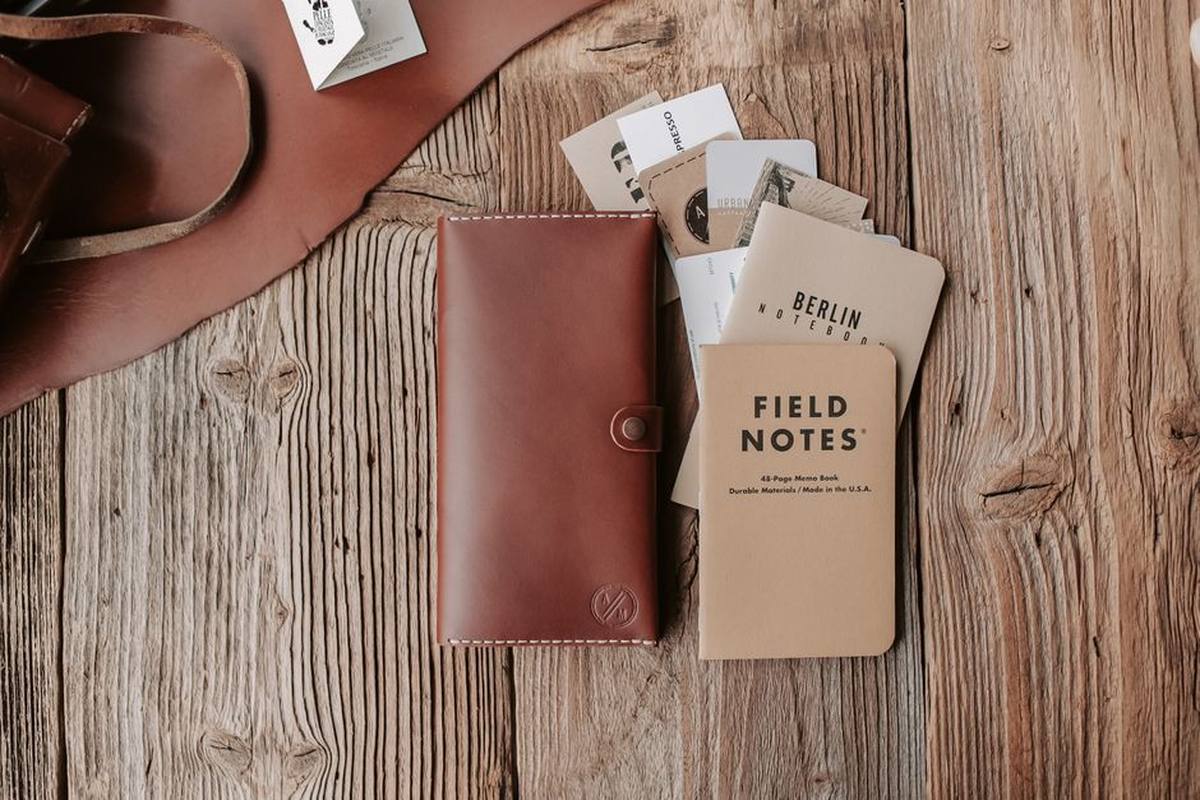
Skip the RFID-blocking marketing line entirely and build your wallet around carry, not shielding. A slim cardholder beats a bulky bifold on comfort alone, chip security being equal either way. We ran the numbers on the Bellroy Slim Sleeve a few weeks back and the RFID-blocking SKU wasn’t worth the upcharge over the standard version — same leather, same stitching, same pocket profile, just a marketing line and a few extra dollars.

If you’re trying to cut carry weight generally, our guide to trimming an EDC loadout covers the same logic from a different angle: buy for what you’ll actually use daily, not for a worst-case scenario that statistically isn’t happening to you. Four cards, a driver’s license, and cash in a sleeve that fits a front pocket does more for your day than a shielding layer against a threat nobody’s documented hitting a real person.
How Your Cards Actually Get Stolen
If you want to spend effort protecting your cards, spend it somewhere that matches the real loss data. Freeze your credit with the three bureaus so a breached number can’t be used to open new accounts in your name. Turn on transaction alerts so a fraudulent charge gets flagged in minutes instead of showing up on next month’s statement. Use a unique, randomly generated password for every shopping site, since reused passwords are how card-not-present fraud actually starts most of the time.

Worth adding: most of this isn’t guesswork on your end. Your bank already runs every contactless transaction through fraud-detection scoring in real time, flagging anything that doesn’t match your normal spending pattern before it posts. That system catches far more fraud than a shielding sleeve ever could, because it’s watching every card you have, every day, not just the one sitting in your pocket.
Card issuers also refund unauthorized charges as standard practice, RFID-related or not, which is the detail that undercuts the whole premise of needing a special wallet in the first place. You’re not financially exposed the way the sales copy implies. The real risk to actually guard against is a lost wallet, a weak email password, or a skimmed number from a breach you’ll read about months later — not a stranger with a scanner standing too close in a grocery line.
FAQ
Do I need an RFID blocking wallet for a modern credit card?
No, not for fraud protection. Cards issued in the last decade run EMV chips that generate a one-time code per transaction, which is what actually stops cloning — the wallet material around the card doesn’t change that math.
Does an RFID blocking wallet protect my passport?
Yes, and that’s the one case where it’s a genuine upgrade. Biometric passports carry an RFID chip without EMV’s rotating-code layer, so a shielding sleeve or passport case is solving a real exposure there.
Can someone really steal my card info by walking past me?
Researchers have demonstrated it at conferences like DEF CON under ideal lab conditions and a few inches of range. The FBI and the Identity Theft Resource Center have no record of it happening to consumers at scale in the real world.
What actually causes most credit card fraud?
Data breaches, phishing, and card-not-present fraud on websites and over the phone. The Nilson Report puts card-not-present fraud as the dominant category worldwide, nowhere close to physical skimming.
Sources
- AARP — Do You Really Need an RFID-Blocking Wallet? — expert quotes from the Identity Theft Resource Center, Point Predictive, Chase, and Visa on real-world RFID fraud risk.
- GlobeNewswire — Global Card Fraud Losses at $33 Billion (Nilson Report data, January 2026) — 2024 global fraud totals and card-not-present fraud as the dominant loss category.
- Trayvax — Do You Need an RFID-Blocking Wallet If You Have an EMV Card? — the technical distinction between EMV chips and RFID technology.
- Alpha Keeper — Is RFID Skimming a Real Threat? Facts vs Fear — Nilson Report contactless-fraud share, FBI IC3 and Identity Theft Resource Center findings, and DEF CON/Black Hat lab demonstrations.