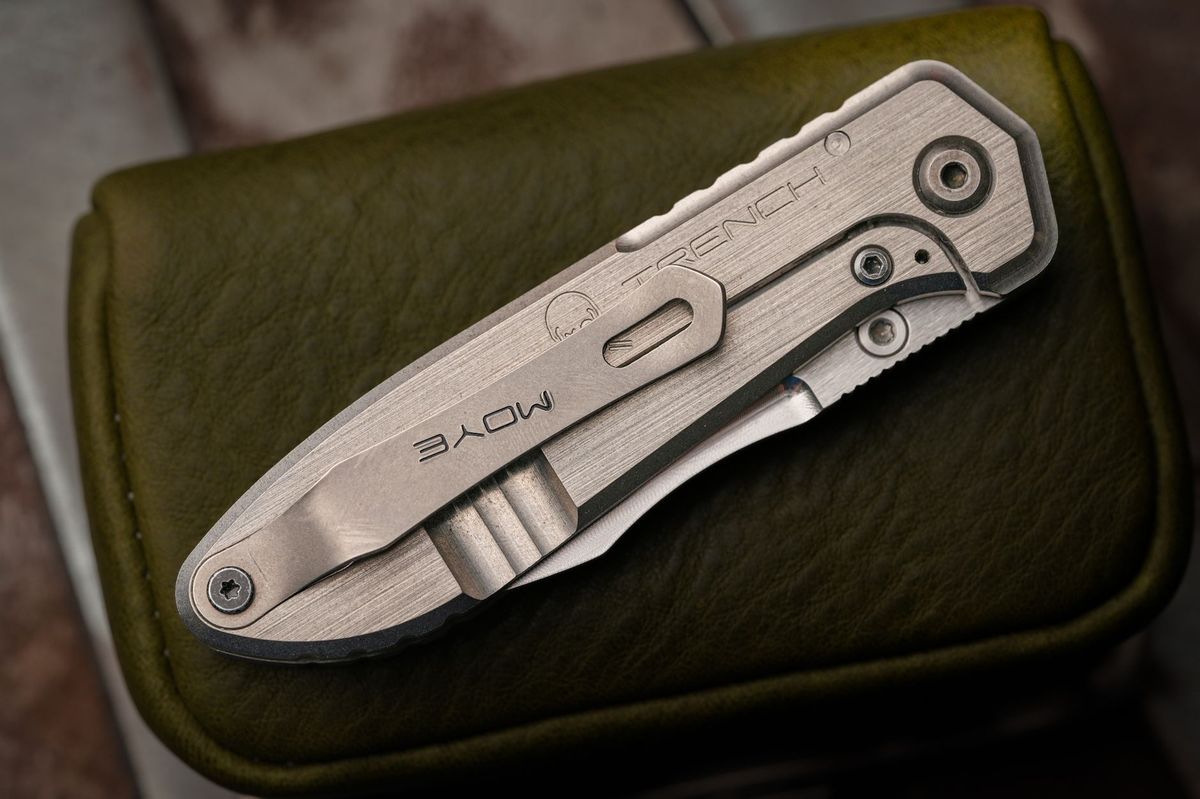
The $40 Value-Knife Boom: How CIVIVI, CJRB and Ontario Made Sub-$50 Blades Worth Trusting
Ten years ago, a $40 pocket knife meant a wobbly liner lock, a soft stainless blade that dulled by lunch, and a pocket clip that bent if you looked at it wrong. Today that same $40 buys D2 tool steel, a flipper riding on caged ball bearings, and machining tolerances that would have cost triple in 2016. If you’ve been ignoring the sub-$50 shelf because it used to be junk, you’ve missed one of the biggest shifts in everyday carry: the arrival of the serious value knife. This is a field breakdown of how that happened, what to actually look for, and which cheap blades have earned a permanent spot in a working man’s pocket.
What Changed: Why $40 Buys So Much More Knife Now
The value-knife boom isn’t marketing spin — it’s a supply-chain story. A handful of Chinese OEMs (most notably the factories behind CIVIVI, Sencut, CJRB and Kizer) invested in CNC machining, powder-metal steel supply, and quality control that used to be the exclusive turf of premium American makers. Once one brand shipped a $40 knife with real heat-treated D2 and a detent tuned for one-hand flipping, the rest had to follow or die. The result is a race to the middle that quietly benefits anyone carrying a blade.
What that means in practice: the floor has risen dramatically. A decade ago the sub-$50 tier was a minefield with two or three survivors. Now there are a dozen genuinely good options, and the differences between them come down to steel, ergonomics, and lock preference rather than “is this thing going to fall apart.” The corner-cutting still exists — it’s just moved to places that matter less for daily use, which we’ll get to.
The Steel Question at the Budget Tier
Steel is where budget knives used to lose, and it’s the single spec worth understanding before you spend a dollar. At the sub-$50 price you’ll run into five names constantly, and they are not equal.
D2 — the workhorse of the value tier
D2 is a semi-stainless tool steel that holds an edge far longer than the old budget standards. At around 60 HRC it takes real abuse and keeps cutting through cardboard, rope and zip ties well past the point where cheaper steel folds. The trade-off is that it’s slightly more effort to sharpen and it can spot with light surface rust if you never wipe it down. For most carriers that’s a fair deal, and D2 is the reason the CIVIVI Elementum became the default first “good cheap knife.”
14C28N and AR-RPM9 — the balanced choices
Sandvik 14C28N is a fully stainless steel that sharpens easily, resists corrosion better than D2, and holds a respectable edge — it’s what Kershaw put on the Skyline and why that knife earned a cult following. AR-RPM9 is CJRB’s newer powder-metallurgy steel, and it punches genuinely above its price: fine grain structure, good edge retention, and better rust resistance than D2. If you live somewhere humid or you carry in a pocket that sees sweat, lean toward one of these over D2.
AUS-8 and 8Cr13MoV — acceptable, not exciting
These are the older budget standards. They’re soft, they dull faster, but they sharpen back to a razor in about thirty seconds on a stone, and they almost never rust. For a beater knife you’ll abuse and re-sharpen constantly, they’re fine. Just don’t pay near $50 for them when D2 or AR-RPM9 is available in the same bracket. If a $45 knife is still on 8Cr, you’re paying for the handle, not the blade.
Deployment and Lock: Where Budget Knives Used to Feel Cheap
The tactile experience of opening and locking a knife is what separates a toy from a tool, and it’s the area that improved the most. The two things to evaluate are the pivot and the lock.
On the pivot: many sub-$50 knives now run caged ball bearings instead of phosphor-bronze washers. Bearings make a flipper snap open with a flick and drop shut under gravity — that satisfying “fidget” action that used to be a $150 feature. Bronze washers are actually more durable long-term and easier to service, so don’t treat bearings as strictly better; but for smooth, fast deployment out of the box, bearings are why cheap flippers feel expensive now.
The detent is the unsung hero here. A properly tuned detent — the tiny ball that holds the blade closed and provides resistance against the flipper tab — is what makes a flipper deploy 100% of the time. Bad detent tuning is the classic budget failure: the blade only makes it three-quarters open and you have to wrist-flick it. The good value brands got this right, and it’s the first thing to test in a store or in the first week of ownership.
Liner lock vs frame lock at this price
Most sub-$50 folders use a liner lock (a leaf of steel inside the handle springs behind the blade) or a frame lock (the handle scale itself is the lock bar). Both are proven and safe when executed well. Watch for early or excessively late lock-up — you want the lock bar landing somewhere in the middle of the blade tang, not at the far edge where it can slip over time. Give a locked blade a firm spine-tap on your palm; it should hold solid with zero blade play. At the budget tier a little side-to-side play after break-in is common and usually adjustable at the pivot screw; vertical (spine) play is a hard pass.
The Value Brands Actually Worth Your $40
Enough theory — here’s where the money goes. These aren’t ranked; they solve different problems, and the right one depends on how you carry.
The CIVIVI Elementum is the knife most people should start with. Around $40, D2 blade, drop-point profile, a slim handle that disappears in a pocket, and a flipper action smooth enough to embarrass knives twice the price. It’s boring in the best way — nothing to complain about, nothing that screams cheap. If someone asks “what’s one good EDC knife under fifty bucks,” this is the safe answer.
Shop CIVIVI Elementum on Amazon
The Ontario RAT 1 (and its smaller sibling the RAT 2) is the anti-fidget pick: a big, tough, thumb-stud folder with a nylon handle that shrugs off drops and jobsite abuse. The D2 version sits right at the top of the budget bracket and gives you a full 3.6-inch blade, a grippy handle, and a four-way pocket clip. It’s not smooth or refined — it’s a hammer of a knife you’ll never worry about. For anyone doing actual work rather than opening Amazon boxes, this is the one.
Shop the Ontario RAT 1 on Amazon
The Kershaw Skyline is the enthusiast’s cheap knife. Made in the USA, 14C28N steel, a lightweight G10 handle, and a flipper-plus-thumb-stud deployment that’s been beloved for over a decade. It’s the knife that proves budget doesn’t have to mean imported. If you want a domestically made blade under $50 with genuine pedigree, the Skyline has outlasted every trend since it launched.
Then there’s the CJRB Pyrite and Feldspar line, which brought AR-RPM9 steel and titanium-free frame-lock feel to the sub-$45 tier, and the venerable Opinel No. 8 — a $20 French classic with a carbon or stainless blade, a beechwood handle, and a rotating collar lock. The Opinel is the opposite of tactical: it’s the knife you hand a friend for the cheese board and then quietly reach for every day because it just slices beautifully.
Shop the Kershaw Skyline on Amazon
Where Sub-$50 Knives Still Cut Corners
Honesty matters more than hype, so here’s what your $40 doesn’t buy. The savings show up in a few predictable places, and knowing them helps you set expectations instead of feeling cheated.
- Steel ceiling. You won’t get S30V, S35VN, or MagnaCut at this price. D2 and AR-RPM9 are excellent, but the true super-steels cost more to buy and heat-treat.
- Fit-and-finish variance. Budget QC is good on average but less consistent unit to unit. One Elementum might be flawless; another needs a pivot adjustment out of the box.
- Clip and hardware. Pocket clips are often thinner stamped steel that can lose tension, and screws are sometimes soft. Neither is a dealbreaker, both are cheap to replace.
- Handle materials. You’ll see G10, Micarta and FRN — good, functional materials — but rarely titanium or carbon fiber unless it’s a sale unit.
None of these compromises affect whether the knife cuts well or holds up to daily carry. They’re the difference between “great value” and “heirloom,” and for a pocket tool you might lose or beat up, great value is exactly the right target.
Matching the Knife to How You Actually Carry
The best budget EDC knife is the one that fits your life, not the one with the highest spec sheet. Work through it honestly. If you open packages and break down boxes in an office, a slim, non-threatening drop point like the Elementum or a smaller RAT 2 disappears in slacks and won’t alarm anyone. If you’re on a jobsite or outdoors, prioritize a tough handle and a bigger blade — the full-size RAT 1 earns its keep. If you value the ritual of a smooth flipper and you’ll fidget with it at your desk, chase the bearing-pivot knives. And if you just want something that slices food and cuts twine without any tacticool baggage, the Opinel is hard to beat for twenty bucks.
Whatever you pick, the takeaway is that you no longer have to spend $150 to carry a knife you can trust. The value-brand wave has made the sub-$50 shelf the smartest place to shop in all of EDC. Buy one, put a fresh edge on it, carry it hard for a month, and you’ll understand why the gear-nerd community stopped sneering at budget blades. The floor is high now — you just have to reach down and grab it.
The value gear boom extends well beyond knives. If your EDC interests lean toward outdoor pursuits, Archery Supplier covers the same value-hunting mindset applied to bows, arrows, and range accessories — gear that holds up without the premium brand markup.
Sources
- Wikipedia — Everyday carry
- Wikipedia — Pocketknife
- Wikipedia — Tool steel (D2 and blade steels)
- KnifeCenter — specs and pricing reference
- Blade HQ — model catalog reference
Explore our top EDC gear picks at the EverydayCarryGuy shop →
Shop on Amazon
EDC Knives on Amazon →
As an Amazon Associate we earn from qualifying purchases.
Shop on eBay
EDC Knives on eBay →
We may earn a commission when you shop through our eBay links.
Handmade Polish craftsman knives
Shop Polish Custom Knives →
We may earn a commission when you shop through our Polish Custom Knives link.