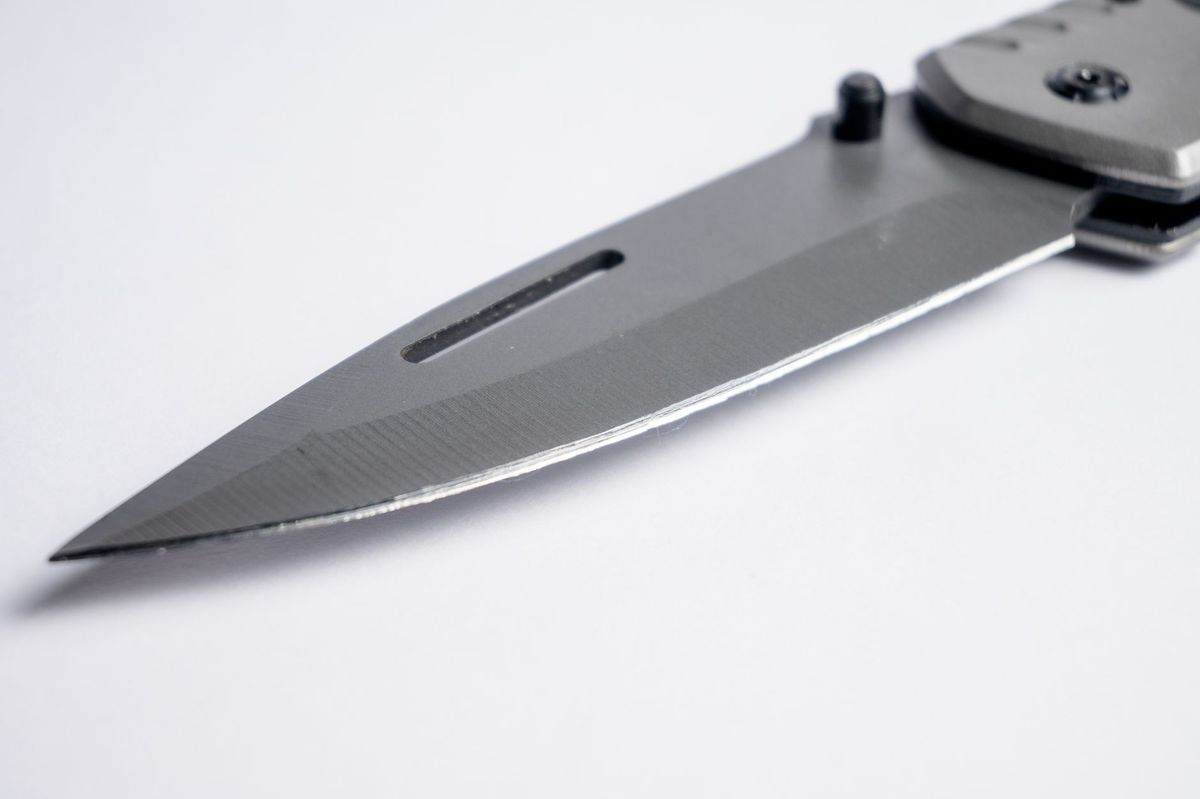
Blade Geometry on a Budget: How Grind and Point Shape Decide Which Cheap EDC Knife Actually Cuts
Spend twenty minutes in any EDC forum and you’ll think steel is the only thing that matters. S30V versus S35VN, 14C28N versus D2, powder metallurgy this and edge retention that. It’s a fun rabbit hole, and under $50 the steel question mostly answers itself anyway — you’re getting decent stuff. But here’s what nobody tells the guy buying his first serious pocket knife: two blades made from the exact same steel can cut like completely different tools. The difference is geometry. Grind, primary bevel, point shape, blade height. That’s what your edge actually is, and it’s what decides whether a cheap knife glides through a cardboard box or wedges and tears halfway down.
Geometry is also the one spec makers can’t fake with a marketing sticker. A budget brand can stamp a fancy steel name on the blade and skimp everywhere else, but the grind is either good or it isn’t — you can see it, measure it, and feel it in the first cut. Learn to read it and you’ll pick better knives than half the people arguing about carbides online.
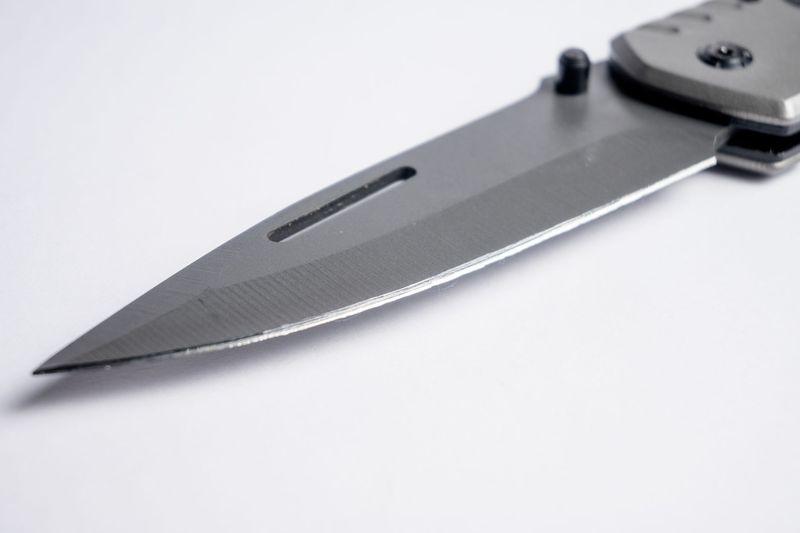
Why steel matters less than you think under $50
Let’s get the steel obsession out of the way first, because it’s blocking your view of the thing that matters. Edge retention — how long a blade stays sharp — is real, and premium steels genuinely hold an edge longer. But retention only matters once the edge is thin enough to cut well in the first place. A thick, obtusely-ground blade in the world’s best super-steel will still shove material aside instead of slicing it. Meanwhile a thin flat grind in humble Sandvik 14C28N or AUS-8 will feel scary sharp and stay usable for weeks of normal carry.
For 95% of EDC — opening packages, breaking down boxes, cutting cord, trimming a loose thread, slicing an apple at your desk — geometry does the heavy lifting and steel is a tiebreaker. The practical takeaway: don’t pay a premium for exotic steel on a sub-$50 knife with a fat, poorly-ground blade. Pay attention to how the blade is shaped, and the budget-steel edge will do everything you need. You can always touch it up on a $15 stone in five minutes.
Grind types: what the cross-section actually does
The grind is the shape of the blade when you slice it in half from spine to edge. Look at a knife end-on and you’ll see it. This cross-section decides how the blade parts material, and it’s the single most important geometry spec on any EDC knife.
Full flat grind — the EDC default for a reason
A full flat grind tapers in a straight line from the spine all the way down to the edge. No secondary planes, no fat shoulders — just one clean wedge that gets progressively thinner. This is the most forgiving, most versatile geometry for everyday cutting because the blade keeps getting thinner as it sinks into material, so it doesn’t bind. The CIVIVI Elementum, one of the most-recommended sub-$50 folders on the planet, is a textbook full flat grind, and that’s a huge part of why it slices so far above its price. When people say a cheap knife “cuts like a much more expensive one,” they’re almost always describing a good flat grind.
Shop the CIVIVI Elementum on Amazon
Hollow grind — scary sharp, a little delicate
A hollow grind uses a concave curve — like the two sides were ground on a big wheel — leaving the edge extremely thin. That thinness makes hollow grinds feel unbelievably sharp out of the box and excellent for shallow, precise cuts: skinning tasks, fine slicing, whittling. The trade-off is that behind that razor edge the blade thickens fast, so hollow grinds can bind in deep cuts through thick material, and the thin edge is a touch more prone to rolling or chipping if you pry (which you shouldn’t). Kershaw’s Leek family is a well-known hollow-ground budget option — slim, elegant, and genuinely surgical for light EDC.
Sabre and Scandi grinds — toughness over slicing
A sabre grind starts its bevel partway down the blade instead of at the spine, leaving more meat behind the edge. It’s stronger and better for hard, abusive tasks — but it’s a worse pure slicer because there’s more material to shove aside. The Ontario RAT 1, a perennial sub-$40 favorite, runs a sabre-ish grind that leans toward toughness, which is exactly why hard-use folks love it and box-cutting purists sometimes wish it were thinner. Scandi grinds (a single wide bevel down to the edge) are common on fixed-blade bushcraft knives and are fantastic on wood; you’ll rarely see a true Scandi on a folding EDC, and that’s fine.
Shop the Ontario RAT 1 on Amazon
Point shape: the tell for what a knife is built to do
If the grind decides how a blade cuts, the point shape decides what jobs it’s aimed at. This is where you match a knife to your actual life instead of buying whatever looks tactical in a thumbnail.
Drop point — the do-everything shape
The spine curves gently down to meet the edge, putting the tip roughly in line with the center of the blade. It’s strong, controllable, and useful for everything from opening mail to detail work. If you only own one EDC folder, a drop point is the safe answer — it does nothing spectacularly and everything well. The vast majority of the best budget EDC knives under $50, from the Elementum to countless CJRB and Sencut models, are drop points precisely because the shape refuses to be bad at anything.
Sheepsfoot and wharncliffe — the straight-edge specialists
These drop the pointed tip almost entirely (sheepsfoot) or run a dead-straight edge to a low, fine tip (wharncliffe). A straight edge is a gift for cut-on-a-flat-surface work: scoring cardboard, cutting against a bench, slicing tape on a box without the belly wandering. Sheepsfoots are also the go-to for anyone who wants a less-pointy, less-intimidating blade — think office carry or first-responder work where a stabbing tip is a liability. If most of your cutting is boxes and material laid flat, a wharncliffe will feel like a cheat code.
Clip point and tanto — reach and a strong tip
A clip point (think classic Buck) has a concave or straight “clip” cut out of the spine near the tip, giving a fine, controllable point that’s great for piercing and detail work — the trade-off is a slightly weaker tip. Tantos flip that: a high, reinforced tip with a secondary edge angle, built to punch through tough material without snapping. Tantos look aggressive and are genuinely tough at the point, but that angular belly makes rolling cuts and slicing awkward. Buy a tanto only if you actually pierce hard stuff regularly; otherwise the drop point out-cuts it every day of the week.
Blade height, stock thickness, and the “behind-the-edge” number
Two more numbers finish the geometry picture, and they’re the ones budget shoppers most often ignore. Blade stock thickness is how thick the steel is at the spine — anywhere from about 2.5mm on a slicer to 4mm+ on a hard-use blade. Thicker stock is stronger but, all else equal, worse at slicing because there’s more metal to spread apart. Blade height is how tall the blade is from spine to edge; a taller blade with a full flat grind reaches a thinner apex from the same thickness, which is why tall flat-ground blades slice so well.
The number that ties it together is “behind-the-edge” thickness — how thick the blade is just above the sharpened bevel. You won’t find it on a spec sheet, but it’s what you’re really feeling when a knife cuts well or poorly. A thin behind-the-edge (roughly 0.4–0.5mm) glides; a thick one (0.7mm+) wedges. When a reviewer says a budget knife “punches above its weight,” they’ve handled one with a generous height, moderate stock, and a thin behind-the-edge. You can approximate this yourself: hold the blade edge-on to a light and look at how quickly the steel fattens up behind the sharpened part. Thin and gradual is what you want.
Putting it together: matching geometry to your carry
Here’s how this all cashes out at the register. Figure out what you actually cut, then buy the geometry that serves it — the brand and steel sort themselves out afterward.
If you’re a generalist — packages, cord, food, the odd stubborn zip tie — get a full flat grind drop point. That’s the CIVIVI Elementum, the CJRB Feldspar, the Sencut Sachse and their many cousins, all sitting comfortably under $50 and all built around the shape that refuses to be bad at anything. If your day is dominated by boxes and flat material, prioritize a sheepsfoot or wharncliffe with a flat grind — the straight edge earns its keep every single cut. If you genuinely put your knife through abuse — prying-adjacent tasks, thick rope, hard plastics — accept a sabre grind and thicker stock like the Ontario RAT 1 offers, and make peace with slightly worse slicing in exchange for a blade that shrugs off punishment.
And don’t sleep on the humble outliers. The Opinel No. 8 — a French wood-handled folder that costs less than a lunch — is a thin, tall, high-carbon flat grind that out-slices knives ten times its price. It has no clip, a middling lock, and a handle that swells in the rain, but as a pure demonstration of what good geometry does for cutting, it’s a masterclass. Handle one and you’ll understand viscerally why grind beats steel for everyday cutting.
Shop the Opinel No. 8 on Amazon
How to read a blade before you buy
You can evaluate geometry from photos and specs, no in-hand handling required — which matters when you’re buying a budget knife online. Pull up a clean side profile and a spine-on or macro shot if the listing has one. Ask three questions in order.
- Where does the grind start? High up near the spine (full flat) is your slicing friend. Starting partway down (sabre) trades cutting for toughness — fine if that’s your goal, a red flag if you just wanted a good box knife.
- Where is the tip? Roughly centered and gently curved (drop point) is the safe generalist. Dropped and straight (sheepsfoot/wharncliffe) is a flat-work specialist. High and reinforced (tanto) is a piercing tool that slices poorly.
- How thick is the stock? Listings quote it in millimeters. Under ~3mm with a flat grind is a slicer; 3.5mm+ leans hard-use. Match it to what you cut, not to what looks toughest.
Do that and you’ve filtered out the badly-designed knives regardless of the steel stamped on the blade. It also inoculates you against the two most common budget-knife disappointments: the thick, obtuse “tactical” folder that looks mean but wedges in cardboard, and the pretty knife with a beautiful steel name and a grind so thick it cuts like a butter knife. Geometry is the truth serum.
The bottom line
Under $50, the steel is good enough. What separates a knife you’ll carry for years from one that ends up in a junk drawer is geometry — the grind that decides how it cuts, the point that decides what it’s for, and the behind-the-edge thickness that decides whether it glides or shoves. Learn to read those three things and you’ll never be at the mercy of a spec sheet again. Buy the shape that fits your hands and your tasks, keep it sharp on a cheap stone, and let the steel snobs argue about carbides while your $35 flat-ground drop point quietly out-cuts their safe-queens.
Sources
- Wikipedia — Blade (grind types and geometry)
- Wikipedia — Opinel knives
- Blade HQ — knife specs and references
Explore our top EDC gear picks at the EverydayCarryGuy shop →
Shop on Amazon
EDC Knives on Amazon →
As an Amazon Associate we earn from qualifying purchases.
Handmade Polish craftsman knives
Shop Polish Custom Knives →
We may earn a commission when you shop through our Polish Custom Knives link.