The Full-Size Plier Multitool Under $100: How to Pick a Belt Workhorse That Earns Its Weight
There’s a quiet split in the multitool world that most buying advice ignores. On one side you’ve got the pocket compacts — the sub-four-ounce, scissors-or-pliers, keychain-class tools built around the question of what you’ll actually carry. On the other side sits the full-size plier multitool: the four-to-nine-ounce belt or bag workhorse that exists to answer a different question entirely — what can you actually do when something breaks. This guide is about the second kind, and specifically the surprisingly deep field of full-size plier tools you can buy for under $100.
The good news for your wallet: the sub-$100 bracket isn’t where the compromises live anymore. It’s where the smart money sits. Spend $180 and you’re paying for premium steel, exotic handle scales, and one-hand magnetic deployment. Spend $60 to $100 and you get the same plier head geometry, the same replaceable cutters on the right models, and the same warranties — with a tool you won’t cry over if it gets left at a job site. The trick is knowing which four or five specs actually separate a workhorse from a drawer ornament.
Why “Full-Size” Changes Everything
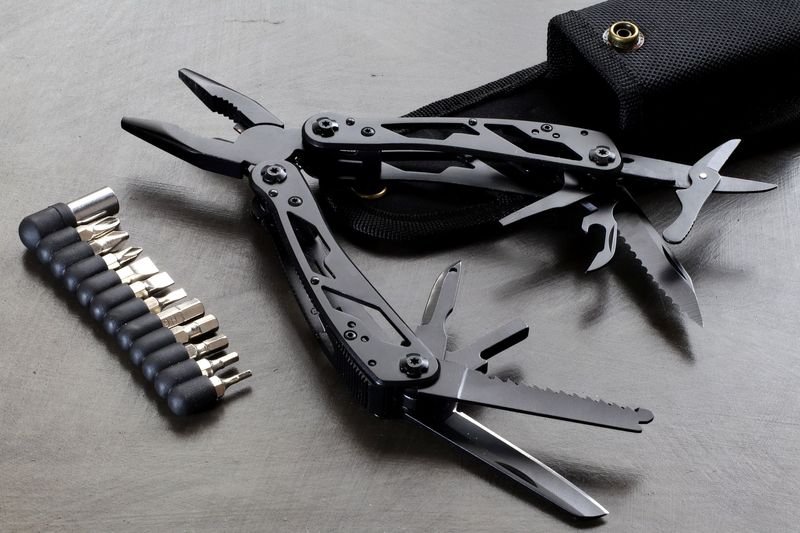
A pocket multitool is a compromise machine — every gram fought over, every tool shrunk to fit. A full-size plier tool throws that constraint out. The handles are long enough to give your hand real leverage, which is the whole point. When you’re crimping a connector, pulling a stubborn cotter pin, or torquing a rusted fastener, plier leverage scales with handle length. That’s basic physics, and it’s why a four-ounce compact will always feel like a toy in your palm next to a Leatherman Wave Plus.
Length buys you more than grip. It buys real-estate for full-length blades, a proper saw, scissors that actually cut, and a bit driver with enough body behind it to drive a screw without your thumb cramping. The penalty is carry: these tools want a belt sheath or a bag pocket, not your jeans. If you already carry a bag to work — or wear a belt and don’t mind a pouch — the full-size form factor is the better value per dollar, every time.
The Plier Head Is the Whole Tool
Everything else on a plier multitool is a bonus. The pliers are the reason it exists, so this is where you spend your attention first. Three things matter: the jaw geometry, the cutter design, and whether the pliers spring open on their own.
Needlenose vs. blunt, and why it matters
Nearly every quality full-size tool uses a needlenose plier head that transitions to a flat gripping section near the pivot. The needlenose tip reaches into tight spaces — fishing a dropped nut out of an engine bay, gripping a tiny wire — while the wider rear jaws give you crushing grip for bigger work. Cheaper tools sometimes use a blunt, stubby jaw that grips fine but can’t reach. For EDC versatility, needlenose wins.
Replaceable wire cutters: the spec nobody mentions until theirs are dull
Here’s the single most underrated feature in the under-$100 bracket. On budget tools, the wire cutters are ground directly into the plier jaws. Cut through enough hardened wire or a stray nail and those edges roll or chip — and now your pliers have a permanently degraded cutter you can’t fix. On better tools, the cutters are replaceable: small hardened inserts pinned into the jaw that you can swap when they wear. The Leatherman Rebar and Wave Plus both use replaceable 154CM cutters. The budget Wingman and Sidekick do not. If you cut wire regularly, replaceable cutters are worth the price bump on their own — they turn a wear item into a lifetime tool.
Spring-loaded vs. manual jaws
Spring-loaded pliers snap back open after every squeeze, so you can ratchet through repetitive cuts and grips one-handed without manually re-opening the jaws. The Leatherman Wingman and Sidekick and most Gerber and SOG tools in this range are spring-loaded. The classic Rebar and Wave Plus are not — they’re deliberately manual, which some old-school users prefer for control. Neither is wrong; it’s a feel preference. If you do a lot of repetitive cutting, springs save your hand real fatigue.
Shop Leatherman Wingman on Amazon
Blade Access: The Detail That Decides Daily Use
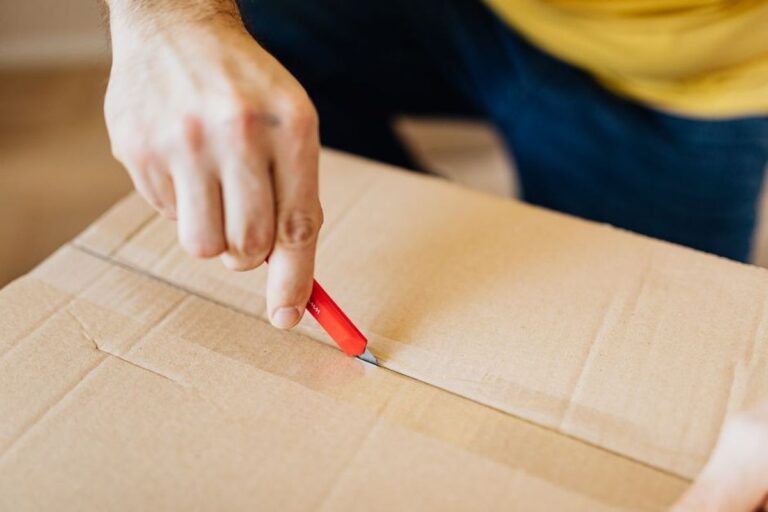
This is the feature that quietly separates a tool you reach for from one you leave at home. On a traditional multitool, the knife blade lives inside the handle — to use it, you unfold the tool into its full plier configuration first, then pivot the blade out. That’s two hands and a few seconds, fine for a workbench, annoying when you just need to slice a zip tie or open a box.
Outside-accessible blades fix this. The Leatherman Wave Plus put this on the map: the knife (and saw, and serrated blade) sit on the outside of the closed handle, so you can flick the blade open one-handed without ever deploying the pliers. For a tool you use mostly as a knife and occasionally as pliers, outside access is transformative. The Rebar, by contrast, keeps everything inside — it’s a pure pliers-first tool, cheaper, and lighter, but slower to the blade. Decide which describes your day before you buy, because this one feature changes how the tool fits your hand more than any other.
Locking, Steel, and the Bits That Live Inside
Every full-size tool worth carrying locks its individual implements open. Without locks, a blade or saw can fold on your fingers under load — a genuine injury risk, not a nicety. Leatherman uses liner-style locks on the Wave Plus and Rebar; Gerber and SOG use their own variants. Confirm the lock before you buy; a few rock-bottom budget tools still skip it, and those are the ones to avoid.
On steel: don’t overthink it in this bracket. Most full-size tools use 420HC or 154CM stainless for the blades — both are mid-range, easy to sharpen, and corrosion-resistant enough for a tool that lives in a sheath. You are not buying a plier multitool for premium blade steel; you’re buying it for the pliers. If you want a dedicated supersteel slicer, carry a separate folder. The multitool blade just needs to be tough and easy to bring back to a working edge, and 420HC nails that.
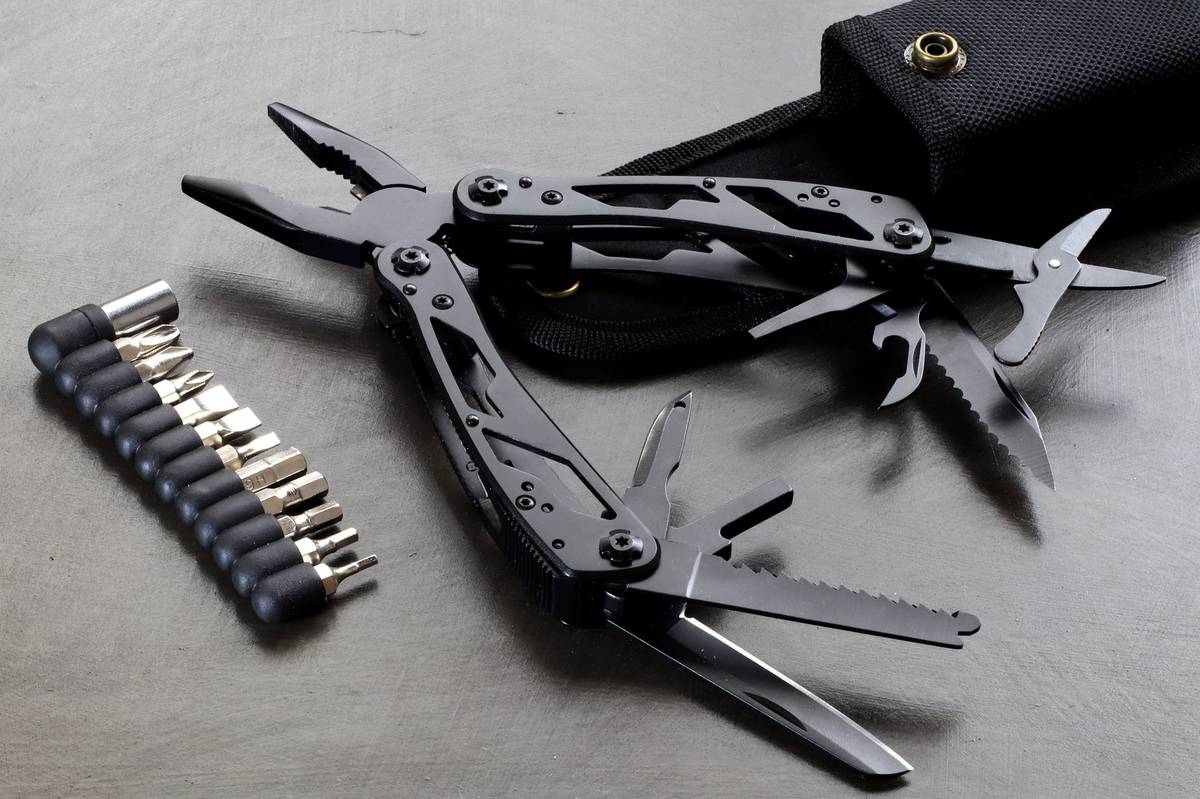
The bit driver is where the under-$100 field genuinely shines. The better tools — the Wave Plus chief among them — accept flat, double-ended proprietary bits, so a tiny kit gives you a half-dozen screwdriver sizes plus Phillips and even Torx. That single feature replaces a pocketful of dedicated drivers. If you do any device repair, furniture assembly, or electronics work, prioritize a real bit driver over a fixed flathead-and-Phillips combo.
Mapping the Under-$100 Field
Once you understand the specs above, the actual products sort themselves into a few clear tiers. Here’s how the field lays out so you can match a tool to your budget and your work without guessing.
The everyday value pick (~$60)
The Leatherman Wingman and its near-twin Sidekick anchor the value end. Spring-loaded pliers, an outside-accessible blade, real scissors, and a 25-year warranty for around sixty bucks. The cutters aren’t replaceable and the bit driver is basic, but for a first full-size tool — or a glovebox and toolbox spare — nothing else delivers this much for the money. If you’re not sure you’ll use a multitool enough to justify more, start here.
The pliers-first workhorse (~$75)
The Leatherman Rebar is the tool for people who think of a multitool as primarily pliers. Manual jaws, replaceable 154CM cutters, a clean inside-handle layout, and a noticeably solid feel in the hand. No outside blade access, no scissors — it’s deliberately spartan, and that focus is the appeal. If you cut and grip more than you slice, the Rebar’s replaceable cutters make it the long-term value king of the bracket.
Shop Leatherman Rebar on Amazon
The do-everything ceiling pick (~$100)
The Leatherman Wave Plus sits right at the top of this bracket and is the most-recommended full-size multitool on the planet for a reason. Eighteen tools, replaceable cutters, four outside-accessible blades (plain edge, serrated, saw, file) deployable one-handed, and a proprietary bit driver. It’s the tool that does genuinely everything a sub-$100 multitool can do, and it’s the one to buy if you only want to buy once. Street price hovers near the hundred-dollar line, so watch for sales.
The budget alternatives worth a look
Outside the Leatherman lineup, the Gerber Suspension NXT brings a butterfly-opening frame and spring-loaded pliers in at a rock-bottom price, while SOG’s compound-leverage tools use a gear mechanism that multiplies your grip force — genuinely useful if cutting is your main job. Neither matches the Wave Plus on refinement, but both undercut it on price, and the SOG compound leverage is a real engineering advantage for heavy cutting that the Leathermans don’t offer.
The Warranty Math Most People Skip
Here’s an argument that should weigh more than it does: Leatherman’s 25-year warranty fundamentally changes the cost equation on a sub-$100 tool. Buy a $75 Rebar, use it hard for a decade, snap a tool or wear out a spring, and Leatherman repairs or replaces it. Amortized over 25 years, even the $100 Wave Plus costs you four dollars a year. There’s almost no other piece of EDC gear with that kind of cost-per-use floor.
That warranty also reframes the “buy cheap” instinct. A no-name $20 multitool with a 90-day warranty isn’t cheaper than a Rebar over any real timeline — it’s just cheaper today. The spring fails, the cutters chip, the lock wears, and you buy another. The branded sub-$100 tools with lifetime-class warranties are the actual budget play. Cheap-up-front is the expensive option here.
Shop Leatherman Wave Plus on Amazon
How to Actually Decide
Strip away the brand loyalty and the spec sheets and the decision comes down to two honest questions about your own day. First: do you reach for a knife or for pliers more often? If it’s the knife, you want outside-accessible blades — the Wave Plus or a Wingman. If it’s pliers, the Rebar’s focused, replaceable-cutter design serves you better and saves money. Second: how hard do you cut? Occasional zip ties and packaging, any of these handles fine. Regular hardened wire or fencing, prioritize replaceable cutters or SOG’s compound leverage, because that’s where cheap tools die first.
Everything else — the saw, the file, the bottle opener, the ruler etched into the handle — is genuinely a bonus, and you’ll use maybe two of them regularly. Don’t let a tool count drive the purchase. A focused tool you carry beats a feature-stuffed one that stays in a drawer because it’s awkward. The full-size plier multitool earns its weight only when it’s on your belt or in your bag the day the thing breaks. Pick the one you’ll actually carry, keep it under a hundred bucks, and let the 25-year warranty do the long-term math for you.
Sources
- Wikipedia — Multitool
- Wikipedia — Leatherman
- Leatherman official site
- Gerber Gear official site
- SOG Knives & Tools official site
Explore our top EDC gear picks at the EverydayCarryGuy shop →
Shop on Amazon
Multitools on Amazon →
As an Amazon Associate we earn from qualifying purchases.
Shop on eBay
Multitools on eBay →
We may earn a commission when you shop through our eBay links.
Survival & preparedness gear
Shop Survival Frog →
We may earn a commission when you shop through our Survival Frog link.