Keychain-Class Multitools: The Tiny EDC Tools That Actually Earn Pocket Space
There’s a quiet truth every long-term EDC carrier eventually runs into: the multitool you own is almost never the multitool you carry. The 8-ounce, 18-function workhorse lives in a drawer, a glovebox, or a bag you left at home. The tool that actually rides in your pocket day after day is small enough that you forget it’s there. That’s the whole game with the best compact multitools that fit in your pocket — not maximum function count, but the weight and bulk threshold below which a tool stops feeling like a chore to carry.
This is a deep dive into the smallest practical tier — what I think of as keychain-class and slip-class tools. These are the multitools that ride on a key loop, drop into a coin pocket, or clip so light you stop noticing them. We’ll go deep on the real contenders, the specs that matter, and the honest tradeoffs, because at this size every gram and every millimeter of closed length buys or costs you something.
Why the smallest tier wins the carry war
Carry probability is everything. A tool that solves 90% of your daily problems but lives in your pocket every single day beats a tool that solves 100% but only comes out when you remember to grab it. The math is brutal and it favors small. A Leatherman Wave Plus is a genuinely brilliant tool — outside-accessible blades, replaceable wire cutters, a saw that actually cuts — but at 8.5 ounces and roughly 4 inches closed, it carries like a brick on your hip. For a lot of guys, that means it stays home more days than not.
Drop to the keychain tier and the calculus flips. A Leatherman Squirt PS4 weighs about 2 ounces and closes to roughly 2.25 inches. A Victorinox Classic SD is well under an ounce. At that weight, there’s no decision to make in the morning — it’s just always with you, the same way your keys and wallet are. The functions you give up matter far less than the carries you gain.
The two failure modes of tiny tools
Going small introduces two real risks, and a good compact tool engineers around both. The first is leverage — small pliers and small drivers can’t put much torque on a stubborn fastener, and you’ll feel the handles bite your palm. The second is ergonomics under load: a 2-inch handle gives your fingers almost nothing to grip when you’re actually pulling a wire or cracking a knot. The tools worth carrying solve this with handle geometry, spring-loaded jaws, and bit access that lets you choke up. The ones that don’t will draw blood and then live in a drawer.
The pliers-based keychain tier
If you want actual pliers in your pocket, the Leatherman Squirt PS4 is the reference point and has been for years. You get spring-loaded needlenose pliers, real wire cutters, a 420HC blade, spring-loaded scissors, a flat and Phillips driver, a file, and a bottle opener — all in a 2-ounce, 2.25-inch closed package. The spring-loaded jaws are the detail that makes it usable: at this size, having the pliers snap back open on their own means you can work one-handed without fighting the tool. The scissors are genuinely good, which matters more in daily life than the blade does.
The Gerber Dime is the budget-conscious counterpoint. It’s a touch larger and a touch less refined in the pivots, but it adds a spring-loaded plier head, a fine-edge blade, scissors, a package opener (a hooked blade for blister packs — surprisingly useful), and a pry bar with a bottle opener. The Dime tends to ride looser over time and the steel is softer, so it’s the tool I’d hand to someone getting into EDC rather than the one I’d buy if I wanted a lifetime carry. But for the price, it punches above its weight and lives happily on a keychain.
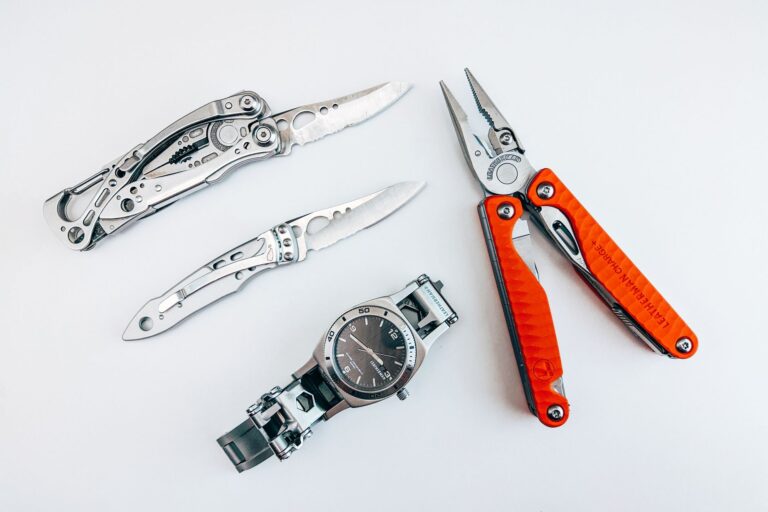
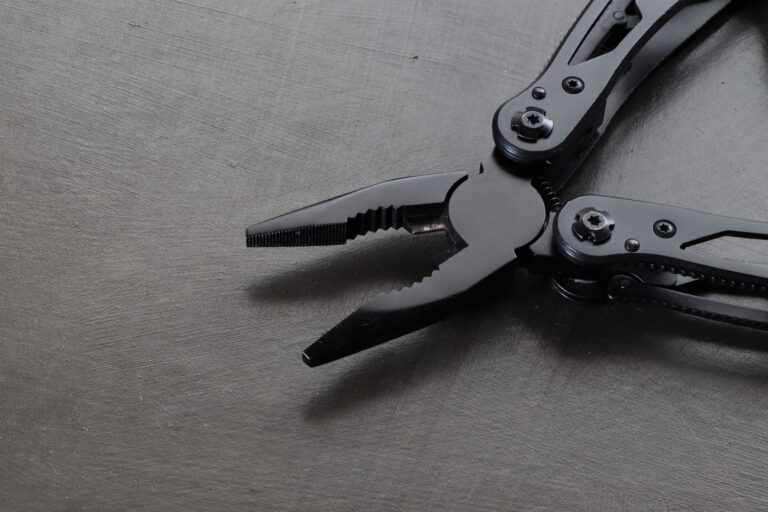
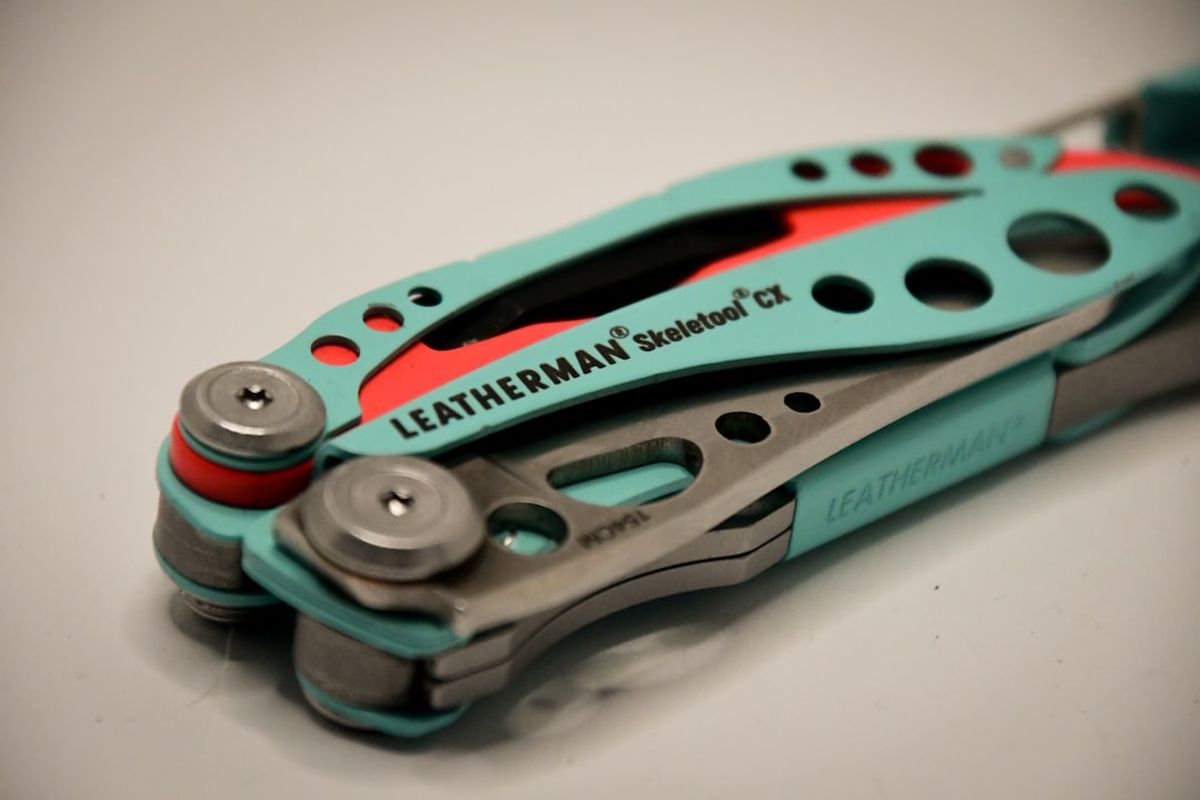
For the person who wants pliers but refuses to give up a proper blade, the Leatherman Skeletool is the upper bound of “still pocketable.” It’s heavier (about 5 ounces) and longer, but it strips down to the essentials with intent: needlenose pliers, wire cutters, a 2.6-inch outside-accessible blade you can open one-handed, a bit driver with two double-ended bits, and a carabiner clip that doubles as a bottle opener. It rides on a pocket clip rather than a key loop, and it threads the needle between “real tool” and “daily carry” better than almost anything else on the market.
Shop Leatherman Squirt PS4 on Amazon
The Swiss Army approach: slim, not pliers
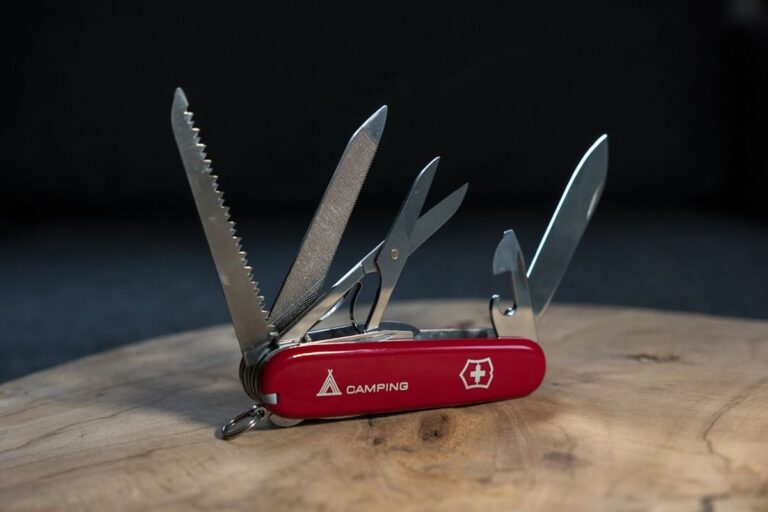
There’s a whole school of EDC that quietly decided pliers aren’t worth the bulk, and Victorinox has owned that lane for over a century. The slip-joint Swiss Army knives trade plier leverage for a thinner, lighter, more pocket-friendly profile, and for a lot of daily tasks that’s the smarter trade. You’re not crimping wire on a keychain tool anyway — you’re opening boxes, tightening screws, trimming threads, and popping bottle caps.
The Victorinox Classic SD is the platonic ideal of a forgettable carry. Under an ounce, smaller than a stick of gum closed, and it gives you a small blade, scissors, a nail file with a flat-head tip, tweezers, and a toothpick. The scissors alone justify it for most people — they’re tensioned with a tiny leaf spring and they cut better than they have any right to. It’s not a “tool” in the rugged sense; it’s a grooming-and-light-tasks companion that never once makes you think about whether to bring it.
Step up to the Victorinox Cadet and you get a real one-layer aluminum-scaled knife: a 2.6-inch blade, a combination can/bottle opener with screwdrivers, a nail file, and a key ring, all in a slim profile that drops into a pocket without a clip. The Cadet is the connoisseur’s slim EDC — no plastic, low-profile, and the kind of tool that develops a patina and a story over a decade of use. If you’ve decided pliers are dead weight for your life, this is the tier to live in.
The modern compromise: Leatherman Free T-series
The Leatherman Free T2 and T4 represent the newest thinking in compact, no-pliers multitools, and they’re worth understanding because they fix the single most annoying thing about traditional Swiss-style tools: you can open every implement one-handed, with your thumb, thanks to Leatherman’s magnetic Free architecture. No fingernail nicks, no two-handed fumbling. Each tool snaps open and closed with a satisfying magnetic detent that genuinely changes how often you reach for it.
The T2 keeps it minimal — spring-action scissors, a pry tool, a flat driver, a bottle opener, an awl, and tweezers — with no main blade, which makes it the ideal pick for office or travel where a knife is a liability. The T4 adds a 2.2-inch blade and a Phillips driver for the person who wants a cutting edge back in the mix. Both close to about 3 inches and weigh in the 2.5-to-3-ounce range, sitting right on the line between keychain-class and full pocket carry. The build quality is a clear step above the Gerber Dime — tighter tolerances, better steel, smoother actions — and they feel like tools you’ll still be carrying in ten years.
Shop Leatherman Free T2 on Amazon
Specs that actually matter at this size
When you’re shopping the compact tier, the spec sheet lies to you. Function count is the number every product page leads with, and it’s close to meaningless. A tool that lists 14 functions but buries the scissors behind two other implements you’ll never use is worse than a tool with 8 functions you can each deploy in a second. Here’s what I actually weigh when comparing tiny tools.
- Closed length and weight — the two numbers that decide whether it carries. Under 3 inches and under 3 ounces is the sweet spot for genuine daily pocket carry.
- Scissor quality — for most people the scissors are the single most-used tool. Spring-tensioned scissors beat friction scissors every time.
- One-handed access — magnetic detents (Leatherman Free) or outside-accessible blades (Skeletool) dramatically raise how often you reach for the tool.
- Blade steel — 420HC and Victorinox’s stainless are soft-ish but stainless and easy to resharpen; fine for a backup blade. Don’t expect S30V at this price and size.
- Driver usefulness — a flat driver that fits common screws and a real Phillips matter more than a dozen niche bits you’ll never load.
The legality and social-cost factor
One underrated advantage of the smallest tier: a no-blade tool like the Leatherman Free T2 or a sub-2-inch Victorinox blade draws zero attention in an office, an airport-adjacent setting, or a meeting. A 3.5-inch folding knife makes people nervous; a keychain multitool with scissors and a driver does not. If your daily environment is white-collar, the tiny tier isn’t a compromise — it’s the correct answer. You get useful function without ever being the guy who pulled out a tactical folder to open a granola bar.
How to actually choose your tiny tool
Forget the spec wars and answer one question first: do you need pliers in your daily life, or do you just think you do? Be honest. If you’re regularly gripping, twisting, or cutting wire, the Squirt PS4 or Skeletool earns its keep. If your real daily problems are boxes, threads, screws, and bottle caps — which is most of us — a slip-joint or a Free T-series tool is lighter, slimmer, and more pleasant to use, and you’ll never miss the jaws.
Then decide on carry mode. Keychain riders (Squirt PS4, Victorinox Classic SD, Gerber Dime) live on your keys and you’ll always have them. Pocket-clip tools (Skeletool) carry like a folding knife and feel more substantial in the hand. Slip-in tools with no clip (Cadet, Free T2) drop into a coin pocket or ride loose. The best carry mode is the one that matches a habit you already have — bolt the tool onto an existing daily object and it’ll never get left behind.
Finally, buy quality once. The temptation in the compact tier is to grab the cheapest option, but a tool you carry every day for a decade is one of the best per-use values in your entire kit. Spend the extra to get tighter tolerances, better steel, and pivots that don’t loosen, and the tool becomes invisible in the best way — always there, always working, never a thing you have to think about.
Shop Victorinox Cadet on Amazon
The bottom line
The best compact multitools that fit in your pocket aren’t defined by what they can do — they’re defined by how little you have to sacrifice to keep them on you. The keychain and slip-class tier wins because it removes the daily decision entirely. A Squirt PS4 on your keys, a Free T2 in a coin pocket, or a Cadet riding loose will be there the day you actually need it, which is the only spec that ultimately counts. Pick the smallest tool that covers your real, honest daily tasks, buy it once at a quality you won’t outgrow, and let it disappear into your routine. That’s the whole point.
Sources
- Leatherman — official site (Squirt PS4, Skeletool, Free T-series specs)
- Victorinox — official site (Classic SD, Cadet specs)
- Gerber Gear — official site (Dime specs)
- Wikipedia — Multitool (history and function overview)
Explore our top EDC gear picks at the EverydayCarryGuy shop →
Shop on Amazon
Multitools on Amazon →
As an Amazon Associate we earn from qualifying purchases.
Shop on eBay
Multitools on eBay →
We may earn a commission when you shop through our eBay links.
Survival & preparedness gear
Shop Survival Frog →
We may earn a commission when you shop through our Survival Frog link.