
Olight i3T EOS Review: Best $20 EDC Light
A dead phone flashlight at midnight outside a locked apartment door is how most people discover they need a dedicated EDC light. I carried the Olight i3T EOS for three months after exactly that happened to a coworker, and it’s stayed clipped to my pocket ever since. At 1.4 ounces and 3.5 inches long, it disappears next to keys and a wallet, and it runs on a single AAA battery you can buy at any gas station at 2 a.m. That last part matters more than the spec sheet lets on.

What the Olight i3T EOS Gets You for $19.95
The Olight i3T EOS ships with one 1.5V AAA alkaline battery already installed, a two-way pocket clip, and an aluminum body with anti-slip double-helix knurling. Olight’s own spec sheet lists 180 lumens on high and 5 lumens on low, a 60-meter beam throw, and an IPX8 waterproof rating good to more than a meter of submersion.1 It’s built from aerospace-grade aluminum, rated for a 1.5-meter drop, and the whole thing runs off a single Philips LUXEON TX LED behind a TIR optic lens instead of a traditional reflector.
None of that is unusual for a $20 AAA light in 2026. What separates the i3T EOS from a dozen similar lights on Amazon is that it’s been in continuous production since 2018 and has a large enough installed base that independent reviewers have actually torture-tested it, which is where the real numbers below come from. Olight also sells it in close to a dozen finishes — black, desert tan, orange, even a brass and a titanium version for collectors — but the guts are identical across every colorway, so pick whichever one matches your keys and don’t overpay for the limited editions unless the finish itself is the appeal.
Real-World Brightness: 191 Lumens, Not 180
Manufacturer lumen ratings are marketing copy until someone puts a light meter on them. 1lumen’s bench testing measured the i3T EOS at 191 lumens on a 30-second ANSI FL1 cycle — slightly above Olight’s own 180-lumen claim — and clocked beam distance at 66 meters against a 60-meter spec.2 That’s a rare case of a manufacturer under-promising. Peak beam intensity came in at 1,100 candela, well above the 900 cd Olight lists.
In practice, 191 lumens is enough to light up a parking garage stairwell or find a dropped key on a dark sidewalk, but it will not compete with a 1,000-lumen tactical light for throw distance. This is a close-range utility light, not a searchlight, and the beam profile backs that up: wide and even, with almost no color tint, which makes it easier on the eyes for reading a menu or checking a breaker panel than a harsh white-blue beam would be.
The Alkaline Battery Trap
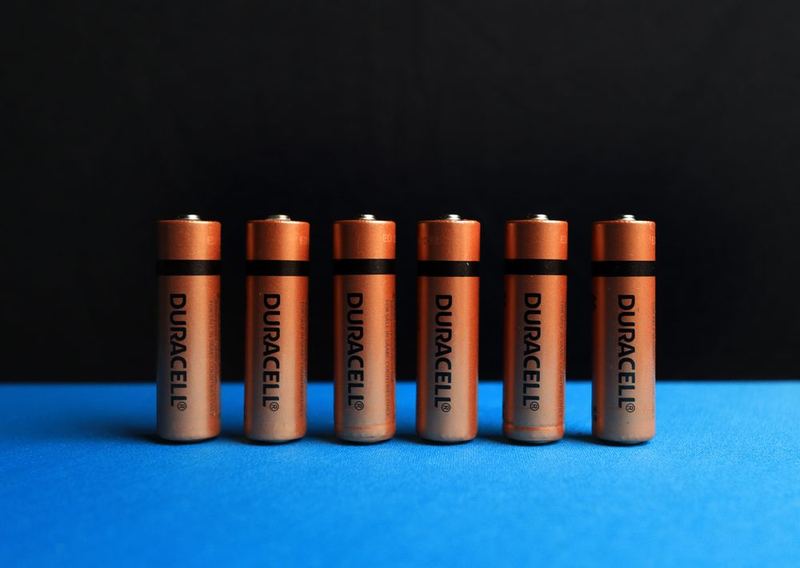
Here’s the number nobody puts in the headline spec: runtime on high mode falls off a cliff depending on what battery you load. 1lumen’s testing showed 59 minutes to 10% output using a rechargeable Eneloop NiMH cell, but only 11 minutes using the alkaline battery Olight actually ships in the box.2 Low mode is far more forgiving — over 10 hours on NiMH — but if you plan on using high mode more than occasionally, the included battery is the wrong one.
This isn’t a defect, it’s chemistry. Alkaline cells can’t sustain the current draw a 180-lumen LED wants without their voltage sagging hard under load, while NiMH holds a flatter discharge curve. The fix costs about $12: swap in a four-pack of rechargeable AAA NiMH batteries on day one, and the runtime complaint most reviewers list as a con mostly disappears.
Build Quality After Months of Pocket Carry
TechWriterEDC’s long-term review put the light through multiple accidental drops onto concrete and reported no functional damage, just light cosmetic wear on the anodizing at the edges of the knurling.3 My own copy has survived a washing machine cycle (forgotten in a jeans pocket, not recommended on purpose) and still clicks on every time.
The tail switch is a textured rubber button rather than a twisty head, which matters more than it sounds like it should. A tail-clicky light works one-handed in a coat pocket or in gloves; a twisty requires two hands and enough dexterity to rotate a head that’s often slick with rain or sweat. If you’re deciding between switch types for your next light, the tradeoffs are worth understanding before you buy — we broke down twisty, clicky, and rotary designs in more detail in our EDC flashlight switch mechanism guide.
The Two-Way Pocket Clip Problem
The included clip reverses direction so you can carry the light bezel-up for quick draw or bezel-down to clip it to a cap brim as an improvised headlamp. It’s a genuinely clever piece of stamped steel. The catch, flagged by 1lumen’s review, is that the clip is the only way to attach the light to anything — there’s no lanyard hole and no threaded ring for a split ring, so it can’t go directly onto a keyring the way a lot of keychain lights can.2
For most people this is a non-issue; the clip rides fine on a pocket seam or a bag strap. But if your plan was to add this to an actual keyring alongside your house and car keys, you’ll want a carabiner or a key organizer that accepts a clip-on attachment rather than a traditional keyring. We cover a few options that solve exactly this in our EDC carabiner roundup.

How It Actually Carries Day to Day
At 39 grams with the battery installed, the i3T EOS is light enough that I forget it’s clipped to my front pocket until I need it. It doesn’t print against thin fabric the way a bigger 18650-powered light does, and the low mode’s 5-lumen output is dim enough to use at a 3 a.m. feeding without waking anyone up — a use case three separate reviewers mentioned independently, which tells you it’s a common one.
Where it falls short is anything requiring sustained high-mode use. Walking a dog down an unlit trail for twenty minutes on high will burn through an alkaline battery in that single walk. For that kind of use, you want either the NiMH swap mentioned above or a larger-capacity light entirely. This is a light built for five-second tasks done fifty times a week, not for continuous illumination.

Should You Spend $5 More on the i3T 2 EOS?
Olight’s updated i3T 2 EOS addresses the single biggest complaint about the original: it accepts both the stock AAA alkaline battery and a rechargeable 10440 lithium cell. On AAA alkaline it matches the original at 200 lumens; drop in a 10440 and output jumps to 300 lumens with a claimed 31% longer runtime.4 Everything else — size, clip, IPX8 rating, tail switch — carries over essentially unchanged.
My take: if you already own 10440 cells from another light, the i3T 2 EOS is the better buy outright. If you’re starting from zero and don’t want to manage a second battery chemistry, the original i3T EOS at $19.95 does 90% of the job for less money and less hassle. Buy the newer model for the battery flexibility, not because the original is obsolete — it isn’t.

Who Should (and Shouldn’t) Buy This Light
Buy it if you want a sub-$20 light that lives on a pocket seam or bag strap and only needs to work for short bursts: unlocking a door in the dark, reading a restaurant menu, checking under a car seat. The AAA battery format means you’re never stuck without a replacement, which is the single biggest advantage over rechargeable-only lights when you’re traveling.
Skip it if you need sustained high-output runtime, want a built-in keyring hole, or are set on a rechargeable-only setup. In those cases, step up to the i3T 2 EOS with a 10440 cell, or look at a larger 18650-powered light built for longer continuous use. Either way, don’t judge any AAA light by its box battery alone — that one swap changes the entire runtime conversation, and it’s the detail most $20 flashlight reviews skip entirely.

FAQ
Is the Olight i3T EOS actually waterproof?
Yes. It carries an IPX8 rating, which means it’s tested for continuous submersion beyond one meter of depth, not just splash resistance. That’s a higher rating than most lights in this price range bother to get certified for.
Can the Olight i3T EOS use rechargeable batteries?
The original i3T EOS is built for single-use AAA alkaline or NiMH rechargeable AAA cells, but not 10440 lithium batteries — those require the newer i3T 2 EOS, which is rated for both AAA and 10440 cells.
How long does the battery actually last?
On low mode with a fresh AAA, expect somewhere around 10-16 hours depending on battery chemistry. On high mode, independent testing measured just 11 minutes with the included alkaline battery versus 59 minutes with a rechargeable NiMH cell — swap batteries if you use high mode often.
Is the i3T EOS worth it over a bigger EDC flashlight?
If your use case is five-second tasks — unlocking doors, checking a bag, dropped-key searches — yes. If you need sustained bright light for long stretches, a larger 18650-powered light will serve you better; the tradeoff is pocket size and weight.
Sources
- Olight i3T EOS official product page — manufacturer specs, dimensions, and waterproof rating
- 1lumen Olight i3T EOS review — independent ANSI FL1 lumen, beam distance, and runtime testing
- TechWriterEDC long-term review — multi-month durability and drop-test observations
- 1lumen Olight i3T 2 EOS review — successor model specs and 10440 battery performance