Traveler EDC: 8 Essentials Worth Carrying
Most people pack for a trip and then figure out their pockets at the gate, patting themselves down for a boarding pass while a TSA agent waves the line forward. A traveler’s EDC is the fix: the small kit of items you keep on your body or in your personal item, not buried in a suitcase, so you’re never digging through a backpack at security or fumbling for a charging cable on a layover.
This isn’t a packing list for the suitcase. It’s eight things worth carrying every time you fly, cross a border, or spend a week living out of a carry-on — chosen specifically because they clear security without a second look and solve a problem that shows up on almost every trip.

What Changes When Your EDC Has to Travel
Everyday carry at home optimizes for convenience. Everyday carry on the road optimizes for a different problem: you’re moving through checkpoints, time zones, and unfamiliar outlets, and anything you carry has to justify its weight for the whole trip, not just one afternoon. A pocket knife that’s fine at your desk gets confiscated at the gate. A phone charger that’s fine at home doesn’t fit the wall socket in Lisbon. The traveler’s version of EDC isn’t smaller for its own sake — it’s filtered for what actually survives transit.
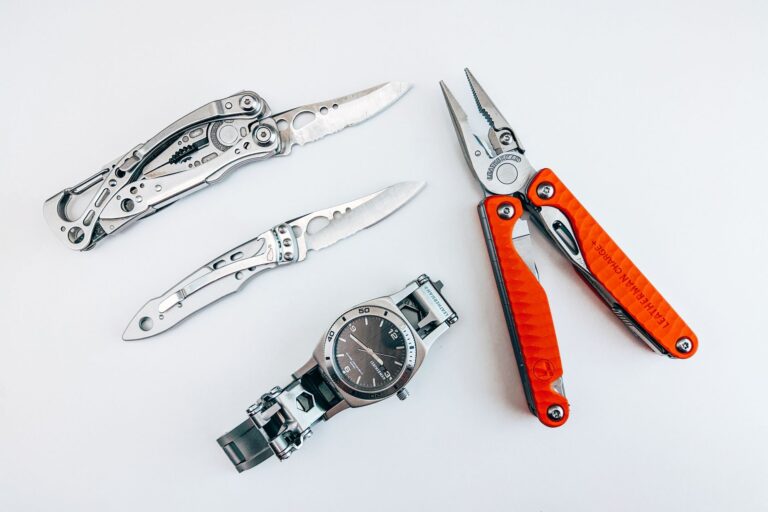
That filter is also why this list skips knives and multitools entirely. TSA-friendly multitools are their own category with their own rules, and anything with a fixed blade has to go in checked luggage regardless of how it’s marketed. The eight items below are the ones that stay in your pocket or personal item the entire trip, security line included.
None of this is exotic gear. Every item below is something you can buy at a drugstore, an airport kiosk, or any electronics counter — the value isn’t in finding something obscure, it’s in deciding ahead of time what earns a spot in your pockets instead of figuring it out while a TSA line backs up behind you.
A Slim Travel Wallet That Holds Everything Without the Bulk
A standard bifold works fine around town, but add a passport, a boarding pass, and a second currency and most wallets turn into a brick. The fix is a dedicated travel wallet — slim profile, a passport sleeve, and enough card slots for your usual cards plus one local-currency slip. The card-holder-vs-bifold tradeoffs we’ve covered apply here too: minimal cut is good until you’re standing at a currency exchange counter with nowhere to put the cash you just got.
Keep your passport in the wallet, not loose in a bag pocket. It sounds obvious until you’re the person patting down every zipper at immigration while the line behind you grows.

A Power Bank That Actually Survives TSA
Spare lithium-ion batteries — which is what a power bank is — must travel in your carry-on, never checked luggage, and anything under 100 watt-hours clears security with zero paperwork. That covers the overwhelming majority of consumer power banks, including anything in the 10,000–20,000 mAh range most people actually buy. Go above 100Wh and you need airline approval before you fly; go above 160Wh and it’s not getting on the plane at all.
A single 10,000 mAh bank is enough to get a phone through a full travel day of maps, boarding passes, and photos without a wall outlet in sight. Pair it with a short, braided cable instead of a full-length one — it survives a bag significantly longer, and you’re rarely more than an arm’s length from the device you’re charging anyway.

The Adapter You Actually Need, Not the One Amazon Pushes
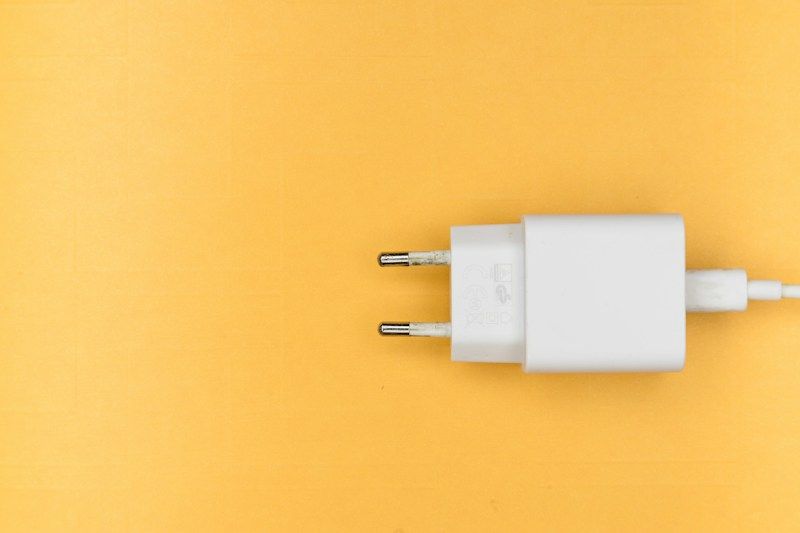
Most “universal” adapters sold online are bulky all-in-one bricks built for someone who visits twelve countries a year. If you’re flying to one region, a single-country adapter does the job for a fraction of the size and weight. The only real decision that matters is voltage: North America runs 120V, most of Europe and Asia run 220–240V, and a device without built-in voltage conversion (check the fine print on the charger brick itself) can be damaged by the mismatch — the plug shape is the easy part.
Check your laptop and phone chargers before you fly. Nearly all modern ones say “100–240V” somewhere on the housing, which means the adapter only needs to change the plug shape, not the voltage. If yours doesn’t say that, it needs a real voltage converter, not just a shape adapter.
Tag Your Bag Before It Disappears
A Bluetooth tracker clipped inside a checked bag’s main compartment turns “the airline lost my luggage” from a guessing game into a map. You’ll know within minutes whether your bag made the connection, sat on the wrong carousel, or is still sitting in the originating airport — and you can hand an agent a precise location instead of a flight number and a shrug.
Put the tracker somewhere it won’t get removed with the tags at check-in — inside a zipped inner pocket, not clipped to the outside handle. And don’t rely on it alone: a paper tag with your name and phone number on the bag’s exterior still matters, because a tracker tells you where a bag is, not who it belongs to if it’s sitting unclaimed.

Skip the Bottled Water Markup
Airport terminals charge $5 for a bottle of water you could fill for free, and the only reason most travelers don’t is habit — they forget the bottle has to be empty to clear security. Carry a reusable bottle through the checkpoint dry, then fill it at any post-security water fountain or café. A steel bottle doubles as insulation on a long layover and doesn’t pick up the plastic taste a disposable bottle does after a few refills.
This is a small habit, but it adds up over a multi-leg trip. Three flights, three refills, and you’ve skipped fifteen dollars in checkpoint markup — and kept three plastic bottles out of an airport trash can along the way.

Compression Cubes Beat a Bigger Bag
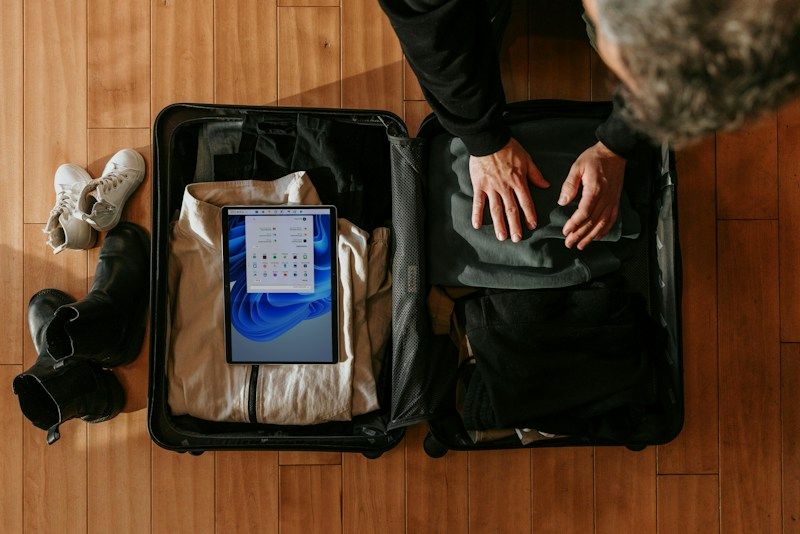
The instinct when a carry-on feels tight is to pack lighter. The better fix is packing denser. Compression packing cubes squeeze clothing down enough that a standard carry-on holds close to a week of outfits without resorting to checked luggage — and because everything is sorted by cube instead of loose in the main compartment, you’re not unpacking the whole bag to find one shirt at security re-check or a hotel room at midnight.
One cube per category — tops, bottoms, underlayers — keeps the system simple enough that you’ll actually use it past the first trip, which is where most organizational gear quietly fails.
The real payoff shows up at security re-check and hotel unpacking, not at the airline counter. A loose-packed bag means unzipping the whole thing to find one pair of socks; a cubed bag means pulling one labeled block out and leaving the rest sealed. It’s the difference between a thirty-second repack on a layover and missing your connection because your shirts are mixed in with your cables.
Noise-Cancelling Earbuds Are Cheaper Than a Hotel Upgrade
A pair of compact noise-cancelling earbuds does more for a long flight or a thin hotel wall than most travelers give it credit for. Engine drone, a crying toddler three rows back, a neighbor’s TV through drywall — active noise cancellation flattens all of it into background hum, which matters more for actual sleep than a slightly reclined seat ever will.
Buds beat over-ear headphones here purely on carry logic: they live in a case smaller than a deck of cards, don’t flatten your hair against an airplane headrest, and survive a coat pocket without the bulk of a full headset.

What About the Knife?
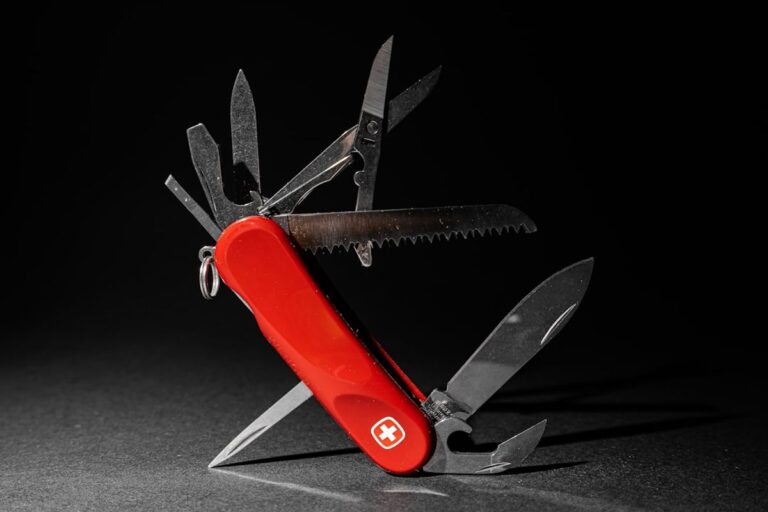
Leave it in the checked bag. TSA treats pocket knives of any blade length as prohibited carry-on items, full stop — there’s no small-enough exception, and a confiscated knife at the checkpoint is gone for good, not held for pickup. If a blade is part of your regular EDC, pack it in checked luggage or skip it for the trip; a TSA-friendly multitool without a locking blade is the closest substitute that actually clears security.
The same logic that cuts the knife from this list is worth applying to the rest of your travel kit: if an item doesn’t earn its space for the entire trip, it’s luggage weight, not EDC. That’s the same principle behind trimming a minimalist everyday carry at home — it just matters more when you’re the one hauling the bag through three airports.
Frequently Asked Questions
Can I bring a power bank in my carry-on?
Yes — power banks must travel in carry-on luggage, not checked bags, and anything under 100 watt-hours (roughly a 20,000 mAh bank or smaller) clears security with no special approval needed.
Is a pocket knife allowed in carry-on luggage?
No. TSA prohibits pocket knives of any blade length in carry-on bags. Pack a blade in checked luggage or leave it home, and use a blade-free multitool if you need tools on the trip.
Do I need a universal adapter for every trip?
Only if you’re visiting multiple regions with different plug shapes. For a single-country trip, a cheaper single-region adapter is smaller and lighter. Check that your charger says “100–240V” first — if it doesn’t, you need a voltage converter, not just a plug adapter.
What’s the one item travelers forget most often?
A bag tracker. Most people remember the charger and the adapter but skip tagging checked luggage, which is exactly the item that matters most when an airline loses the bag.
Sources
- TSA — What Can I Bring: Power Banks — official carry-on vs. checked rules and watt-hour limits for spare lithium batteries.
- TSA — What Can I Bring: Knives — official policy on pocket knives in carry-on baggage.