
Summer EDC: 7 Essential Changes to Make
A folding knife that rides flat and invisible in jean pockets all winter turns into a printing lump against the thin cotton of gym shorts. That’s the real shift summer forces on daily carry — not a seasonal refresh, but a hard constraint on space, weight, and what your gear is actually made of. Trade a jacket, jeans, and two deep pockets for a t-shirt and shorts with shallow 4-inch pockets, and you’ve lost more than half your usable carry volume overnight. Below are the seven adjustments worth making before the heat index climbs, not after a knife handle melts a hole in your pocket lining or your phone shuts itself off at the beach.
Shorts and Thin Pockets Change the Math on What You Carry
Winter carry hides behind layers. A multitool on your belt, a full-size flashlight in a jacket pocket, a backup pen clipped inside a coat — none of it prints because there’s fabric and bulk to absorb it. Shorts and a t-shirt remove that cover entirely. A 4-inch pocket depth is common on summer shorts, which rules out anything over 3.5 inches closed without the clip riding above the seam and announcing itself.
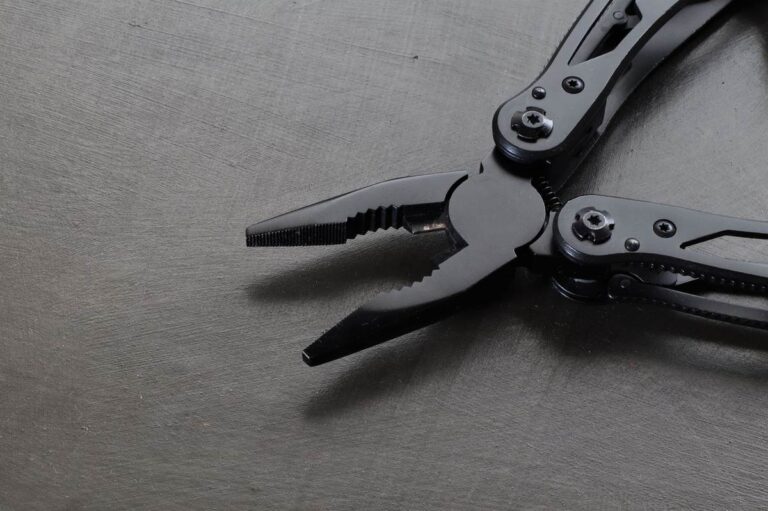
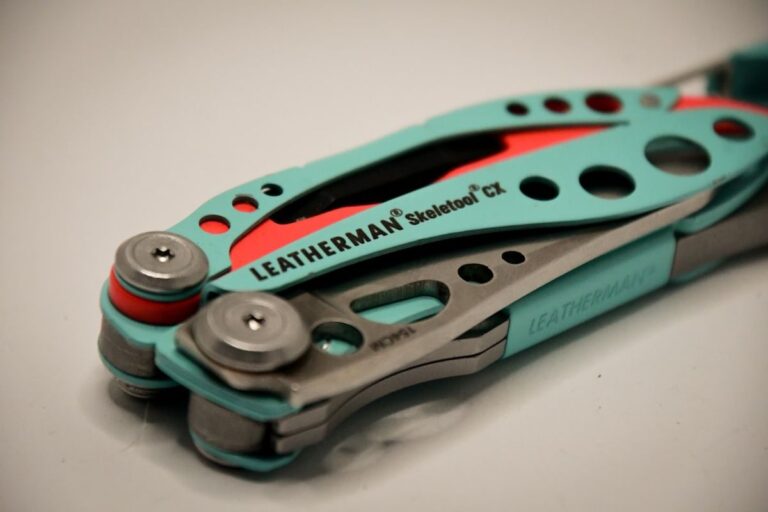
The fix isn’t carrying less gear for the sake of it — it’s carrying the same categories in a smaller footprint. A 3-inch sub-$50 folder does the cutting job a 4-inch flagship does for 90% of daily tasks. A keychain multitool covers the bottle-opener-and-screwdriver use case a full-size plier tool was overkill for anyway. Pocket real estate is the actual constraint in July, not willpower — the same subtraction logic we laid out in our minimalist EDC guide applies even harder once shorts season starts.
Sweat and Humidity Attack Steel and Leather Faster Than You Think
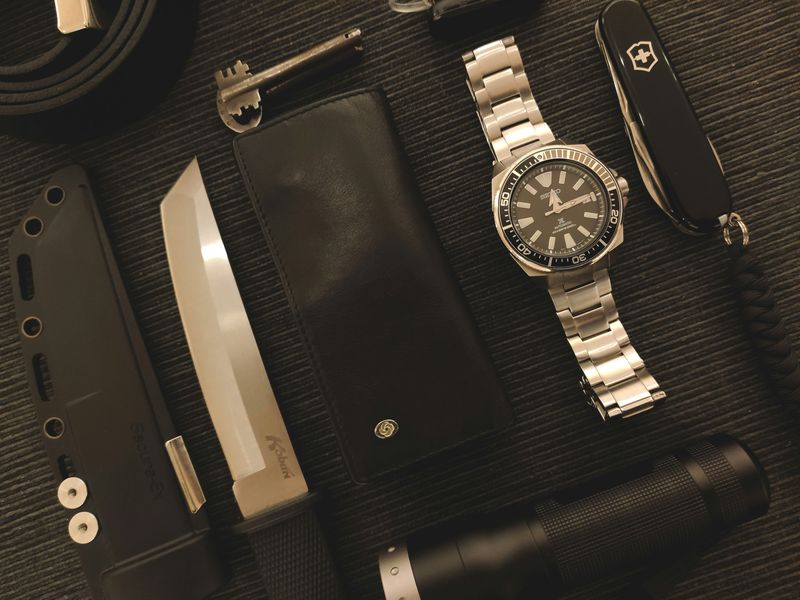
Winter corrosion comes from road salt. Summer corrosion comes from you. A pocket running 90°F+ with body heat and humidity trapped against fabric is a slow-motion salt bath for carbon steel — sweat carries enough sodium chloride to pit an unprotected blade in weeks, not months. Leather wallets fare worse in a different way: they absorb moisture, lose their shape, and start smelling like a gym bag if they never fully dry out between wears.
Stainless steel blades and anodized aluminum bodies shrug this off far better than carbon steel and raw brass. If you’re carrying a carbon steel folder through summer anyway because you like the edge retention, a thirty-second wipe-down each evening and a light oil pass on the pivot does more good in July than it does in January, simply because the exposure is constant instead of occasional. Leather wallets benefit from a day of rest between heavy-sweat days — rotating two slim wallets costs less than replacing one that’s delaminated by August.

Heat Puts a Hard Ceiling on What You Can Carry in a Pocket
Every rechargeable item in your pocket — flashlight, power bank, wireless earbuds case — runs on a lithium-ion cell with a real thermal ceiling, not a marketing one. Battery University’s prolonging guide puts it in concrete terms: a cell that loses 20% of its cycle life at 86°F (30°C) loses 40% at 104°F (40°C), and a black car seat or dashboard in direct July sun clears that number before lunch.[1] A Stanford Medicine study measuring parked-car interiors found the dashboard averaged 157°F and the cabin itself hit 116°F within one hour in direct sun — with 80% of that temperature rise happening in the first 30 minutes.[2]
That’s the real argument against leaving a flashlight or power bank in a car cupholder, a beach bag zipped shut in direct sun, or a back pocket pressed against a hot car seat for a long drive. It’s not about explosion risk, which is rare — it’s about quietly cutting a $60 flashlight’s usable battery life in half by September. The practical fix is boring but it works: keep rechargeables in a bag’s shaded interior pocket, not a side pocket that faces the sun, and don’t leave anything lithium-powered in a parked car past a quick errand.

A Slimmer Wallet Earns Its Keep When Your Pockets Do Too
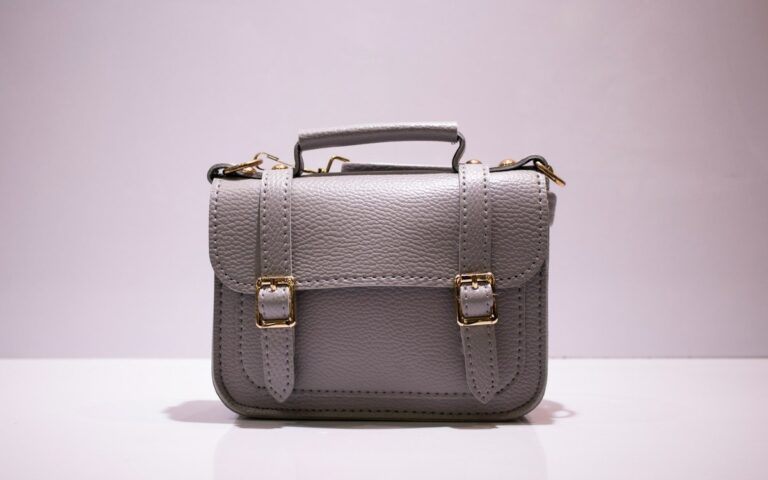
A bifold stuffed with receipts, a spare key, and six cards you don’t use barely registers in a winter coat pocket. In gym shorts, it’s a brick-shaped bulge that shows through the fabric and digs into your leg the moment you sit down. This is the one summer change that pays off even after summer ends — once you’ve trimmed a wallet down to four cards and cash, there’s rarely a reason to load it back up in October.
A card holder or slim bifold under a half-inch thick solves the visible-bulge problem outright, and it forces a secondary benefit: fewer cards in rotation means less to lose if a pocket gets picked at a crowded pool party or beach bar. We broke down the actual tradeoffs in Card Holder vs Bifold Wallet if you’re still deciding which format fits. If you’ve been putting off trimming your wallet down, summer is the season that makes the decision for you.

Hydration and Sun Protection Become Permanent EDC Items
Water and sunglasses aren’t optional add-ons once the heat index climbs — NIOSH’s heat-stress guidance recommends roughly 8 ounces of water every 15 to 20 minutes during sustained heat exposure, which works out to 24-32 ounces an hour, well above what most people carry without thinking about it.[3] A 20-ounce insulated bottle clipped to a bag or held in hand covers most of a midday errand run; anything longer than an hour outside in direct sun needs a refill plan, not a bigger bottle.
Polarized sunglasses do double duty as sun protection and glare reduction, which matters more for daily function than people give it credit for — squinting through an afternoon walk is a genuine fatigue cost, not just a comfort issue. Keep a hard case in a bag if you’re prone to sitting on folded sunglasses in a back pocket; soft pouches don’t stop a frame from bending under body weight.

Pool, Beach, and Sweat Exposure Change What “Water Resistant” Needs to Mean
An IPX4 splash rating is fine for walking through rain. It is not fine for a cannonball into a pool or a phone that slides out of a towel into shallow water. Summer carry puts gear in front of actual submersion risk more often than any other season, and the spec sheet difference between “splash resistant” and “waterproof to 1 meter” is the difference between a flashlight that survives a dropped pool bag and one that doesn’t.
Check the actual IP rating before assuming “water resistant” on a product page means what you need it to mean. A watch rated for 100m of water resistance handles pool swimming and light snorkeling without a second thought; one rated for splash resistance only should come off before anyone gets near the water, full stop. The same logic applies to card wallets and phone cases — a few dollars more for a genuinely sealed option beats replacing a phone that spent four minutes in a beach bag that got hit by a wave.

Crowded Summer Crowds Raise the Bar on Theft-Resistant Carry
Festivals, beach boardwalks, outdoor concerts, and packed patios share one trait that quiet winter commutes don’t: density. More bodies in less space means more opportunity for a hand to find an unzipped bag pocket or a phone left face-up on a towel while you’re in the water. None of this requires paranoia — it requires carrying smart in the specific settings where it matters.
A front pocket beats a back pocket for a phone or wallet in any crowd, full stop — back pockets are the easiest target because you can’t feel a hand near them. A cross-body bag with a zippered compartment against your body beats an open tote every time at a festival or beach day. And if you’re swimming, nothing stays in a towel on the sand unattended; either it goes in a locked car, a water-resistant pouch clipped to you, or it doesn’t come to the beach at all.

FAQ: Summer EDC Questions
Do I need to carry less gear in summer, or just different gear?
Mostly different, not just less. The categories stay the same — a cutting tool, a light source, a wallet, hydration — but each one needs to fit a smaller, lighter-weight loadout. Swapping a 4-inch knife for a 3-inch one and a bifold for a card holder solves most of the space problem without actually dropping a category.
Will heat actually damage my EDC gear, or is that overblown?
For lithium batteries, it’s real and measurable — Battery University’s data shows a meaningful cycle-life drop at sustained 104°F exposure, which a car interior or a pocket pressed against a hot car seat reaches easily.[1][2] For knives and wallets, the damage is slower (corrosion, leather breakdown) but just as real over a full summer of daily wear.
Is a water-resistant watch the same as a waterproof one?
No. “Water resistant” with no rating number usually means light splash protection only. Look for an actual meter rating — 30m is fine for hand-washing and rain, 100m+ is what you want before swimming or diving into a pool.
What’s the single easiest summer EDC change to make?
Moving your phone and wallet to front pockets instead of back pockets. It costs nothing, takes zero adjustment period, and closes the single easiest theft opportunity in any crowded summer setting.
Carrying smart in summer isn’t about owning a second set of gear — it’s about recognizing that the same multitool, wallet, and flashlight face a different set of problems from May through September than they do the rest of the year. Adjust for the five that actually matter — space, sweat, heat, water, and crowds — and the gear you already own will carry you through the season without a mid-July replacement. For the opposite end of the calendar, see what changes when the temperature drops in our Winter EDC guide.
Sources
- Battery University — BU-808: How to Prolong Lithium-Based Batteries — cycle-life loss data at elevated temperatures.
- Stanford Medicine — Parked Cars Get Dangerously Hot Even on Cool Days — interior and dashboard temperature study.
- CDC/NIOSH — Heat Stress Recommendations — hydration intake guidance during heat exposure.