Field Notes vs Moleskine: Which Pocket Notebook Actually Survives Daily Carry
Six months into carrying a Field Notes Original in my back pocket, the cover had gone soft at every corner and the spine had started to separate where sweat and friction worked into the cardstock. That’s not a defect — it’s the design. Field Notes is built to be replaced, not babied. Whether that’s a feature or a dealbreaker depends entirely on what you actually want a pocket notebook to do, and that’s the question most “best notebook” roundups skip.

What “Survives” Actually Means for a Pocket Notebook
Every pocket notebook comparison eventually collapses into “which one lasts longer,” but that question only makes sense once you define what you’re testing. A notebook that lives in a back pocket all day faces three separate stresses: the cover has to resist bending and cracking at the fold points, the binding has to hold the pages together through repeated open-close cycles, and the paper itself has to survive sweat, humidity, and the occasional spill without turning to mush.
Most buying guides only look at the first one — does the cover look nice on day one. That’s the wrong test. A notebook’s carry life is decided by how it ages after 30, 90, and 180 days of actual pocket time, not how it photographs new. Cover material and weight, binding method (stapled, stitched, or glued), and paper stock all trade off against each other, and no single notebook wins on all three at once.
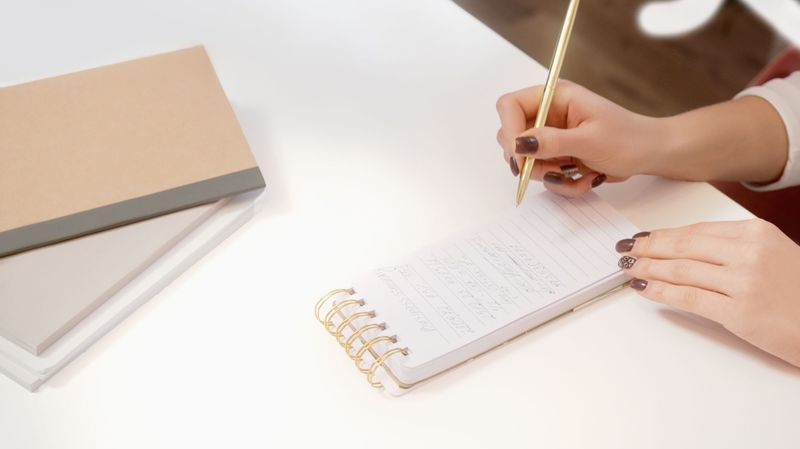
Field Notes — Built to Be Replaced, Not Babied
Field Notes uses a kraft paper cover, three-staple saddle-stitch binding, and standard interior stock — a formula that hasn’t changed much since the brand launched. A 3-pack of the Original runs under $10, which is the entire point: Field Notes isn’t designed to survive a year, it’s designed to be cheap enough that you don’t think twice about starting a fresh one every few months.
That tradeoff shows up fast in a pocket. Corners soften and round off within weeks. Moisture — sweat, humidity, a splash of coffee — works into the cardstock cover and can cause the spine to separate at the staples. By month three or four, a daily-carried Field Notes looks like it went through the wash, because functionally, it kind of did. If you want weather resistance without switching brands, the Expedition edition swaps in waterproof, tearproof synthetic paper and a tougher cover for roughly $15–$22 per 3-pack — worth it if you’re outdoors or commuting in rain regularly, overkill if you’re mostly at a desk.
The honest way to think about Field Notes: it’s a consumable, not an heirloom. That’s a legitimate design choice for EDC — carry it hard, fill it fast, replace it without guilt. It’s the wrong pick if you want one notebook to outlast the notes you put in it.

Moleskine Cahier — More Structure, Less Disposable
Moleskine’s Cahier line takes the opposite bet. Instead of a thin kraft cover, it uses a heavier cardstock with a rounded spine and a stitched (not stapled) binding, plus a gusseted pocket in the back cover for loose receipts or cards. A 3-pack runs about $13–$14, roughly 30–40% more than Field Notes, and you’re paying for exactly the durability Field Notes trades away.
In back-pocket carry, the difference is noticeable by month two. The Cahier’s cover resists the soft, rounded-corner wear that hits Field Notes early, and the stitched binding doesn’t loosen the way a three-staple spine can after repeated flexing. It won’t survive a soaking the way an Expedition notebook will, but under normal daily wear — pocket, bag, desk, repeat — a Cahier is still holding its shape at the one-year mark where a standard Field Notes has usually been retired two or three times over.
The cost of that structure is exactly what Field Notes fans like about the alternative: less character, less “disposable and proud of it” attitude, and a slightly bulkier carry. If you want one notebook that’s still legible and intact when you go back to reference it in six months, that tradeoff is worth it.
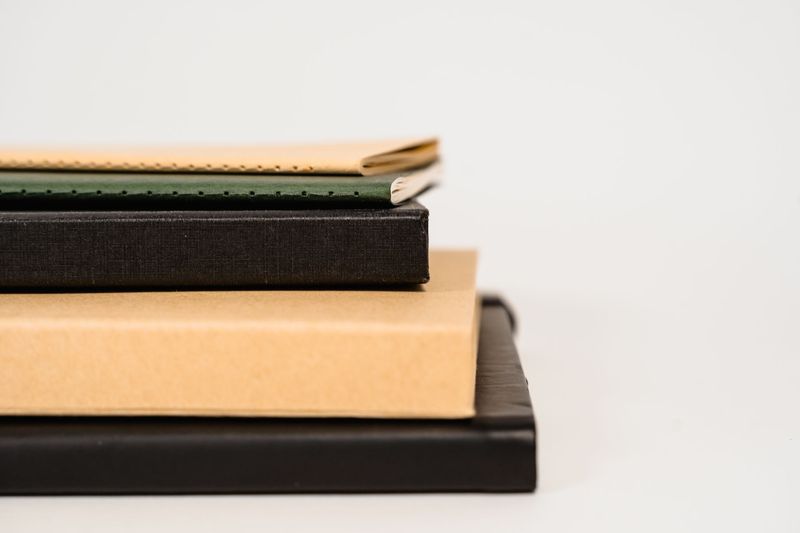
The Paper Nobody Talks About: Rhodia and Pen Compatibility
Cover and binding get all the attention in these comparisons, but for a meaningful chunk of EDC carriers — anyone running a fountain pen, a rollerball, or even a gel pen with heavier ink flow — paper stock decides the winner before durability even enters the conversation. Both Field Notes and standard Moleskine paper are thin enough that fountain pen ink can ghost through or bleed on the reverse side, which makes the back of every page unusable for notes.
This is where Rhodia quietly wins a category most buyers don’t know to look for. Rhodia’s 90gsm bright white paper is noticeably smoother and heavier than either competitor, and it handles fountain pen and rollerball ink with minimal bleed-through — the tradeoff most EDC pen users don’t realize they’re making until they switch. The catch is construction: Rhodia pocket notebooks are side-stapled rather than saddle-stitched, so they don’t lay fully flat when open, and the cover is a simple kraft wrap with none of the Cahier’s structural reinforcement.
If you’re carrying a fountain pen daily, this is the notebook that actually matters — not the one with the toughest cover, the one that doesn’t ruin your ink.
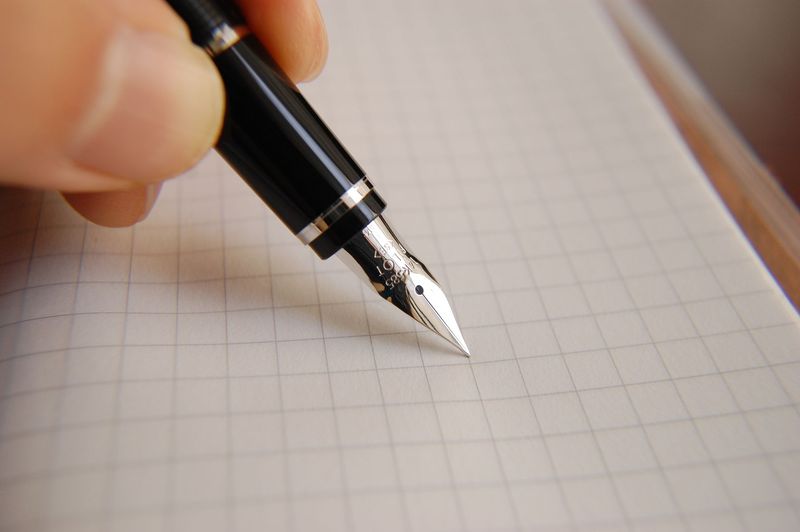
Price Per Year: The Real Cost of “Durability”
Run the numbers and the durability gap turns into a cost comparison that most buyers never actually do. A 3-pack of Field Notes Originals costs under $10 and, based on how it wears in daily back-pocket carry, realistically needs replacing every three to four months — call it three notebooks a year, roughly $25–$30 annually if you’re filling them at a normal clip. A Moleskine Cahier 3-pack costs about $13–$14 and, held to the same one-year carry test, is still intact when the year is up. Depending on how many notebooks you actually fill, that can put the two brands within a few dollars of each other annually, or tip in Moleskine’s favor if you’re a light note-taker who isn’t filling a notebook every few weeks.
The number that matters isn’t sticker price, it’s cost per month of usable carry life. Field Notes wins for people who fill notebooks fast and want the cheapest per-unit cost along the way. Moleskine wins for people who carry a notebook for months without filling it, where Field Notes’ short carry life becomes the more expensive option even at half the sticker price. Neither is “wrong” — they’re priced for different usage rates, and matching your own fill-speed to the right one is the actual decision, not the number printed on the shelf tag.

Which One Actually Wins Your Pocket
There’s no single winner here, because the three notebooks are solving different problems. If you want cheap, replaceable, and light — the kind of notebook you don’t mind destroying — Field Notes Original is still the right call, and the Expedition version covers you if you’re outdoors or in bad weather. If you want one notebook that survives a full year of back-pocket carry and still looks intact when you reference it later, Moleskine Cahier is worth the extra few dollars. And if you write with a fountain pen or a smooth rollerball, skip the durability debate entirely and grab a Rhodia — the paper is the whole point.
The real mistake is buying based on brand recognition alone. Moleskine’s name recognition outpaces its actual durability advantage for most people, and Field Notes’ cult following sometimes obscures how quickly it wears in constant daily carry. Match the notebook to how long you actually need it to last, not to which one shows up first in a “best of” list — the same logic that settled our card holder vs. bifold wallet breakdown applies here: buy for how you actually use the thing, not for the reputation printed on the cover.

Frequently Asked Questions
Is Field Notes or Moleskine better for daily carry?
Field Notes is better if you want a cheap, lightweight notebook you’re comfortable replacing every few months. Moleskine Cahier is better if you want a single notebook to survive a full year of pocket carry without the cover softening or the binding loosening.
Do Field Notes notebooks fall apart?
Not immediately, but in sustained back-pocket carry the kraft cover softens at the corners within weeks, and moisture can cause the staple-bound spine to separate over several months. This is expected wear for the design, not a manufacturing flaw.
Why do fountain pen users prefer Rhodia over Field Notes or Moleskine?
Rhodia’s 90gsm paper is heavier and smoother than the standard stock used in Field Notes or Moleskine, which significantly reduces fountain pen ink bleed-through and ghosting on the reverse side of the page.
Is the Moleskine Cahier the same as the Moleskine Classic?
No. The Cahier line uses a lighter, unstructured cardstock cover without the elastic closure of the Classic notebook, making it more flexible for pocket carry, though still sturdier than Field Notes’ kraft cover.
Sources
- Tested: The Best Pocket Notebooks for EDC — HiConsumption
- Field Notes vs Moleskine Cahier: Which Survives a Year — Time and Ink
- The 15 Best Pocket Notebooks for 2026 — OnPlanners
- The Ultimate Black Notebook Comparison — JetPens Blog