
Office-Friendly EDC Knives: The Non-Threatening Blade Guide for Cubicle Carry
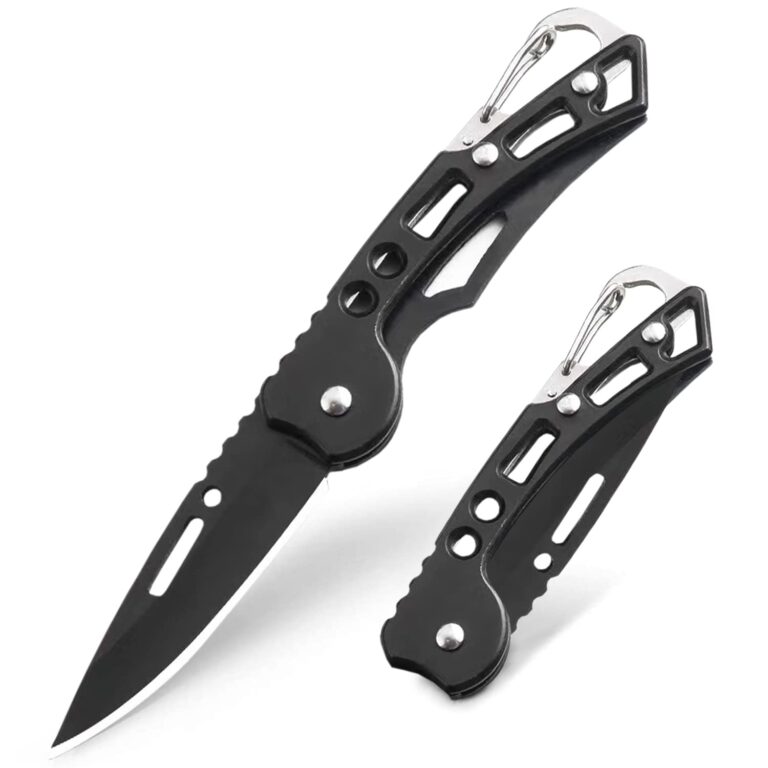
The office EDC problem is real. You need a blade for opening packages, cutting tape, trimming a loose thread, slicing an apple at lunch — but you also need to not freak out your HR rep, your cube neighbor, or the security guard at the lobby scanner. A 3.5-inch black tanto with serrations and a wave opener is going to read very differently than a 2-inch satin sheepsfoot when you pull it out to open a FedEx box.
This guide is about the second category. Non-threatening blades — knives that disappear in a polo and slacks, do real work, and never start an awkward conversation. We will cover blade shapes, locking mechanisms, materials, and three specific knives I have personally cycled through office carry. No tactical aesthetics, no clip-point daggers, no glass breakers.
What Office-Friendly Actually Means
Office-friendly is a usability category, not a legal one. A knife can be legal everywhere in your state and still get you sent home for the day. The criteria I use:
- Blade under 3 inches — most jurisdictions cap legal carry around 3 to 3.5 inches, but more importantly, 2.5-inch blades do not trigger the lizard brain in coworkers.
- Non-tactical blade shape — sheepsfoot, wharncliffe, spey, and drop point read as tool. Tanto and clip-point bowie shapes read as weapon.
- Satin or stonewash finish — black DLC and titanium nitride coatings scream tactical even on small knives.
- Slip joint or friction folder — locking blades are not illegal most places, but slip joints look like the Swiss Army knife your dad carried.
- No pocket clip, or a deep-carry clip — visible black tactical clips are the single biggest tell.
- No thumb stud or flipper tab — one-hand opening looks practiced. Nail nicks look quaint.
You can break some of these rules and still be fine. Break too many and you are carrying a tactical knife in beige clothing.
Blade Shapes That Read As Tools, Not Weapons
The single biggest variable is blade geometry. A 2.5-inch tanto with a swedge looks more aggressive than a 3-inch sheepsfoot. Here is the visual hierarchy from tool to weapon — pick from the top.
Sheepsfoot
Flat spine, slightly curved edge that meets the spine at the tip. No point to speak of. Originally for trimming sheep hooves without stabbing the animal. Reads as utilitarian. Examples: CRKT Pilar in satin, Spyderco Roadie, Cold Steel Tuff Lite.
Wharncliffe
Straight edge, gently curved spine that drops to meet the edge at a fine point. Looks like a small kitchen knife or a box cutter. The cutting geometry is excellent for slicing tape and paper. Examples: Spyderco Bug, Boker Plus Urban Trapper Wharncliffe.
Spey Point
A traditional pattern from stockman knives — gently curved, broad tip with a clipped top edge that ends well short of the tip. Looks like a small folding kitchen tool. Examples: Case Stockman, Buck 301 Stockman.
Drop Point
Workhorse shape. Belly for slicing, tip drops below the spine so it does not lead with a point. Acceptable for office carry in small sizes. Examples: Victorinox Cadet, Benchmade Proper, CIVIVI Elementum.
Avoid
Tanto, clip point with a long swedge, dagger, spear point, recurves, serrations on more than a third of the blade. These all read as fighting geometry whether they are meant to or not.
The Victorinox Cadet — The Default Answer
If you only read one section of this article, read this one. The Victorinox Cadet is the answer to what knife should I carry to work for roughly 70 percent of office workers.
Specs: 84mm aluminum scales (Alox), 65mm flat-ground drop point blade, slip joint, plus a nail file, bottle opener/screwdriver, and can opener/screwdriver. The blade is 1.4116 stainless — a mid-tier steel, not premium, but it is easy to sharpen on anything.
The Cadet works because Victorinox is invisible. Nobody on Earth sees a Swiss Army knife and thinks weapon. The Alox scales (textured aluminum, usually silver, red, or olive) look like a wallet card or a key fob. It rides in a pocket at 1.6 ounces and you forget it is there.
Real-world office uses I have done with mine in the last month: opened two boxes, cut three zip ties off a new monitor stand, trimmed a frayed lanyard, peeled an orange, scraped a sticker residue off a laptop lid, opened a beer at the after-work happy hour. The bottle opener doubles as a flathead and is the second-most-used tool on the knife.
The only downside: no pocket clip. It rides in the change pocket of jeans or loose in a slacks pocket. Some people add a Victorinox key ring extension and clip it to a belt loop with a Tom Bihn keystrap.
Shop Victorinox Cadet Alox on Amazon
The Spyderco Roadie — When You Need One-Handed Operation
If the Cadet feels too dad and you want something with Spyderco quality steel and a modern aesthetic, the Roadie is the move. It is a slip joint, no clip, 2.09-inch leaf-shaped blade in N690Co stainless, FRN handles in conservative colors (gray, dark blue, olive).
What makes it work in offices: no thumb stud, no flipper, no lockup. You open it with the dual finger choils — pinching the spine of the blade and rotating it open like a friction folder. It looks weird and slow to a knife person; it looks like fidgeting with a tool to a non-knife person.
The blade is small enough to be airline-legal in most countries (under 6cm), and Spyderco actually marketed it that way. For office carry that doubles as travel carry, this is a hard combo to beat.
Steel matters: N690Co is significantly better than 1.4116 in the Cadet. It holds an edge for weeks of light office use, and stainless enough that you can ignore it after slicing fruit.
Shop Spyderco Roadie on Amazon
The CIVIVI Elementum — Gentleman Folder Territory
The Elementum is the cheapest entry into gentleman folder territory — slim, polished, with a clip but a discreet one. It is a flipper, which technically violates my earlier rule about thumb studs and flippers, but the Elementum deployment is so smooth and the overall package so refined that it reads as a designer tool, not a tactical knife.
Specs: 2.96-inch drop point, D2 tool steel (or 14C28N or 10Cr15CoMoV depending on the year), G10 or wood or micarta handles, ceramic ball bearings. Around 2.9 ounces. The wood-handled or micarta-handled versions are the office choice — the all-black G10 versions tip into tactical territory.
Where the Elementum wins over the Cadet: it is a legitimate folder you can use with one hand, the steel is significantly better, and the action is satisfying enough that the knife becomes part of your daily fidget rotation. Where it loses: it has a real lockup (liner lock), it has a clip, and a tactically-inclined coworker will recognize it as a knife guy knife.
Shop CIVIVI Elementum on Amazon
Slip Joints vs Locking Blades
For office carry, slip joints win every time you are not actively choosing between them. Three reasons:
- Legal coverage — the UK, parts of EU, and a few US municipalities restrict locking folders specifically. Slip joints stay legal in more places.
- Optics — a slip joint that closes with a backspring rather than a button or lever does not have the same mechanical weapon sound as a lockback or framelock snapping shut.
- Recovery — slip joints can be closed accidentally on your finger if you push the blade backward, which is the main argument against them. In an office, you are cutting tape on a desk. The catastrophic failure mode of a slip joint is a paper cut on your knuckle, not a severed tendon.
The argument for a locking folder in an office is one-handed opening and confidence under load — useful if you actually do batoning-tier tasks at work, which you do not.
Pocket Clips and Deep Carry
Pocket clips are the single biggest visual tell that someone is carrying a tactical knife. The black anodized aluminum clip clamped to the right rear pocket of khakis screams knife guy from twenty feet away.
Three options:
- No clip — Victorinox Cadet route. Knife rides in change pocket or loose. Best for slacks and tailored pants.
- Wire clip in matching finish — Spyderco deep-carry wire clip in stonewashed steel sits flush with the pocket and shows about a quarter inch of wire. Nearly invisible at three feet.
- Aftermarket titanium deep-carry clip — for higher-end folders (Benchmade Proper, Spyderco Native), companies like MXG Gear and Lynch Northwest make blacked-out and burnished titanium clips that drop the visible height to near zero.
If you cannot ditch the clip, drop the clip. Hardware stores sell tiny T6 and T8 Torx drivers for $4. Removing a clip takes 30 seconds.
Quick Checks Before You Carry Anything
Two five-minute checks before any new office knife enters rotation.
State and Local Law
AKTI (American Knife and Tool Institute) maintains a state-by-state knife law summary. Most US states permit folders under 3 to 3.5 inches with no problem; some cities (NYC, parts of Chicago) have additional restrictions. If you travel for work, check the destination state, not just yours.
Company Policy
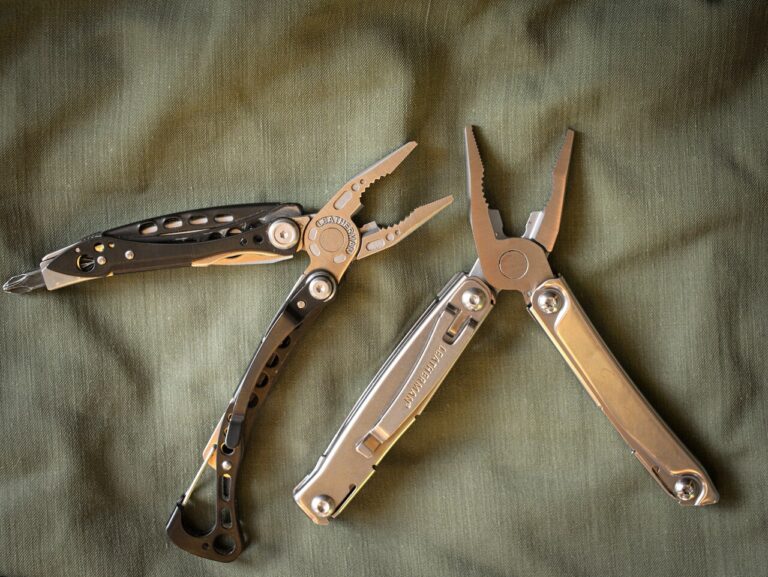
Many corporate handbooks have a no weapons line that explicitly mentions knives with a blade longer than X inches. Read your handbook. If it says 3 inches, your Cadet at 65mm (2.56 inches) is fine. If it says no knives, you carry a Leatherman Style PS — which has scissors but no blade — and call it a tool.
The Final Lineup
If I were starting from scratch and building an office-friendly EDC knife rotation for a year, I would own three:
- Victorinox Cadet Alox for daily clipless carry under slacks
- Spyderco Roadie for travel weeks and air-side flights
- CIVIVI Elementum (wood handle) for days when I want a real folder and presentation
Total spend: under $130 for all three. None of them will get a second look from anyone, and all three will out-cut whatever your IT guy keeps in his desk drawer.
Sources
Explore our top EDC gear picks at the EverydayCarryGuy shop →
Shop on Amazon
EDC Knives on Amazon →
As an Amazon Associate we earn from qualifying purchases.
Shop on eBay
EDC Knives on eBay →
We may earn a commission when you shop through our eBay links.
Handmade Polish craftsman knives
Shop Polish Custom Knives →
We may earn a commission when you shop through our Polish Custom Knives link.