The 96-Hour Report: What a TSA-Friendly Multitool Does on a Real Trip
The TSA conversation around multitools is largely settled. Blade-free designs clear the checkpoint. Scissors under four inches, flat-head drivers, files, and pliers without a blade go through without a second look. What the conversation consistently underweights is everything that happens after — the hotel room, the rental car, the gear management between flights, the 72 or 96 hours when your carry-on tool either earns its weight or sits useless at the bottom of a bag. The best multitools for travelers — TSA-friendly or otherwise — aren’t defined solely by what clears security. They’re defined by what gets used on the other side of it.
What Travel Actually Demands From a Multitool
The environments that test a travel multitool have almost nothing in common with the environments that test a workshop or trail tool. You’re not cutting paracord or gripping wire in a cramped engine bay. You’re removing hang tags from replacement gear bought mid-trip. You’re opening sealed electronics packaging at a hotel desk at 11 PM because your original USB-C hub is in your checked bag. You’re tightening the screws on a loose folding laptop stand before a presentation. You’re cutting the elastic band off a bento box at a transit hub with no utensils in sight.
These are not exotic scenarios. They are the actual physical tasks that accumulate over any serious multi-day trip. And they completely reorganize which tools on a multitool actually matter in the travel context.
In most EDC frameworks, the blade leads. It’s the first tool deployed, the one the frame is often designed around. In a carry-on travel context, the blade is either checked in your bag or absent by design. What remains — the secondary and tertiary tools on most multitools — suddenly becomes the primary kit. How well your TSA-friendly multitool handles that shift is the only spec that matters when you’re three days in and the airport retail shop closed an hour ago.
The Tool Hierarchy That Travel Forces
Scissors as the Primary Work Tool
Scissors do more real work in a travel context than any other tool on a TSA-friendly multitool. The use cases accumulate faster than most EDC carriers expect: cutting the cable ties on newly purchased electronics, trimming moleskin for blisters before a walking day, snipping tags off replacement gear bought mid-trip, cutting medical tape, opening shrink-wrapped charger adapters, trimming a loose shirt thread before a client meeting. In a shop, scissors are the afterthought. In a carry-on kit, scissors are the headline.
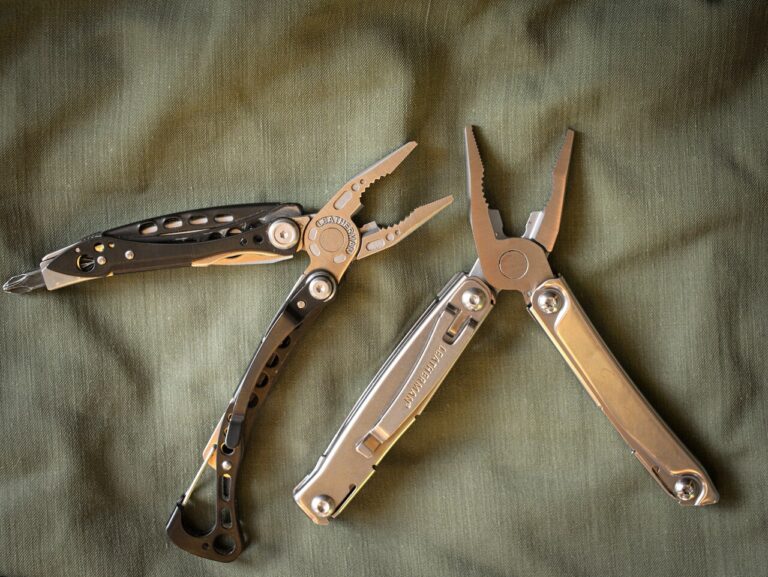
The Leatherman Style CS is built around exactly this reality. Blade-free by design, it opens scissors-first. The spring-loaded blades are full-length relative to the 3.9-inch closed frame — not the vestigial decorative scissors that some compact tools pass off as functional. At 0.96 oz, it clips to a keychain or sits in a coin pocket without announcing itself. The flat-head screwdriver, nail file, and bottle opener on the frame are support tools for the scissors rather than competing attractions. If your travel demands a hard scissors argument, this is the frame it lives on.
Shop Leatherman Style CS on Amazon
Screwdrivers and the Electronics Problem
Modern travel is continuous electronics management. Portable monitors, mechanical keyboards, camera rigs, audio recorders, folding tripods, adjustable desk risers — the gear that serious business and content travelers carry has screws in it. Those screws are almost universally Phillips #0 or #1, or flathead in small gauges. A travel multitool that carries a quality driver in both formats handles the actual maintenance that surfaces on a production or business trip. One that doesn’t leaves you improvising with a hotel pen cap.
The Style CS covers flathead only — a real limitation if your kit runs primarily Phillips fasteners. The Leatherman Squirt PS4 adds pliers and extends the driver range slightly, but remains constrained on bit variety. For travelers whose electronics work demands Phillips access from the carry-on piece, the honest answer is to stop demanding a single carry-on tool cover everything and build a proper two-piece kit. The carry-on tool handles what it handles well. The checked bag takes the rest.
Files, Tweezers, and the Grooming Layer
The tools that get glossed over in spec-sheet comparisons turn out to be the ones with the most consistent daily use on a long trip. Nail files see real action — airport environments are rough on hands, and a cracked or jagged nail is a persistent distraction through a full conference day or travel sprint. Tweezers handle splinters from hotel wooden furniture, errant hairs, watch band adjustments, and retrieval of the small parts that fall into laptop bag seams and refuse to come back out with fingers alone.
The Leatherman Micra is built almost entirely around this insight. At 2.24 inches closed and 1.76 oz, it carries a nail file, spring-action scissors, flathead screwdriver, tweezers, and a small blade in a package smaller than a hotel keycard. The blade — a genuine drawback for pure carry-on use — means TSA will flag it. Travelers who check even a small bag can keep the Micra in checked luggage and access the full grooming and utility kit at the destination. Used this way, it’s arguably the most complete urban utility kit in its size class, and it disappears in a toiletry bag or jacket pocket without adding perceptible weight to either.
Shop Leatherman Micra on Amazon
The Checked-Bag Partner Architecture
The TSA-friendly carry-on multitool doesn’t have to carry the entire load. If you’re checking a bag — even a small one — the checked-bag tool changes the math entirely. A Leatherman Wave+ in the checked bag gives you access to a 3.0-inch partially serrated blade, heavy-gauge pliers, wire cutters, a saw, a Phillips driver, and a file at your destination. Your carry-on piece drops back to its actual job: managing the 60 to 90 minutes of transit activity and carry-on gear maintenance that happen before you ever reach your checked luggage.
This two-tool architecture is how experienced EDC travelers structure their kits, and it works because the use environments genuinely don’t overlap. The carry-on tool — something like the Style CS — handles airport lounge tasks, hotel room packaging, and conference bag management. The Wave+ handles the rental car glove box situation, any mechanical work at a remote destination, the outdoor tasks, and the jobs where real plier force or a proper blade are required. They cover different phases of the same trip without either tool being asked to do a job it was never designed for.
Shop Leatherman Wave+ on Amazon
What to Stop Looking For in a Travel Multitool
The features that dominate multitool marketing — heavy-gauge pliers, multiple blade configurations, wire stripper, aggressive saw blade — are either going to draw a secondary screening at TSA or never get touched in a hotel room and transit hub. Plier-heavy designs weigh more, bulk out in a jacket pocket, and the pliers contribute nothing unless you’ve pre-identified a mechanical task at your destination. If that task is real and anticipated, the tool handling it belongs in the checked bag, not on the carry-on piece.
Bit-kit complexity is similarly mismatched to carry-on travel demands. A fixed flathead and a fixed Phillips cover the overwhelming majority of fastener work that actually surfaces on a business or production trip. The fully modular bit-driver system on a Leatherman Charge+ is excellent for field repair and workshop use. In a carry-on kit where the actual screwdriver tasks involve laptop stands and audio recorder panels, the added weight and pocket bulk of a full bit set aren’t buying anything useful.
The correct filter for a TSA-friendly travel multitool isn’t “how many tools does it have.” It’s “how much of the tool count actually maps to a task I encounter between leaving home and locking the hotel room door.” Travelers who run that filter honestly arrive at a short list: scissors, a small flathead driver, a nail file, and tweezers. That’s the tool map for real travel use. Everything else is added weight serving an imaginary trip.
Configuration Over Catalog
There’s no single multitool that wins every travel configuration, because the variable that matters most is trip architecture. Business travel to conference centers with no checked bag favors the Style CS — it clears every checkpoint globally without a second look, handles the actual physical tasks of a conference environment, and disappears in a jacket pocket or card slot in the front of a laptop bag. Adventure or production travel that involves checking gear anyway needs the two-piece setup, with the carry-on piece staying light and the full-capability tool riding in checked luggage.
International travel introduces an additional filter that domestic travelers skip: blade laws at the destination. TSA compliance gets your tool on the plane. The laws governing blade length and lockback mechanisms in your destination country govern what you can carry when you land. Blade-free designs sidestep this entirely — there’s no blade law that applies to scissors and a screwdriver — which is a genuine argument for the fully blade-free carry-on piece beyond just checkpoint convenience.
What doesn’t change across any of these configurations is the tool hierarchy: scissors lead, screwdriver and file support, pliers don’t matter unless you’ve pre-identified the use case. Every TSA-friendly multitool worth evaluating has resolved that hierarchy correctly or gotten close enough that the gap doesn’t affect real use. The ones that haven’t are workshop tools in travel clothing. That distinction reveals itself fast when you’re trying to open shrink-wrapped cable adapters at an airport gate with a tool built to strip automotive wire. The best multitools for travelers — TSA-friendly by design or by packing strategy — earn their weight at the destination, not just at the checkpoint.