The Counterfeit Trap: How to Actually Buy the Best EDC Flashlight in 2026
Search “best EDC flashlight 2026” and you’ll get a hundred lists ranking lumens, throw distance, and battery chemistry. What almost none of them mention is the thing actually deciding whether your purchase is any good: whether the light in the package is the one the manufacturer actually built. The EDC flashlight market has a counterfeit problem that’s grown quietly alongside its popularity, and it’s reshaping what “best” even means. A genuine mid-tier light with an honest 800-lumen output will outperform a counterfeit flagship claiming 4000 lumens every single time, because the counterfeit’s driver, LED bin, and battery protection circuit are all cut corners hiding behind a copied shell.
This isn’t a fringe issue limited to sketchy import sites. Counterfeit and gray-market EDC flashlights show up in legitimate-looking third-party listings on major marketplaces, in gear swap forums, and even occasionally slip into brick-and-mortar surplus stores. If you’re spending real money on a flashlight you plan to carry every day for years, knowing how to spot the fakes matters more than knowing the difference between a twisty and a clicky tailcap.
Why the Lumens on the Box Are the First Lie
Every counterfeit EDC flashlight starts with the same move: inflating the output number, because that’s the spec casual buyers actually compare. A legitimate Fenix or Olight rates lumens using an integrating sphere measured at turn-on, following the ANSI/PLATO FL1 standard, and the number on the box reflects real, third-party-verifiable output. A counterfeit manufacturer just prints whatever number sells. It’s common to see knockoff “tactical” lights claiming 5000 to 10000 lumens from a single 18650 cell in a body the size of a marker — output that would require a driver and LED array that simply doesn’t fit in that housing, and would cook itself into thermal shutdown in under thirty seconds if it were real.
The giveaway isn’t just the number itself, it’s the absence of everything that should accompany it. Genuine manufacturers publish full FL1 runtime graphs, candela figures, and beam distance on their own websites, not just the box. If a listing only gives you a lumens figure and nothing else — no runtime curve, no candela, no verified IP rating test — that’s a light built to be sold on a headline number, not to be used.
How the LED Bin Swap Works
Same Part Number, Different Chip
LEDs are sold in “bins” — batches sorted by actual measured output, color temperature, and efficiency, even when they share the same part number like a Luminus SST-40 or a Cree XHP50.2. A legitimate manufacturer buys high-bin chips and pays for that quality, then designs a driver circuit tuned to that specific chip’s forward voltage and thermal characteristics. A counterfeiter buys the cheapest bin available, drops it into a cloned host that looks identical from the outside, and relies on the fact that almost no consumer owns a lux meter or an integrating sphere to check the difference.
The practical result shows up in ways that are easy to misdiagnose as bad luck rather than counterfeiting: the beam has a greenish or pink tint instead of a clean white, the hotspot has visible rings or artifacts, the light steps down in brightness within a minute or two of turn-on, or the color rendering makes gear and skin tones look flat and lifeless compared to a known-good light.
The Fake IP68 Rating
Water and impact resistance ratings are laboratory-tested and certified, not something a manufacturer can simply claim without paying for the testing. Counterfeit lights routinely print IP68 or MIL-STD-810G on the housing with zero testing behind it — no potted electronics, no proper O-ring seating, sometimes not even a real gasket in the tailcap threads. The first time the light gets rained on or dropped in a sink, it’s over. Genuine manufacturers list their actual certification body and test parameters on their spec sheets; if a listing just shows a badge graphic with no testing standard referenced, treat the rating as decorative.
Where Genuine Units Actually Get Sold
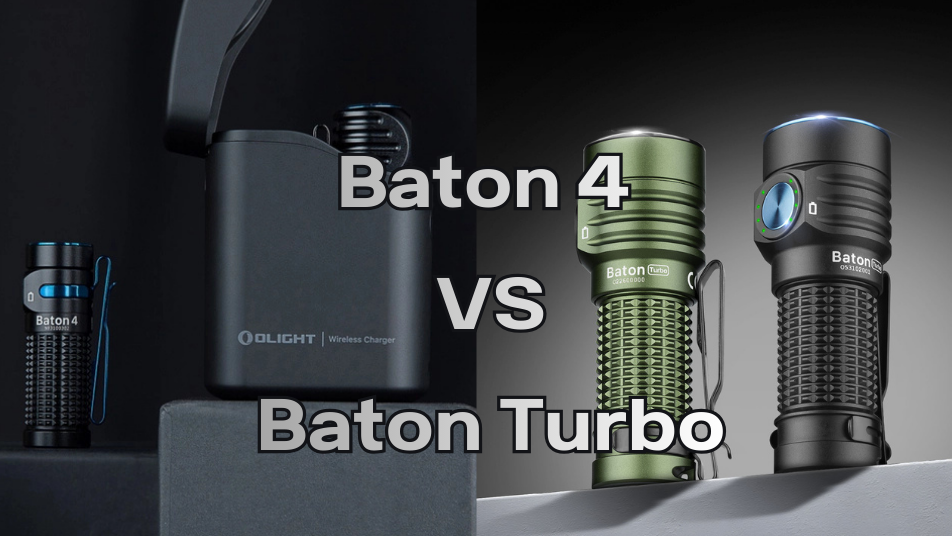
The single most reliable move is buying from the manufacturer’s own storefront or from a retailer explicitly listed as authorized on the manufacturer’s website. Olight, Fenix, and Nitecore all maintain authorized-dealer lists, and buying outside that list — particularly from a marketplace’s third-party seller field rather than the platform’s own retail arm — is where risk concentrates. Marketplace listings that show a manufacturer’s brand name and photos but ship from an unrelated seller storefront with no brand affiliation are a common vector for counterfeits, because the platform’s brand-registry protections don’t always catch every reseller.
Price is a blunt but useful signal too. If a flagship model is listed at 40 to 60 percent below every other retailer’s price at the same time, that gap is almost never a genuine clearance — it’s either a counterfeit, a gray-market unit intended for a different region’s warranty network, or old stock with a swapped battery that no longer holds a real charge.
Shop the Olight Baton 3 on Amazon
Reading a Spec Sheet Like a Skeptic
Before buying any EDC flashlight, pull up the manufacturer’s own product page for that exact model and compare it line by line against the marketplace listing. Check that the lumens, candela, throw distance, and runtime figures match exactly — counterfeit listings frequently copy the photos but alter the numbers, or mix specs from two different models in the same lineup to make a cheaper unit look like the flagship. Check the battery compatibility too: a genuine 21700-based light will list a specific proprietary cell or a named compatible cell, not a vague “rechargeable battery included” with no model number.
Weight is an underrated tell. Manufacturers publish exact weight figures including the battery, often down to the gram, because the anodized aluminum housing, glass lens, and driver board all add up to a specific, repeatable number. A counterfeit built with thinner-wall aluminum or a plastic-backed lens will often run noticeably lighter than spec, even when everything else looks identical in photos.
Verifying Authenticity Before and After You Buy
Most major EDC flashlight brands now include some form of authenticity verification, and it’s worth using every time. Nitecore and Fenix both use serial numbers or QR codes that can be checked against the manufacturer’s registration system, and a code that fails to register, or registers as already claimed by someone else, is a hard stop. Olight’s warranty registration through its official app or site works the same way — a light that can’t be registered under its own serial number is either counterfeit or has already had its identity used once before, which happens with gray-market units resold across regions.
Register the light the day it arrives, not months later. Warranty windows on genuine EDC flashlights typically run several years, but that protection is void from the start if the unit turns out to be counterfeit, and registering early is what surfaces that problem while a return is still possible. Keep the original packaging and the seller’s order confirmation until registration is confirmed and the light has been bench-tested for a few charge cycles.
A five-minute bench test catches most of what a spec sheet comparison can’t. Run the light on its highest mode for two minutes on a stable surface and feel for excessive heat buildup at the bezel — legitimate lights step down output well before the housing becomes uncomfortable to hold, because thermal regulation is engineered in. Cycle through every mode on the UI and confirm it matches the documented interface exactly; counterfeiters frequently get the mode-group order or the strobe/SOS sequence wrong because they’re copying photos, not source firmware.
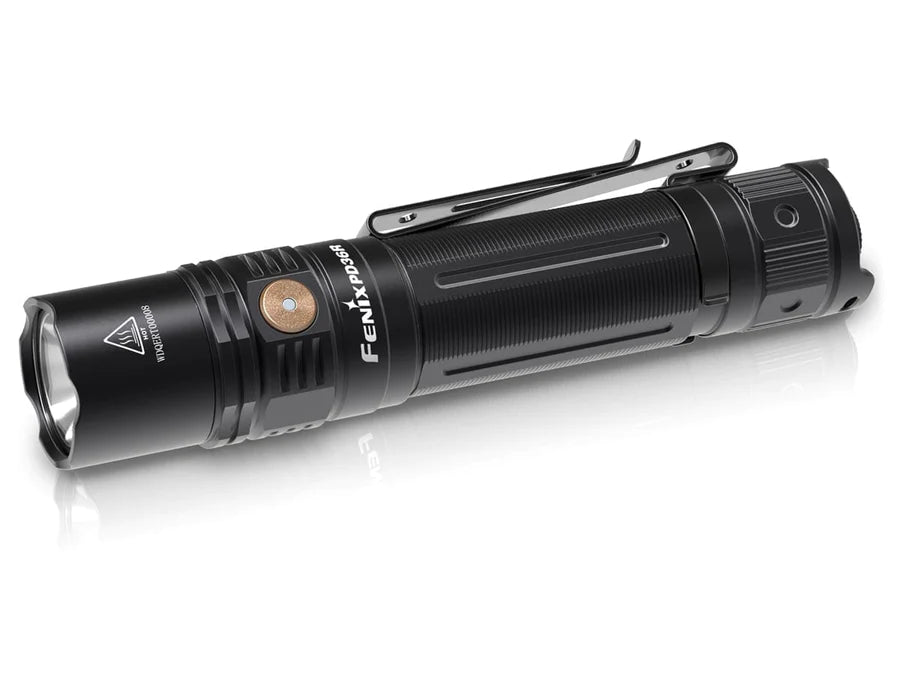
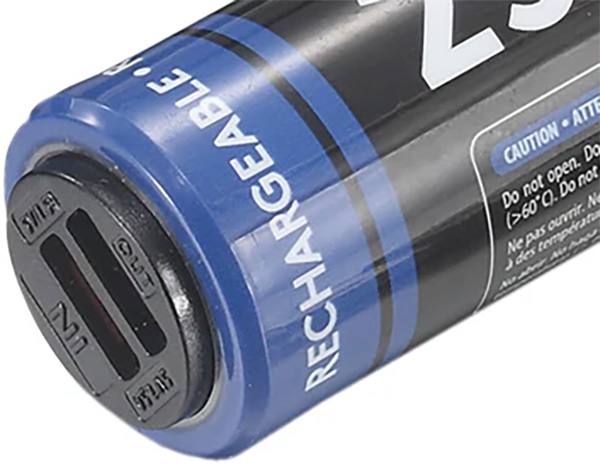
Shop the Fenix PD36R on Amazon
What Warranty Registration Actually Protects You From
It’s tempting to treat warranty registration as paperwork you’ll get to eventually, but for EDC flashlights it functions as a live authenticity check, not just a service contract. When a serial number won’t register, or the manufacturer’s support line confirms the number doesn’t exist in their production records, you’ve found out for free what a lab test would otherwise cost. This is also why buying secondhand from an unknown source carries more risk in this category than in most gear categories — a used light with a scratched-off or missing serial number should be treated as unverifiable regardless of how good the price looks.
For anyone building out a genuine EDC kit in 2026, the practical takeaway is simple: buy fewer lights, buy them from verified sources, and register every one immediately. A single authenticated light from Olight, Fenix, or Nitecore that actually performs to its published spec will beat three unverified lights that might.
The Brands Worth Trusting Right Now
Olight, Fenix, and Nitecore remain the three names worth building an EDC flashlight kit around in 2026, not because they’re immune to being counterfeited — they’re the most-counterfeited brands precisely because they’re the most trusted — but because all three maintain active authentication systems, publish full FL1 data, and honor warranty claims quickly when a serial checks out. ThruNite and Acebeam have earned similar reputations in the enthusiast community for the same reasons: transparent specs and responsive support. Any brand that can’t be found on a public authorized-dealer list, or whose warranty process is a generic email address with no registration system at all, is a brand to research thoroughly before buying, regardless of how the reviews on the listing page read.
Shop the Nitecore NU25 on Amazon
Sources
- Olight — official site and warranty registration
- Fenix — official site and product specifications
- Nitecore — official site and authorized dealer list