Spyderco Paramilitary 2 Long-Term Verdict: 5 Years of Daily Carry, S30V Patina, and a Compression Lock That Won’t Quit
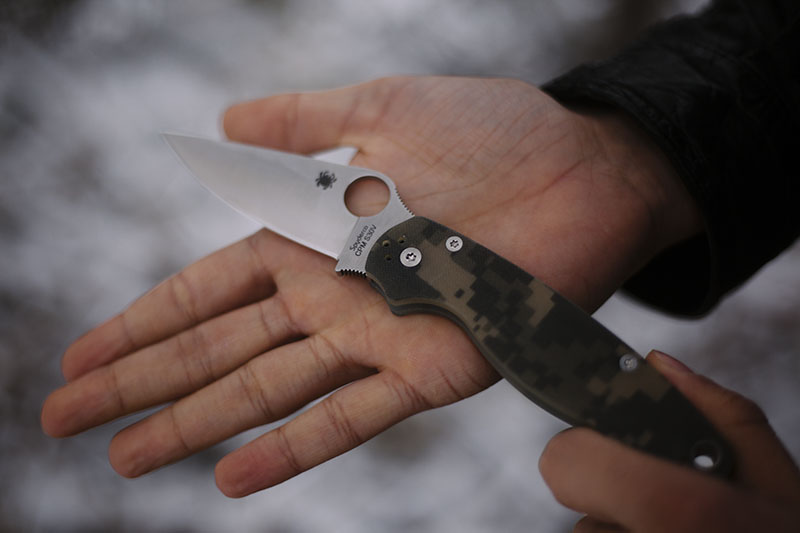
The Spyderco Paramilitary 2 has been clipped to my right front pocket for five years and three months. It’s survived three jobs, two international moves, one wedding (best man — the patina starts in the cake photos), and an embarrassing volume of Amazon cardboard. The PM2 isn’t a new knife. Spyderco refreshed the original Paramilitary in 2010, and by 2026 it’s the folder every other folder gets measured against. Half the EDC lists still rank it #1; the other half use it as the control. After five years of actual pocket time, I’ve stopped reading week-one reviews and started writing the one I wish I’d had — what wears, what holds, what’s overrated, and whether the PM2 still deserves a spot on your belt clip in a world full of Magnacut Civivis.
The Spec Sheet, Briefly
If you already own a PM2, skim past. For the other half, here’s what it actually is on paper:
- Blade: 3.42″ CPM S30V, full-flat ground, plain edge
- OAL: 8.28″ open / 4.82″ closed
- Weight: 3.75 oz
- Handle: G10 scales over skeletonized stainless liners
- Lock: Spyderco Compression Lock
- Clip: Four-position wire pocket clip
- Opening: 14mm Spyderco Round Hole, ambidextrous
- Origin: Golden, Colorado, USA
S30V was Crucible’s premium-steel flagship in 2001, and it’s been a punching bag on knife forums since CPM-20CV, M390, and Magnacut showed up. We’ll get to whether that matters in actual pocket use — spoiler: less than the internet thinks.
Year One vs. Year Five — What Actually Held Up
Brand-new PM2s ship with surgical lockup, factory-mirrored detents, and an edge that’ll shave arm hair. Five years in, here’s what each of those looks like under a loupe.
The Blade and S30V’s Real-World Wear
Steel snobs lose their minds about edge-retention charts. CATRA testing puts S30V at roughly 70% of Magnacut’s edge life on rope. In a real pocket: I have never lost an edge mid-task. The PM2 runs about six weeks of normal cutting — packages, apples, garden twine, paracord — before it needs more than a 90-second rod touch-up. Two minutes on a strop and it’s back.
Patina on the bevel is real. There’s a fine grey haze on the flats where citrus juice and acidic produce kissed the steel. It’s not corrosion. S30V is stainless enough that I’ve cut limes wet, dropped the knife into a pocket, and never seen a rust spot. The blade tip is still a tip — no chip, no roll — which is a small miracle considering how many cardboard boxes I’ve stabbed through.
Full reprofile work: I’ve done one 15-degree-per-side reset in five years, on a DMT diamond plate. About 25 minutes. The edge came back to factory geometry, possibly sharper, because Spyderco’s factory grind on a busy production day isn’t always the cleanest in the world.
The Compression Lock — Still Buttery After 5,000 Cycles
The Compression Lock is why people buy PM2s. It’s a leaf spring riding on a stop pin, with the steel interface biting into a tiny ramp on the blade tang. Five years in, lockup is still rock solid: zero vertical play, zero horizontal play, no early or late engagement. The interface has a faint witness mark — cosmetic, not structural.
More importantly, one-handed closing still works exactly the way Sal Glesser designed it. Pinch the lock bar with thumb and middle finger, let the blade fall away from your skin, snap it closed with a wrist flick. Five thousand-plus cycles and the motion hasn’t loosened or stiffened. AXIS-lock owners brag about smoothness; PM2 owners brag about silence and longevity.
G10, Hardware, and the Pocket Clip
G10 doesn’t really wear. The factory peel-ply texture has rounded over from grippy 80-grit to mellow 220-grit under my thumb where I open the knife — everywhere else it still bites jeans like new. No scale chipping. No fade. G10 is fiberglass composite, and it’s basically forever.
The hardware tells a different story. The pivot screw has loosened twice in five years; both times a tiny drop of Loctite Blue fixed it permanently. Body screws have stayed tight. The four-position pocket clip lost a small patch of black paint at the bend in year two — purely cosmetic. The wire spring still snaps the clip closed on every pair of jeans I’ve owned.
What Wore, What Annoyed, What I’d Pay to Fix
Honest list. Nothing here is a dealbreaker — the PM2 is still my daily — but if you’re spending $170 to $200 you should know what comes with it.
- Lanyard hole — never used. Lint trap.
- Standoff lint — PM2 uses three open standoffs instead of a closed backspacer. Pocket lint accumulates. Compressed air every six months clears it.
- Pivot drift — once, after a deep clean, I over-torqued the pivot and blade centering went slightly off. Loosen, retorque, fine. User error, not a design flaw.
- Spine sharpness — factory ships with sharp 90-degree spine corners. After five years of skin oil and denim they’re rounded enough to be friendlier on the thumb pad. Still strikes a ferro rod fine.
- Sharpening choil — the tiny choil at the heel of the blade bites the web of your hand if you choke up. Same complaint everyone has had for 15 years. Spyderco hasn’t changed it. I’ve stopped caring.
Sharpening the PM2 — What Actually Works
S30V responds well to the right tools and punishes the wrong ones. Five years of trial and error, distilled.
The Cheap, Reliable Routine
Spyderco Sharpmaker, medium ceramic rods, 15 strokes per side. Switch to fine ceramic rods, 10 strokes per side. Strop with green compound on leather, 20 strokes per side. Shaving sharp in under five minutes. This has been 90% of my maintenance for the entire ownership period.
The Annual Reset
Once a year — usually January, because resolutions — I do a full reprofile on DMT diamond stones. Coarse, fine, extra-fine, then back to the Sharpmaker for the finishing strokes. About 25 minutes start to finish. The PM2 comes back to me like a new knife.
Tools That Wasted My Time
- Pull-through carbide sharpeners — destroyed a friend’s M390 PM2 edge geometry in one session. Never let one near your knife.
- Convex stropping alone — useful as a finish step, useless for restoring a dull edge.
- Sub-1000-grit whetstones — overkill on S30V for routine touch-ups. Save them for kitchen knives.
- Electric belt sharpeners — same story. The PM2’s flat grind doesn’t want a recurve introduced.
The PM2 in 2026 — Honest Field Comparison
The knife market in 2026 is wild. Civivi and We Knife are dropping Nitro-V and 14C28N folders at $60 with bearings that feel as smooth as a $300 custom. Magnacut is in everything from Bugouts to ESEE fixed blades. So where does a 2010-design folder running steel from 2001 still fit in?
PM2 vs. Spyderco Para 3
Same lock, same steel options, half an inch shorter blade on the Para 3. If your jurisdiction caps blade length at 3 inches, get the Para 3. If you actually cut things, get the PM2. The extra half inch matters more than it sounds — apples, cardboard, paracord all want length, and the longer handle anchors a full four-finger grip even with gloves.
PM2 vs. Benchmade Bugout 535
The Bugout is 1.85 oz. The PM2 is 3.75 oz. That’s the comparison. The Bugout disappears in your pocket but the thin handle fatigues your grip during heavy cutting, and the AXIS lock has more long-term wear stories on enthusiast forums than the Compression Lock does. Trade-off, not winner-takes-all. If you cut all day, PM2. If you carry all day and cut occasionally, Bugout.
PM2 vs. Mid-Tier Civivi and We Knife
Civivi Elementum II and similar $90 folders are remarkably close to PM2 build quality out of the box. What you pay the Spyderco premium for, in 2026: USA manufacturing, lifetime parts availability, a lock design that’s been bulletproof for 15 years, and resale value if you ever sell. The PM2 holds 70% of retail on the used market. A Civivi holds 30%.
Real-World Cut Tasks the PM2 Eats for Breakfast
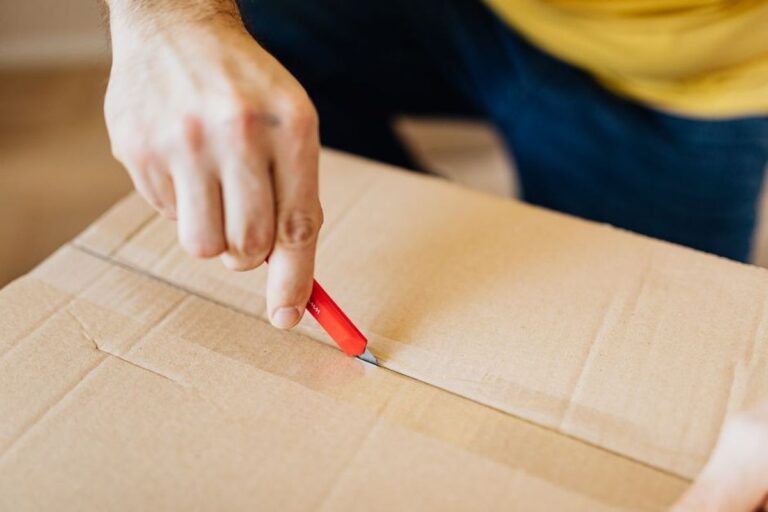
- Cardboard — what the PM2 was designed for. The flat grind glides instead of wedging.
- Food prep on the go — apples, cheese, charcuterie, baguette. Wipe and pocket.
- Paracord, zip ties, tape — sharp tip means no fight at the start of the cut.
- Light wood whittling — fine for tinder, tent pegs, and feather sticks. Not for batoning kindling.
- 550 cord and webbing — splices cleanly with the flat-ground belly.
- Stripping wire jackets — works in a pinch; not its day job.
Tasks the PM2 doesn’t do, and you shouldn’t ask it to: prying, digging, batoning, screwdriving, hammering. Folders aren’t fixed blades and the Compression Lock is not a torque resistor. Use a Mora or a Becker for that.
My Actual Maintenance Calendar
- Daily — wipe the blade with a thumb if I cut anything wet or acidic.
- Weekly — visual check for nicks or rolls. Strop on green compound, 10 passes.
- Monthly — Sharpmaker touch-up, fine ceramic rods only.
- Quarterly — disassemble, clean pivot, fresh drop of Krytox lube, retorque to spec.
- Annually — full DMT reprofile + Sharpmaker finish.
Total time investment: about 90 minutes per year. For a knife that does this much daily work, that’s nothing.
Who Should Actually Buy a PM2 in 2026
I get asked this constantly because I won’t shut up about my knife. Here’s the honest segmentation.
Buy a PM2 if…
- You cut things every day and want a folder that won’t quit in 10 years.
- You value USA manufacturing and Spyderco’s no-questions warranty service.
- You want a lock design that’s been field-proven since 2005.
- You’re done chasing the steel-of-the-month and want a known-good platform.
- You want a knife your kid can inherit in 2046 and still use.
Skip the PM2 if…
- Your jurisdiction caps blade length at 3 inches — get the Para 3 instead.
- You want sub-2 oz pocket weight — get the Bugout.
- You demand Magnacut or nothing — wait for a Spyderco sprint run, they happen.
- You need a thumb-stud opener for tactical work — the Round Hole is the wrong style.
The 5-Year Verdict
Should you buy a Spyderco Paramilitary 2 in 2026? Yes. Not because it’s the spec-sheet winner — it isn’t. CPM-20CV, M398, and Magnacut all outperform S30V on lab edge-retention testing. The PM2 isn’t about the spec sheet anymore. It’s about a knife you can hand to your kid in twenty years and it’ll still cut tomatoes.
The Compression Lock has zero meaningful wear in five years. The G10 doesn’t degrade. The blade still sharpens to shaving in five minutes with cheap tools. The pivot is serviceable with two Torx bits and a $5 bottle of Loctite. Spyderco’s warranty has fixed two of my friends’ PM2s for free — one a snapped lockbar from a fall, one a stripped pivot from over-tightening. The aftermarket for scales, clips, and replacement blades is enormous. The pattern hasn’t changed in 16 years and probably won’t in another 16.
In a knife market full of $80 folders that feel as smooth as the PM2 out of the box, you’re paying for a knife that will be smooth for fifteen more years. That’s the long-term review you can only write after living with one. So here it is: still the best $200 you can spend on a folding knife in 2026, and the only knife in my collection that I genuinely cannot imagine replacing.
Sources
- Spyderco — official manufacturer site, current production specs and warranty info
- Wikipedia: Spyderco — company history, patent timelines, lock design context
- BladeForums — long-running community archive for steel comparisons and long-term ownership threads
Explore our top EDC gear picks at the EverydayCarryGuy shop →
Shop on Amazon
EDC Gear on Amazon →
As an Amazon Associate we earn from qualifying purchases.
Shop on eBay
EDC Gear on eBay →
We may earn a commission when you shop through our eBay links.