Buy for the Cut, Not the Spec Sheet: Choosing a Sub-$50 EDC Knife by the Jobs You Actually Do
Walk into any knife forum thread about the best cheap everyday carry blade and you’ll drown in steel abbreviations, hardness numbers, and pivot-bearing arguments before anyone asks the only question that matters: what are you actually going to cut with it? A spec sheet is a menu, not a meal. The 8Cr13MoV in a $28 folder and the D2 in a $45 one are only meaningfully different if the jobs you do actually expose that difference — and for most people carrying a knife to break down Amazon boxes and open blister packs, they never will.
So instead of ranking blades by their numbers, this is a guide to working backward from your hands. Figure out the three or four cuts you make most often in a normal week, and the right sub-$50 knife more or less selects itself. Everything else — the fancy steel, the ball-bearing flip, the titanium-look handle — is a bonus you’re paying for, not a reason to buy.
Start by auditing your week, not the catalog
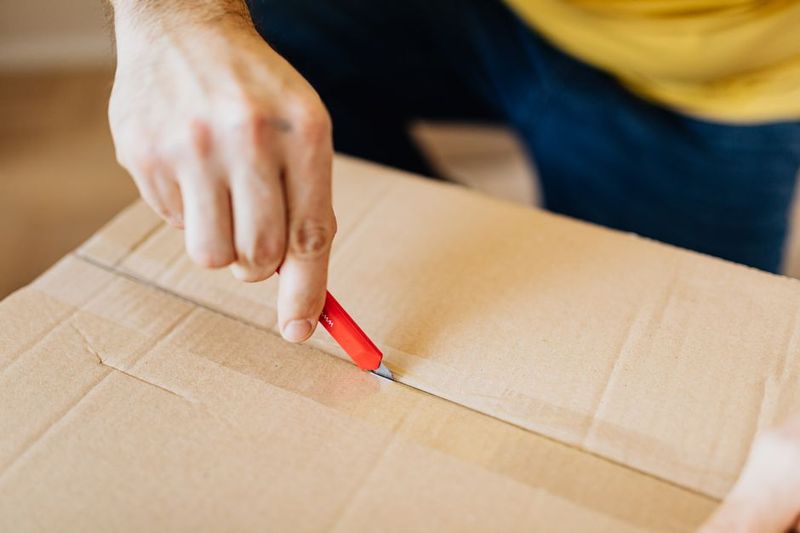
Before you read a single review, do a boring but revealing exercise: for one week, notice every time you reach for a blade. Most people are shocked at how repetitive it is. A warehouse guy is opening cases and cutting strapping. A tradesman is scoring drywall, stripping cable, and trimming shims. A dad is opening toy packaging, slicing apples, and cutting tape off boxes. An office worker barely uses a knife for anything sharper than a granola-bar wrapper.
Those patterns point at wildly different tools even though every one of them is under $50. Cardboard and cordage reward a keen, easily-touched-up edge and a point you can dig in with. Food prep rewards a flat grind and a blade you’re comfortable putting near your mouth. Rough utility rewards a thick, tough tip that won’t snap when you pry — or a cheap enough knife that you don’t care if it does. The mistake is buying the knife that looks like the best all-rounder and discovering it does your actual main job worse than a $15 box cutter.
If your life is boxes, tape, and cordage
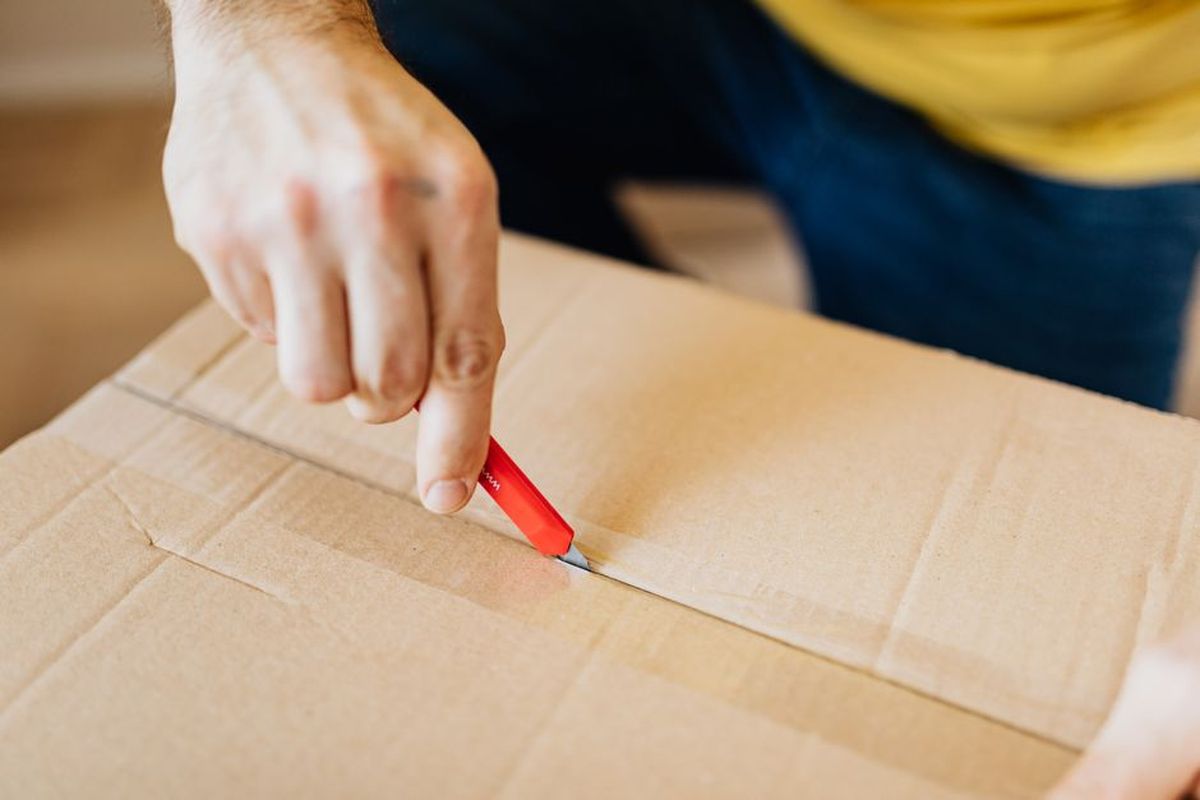
This is the single most common EDC reality, and it’s the easiest to solve well on a budget. Cardboard is abrasive and dulls edges fast, so what you want isn’t the hardest exotic steel — it’s a thin behind-the-edge geometry that slices with minimal drag, plus a steel that’s easy to bring back with a few passes on a strop or ceramic rod. This is exactly why value steels like 8Cr13MoV and Sandvik 14C28N are so beloved in this class: they don’t hold an edge as long as premium powder steels, but they take an edge in seconds, so the maintenance tax is trivial.
Blade shape matters more than steel here. A drop point or a Wharncliffe with a fairly straight edge lets you drag-cut a taped box seam in one smooth pull without the belly rolling the tip up out of the cardboard. The Ontario RAT II is the textbook pick — a nylon-handled, AUS-8 folder that costs less than a large pizza, deploys with a thumb stud, and has a blade profile that eats packaging for years. The CIVIVI Elementum is the slightly nicer version of the same idea: a D2 drop point with a glassy action and a slim profile that disappears in a pocket.
Shop the Ontario RAT II on Amazon
One underrated detail for the box-and-cordage crowd: choose a knife you can open and close one-handed while your other hand holds the load. A flipper or a well-placed thumb stud with a smooth detent is worth more to you daily than an extra point of blade hardness you’ll never notice.
If you actually prep food with it
Plenty of people use their EDC knife to slice an apple at their desk, cut cheese on a hike, or portion a sandwich. If that’s you, the priorities flip. You want a full flat grind that slices cleanly instead of wedging, a blade that’s easy to wipe clean with no deep jimping or texturing to trap food, and ideally a steel that resists rust because moisture and acids are now part of its life. This is where a stainless like 14C28N quietly beats a stain-prone tool steel like D2, which will develop a patina — or worse, orange spots — if you cut a lemon and forget to dry it.
The classic answer here is almost embarrassingly cheap: the Opinel No. 8. It’s a French peasant knife with a carbon or stainless blade and a beechwood handle, and its thin, tall grind out-slices folders costing five times as much. The tradeoff is a wood handle you shouldn’t leave soaking wet and a simple collar lock rather than a modern one-hander. If you want something more pocket-modern that still slices food well, the CJRB Pyrite offers a stainless-friendly steel and a flat-ground blade in a slim, easy-to-clean package.
Shop the Opinel No. 8 on Amazon
If your knife earns its keep on the job site
Trades and outdoor work punish a knife in ways office carry never will. You’re going to pry a paint-can lid, score a two-by-four, cut roofing felt, dig a screw out of a stud, and occasionally use the blade as a chisel you’ll regret using it as. Here the whole calculus changes: tip toughness and lock strength beat edge refinement, and there’s genuine wisdom in buying a knife cheap enough that abusing it doesn’t sting.
Look for a thicker blade stock, a robust point rather than a needle tip, and a lock you trust under lateral load — a solid liner lock or, better, a frame lock or Cold Steel’s Tri-Ad-style lock on their budget models. A thin, high-flat-ground slicer is the wrong tool here; it’ll chip the tip the first time you torque it. This is one of the rare cases where the “worse” cutter is the better buy, because your failure mode isn’t dull, it’s broken.
The honest move for the job site is to accept your knife is a consumable. Buy two of a proven sub-$30 workhorse, keep a backup in the truck, and don’t cry when one dies. A knife you’re afraid to use because it cost $45 is a knife that stays in your pocket while a screwdriver does the cutting badly.
Match the size to the pocket, not the ego
There’s a strong temptation to buy a big blade because it feels like more knife for the money. Resist it. The best EDC knife is the one you actually carry, and a 3.5-inch folder that prints through your slacks and spooks coworkers gets left at home by Wednesday. For the vast majority of daily cutting, a blade between 2.5 and 3.2 inches does everything, rides discreetly, and keeps you clear of the blade-length limits that many cities and workplaces enforce.
Carry laws are genuinely worth thirty minutes of research before you buy, because they vary enormously and a knife that’s perfectly legal in one state is a problem in another. Blade length, locking mechanisms, and assisted opening are all regulated differently depending on where you are, so check your local rules rather than assuming — a slim, sub-3-inch, non-assisted folder is the safest bet almost everywhere and, conveniently, also the most practical size for real tasks.
The spec-sheet stuff, put back in its place
None of this means steel and geometry are meaningless — they’re the reason two knives that do the same job feel different in the hand. It means you should let the job set the priorities and then use the specs to break ties. Decide you need a slicey box-cutter with a stainless edge, and now the choice between an Elementum and a Kershaw Leek is a fair fight you can settle on handle feel and price. Decide you need a food-safe slicer, and the Opinel versus Pyrite question answers itself on rust resistance and cleanability.
The reason the sub-$50 category is so good right now is that the floor has risen dramatically — companies like CIVIVI, CJRB, Ontario, and Kershaw now ship blades with heat-treats and fit-and-finish that would have been mid-tier money a decade ago. That’s a gift, but it’s also a trap, because when everything is competent it’s easy to buy on marketing instead of need. Anchor on the job, and the abundance works for you instead of paralyzing you.
Shop the CIVIVI Elementum on Amazon
Buy once, for the life you actually live
The cheapest way to end up with a drawer full of unused folders is to keep buying the knife the internet is excited about this month. The cheapest way to end up carrying one knife for years is to name your top three cutting jobs out loud, pick the sub-$50 blade whose shape and steel serve those jobs best, and ignore every spec that doesn’t move that needle. A box-breaker doesn’t need to prep food. A food knife doesn’t need to pry. And almost nobody needs the biggest, hardest, most expensive thing in the sub-$50 case.
Get the fit right and a $30 knife will outperform a $200 one you bought for the wrong reasons — not because the steel is better, but because it’s the blade you’ll actually have in your pocket the moment you need to cut something. That’s the only performance metric that ever really counted.
Sources
Shop on Amazon
EDC Knives on Amazon →
As an Amazon Associate we earn from qualifying purchases.
Shop on eBay
EDC Knives on eBay →
We may earn a commission when you shop through our eBay links.
Handmade Polish craftsman knives
Shop Polish Custom Knives →
We may earn a commission when you shop through our Polish Custom Knives link.